Roti Making Tips: Perfect Flatbreads Every Time
When you think of roti, a simple, unleavened Indian flatbread made from whole wheat flour, water, and salt. Also known as chapati, it's the daily bread for over a billion people across India, Pakistan, and beyond. It’s not fancy, but getting it right takes more than just mixing flour and water. The best roti is soft, pliable, and puffs up like a balloon over heat—not hard, dry, or chewy. And yes, it’s totally doable at home, even without a tandoor.
What makes roti work isn’t magic—it’s technique. The dough needs to rest, the rolling needs to be even, and the heat needs to be just right. Too much flour while rolling? Your roti turns tough. Too little kneading? It won’t puff. And if you skip letting the dough sit for at least 30 minutes, you’ll end up with a flat, dense disc instead of a light, airy bread. The roti dough, a simple mixture of atta (whole wheat flour), water, and a pinch of salt is the foundation. Use fresh atta, not old stock. Cold water helps keep the gluten tight. And don’t over-knead—just until it’s smooth and elastic, like an earlobe.
Then there’s the rolling. Don’t use a heavy rolling pin. A light, even pressure works better. Start from the center and rotate the dough as you roll. If it sticks, use a dusting of flour—but sparingly. Too much and you’re just adding dry flour to your bread. The goal is a thin, even circle, about 6 to 7 inches across. When it’s time to cook, a hot tawa (griddle) is non-negotiable. Wait until it’s properly heated—drop a few water droplets. If they sizzle and dance, you’re ready. Flip the roti when you see small bubbles forming. Press gently with a cloth or spatula to help it puff. If it doesn’t puff, your dough might be too dry, or the heat too low. And don’t press too hard—you’re not trying to flatten it further, you’re helping it expand.
Some swear by brushing with ghee right after cooking. Others skip it. Both work. Ghee adds flavor and keeps it soft longer. But even plain, warm roti is delicious with dal, sabzi, or just a spoon of yogurt. The real secret? Consistency. Make roti often. The first few might be uneven. The fifth? Maybe perfect. The tenth? You’ll know exactly how the dough feels, how the heat behaves, and when to flip. That’s the skill you build—not a recipe, but a rhythm.
What you’ll find below are real, tested tips from people who make roti every single day. No fluff. No overcomplicated steps. Just the things that actually work: how to fix sticky dough, why your roti won’t puff, the best way to store leftovers, and how to make roti in under 10 minutes on a weeknight. These aren’t restaurant tricks—they’re home kitchen truths. And they’ll turn your roti from an afterthought into the star of the meal.
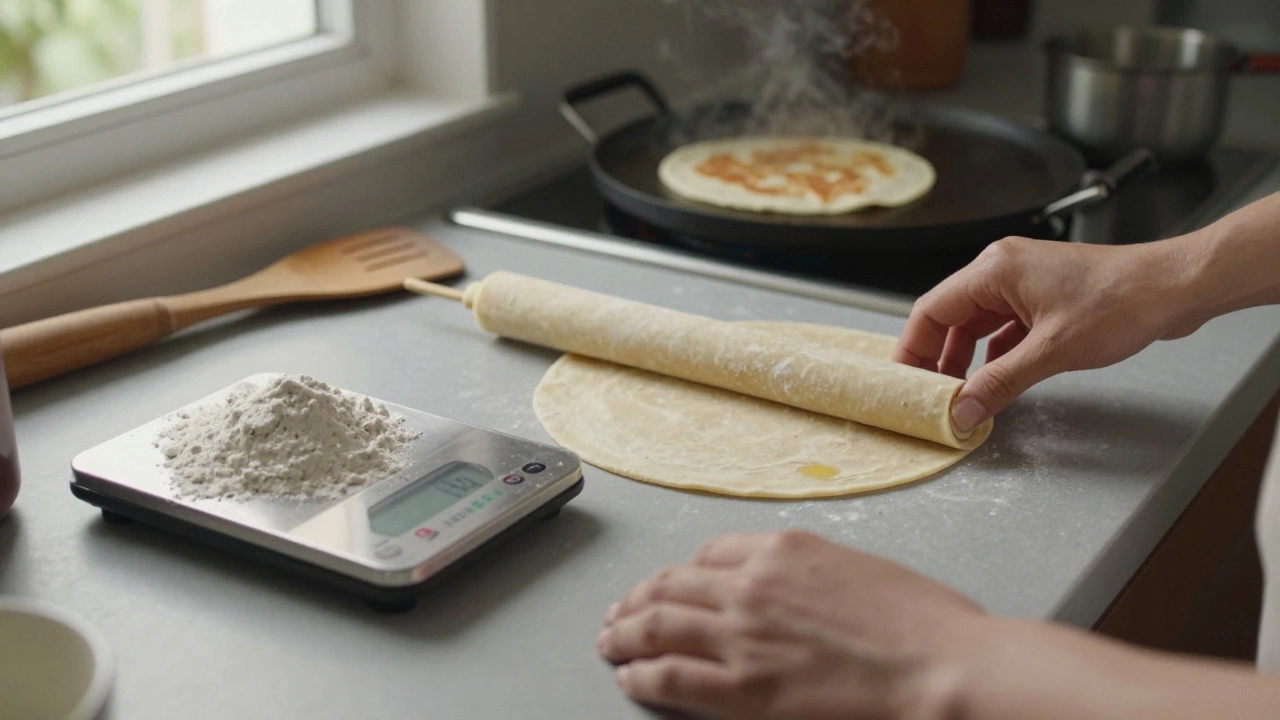
How Much Flour for One Roti? The Perfect Ratio for Soft, Fluffy Rotis Every Time
Learn the exact amount of flour needed for one perfect roti-45 grams-and how to adjust water, rolling, and cooking for soft, fluffy results every time. No guesswork, just tried-and-tested ratios.
View More
Chapati vs Roti: What's the Real Difference?
Ever wondered if chapati and roti are actually different? This article cuts through the confusion, breaking down how chapati and roti are made, how they taste, and where they come from. You'll find out if you really need to stress about calling your bread a chapati or a roti. Grab some simple tips for rolling and cooking the perfect flatbread. After reading, you'll never hesitate in the kitchen again.
View More
Why Are My Rotis Not Soft? Discover the Secrets to Fluffy Perfection
Struggling with your rotis turning out anything but soft isn't uncommon, but it can be fixed with a few simple tweaks. From kneading techniques to dough consistency, learn how to transform your rotis into soft, fluffy rounds. We'll explore common pitfalls and provide practical tips to elevate your roti game. With our handy guide, enjoy soft and delicious rotis every time.
View More