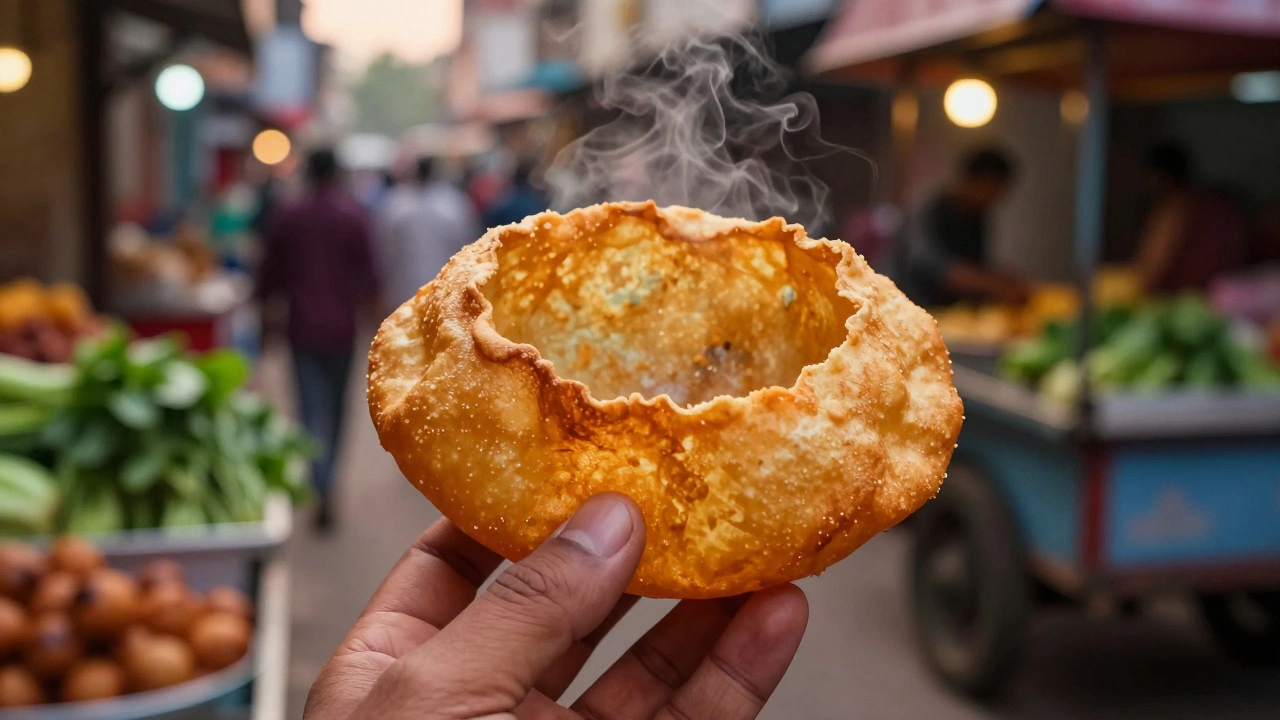
Regional Pani Puri Explorer
Select a region to discover its unique version of India's favorite street food
North India: Golgappa
The focus is on tangy tamarind water and soft potato filling. The name comes from "gol" meaning round and "gappa" referring to the ball-like shape.
Common Add-ons:
- Sev (crispy noodles)
- Yogurt dip
Experience the Bite
Click the puri to experience the flavor explosion!
Walk down any busy lane in Mumbai, Delhi, or Kolkata after sunset, and you will hear the same sound echoing from every corner: the crisp *crunch* of a hollow puri breaking apart. It is a sound that signals hunger, excitement, and joy all at once. If you ask anyone who knows their way around an Indian market which dish reigns supreme, the answer is almost always the same. Pani Puri, also known as Golgappa or Puchka depending on where you are, is widely considered the king of street food in India.
It might seem strange to crown such a small, bite-sized snack as royalty. After all, it has no grand presentation, no heavy ingredients, and costs only a few rupees. But its status isn’t about luxury; it’s about universal appeal. From the bustling streets of South India to the quiet towns of North India, this dish bridges linguistic, regional, and cultural divides better than any other food item. Let’s look at why this humble snack holds such a powerful position in the hearts of millions.
The Anatomy of a Perfect Bite
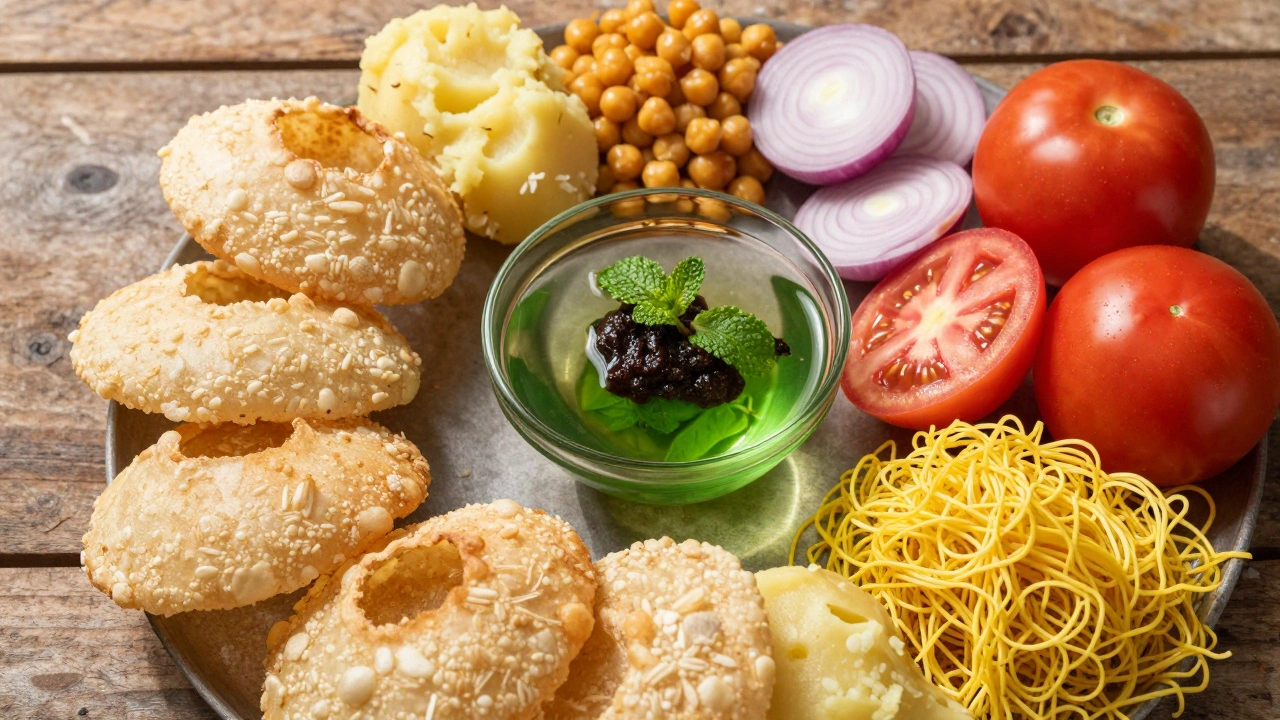
To understand why Pani Puri is a popular Indian street snack consisting of a crispy fried dough shell filled with spiced water, potatoes, and chickpeas so beloved, you have to look at what goes into it. It is a masterclass in texture and flavor balance. The base is the puri itself-a thin, hollow sphere made from semolina (suji) or wheat flour, deep-fried until golden and incredibly brittle. One wrong move, and it shatters. This fragility adds a layer of thrill to eating it; you must be quick and decisive.
Inside the shell sits the filling, usually a mix of boiled potatoes mashed with onions, tomatoes, and green chilies. Some vendors add boiled chickpeas (chana) for extra protein and texture. But the real star is the pani-the flavored water. This liquid is typically mint-coriander chutney mixed with tamarind pulp, salt, sugar, and a generous amount of spices like black salt, cumin, and red chili powder. When you break the puri and let the water flood in, you get an explosion of sweet, sour, spicy, and savory flavors hitting your tongue simultaneously. It is a complete sensory experience in one mouthful.
A Name That Changes With Every State
One reason Pani Puri feels like a national treasure is how it adapts to local cultures while keeping its core identity intact. In North India, particularly in Delhi and Punjab, it is called Golgappa. The name comes from "gol" meaning round and "gappa" referring to the ball-like shape. Here, the focus is often on the tangy tamarind water and the softness of the potato filling.
In West India, especially Maharashtra and Gujarat, it is known as Pani Puri. The emphasis here is on the "pani"-the water. Vendors in Mumbai might serve it with a heavier spice kick and sometimes include sev (crispy gram flour noodles) inside the puri for added crunch. In Eastern India, particularly Bengal and Bihar, it is called Puchka. Bengali versions often feature a more refined, less spicy water, sometimes using a clear broth infused with mint and lemon rather than the thick, dark chutneys found elsewhere.
This linguistic diversity doesn’t confuse people; it unites them. No matter what you call it, the ritual remains the same. You stand near a cart, watch the vendor skillfully punch holes in the puris, fill them, and hand them to you. It is fast, efficient, and deeply satisfying.
The Social Ritual of Eating Pani Puri
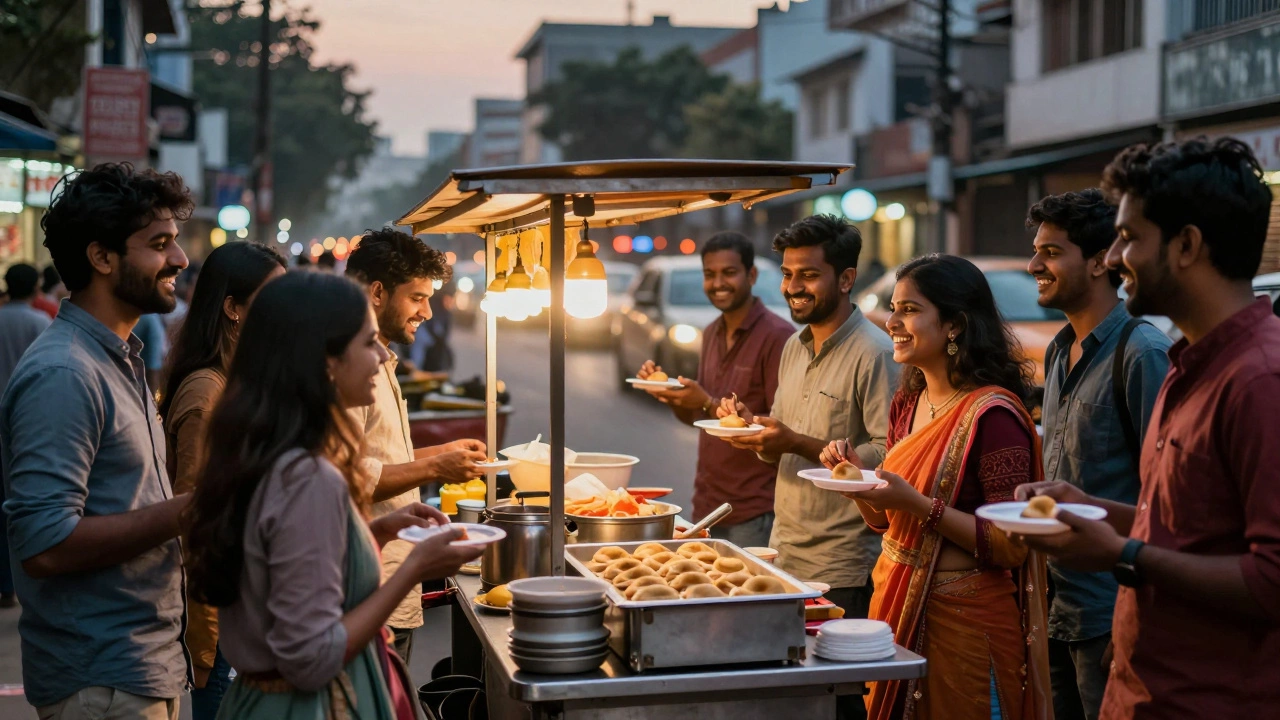
Eating Pani Puri is rarely a solitary activity. It is a social event. You gather with friends, family, or colleagues around a small table or even standing on the pavement. There is a shared anticipation as the vendor prepares each order. Watching the hands move quickly-piercing, filling, dipping-is part of the entertainment. It creates a communal atmosphere where strangers become temporary companions over a shared love for spicy, messy food.
There is also an unspoken rule: do not take too long. Once the puri is pierced, the clock starts ticking. If you wait, the water seeps through the hole and dissolves the bottom of the shell before you can eat it. This urgency forces you to engage fully in the moment. You cannot scroll through your phone while eating Pani Puri; you have to be present. In a world full of distractions, that forced mindfulness is refreshing.
Health Concerns and How to Stay Safe
Despite its popularity, Pani Puri has earned a reputation as a risky food. In medical circles, it is jokingly referred to as "Cholera Puri" due to past outbreaks linked to contaminated water. The risk is real because the dish relies heavily on raw water and fresh vegetables that may not be thoroughly washed. Bacteria like E. coli and Salmonella can thrive if hygiene standards are low.
However, this doesn’t mean you should avoid it entirely. Smart choices can significantly reduce risks. Look for vendors who use filtered or bottled water for making the pani. Check if they wash their utensils frequently and wear gloves or use tongs to handle the food. Avoid carts that look dirty or have flies buzzing around. Also, pay attention to the smell-if the water smells off or overly fermented, skip it. Many modern chains now offer hygienic versions of Pani Puri, ensuring safety without sacrificing taste.
| Region | Local Name | Key Characteristics | Common Add-ons |
|---|---|---|---|
| North India | Golgappa | Sweet-tangy tamarind water, soft potato filling | Sev, yogurt dip |
| West India | Pani Puri | Spicy mint-coriander water, crunchy texture | Chickpeas, extra sev |
| East India | Puchka | Mild, clear mint-lemon water, delicate flavor | Cucumber slices, coriander leaves |
| South India | Pani Puri / Golgappa | Balanced sweetness and heat, thicker puris | Onion rings, green chutney |
Why It Beats Other Street Foods
India has an incredible array of street foods. You have samosas, bhajiyas, vada pav, and kebabs. So why does Pani Puri sit on the throne? First, accessibility. Almost every street corner has a Pani Puri vendor. Second, affordability. A plate of ten puris costs just a fraction of what a meal would cost. Third, versatility. It works as a snack, a starter, or even a light dinner when paired with other chaats.
Unlike samosas, which require chewing and digestion time, Pani Puri is instant gratification. You eat five or six in rapid succession, feeling satisfied but not stuffed. It stimulates your palate without weighing you down. Plus, the variety within the category is endless. Some places serve dry versions called Sev Puri, where the puri is topped with chutneys and sev instead of being dipped in water. Others offer stuffed puris with paneer or chicken for non-vegetarian options. This adaptability keeps it relevant across different dietary preferences.
How to Make It at Home Safely
If you want to enjoy Pani Puri without worrying about hygiene, making it at home is easier than you think. Start by preparing the puris. Use fine semolina flour mixed with water and a pinch of salt to form a stiff dough. Roll out small circles, prick them with a fork to prevent puffing unevenly, and fry them in hot oil until they bubble up into hollow spheres. Store them in an airtight container to keep them crisp.
For the pani, blend fresh mint leaves, coriander, green chilies, ginger, and tamarind pulp with water. Strain the mixture to remove fibers, then season with salt, sugar, roasted cumin powder, and black salt. Adjust the sweetness and spice levels to your liking. For the filling, boil potatoes and mash them with chopped onions, tomatoes, and cilantro. Assemble everything right before serving to maintain crunchiness.
By controlling the ingredients and preparation process, you eliminate health risks while preserving the authentic taste. It’s a great way to introduce guests to Indian street culture safely.
Is Pani Puri safe to eat?
Yes, if prepared with clean water and fresh ingredients. Always choose reputable vendors who use filtered water and maintain good hygiene practices. Avoid carts with poor sanitation conditions.
What is the difference between Golgappa and Pani Puri?
They are essentially the same dish but named differently based on region. Golgappa is commonly used in North India, while Pani Puri is preferred in West India. The main differences lie in the spice level and type of water used.
Can I make Pani Puri vegan?
Absolutely. Traditional Pani Puri is already vegan since it contains no animal products. Just ensure the vendor doesn’t add dairy-based toppings like yogurt unless requested.
How many calories are in a plate of Pani Puri?
A standard plate of 10 Pani Puris contains approximately 150-200 calories, depending on the size of the puris and amount of oil used during frying. The calorie count increases slightly with added fillings like chickpeas.
Where did Pani Puri originate?
Its origins trace back to ancient India, possibly influenced by Persian cuisine. Over centuries, it evolved into the diverse regional variations we see today, becoming a staple across the subcontinent.