Unhealthy Food Impact Calculator
This calculator estimates how your daily consumption of common Indian snacks affects your intake of unhealthy elements. Based on the article "What Is the Unhealthiest Food in the World? (And Why It’s Not What You Think)"
Ask anyone what the unhealthiest food in the world is, and they’ll likely name something fried, sugary, or loaded with chemicals. But here’s the truth: the title of "unhealthiest" doesn’t go to a single food item. It goes to a pattern. And in many parts of the world-including India-that pattern is baked into everyday snacks you might not even think twice about.
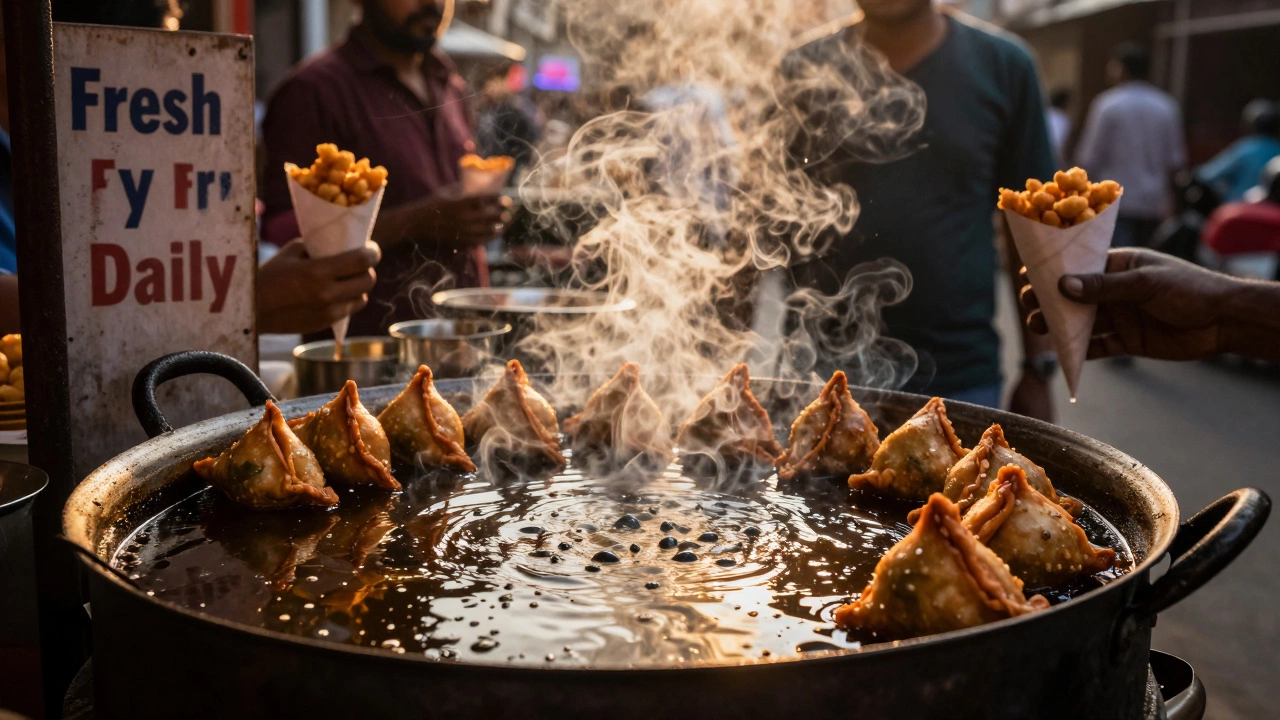
It’s not the samosa. It’s how it’s made.
Samosas get blamed a lot. So do jalebis, bhajis, and pakoras. But the real problem isn’t the ingredients-it’s the oil. Deep-fried foods cooked in reused oil, often at low temperatures, turn into a chemical mess. When oil is heated over and over, it breaks down into trans fats, acrylamide, and free radicals. These aren’t just "bad fats." They’re linked to heart disease, insulin resistance, and inflammation that can last for days after you eat them.
In India, street vendors and even home cooks reuse frying oil for days. A single pot might fry potatoes, then onions, then samosas, then pakoras-all without being filtered or changed. Studies from the Indian Council of Medical Research show that 78% of street food vendors in Delhi and Mumbai use oil past its safe reuse limit. That oil isn’t just old-it’s toxic.
What about sugar?
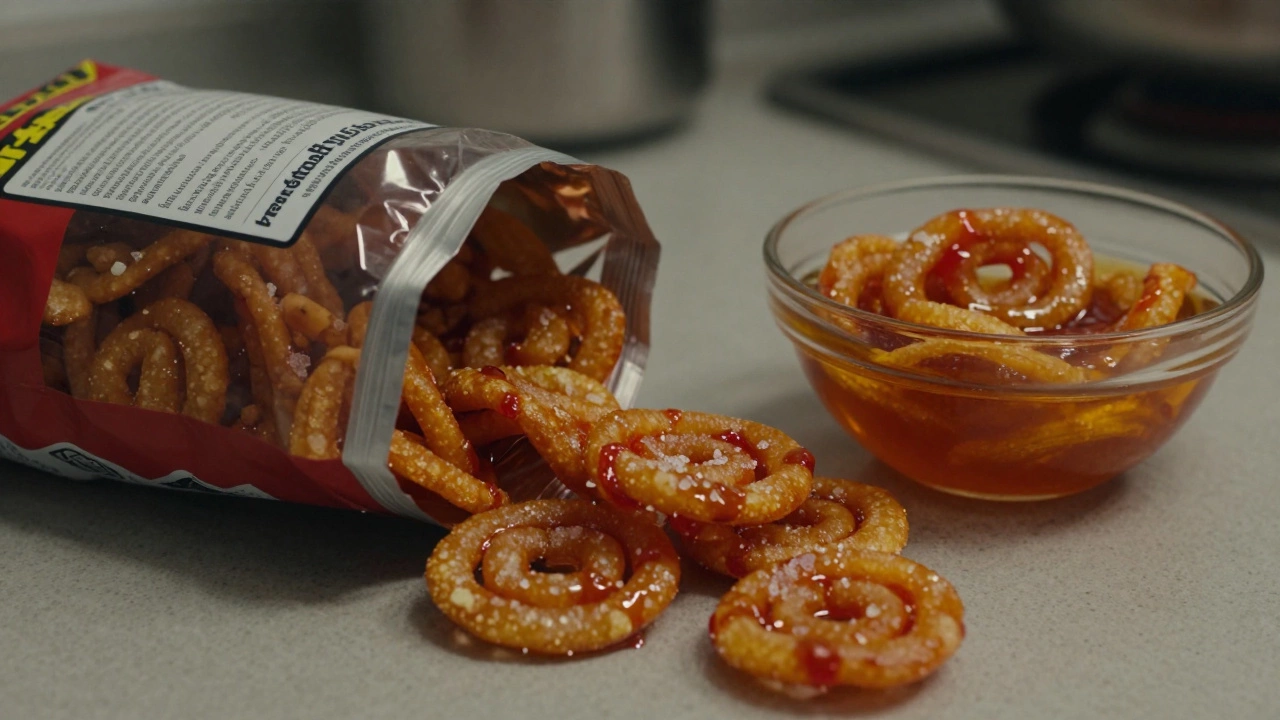
Then there’s the sugar. Jalebi, gulab jamun, rasgulla-these desserts aren’t just sweet. They’re soaked in syrup that’s often 80% sugar by weight. One small jalebi can have 22 grams of sugar. That’s nearly half the daily limit the World Health Organization recommends for an adult. And it’s not just desserts. Many packaged Indian snacks like chivda, murukku, and even some instant masala oats are loaded with hidden sugars and artificial flavors.
When you eat these foods, your blood sugar spikes fast. Your body releases insulin to handle it. Over time, this cycle leads to fat storage, especially around the belly. And here’s the kicker: people think they’re eating "traditional" food, so they don’t feel guilty. But tradition doesn’t make something healthy. It just makes it familiar.
Why masala chips beat burgers
Many people think fast food burgers or pizza are the worst. But look at a bag of masala chips. One serving (about 30 grams) can have 15 grams of fat, 300 mg of sodium, and 2 grams of trans fat. That’s more sodium than a McDonald’s cheeseburger. And unlike a burger, there’s no protein, no fiber, no vitamins-just salt, oil, and artificial coloring.
These chips are often fried in palm oil, which is cheap but high in saturated fat. And the masala spice mix? It’s usually packed with monosodium glutamate (MSG) and artificial colors like tartrazine (Yellow No. 5), which studies have linked to hyperactivity in children and allergic reactions in sensitive adults.
What’s really the worst? The combo.
The unhealthiest food isn’t one item. It’s the combo: a plate of fried samosas, a side of sweet chutney, a glass of sugary lassi, and a handful of masala chips. That’s a meal that delivers:
- High trans fats from reused oil
- Excess sugar from chutney and lassi
- High sodium from spices and chips
- No fiber, no protein, no nutrients
This isn’t a rare treat. For millions of people in India, this is a daily lunch or snack. And it’s not just in cities. Even in small towns, packaged snacks and fried street food have replaced home-cooked meals because they’re cheap, fast, and convenient.
Why this matters more than you think
India has the second-highest number of diabetics in the world-over 100 million people. And it’s not just because of genetics. A 2024 study in The Lancet found that over 60% of new Type 2 diabetes cases in urban India were linked to frequent consumption of fried snacks and sugary drinks, not rice or wheat.
It’s not that rice is bad. It’s that rice is eaten with vegetables and lentils. But when you swap dal-chawal for samosa-chutney-chips, your body gets a different kind of fuel-one that overloads your liver, confuses your insulin, and turns fat into your default storage system.
What can you do?
You don’t have to give up Indian snacks. You just need to change how they’re made.
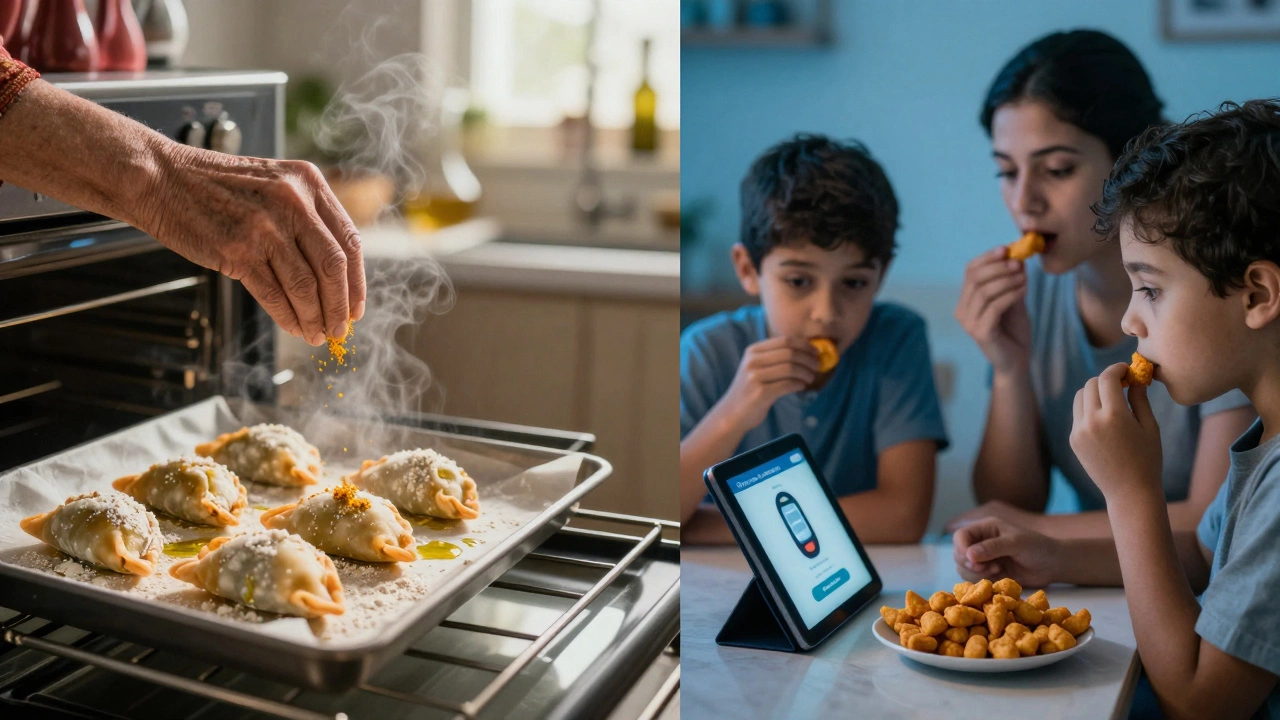
- Swap frying for baking. Make samosas in the oven with a light brush of oil. They crisp up just as well.
- Use fresh oil once. If you fry at home, use fresh oil and throw it away after one use. Don’t reuse it.
- Reduce sugar in chutneys. Make mint chutney with yogurt instead of sugar. Use dates or jaggery in small amounts instead of white sugar.
- Choose whole grains. Swap refined flour in snacks for whole wheat or besan (chickpea flour). It adds protein and fiber.
- Read labels. If a snack has more than 5 ingredients you can’t pronounce, leave it on the shelf.
There’s a reason your grandmother’s cooking felt better-she used fresh ingredients, cooked in small batches, and didn’t rely on chemicals to make food taste good. You can bring that back without losing flavor.
It’s not about perfection. It’s about balance.
You don’t need to ban samosas forever. But if you’re eating fried snacks three times a week, that’s 156 meals a year loaded with bad fats and sugar. That’s not a treat. That’s a habit.
Start by cutting one fried snack a week. Replace it with roasted chana, air-popped makhanas, or a fruit salad with cardamom. Small changes add up. Your body will thank you-not with dramatic weight loss, but with more energy, clearer skin, and fewer cravings.
The unhealthiest food in the world isn’t a single dish. It’s the routine. And routines can be changed.
Is jalebi really that bad for you?
Yes, jalebi is one of the worst offenders. A single small jalebi contains about 22 grams of sugar and is soaked in syrup that’s mostly glucose and fructose. It’s fried in reused oil, which adds trans fats. Together, this combo spikes blood sugar fast and doesn’t fill you up, leading to more cravings. It’s not the sugar alone-it’s the sugar + bad oil + zero nutrients.
Are packaged Indian snacks healthier than street food?
Not usually. Packaged snacks like kurkure, namkeen, or masala chips often have longer ingredient lists with preservatives, artificial colors, and hydrogenated oils. Street food might use reused oil, but packaged snacks are designed to last on shelves-and that means more chemicals. Neither is truly healthy, but packaged snacks trick you into thinking they’re safer.
Can I still eat Indian food if I want to be healthy?
Absolutely. Indian cuisine is full of healthy staples: lentils, chickpeas, spinach, turmeric, yogurt, and whole grains. The problem isn’t Indian food-it’s the fried, sugary, processed versions that have become common. Stick to dal, sabzi, roti, and curd. Skip the fried snacks and sweet drinks. You’ll still taste the flavors you love, without the damage.
What’s a healthy alternative to samosas?
Try baked samosas using whole wheat dough and fill them with spiced lentils or vegetables. Brush them lightly with olive oil and bake at 200°C for 20 minutes. Or make chana chaat: boiled chickpeas with chopped onions, tomatoes, lemon, and chaat masala. It’s crunchy, spicy, and packed with protein and fiber.
Why do people keep eating these foods if they’re unhealthy?
Because they’re cheap, fast, and taste good. A samosa costs less than a banana in many places. And the combination of fat, salt, and sugar triggers dopamine in the brain-making it addictive. It’s not about willpower. It’s about access, cost, and marketing. The solution isn’t guilt-it’s better, affordable options.
If you want to eat healthier without giving up flavor, start with one swap this week. Bake instead of fry. Use less sugar. Choose whole ingredients. Your body doesn’t need perfection-it just needs better choices, one meal at a time.