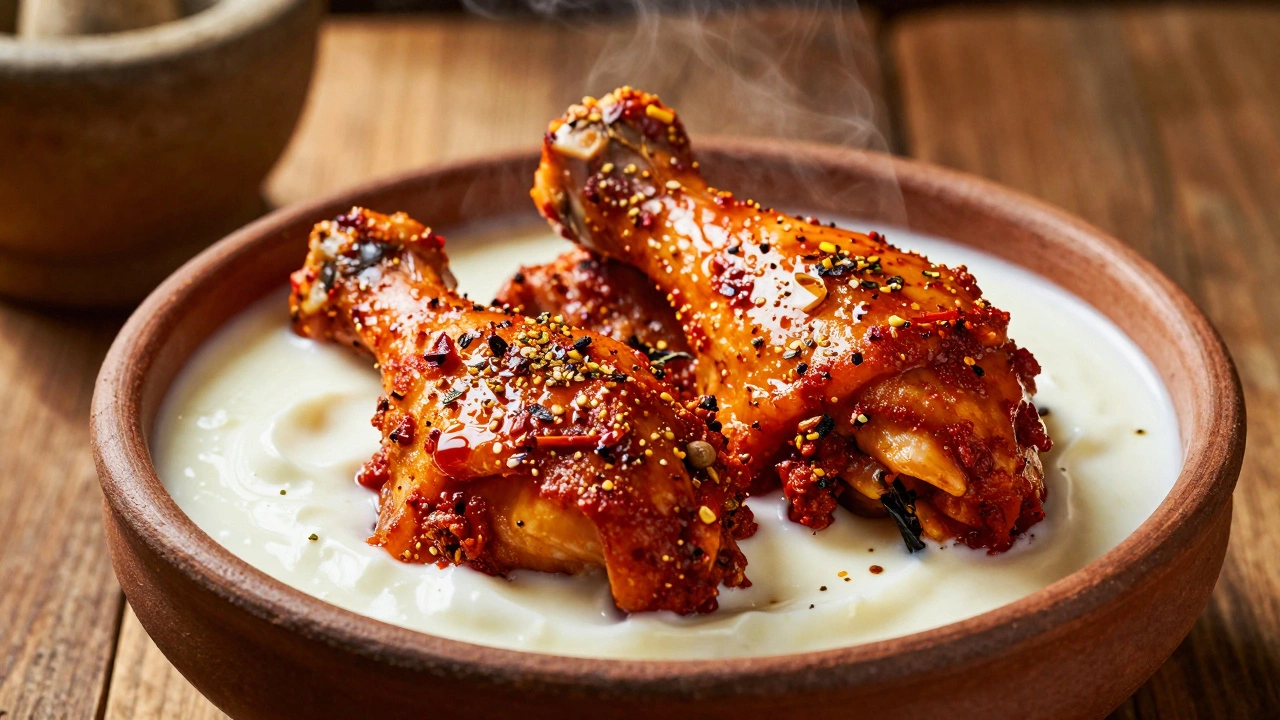
Tandoori Marinade Calculator
Customize Your Marinade
Enter your chicken weight to get exact quantities for authentic tandoori marinade
Your Tandoori Marinade Quantities
- Yogurt:
- Kashmiri chili powder:
- Ground cumin:
- Ground coriander:
- Ground turmeric:
- Garam masala:
- Garlic paste:
- Ginger paste:
- Black salt:
- Lemon juice:
- Neutral oil:
- Sugar:
Note: For best results, marinate for 4-12 hours. Use full-fat yogurt and fresh ginger/garlic paste.
Ever bitten into a juicy piece of tandoori chicken with that bold red crust and smoky flavor, and wondered what’s really inside the marinade? It’s not just red food coloring and paprika. Real tandoori marinade is a balanced blend of yogurt, spices, and acid - each part doing its job to tenderize, flavor, and color the meat. If you’ve tried making it at home and ended up with dry, bland chicken, you probably missed one of the key players in this recipe.
The Base: Yogurt, Not Water
The foundation of any good tandoori marinade is plain, full-fat yogurt. Not Greek yogurt. Not low-fat. Not sour cream. Regular Indian-style yogurt - thick, tangy, and slightly sour - is what you need. It’s not there just to add moisture. Yogurt contains lactic acid and enzymes that slowly break down muscle fibers in the chicken, making it tender without turning it mushy. The fat in full-fat yogurt also helps carry the spices into the meat and keeps it juicy during high-heat cooking.
Most recipes call for about 1 cup of yogurt for 1.5 pounds of chicken. Too little, and the spices won’t stick or penetrate. Too much, and you dilute the flavor. Let the chicken sit in it for at least 4 hours, but overnight is best. If you’re short on time, poke the chicken with a fork a few times before adding the marinade - it helps the yogurt seep in faster.
The Spice Blend: More Than Just Red
The signature red color of tandoori chicken comes from Kashmiri red chili powder, not artificial dye. It’s mild in heat but rich in color. If you can’t find it, use half paprika and half cayenne. But don’t skip the Kashmiri powder - it’s what gives the dish its true hue and depth.
Here’s what goes into a classic tandoori spice mix:
- Kashmiri red chili powder - 1.5 tablespoons (for color and mild heat)
- Ground cumin - 1 teaspoon (earthy warmth)
- Ground coriander - 1 teaspoon (citrusy, floral)
- Ground turmeric - 1/2 teaspoon (adds golden undertones and earthiness)
- Garam masala - 1 teaspoon (the finisher - adds complexity)
- Garlic paste - 1 tablespoon (not powder. Fresh is non-negotiable)
- Ginger paste - 1 tablespoon (same as garlic - fresh, not dried)
- Black salt (kala namak) - 1/4 teaspoon (optional, but it gives that authentic sulfurous tang)
Some cooks add a pinch of ground cloves or cardamom, but that’s for advanced versions. Stick to the core list above if you’re new to this. Too many spices turn it into a muddy mess.
The Acid: Lemon Juice or Vinegar?
Acid helps tenderize and brighten the flavors. Most recipes use fresh lemon juice - about 1 to 2 tablespoons. It’s clean, sharp, and natural. Some use white vinegar, but that can leave a harsh aftertaste. Apple cider vinegar is a decent substitute if you’re out of lemons, but lemon is still best.
Don’t add acid too early if you’re marinating for more than 12 hours. The acid can start to break down the chicken too much, making it stringy. Add it in the last 30 minutes before cooking if you’re marinating overnight.

The Secret: Oil and Sugar
Here’s something most home cooks skip: a tablespoon of neutral oil - like canola or grapeseed. It helps the spices coat the chicken evenly and prevents sticking on the grill or under the broiler. It also helps create that glossy, caramelized crust.
And yes - a teaspoon of sugar. Not to make it sweet. To help with browning. The Maillard reaction needs a little sugar to kick in at high heat. Honey works too, but granulated white sugar is more neutral and gives better control.
How to Use It: Marinating and Cooking
Use bone-in chicken thighs or drumsticks. They stay juicier than breast meat. Cut deep slits into the meat so the marinade gets inside. Mix all ingredients in a bowl, then rub the paste all over the chicken. Cover and refrigerate.
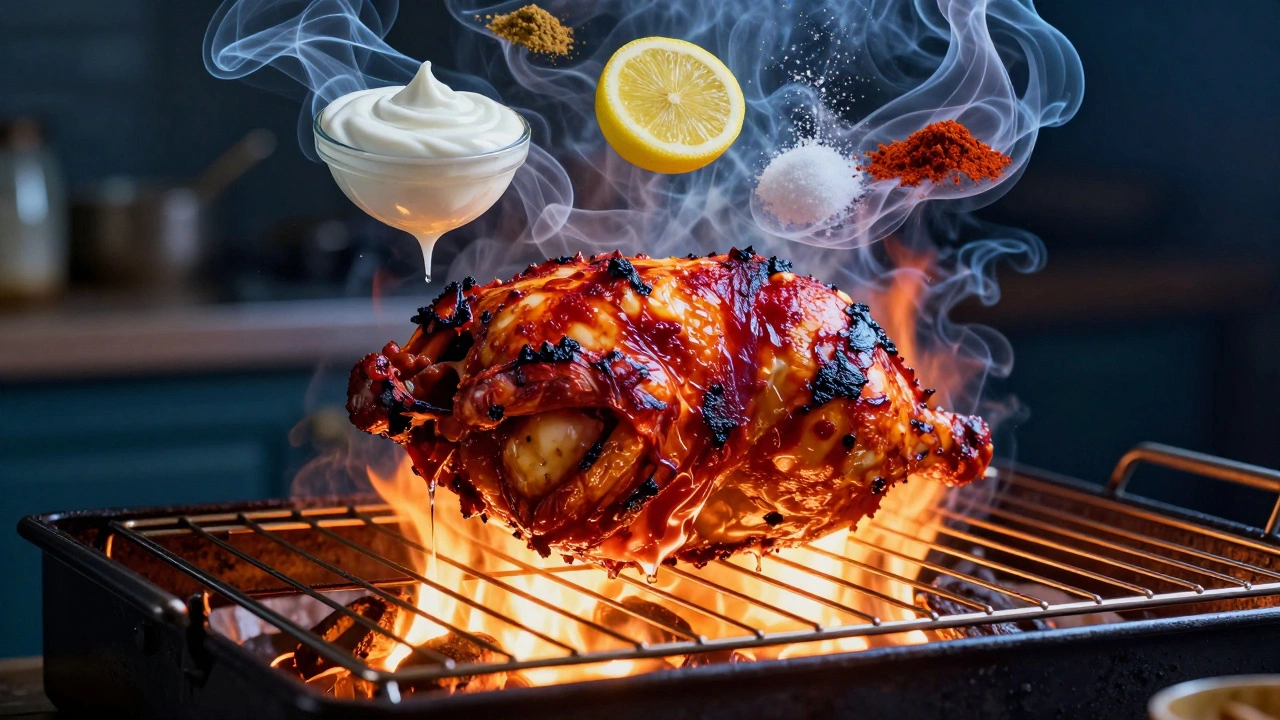
For cooking, you need high, direct heat. A grill is ideal. If you don’t have one, use your oven’s broiler. Place the chicken on a wire rack over a baking sheet so fat drips away. Broil on high for 10 minutes per side, until the internal temperature hits 165°F. Don’t baste with leftover marinade - it’s raw and unsafe. Brush with melted butter or ghee in the last 2 minutes for extra shine and flavor.
Common Mistakes to Avoid
- Using low-fat yogurt - it won’t tenderize properly and will make the chicken dry
- Substituting dried ginger or garlic powder - fresh paste is the only way to get real flavor
- Marinating for less than 2 hours - the spices won’t penetrate
- Overcooking - tandoori chicken dries out fast. Pull it at 165°F, not 175°F
- Using food coloring - it’s unnecessary and tastes artificial
What to Serve With It
Tandoori chicken pairs best with cooling sides. Mint-cilantro chutney is classic. Plain yogurt with a pinch of salt and cumin works too. Serve with basmati rice, naan, or even a simple cucumber-tomato salad. The marinade’s boldness needs something calm to balance it.
Leftovers? Shred the chicken and toss it into a wrap with lettuce, onion, and a squeeze of lemon. Or add it to a grain bowl with quinoa, roasted veggies, and a drizzle of tahini.
Can You Make It Without a Tandoor?
Yes. The word ‘tandoori’ refers to the spice blend and cooking style, not the oven. Traditional tandoors are clay ovens heated with charcoal, reaching 700°F. But your oven’s broiler, a grill, or even a cast-iron skillet on high heat can mimic the effect. The key is high heat and dry cooking. If you’re using a regular oven, turn it to its highest setting and place the chicken on the top rack. Use a fan if you have convection - it helps crisp the skin.
Can I use chicken breast for tandoori marinade?
You can, but it’s not ideal. Chicken breast has less fat and dries out quickly under high heat. If you use it, marinate for at least 6 hours and cook it gently - maybe under a foil tent for the first 8 minutes. Thighs or drumsticks are far more forgiving and flavorful.
How long can I keep tandoori marinade in the fridge?
Unused marinade (before it touches raw chicken) can be stored in an airtight container for up to 5 days. Once it’s been in contact with raw meat, discard it. Never reuse it as a sauce unless you boil it for at least 5 minutes to kill bacteria.
Is tandoori marinade spicy?
It’s flavorful, not necessarily hot. Kashmiri chili powder gives color with minimal heat. If you want it spicier, add a pinch of cayenne or a finely chopped green chili to the paste. Most people find the heat level just right - bold enough to wake up your taste buds, not so hot it overwhelms.
Can I make this marinade vegan?
Yes. Swap yogurt for thick coconut yogurt or cashew yogurt. Use maple syrup instead of sugar, and make sure your garam masala doesn’t contain any animal products (some brands include milk powder). Marinate tofu, cauliflower, or jackfruit instead of chicken. The spice blend works just as well.
Why does my tandoori chicken taste bland?
Most likely, you used dried ginger or garlic powder, low-fat yogurt, or didn’t marinate long enough. Fresh pastes and full-fat yogurt are non-negotiable. Also, check your chili powder - if it’s old or not Kashmiri, you’ll miss the color and depth. Taste your spices before mixing - if they smell flat, replace them.