Snack Fullness Calculator
How This Works
Your snack's ability to keep you full depends on three key nutrients: protein, fiber, and healthy fats. The more of each you have, the longer your snack will satisfy your hunger.
Build Your Snack
Your Snack Fullness Score
How Your Snack Compares
Ever eaten a plate of chips or a sugary snack and felt hungry again an hour later? You’re not alone. Most quick snacks spike your blood sugar, then crash-leaving you craving more. But what if you could snack smart and stay full for hours? The answer isn’t about eating less-it’s about eating the right things. In Indian kitchens, generations have known which foods naturally keep hunger at bay. These aren’t fancy superfoods-they’re simple, everyday snacks packed with protein, fiber, and healthy fats that work with your body, not against it.
Why Some Snacks Last Longer Than Others
Your body doesn’t just care about calories-it cares about how food is broken down. Simple carbs like white bread, biscuits, or jalebi digest fast. They turn into sugar quickly, which gives you a short burst of energy, then a crash. But foods high in protein, fiber, and healthy fats take longer to digest. They slow down how fast your stomach empties. That means your blood sugar stays steady, your hunger hormones stay quiet, and you don’t reach for the next snack.
Studies show that protein triggers the release of peptide YY and GLP-1-hormones that signal fullness to your brain. Fiber adds bulk and slows digestion. Healthy fats like those in nuts or ghee take even longer to process. Combine all three, and you’ve got a snack that lasts.
Top Indian Snacks That Keep You Full
Here are the top five Indian snacks that actually work-not because they’re trendy, but because they’re nutritionally solid.
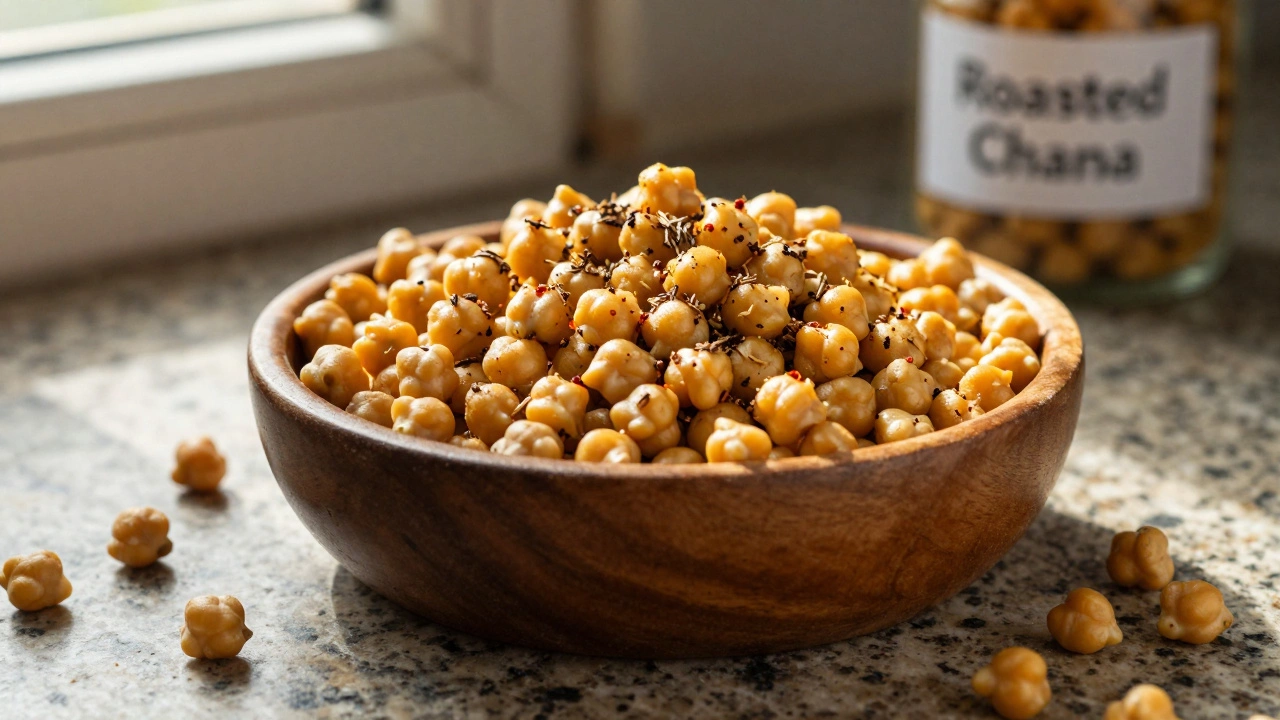
1. Roasted Chana (Roasted Chickpeas)
One cup of roasted chana has 15 grams of protein and 10 grams of fiber. That’s more than a boiled egg and a slice of whole wheat bread combined. The skin of the chickpea is where most of the fiber lives, so don’t peel them. Roast them with a little cumin, black salt, and chili for flavor. Keep a jar in your pantry. When hunger hits, grab a handful. They’re crunchy, satisfying, and won’t spike your blood sugar.
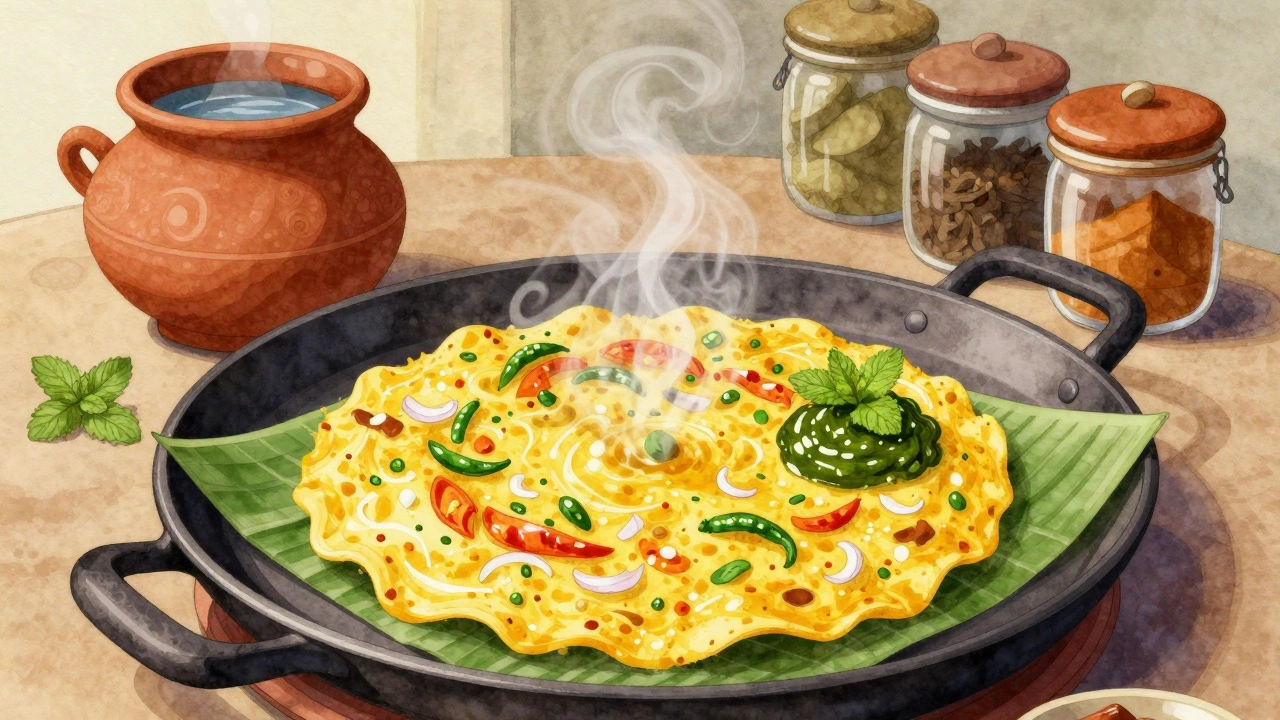
2. Moong Dal Cheela (Mung Bean Pancakes)
Unlike flour-based pancakes, moong dal cheela is made from ground soaked mung beans. No wheat, no rice flour-just protein-rich legumes blended into a batter and cooked on a griddle. One cheela has about 8 grams of protein and 5 grams of fiber. Add finely chopped onions, ginger, and green chilies for extra flavor and digestion support. Eat them plain or with mint chutney. They’re filling enough to replace breakfast or lunch on busy days.
3. Paneer Bhurji with Whole Wheat Roti
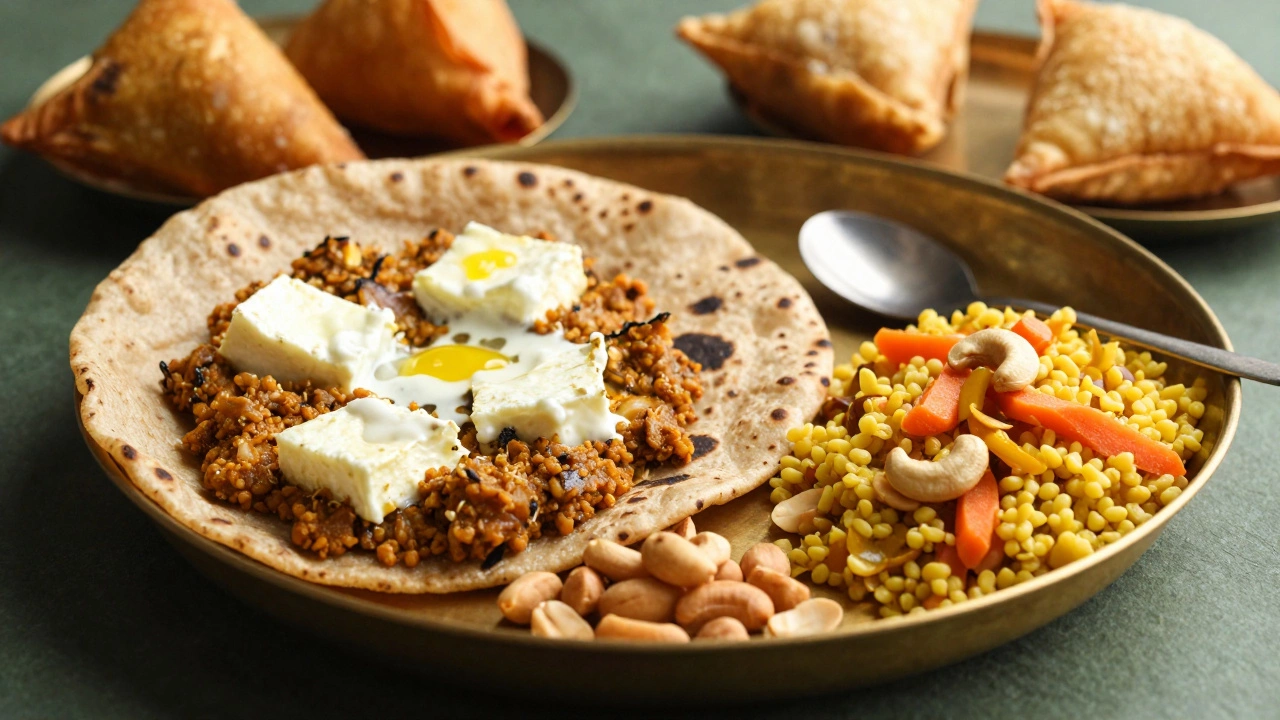
Paneer is India’s answer to cottage cheese-high in casein protein, which digests slowly. Bhurji means scrambled, and when you cook paneer with turmeric, onions, tomatoes, and a touch of ghee, you get a savory, protein-packed dish. Pair it with one whole wheat roti, and you’ve got a snack that lasts 4-5 hours. The roti adds fiber, and the ghee adds slow-burning fat. It’s not just filling-it keeps your energy steady through afternoon meetings or errands.
4. Masala Peanuts
Peanuts aren’t nuts-they’re legumes, like chickpeas. That means they’re loaded with protein and fiber. Dry-roast them with a sprinkle of salt, cumin, and a pinch of red chili powder. A small bowl (30 grams) gives you 7 grams of protein and 3 grams of fiber. The fat content is mostly healthy monounsaturated fat, which helps with satiety. Avoid sugary or oil-fried versions. Plain roasted ones are the real deal.
5. Suji Upma with Vegetables and Nuts
Suji (semolina) gets a bad rap, but when made right, it’s a great base for a filling snack. Use coarse suji, not fine. Toast it lightly in ghee, then add chopped carrots, peas, beans, and a handful of roasted cashews or almonds. The vegetables add fiber and water content, the nuts add fat and protein, and the suji gives slow-release carbs. A bowl of this keeps you full longer than a bowl of cereal with milk.
What to Avoid
Not all Indian snacks are created equal. Some look healthy but are just sugar traps in disguise.
- Sev puri and papdi chaat are loaded with fried bases, sugary tamarind chutney, and refined flour. They’re tasty, but they’ll leave you hungry within an hour.
- Samosas are deep-fried and stuffed with spiced potatoes-mostly carbs and oil. One samosa can have 250+ calories with little protein or fiber.
- Instant masala oats often contain added sugar and flavoring. Stick to plain oats and cook them yourself with milk, nuts, and fruit.
Ask yourself: Does this snack have protein? Fiber? Healthy fat? If the answer is no to two of those, it’s not going to keep you full.
How to Build Your Own Fullness-Boosting Snack
You don’t need to eat only these five snacks. You can mix and match. The rule is simple: always combine at least two of these three elements:
- Protein: Paneer, chana, moong dal, peanuts, yogurt, lentils
- Fiber: Whole grains, vegetables, legumes, nuts, seeds
- Healthy fat: Ghee, nuts, seeds, coconut, avocado (if available)
Example combo: A handful of roasted chana (protein + fiber) + 2 almonds (fat) + a small cup of plain yogurt (protein). That’s a snack that lasts.
Keep a small container in your bag or desk drawer with pre-portioned roasted chana and nuts. No prep needed. No mess. Just grab and go.
Real-Life Results
A friend of mine, a teacher in Pune, used to snack on biscuits and tea every afternoon. She’d get headaches and cravings by 4 p.m. She switched to roasted chana and paneer bhurji on whole wheat roti. Within two weeks, her afternoon crashes disappeared. She stopped buying snacks. She saved money. And she didn’t feel guilty.
Another client, a nurse working night shifts in Delhi, started carrying moong dal cheelas wrapped in cloth. She ate one before her shift and didn’t need to buy food from the canteen. She slept better, had more energy, and lost 4 kilos without trying.
This isn’t magic. It’s biology.
Why This Works in Indian Cuisine
Traditional Indian food wasn’t designed for weight loss. It was designed for survival. Spices like cumin, black pepper, and ginger aid digestion. Legumes and lentils were staples because they stored well and kept people full through long days of work. Ghee was used because it’s calorie-dense and slow-burning. These weren’t trends-they were smart adaptations to the climate, the labor, and the food available.
Today, we’ve lost touch with that wisdom. We think ‘healthy’ means low-fat or sugar-free. But true nourishment is about balance, not restriction. The best Indian snacks aren’t the ones with the least calories-they’re the ones that give you the most staying power.
Quick Snack Ideas for Busy Days
Here’s a cheat sheet for quick, fullness-boosting snacks you can make in under 5 minutes:
- Handful of roasted chana + 1 boiled egg
- Small bowl of plain curd with flaxseeds and a few raisins
- 2 whole wheat rotis with a spoon of paneer bhurji
- Handful of masala peanuts + a cup of green tea
- Leftover dal with a spoon of ghee and a slice of onion
Keep these in mind next time you’re reaching for something quick. You don’t need to cook a full meal to feel satisfied.
Final Thought: Snacking Is Not the Problem
Snacking isn’t bad. It’s what you snack on that matters. You don’t need to give up your favorite Indian flavors. You just need to choose the ones that nourish, not just please. The goal isn’t to eat less-it’s to eat smarter. When your snacks keep you full, you stop fighting hunger. You stop feeling guilty. You stop reaching for the wrong thing.
Try one of these snacks for a week. Notice how your energy changes. Notice when hunger comes-and when it doesn’t. You might be surprised.
What Indian snack has the most protein?
Roasted chana (chickpeas) and paneer-based dishes like paneer bhurji have the highest protein content among common Indian snacks. One cup of roasted chana provides about 15 grams of protein, while 100 grams of paneer gives you around 18 grams. Both are also rich in fiber and healthy fats, making them ideal for long-lasting fullness.
Are roasted peanuts good for staying full?
Yes, roasted peanuts are excellent for staying full. They’re high in protein (7g per 30g), fiber (3g), and healthy fats. Avoid sugar-coated or oil-fried versions. Stick to dry-roasted peanuts with just salt and spices. They digest slowly and help stabilize blood sugar, reducing cravings later.
Can I eat Indian snacks for breakfast instead of bread or cereal?
Absolutely. Moong dal cheela, suji upma with nuts, or paneer bhurji with roti are far better breakfast options than white bread or sugary cereal. They provide protein, fiber, and healthy fats that keep your energy steady. You won’t feel hungry by 10 a.m., and you’ll avoid the mid-morning crash.
Why does ghee help you feel full longer?
Ghee is mostly fat-specifically saturated and monounsaturated fats-which take longer to digest than carbs or protein. This slows down stomach emptying and triggers fullness hormones. A small spoon (5-10g) added to dal, roti, or upma makes the meal more satisfying without adding bulk. It’s a traditional trick that science now supports.
Is yogurt a good snack for fullness?
Plain, unsweetened yogurt is a great snack for fullness. It’s rich in casein protein, which digests slowly. Add a tablespoon of chia seeds or flaxseeds for fiber, and a few nuts for fat. Avoid flavored yogurts-they’re loaded with sugar. A small bowl of plain yogurt with seeds and a sprinkle of roasted cumin is a powerful, traditional combo.
Next Steps
Start small. Pick one snack from the list and replace your usual afternoon bite with it for three days. Notice how you feel. Do you have more energy? Fewer cravings? Better focus? If yes, keep it. If not, try another. There’s no one-size-fits-all. The goal is to find what works for your body-not what’s popular online.
Keep a snack journal for a week. Write down what you ate, when you ate it, and how long you stayed full. You’ll start seeing patterns. And soon, you won’t need to guess what’s good-you’ll just know.