Traditional Chutney: Authentic Indian Flavors and How to Use Them
When you think of traditional chutney, a vibrant, hand-ground condiment made from fresh herbs, fruits, or vegetables, often used to enhance the flavor of Indian meals. Also known as chatni, it’s not just a side—it’s the flavor anchor that ties together everything from crispy dosas to spicy biryanis. Unlike store-bought sauces, real traditional chutney is made fresh daily in Indian homes, using ingredients like cilantro, tamarind, coconut, or green chilies, and ground with a stone mortar and pestle. It’s sharp, tangy, sweet, or spicy—sometimes all at once—and it’s designed to wake up your taste buds, not just sit on the plate.
Traditional chutney works because it balances flavors in a way no spice blend can. A spoonful of mint chutney cuts through the richness of samosas. Tamarind chutney softens the heat of spicy snacks. Coconut chutney adds creaminess to idlis without dairy. These aren’t random pairings—they’re centuries-old food science. The acidity in tamarind or lemon helps break down starches, making meals easier to digest. The raw garlic and ginger in many chutneys act as natural gut boosters. And the fresh herbs? They’re packed with antioxidants that counteract the oils and spices in fried or spiced foods. This is why Indian meals almost always include chutney—it’s not decoration, it’s medicine.
There’s also a cultural layer. In South India, coconut chutney is as essential as rice. In the North, mint and coriander chutney is the soul of chaat. In Maharashtra, peanut chutney turns simple bhakri into a meal. Each region has its own version, passed down through generations. You won’t find a single recipe for traditional chutney because it’s not about perfection—it’s about adaptability. Use what’s fresh. Adjust for heat. Skip the sugar if you’re watching it. That’s the real Indian way.
What you’ll find in the posts below are real, practical guides on how to make, use, and store these condiments. Learn how to revive dried-out chutney, which ones pair best with specific dishes, and why some recipes call for roasted spices while others use raw. You’ll see how chutney fits into everything from weight-loss meals to dairy-free diets. No fluff. No fancy terms. Just the kind of info that helps you cook better, eat smarter, and taste more like you’re sitting at a kitchen table in Kerala or Punjab.
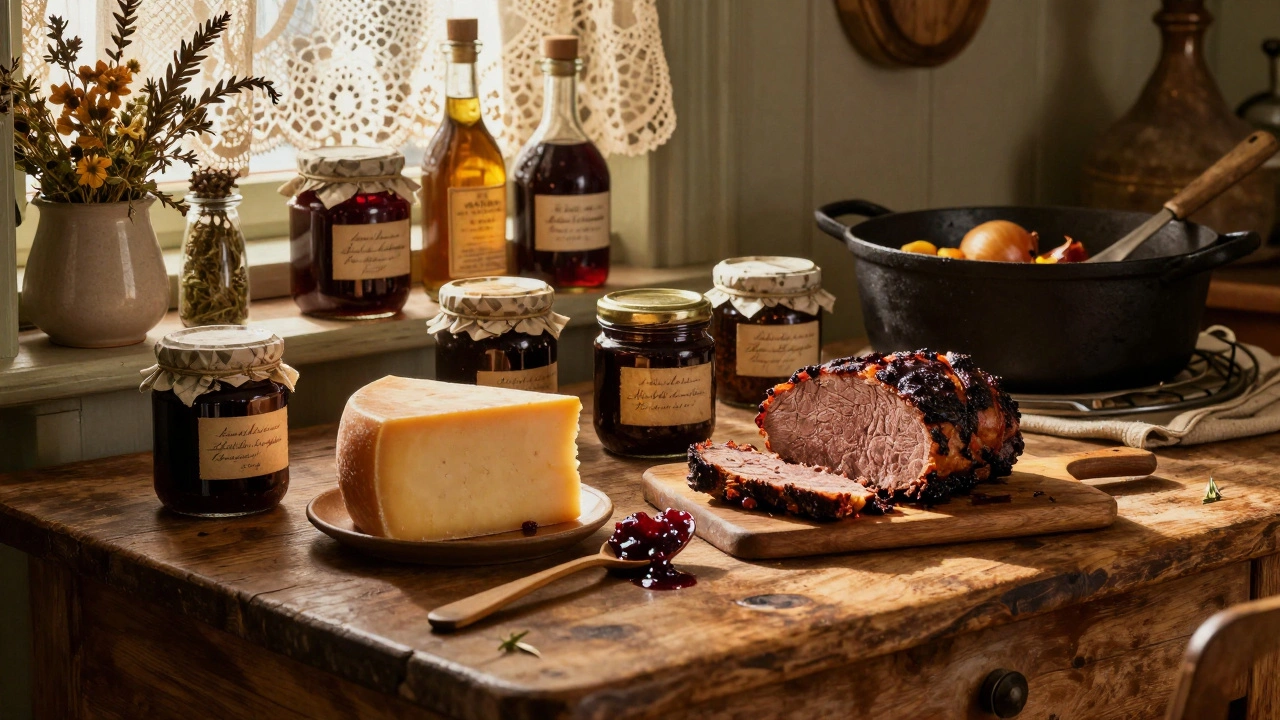
What Is English Chutney? The Surprising History and How It’s Different from Indian Chutney
English chutney is a sweet, spiced preserve made from fruit and vinegar, distinct from Indian chutney. Learn its history, ingredients, and how to use it with cheese, meats, and sandwiches.
View More