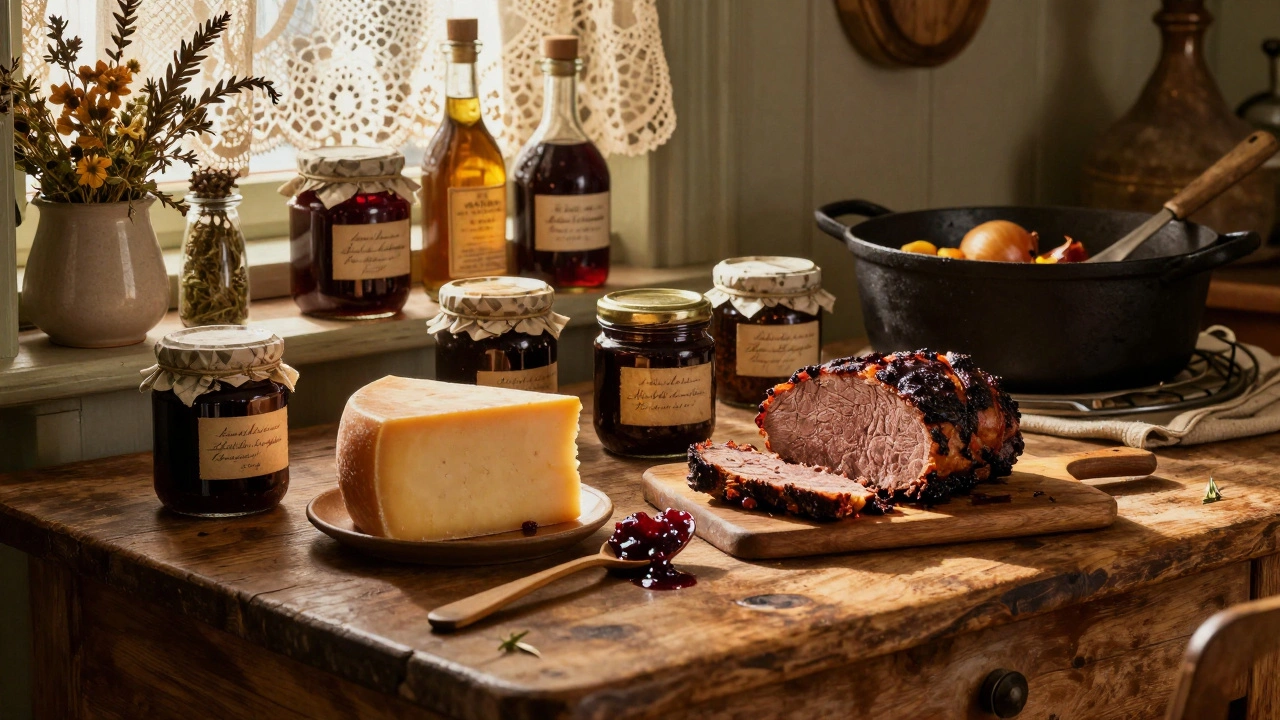
When you hear the word chutney, you probably think of spicy, tangy Indian condiments made with mango, tamarind, or cilantro. But there’s another kind of chutney that’s been sitting on British dinner tables for over 200 years - English chutney. It’s not just Indian chutney with a British accent. It’s a completely different thing.
What Exactly Is English Chutney?
English chutney is a sweet, sour, and slightly spiced preserve made from chopped fruits and vegetables slow-cooked with vinegar, sugar, and spices like cinnamon, cloves, and mustard seeds. Think of it as a cross between jam and pickles. It’s thick, sticky, and packed with flavor - not meant to be eaten by the spoonful, but dolloped onto cheese, cold meats, or roast beef.
Unlike Indian chutneys, which are often fresh, fermented, or served raw, English chutney is cooked for hours until it turns dark and syrupy. It’s shelf-stable, meant to last through winter, and was originally developed as a way to preserve seasonal produce before refrigeration. You’ll find jars of it in British supermarkets next to pickled onions and Branston Pickle.
How English Chutney Got Its Start
English chutney didn’t come from England. It came from India - but not the way you think.
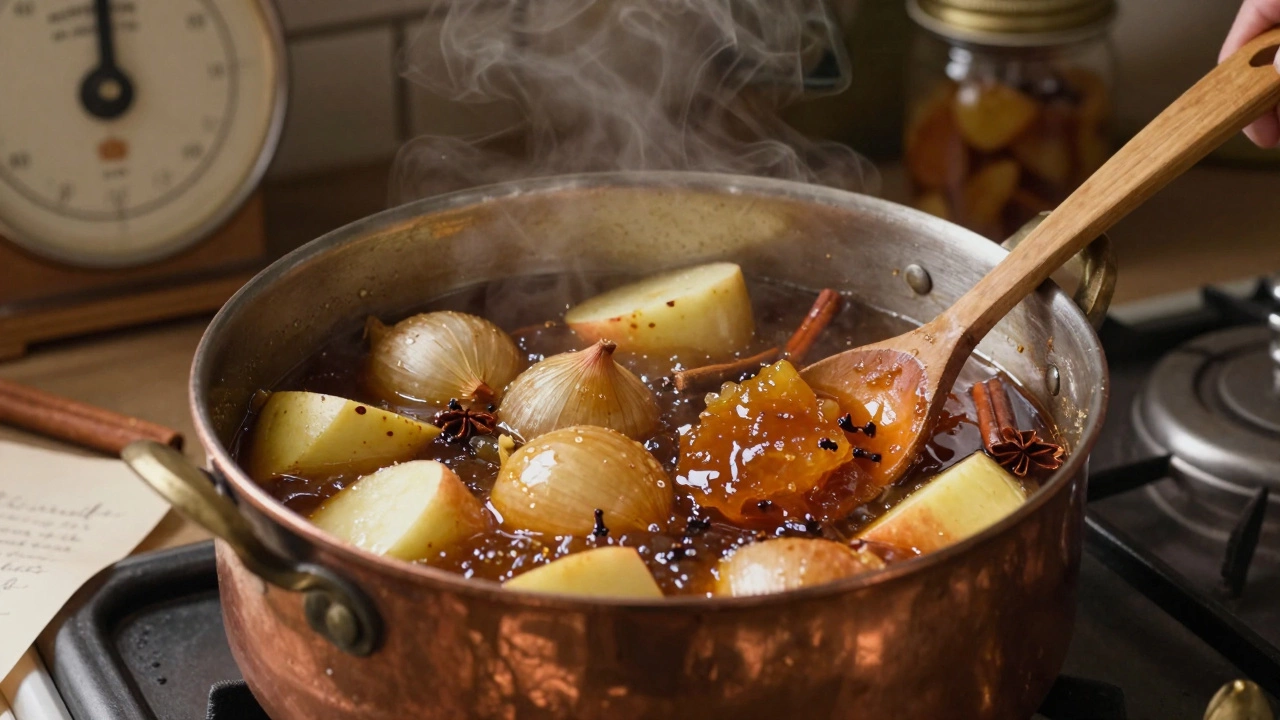
During British colonial rule in India, soldiers and officials picked up the local practice of making chutneys from fresh herbs, fruits, and spices. They brought the idea back home, but they didn’t like the heat or the texture. So they adapted it. They added more sugar, used slower cooking methods, and swapped out fresh ingredients for long-lasting ones like apples, pears, plums, onions, and even cauliflower.
By the early 1800s, English chutney was being mass-produced. Companies like Crosse & Blackwell started selling it in jars. It became a staple in Victorian households - a symbol of refinement and empire. Even Queen Victoria had her own recipe.
Common Ingredients in English Chutney
There’s no single recipe, but most English chutneys follow a basic pattern:
- Fruits: apples, pears, plums, figs, or quince
- Vegetables: onions, tomatoes, cauliflower, or celery
- Sweetener: brown sugar or treacle (molasses)
- Acid: malt vinegar or cider vinegar
- Spices: cinnamon sticks, whole cloves, mustard seeds, ground ginger, nutmeg, black pepper
Some versions include raisins or dried apricots for extra sweetness. Others add a splash of port wine or brandy for depth. The spices aren’t meant to be fiery - they’re warm, comforting, and aromatic.
One of the most popular types is apple chutney. It’s made with tart cooking apples, onions, brown sugar, and vinegar. It’s often served with sharp cheddar cheese or cold ham. Another favorite is plum chutney, which has a deep, jammy flavor that pairs well with turkey or roast pork.
English Chutney vs Indian Chutney: The Big Differences
People often confuse the two, but they’re worlds apart.
| Feature | English Chutney | Indian Chutney |
|---|---|---|
| Texture | Thick, jam-like, cooked down for hours | Thin, fresh, sometimes chunky or smooth |
| Flavor | Sweet, sour, spiced with warm spices | Spicy, tangy, herbal, often fresh |
| Base Ingredients | Apples, onions, plums, vinegar, sugar | Mango, tamarind, cilantro, mint, green chilies |
| Preservation | Long shelf life - lasts years unopened | Short shelf life - best eaten within days |
| When It’s Used | With cheese, cold meats, pies, sandwiches | With dosas, samosas, biryanis, as a side |
| Spice Level | Mild - heat is rare | Often hot - fresh chilies are common |
Indian chutney is alive - it’s made fresh, eaten quickly, and changes flavor over hours. English chutney is a preserved artifact - meant to be opened months or even years after it’s made. One is a condiment; the other is a pantry staple.
How to Use English Chutney Today
If you’ve only ever had chutney with your samosa, you might be surprised at how many ways English chutney fits into modern meals.
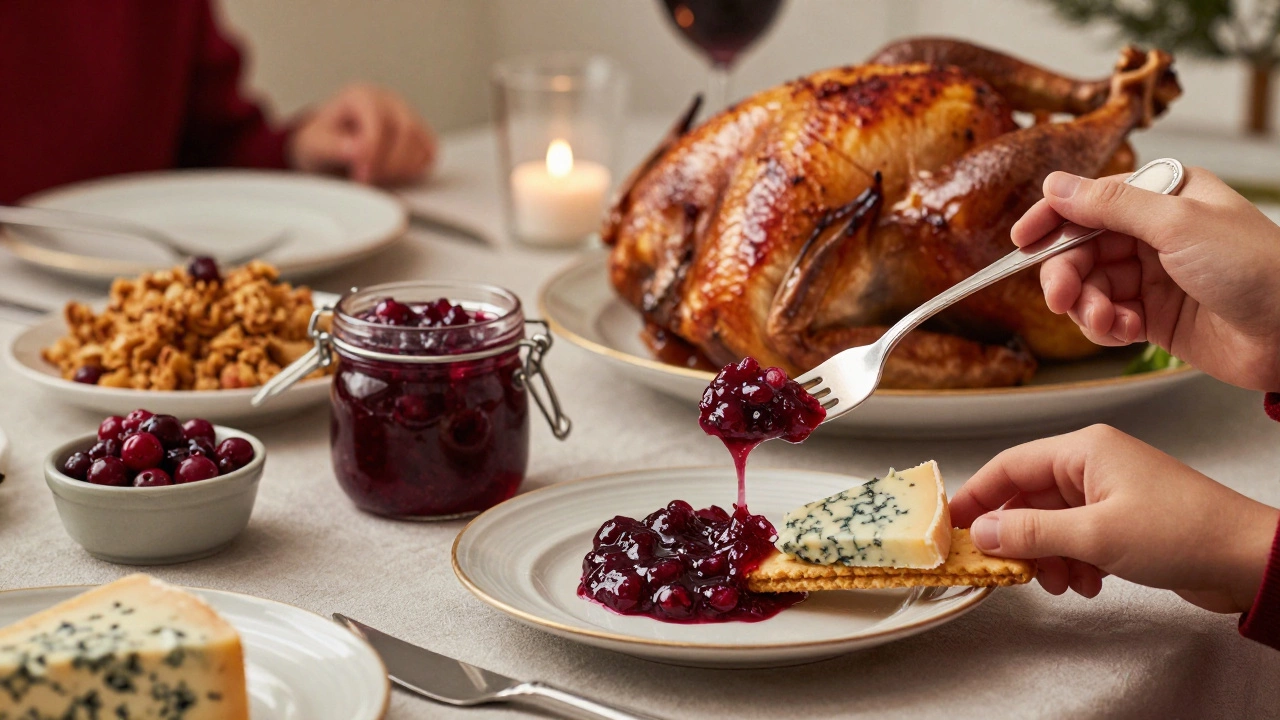
- On cheese boards: Try it with aged cheddar, brie, or blue cheese. The sweetness cuts through the fat.
- With roast meats: Spoon it over roast beef, pork loin, or duck. It’s a classic British pairing.
- In sandwiches: Spread it on turkey or ham sandwiches instead of mustard or mayo.
- With baked potatoes: A dollop adds flavor without the sour cream.
- As a glaze: Mix it with a little honey and brush it on roasted vegetables or grilled sausages.
- With crackers: Serve it alongside crackers and nuts for an easy appetizer.
It’s also popular in holiday meals. In the UK, it’s a common side at Christmas dinner - alongside cranberry sauce and stuffing. Some families even make their own every autumn using leftover fruit from the garden.
Can You Make English Chutney at Home?
Yes - and it’s easier than you think. You don’t need fancy equipment. Just a big pot, a wooden spoon, and some patience.
Start with 1 kg of chopped apples, 500g of onions, 250g of brown sugar, 300ml of malt vinegar, and a mix of spices: 1 cinnamon stick, 10 whole cloves, 1 tsp mustard seeds, and a pinch of ground ginger. Cook everything together on low heat for 2-3 hours, stirring occasionally, until it thickens and turns dark. Pour it into sterilized jars and seal while hot.
Let it sit for at least a month before opening. The flavors deepen over time. The longer it ages, the better it tastes.
Many British families have secret recipes passed down through generations. Some use plums instead of apples. Others add a splash of Worcestershire sauce or a dash of soy sauce for umami. There’s no right way - only your way.
Where to Buy English Chutney
If you’re outside the UK, you might find it in specialty food stores or online. Look for brands like:
- Crosse & Blackwell
- Sharwood’s
- Rowse
- Waitrose
- Fortnum & Mason
Some American grocery chains like Whole Foods carry it in their international aisle. Online retailers like Amazon or Etsy also sell small-batch, artisanal versions made with organic ingredients and unique flavor combinations - like fig and port, or pear and cardamom.
But if you want the real thing, try making it yourself. It’s cheaper, more flavorful, and connects you to a tradition that’s older than most modern condiments.
Why English Chutney Matters
It’s more than just a spread. It’s a taste of history - a quiet reminder of how cultures borrow, adapt, and make something new. English chutney isn’t Indian. It isn’t British. It’s both. It’s the result of empire, migration, and home cooking.
Today, as people rediscover traditional foods and homemade preserves, English chutney is having a quiet revival. Food bloggers, farmers’ markets, and craft food makers are bringing it back - not as a relic, but as a flavorful, versatile condiment for modern tables.
It doesn’t need to be fancy. It doesn’t need to be exotic. It just needs to be tasted.