Tandoori Chicken Recipe: Authentic Marinade, Color, and Cooking Tips
When you think of tandoori chicken, a vibrant, smoky-spiced grilled chicken dish from North India, often cooked in a clay oven called a tandoor. Also known as tandoori murgh, it’s one of the most recognizable Indian dishes worldwide—not because it’s the spiciest, but because it’s juicy, bold, and impossible to ignore. The secret isn’t just the spices. It’s the yogurt marinade, a tenderizing base made from thick, plain yogurt that pulls flavor deep into the meat and keeps it moist under high heat. Skip this, and you’re just grilling seasoned chicken. Get it right, and you get that restaurant-quality bite that sticks in your memory.
Why does tandoori chicken look so bright orange? It’s not food coloring. It’s paprika and Kashmiri red chili powder, natural pigments that give the dish its signature hue without overwhelming heat. Many people use artificial red dye, but traditional recipes rely on these spices alone. You’ll find the same spices in the tandoori spice mix, a blend of cumin, coriander, garam masala, garlic, ginger, and fenugreek that builds layers of flavor. Each spice has a job: cumin adds earthiness, coriander brings brightness, and fenugreek gives that slight bitterness that balances the richness.
You don’t need a tandoor oven to make this at home. A grill, broiler, or even a cast-iron skillet works fine. But the marinade time? That’s non-negotiable. At least 4 hours, but overnight is better. The yogurt breaks down the proteins, so the chicken stays tender even when it’s charred on the outside. And yes, you can use sour cream—but thin it with a splash of water or lemon juice first. Too thick, and it won’t coat the chicken evenly.
What makes this dish stand out from other grilled chicken recipes is how it’s built. The acid from yogurt or lemon juice, the fat from oil or ghee, and the spice blend all work together. One missing piece, and the flavor falls flat. That’s why posts here break down the three key ingredients you can’t skip, explain why citrus doesn’t work well for paneer (a common confusion), and even show you how to fix grainy dosa batter—because if you’re cooking Indian food, you’re learning the why behind every step.
People ask if tandoori chicken is healthy. Yes, if you skip the butter glaze some restaurants add. It’s high in protein, low in carbs, and packed with spices that have anti-inflammatory properties. That’s why it’s often listed among the healthiest Indian dishes to order. But the real win? Making it yourself means you control every ingredient. No hidden sugars. No mystery powders. Just chicken, spices, yogurt, and time.
Below, you’ll find real posts from people who’ve tested these recipes at home—some got the color wrong, others over-marinated, a few used the wrong yogurt. We’ve collected the fixes, the mistakes, and the wins. Whether you’re making it for the first time or trying to perfect it after years, there’s something here that’ll help you get it right.
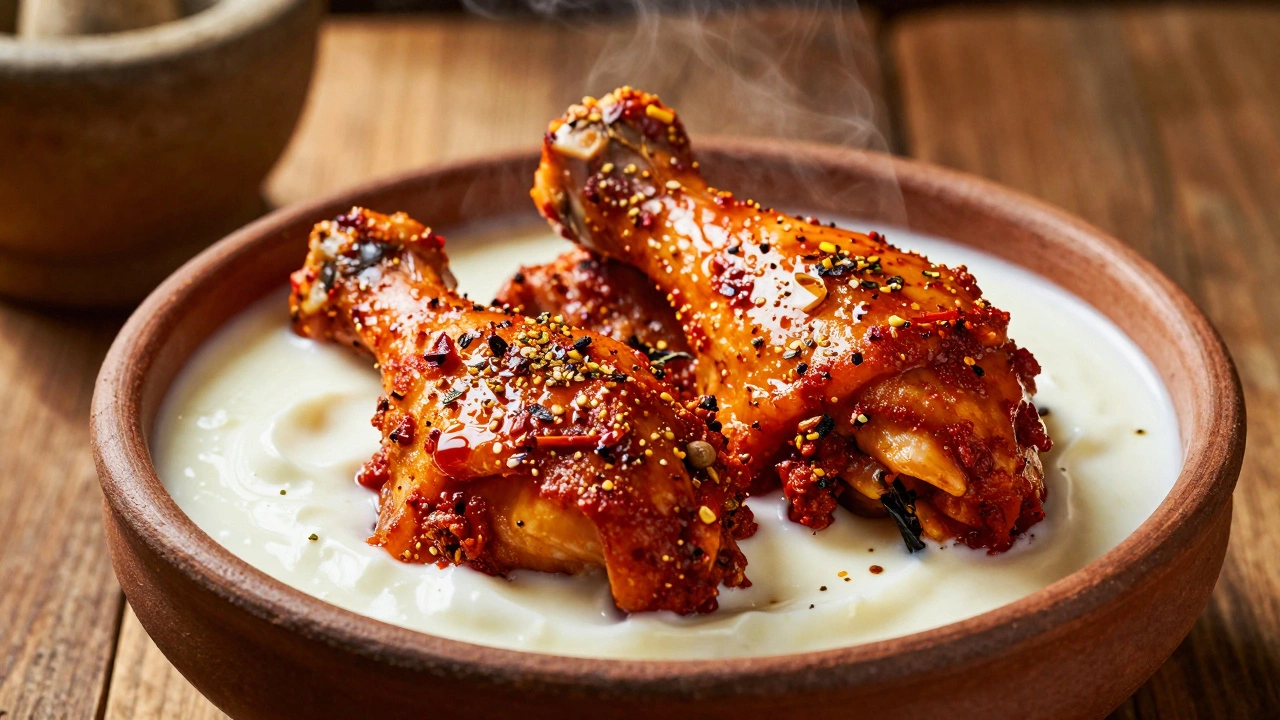
What Is Tandoori Marinade Made Of? Authentic Ingredients and Ratios
Tandoori marinade is made of yogurt, Kashmiri chili powder, garlic, ginger, cumin, coriander, and a touch of lemon juice and sugar. It tenderizes chicken and gives it bold flavor and vibrant color without artificial dye.
View More
Tandoori Chicken Sauce Ingredients: Traditional Recipe & Secrets Revealed
Discover what goes into tandoori chicken sauce, its traditional ingredients, preparation secrets, and expert tips for flavor-packed results.
View More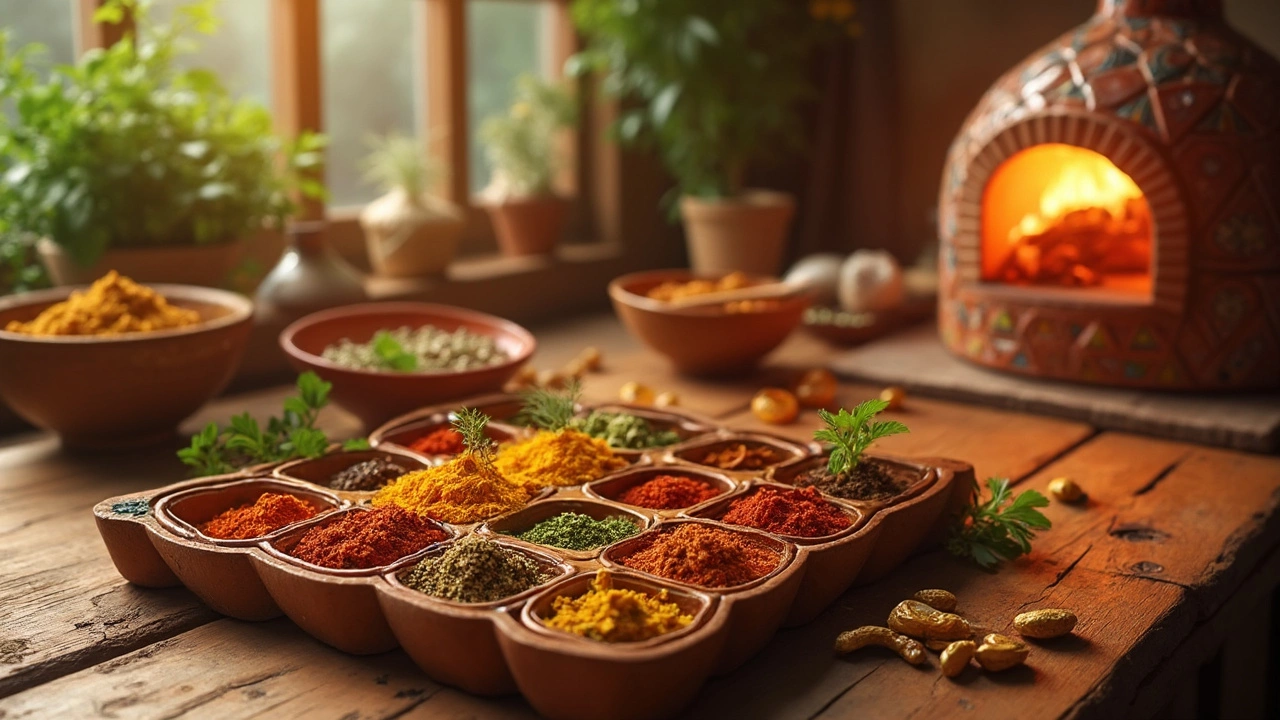
Substitute for Tandoori Masala: Options for Your Chicken Delight
Love tandoori chicken but ran out of tandoori masala? Don't fret; you can still whip up a delicious meal with easy-to-find substitutes. Combining everyday spices from your pantry can mimic that beloved flavor. Whether you prefer a milder taste or like to turn up the heat, alternative blends offer flexibility and creativity. Exploring these alternatives not only saves the day but adds a new twist to a classic dish.
View More