Reduce Heat in Biryani: Simple Ways to Tame Spiciness Without Losing Flavor
When you're craving a rich, aromatic biryani, a layered Indian rice dish cooked with spices, meat or vegetables, and saffron. Also known as hyderabadi biryani, it's meant to be flavorful, not fiery. But sometimes, the heat takes over. You didn't mean to turn your kitchen into a spice lab. You just wanted that deep, slow-cooked taste—not a mouth-on-fire experience. The good news? You can reduce heat in biryani without stripping away its soul.
Spice isn't the enemy. It's the heart of Indian cooking. But heat levels vary wildly depending on the chili variety, how much you use, and whether you leave the seeds in. If your biryani came out too hot, it's not broken—it just needs balance. The trick isn't to drown it in cream or sugar. It's to use yogurt, a fermented dairy product that cools spice and tenderizes meat as your secret weapon. Stir in a few tablespoons of plain, cool yogurt at the end. It doesn't just lower the burn—it adds depth and silkiness. Another fix? Add a peeled, boiled potato. It soaks up excess spice like a sponge. Remove it before serving, and you're left with a milder, more balanced dish.
You can also turn to whole spices, like cardamom, cinnamon, and cloves, which add aroma without heat. If your biryani is already cooked, toss in a few whole green cardamom pods or a small piece of cinnamon stick while it simmers for 10 minutes. They don't burn, but they shift the flavor profile toward warmth, not fire. Nuts like cashews or almonds, lightly toasted and ground, work wonders too. They add richness and mute sharpness. Even a splash of milk or a spoon of sugar can help—just don't overdo it. You're not making dessert. You're fixing a dish that got away.
And if you're planning ahead? Control the heat at the start. Use Kashmiri red chili powder instead of hotter varieties—it gives color and mild warmth without the punch. Skip the green chilies if you're sensitive. Use dried red chilies whole and remove them before layering the rice. That way, you get flavor without the burn.
Every region in India has its own version of biryani—from the fiery Hyderabadi to the delicate Lucknowi. But none of them need to leave you gasping. The real skill isn't adding more spice—it's knowing how to hold it back when it's too much. With these fixes, you’ll keep the soul of the dish, lose the burn, and still have everyone asking for seconds.
Below, you'll find real tips from home cooks who’ve been there—how to fix a too-spicy pot, what ingredients make the biggest difference, and how to adjust for kids, elders, or anyone who just wants comfort, not chaos.
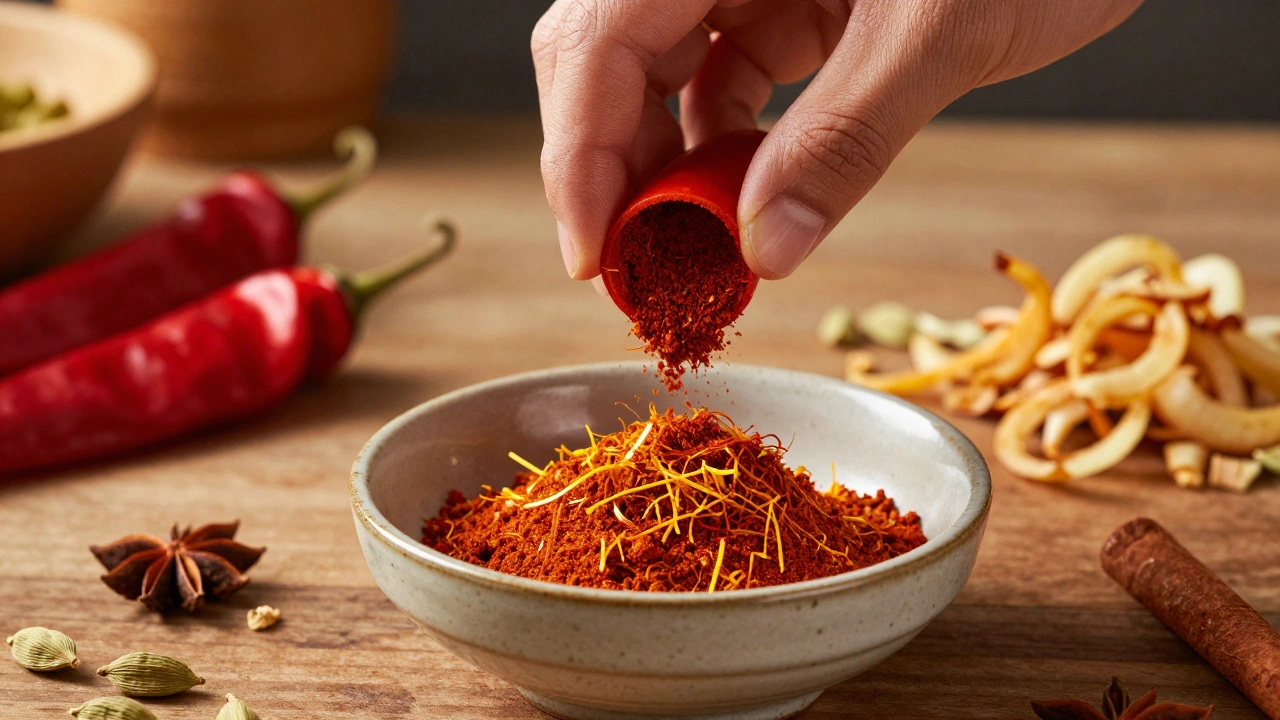
How to Balance Spice in Biryani: Fix Too Much Heat and Enhance Flavor
Learn how to balance spice in biryani without losing flavor. Fix over-spiced dishes with simple tricks using yogurt, sweetness, and layering techniques for perfect results every time.
View More