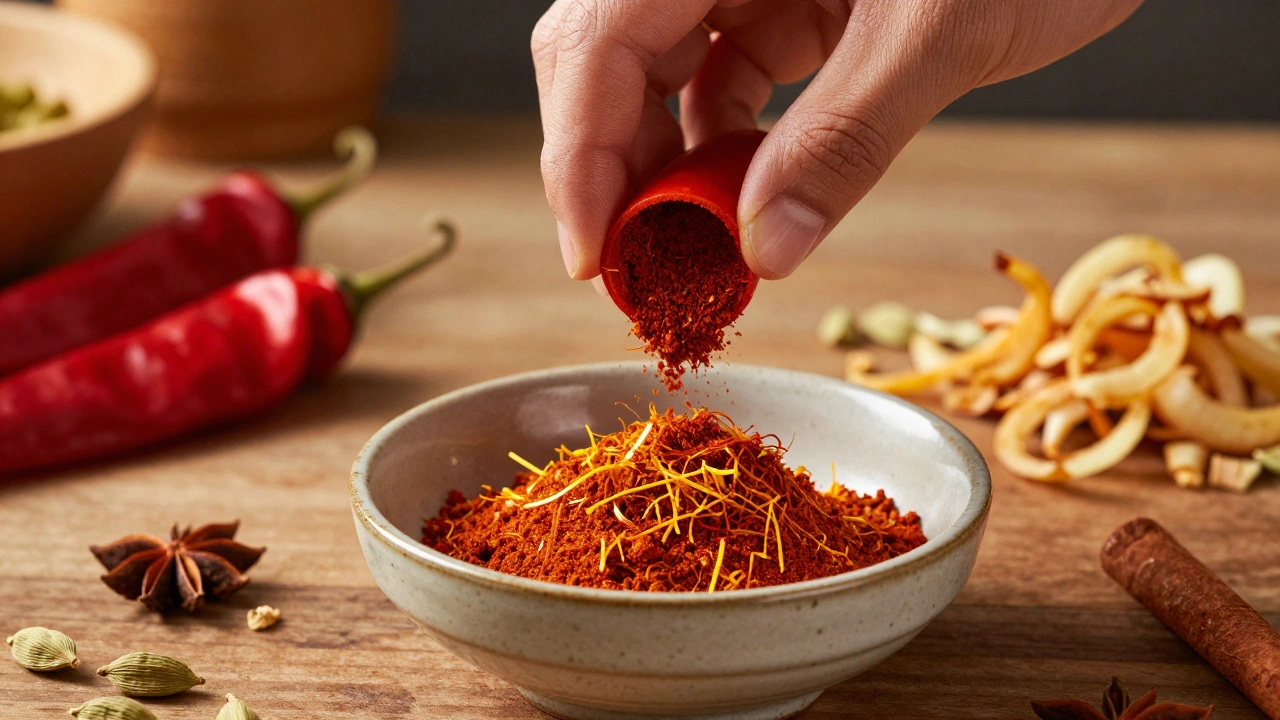
Biryani Spice Calculator
Recommended Chili Powder
teaspoons
Too spicy?
Try these fixes:
- Stir in 2-3 tbsp plain yogurt or heavy cream
- Add 1 tsp sugar dissolved in warm water
- Fold in 1 cup plain rice to dilute heat
- Serve with raita or cucumber slices
Ever made a biryani that burned your tongue instead of warming your soul? You’re not alone. Many home cooks nail the rice, the meat, the aromatics-then go too heavy on the chilies, red chili powder, or green chutney. The result? A dish that feels like punishment, not celebration. Biryani isn’t about heat for heat’s sake. It’s about layers-fragrant saffron, caramelized onions, tender meat, and just enough spice to make you pause and sigh. The trick isn’t avoiding spice. It’s balancing it.
Understand the sources of heat in biryani
Not all spice is the same. In biryani, heat comes from five main places:
- Red chili powder - Adds sharp, direct heat. Often overused because it’s easy to sprinkle.
- Dried red chilies - Whole or broken, they bring smoky depth and lingering fire.
- Green chilies - Fresh, bright, and quick-burning. Used raw or fried in oil at the start.
- Chili paste or green chutney - Often blended into marinades or layered between rice. Concentrated and sneaky.
- Spice blends (garam masala, biryani masala) - Some store-bought mixes pack a punch. Check labels.
Each one behaves differently. Red chili powder hits fast and fades. Dried chilies build slowly. Green chilies fade if cooked too long. If you pile them all in without thinking, you’re asking for trouble.
Fix it before you cook: Control the marinade
Most biryani heat starts in the marinade. Chicken or lamb soaked in yogurt, ginger-garlic paste, and a spoonful of chili powder is common. But here’s the mistake: people use the same amount for mild and hot versions.
Try this: Use 1 teaspoon of red chili powder for every 1.5 pounds of meat if you want medium heat. For mild, cut it to half a teaspoon. Save the rest for the garnish. You can always add more later. You can’t take it out.
Swap some of the chili powder for paprika or Kashmiri red chili powder. They give color and mild warmth without burning. Kashmiri chili powder is a game-changer-it’s bright red, rich in flavor, and low on heat. Most Indian grocery stores carry it.
And skip the bottled green chutney unless you’ve tasted it first. Some are made with 10 green chilies and a handful of cilantro. Make your own: 3 green chilies (seeds removed), a cup of cilantro, a teaspoon of lemon juice, and a pinch of salt. That’s enough.
Balance with sweetness and acidity
Spice doesn’t live in a vacuum. It needs friends. Sweetness and acidity are your secret weapons.
When you fry onions for biryani, let them go golden brown-not black. The sugars in the onions caramelize and naturally tame heat. Add a tablespoon of sugar or jaggery when you start frying. It won’t make the biryani sweet. It’ll make it rounded.
Also, don’t skip the yogurt. It’s not just for tenderness. The lactic acid in yogurt neutralizes capsaicin, the compound that makes chilies burn. Use full-fat yogurt. Stir it in before you add the meat. Let it sit for 30 minutes. That’s your first line of defense.
At the end, if it’s still too hot, squeeze in a tablespoon of lemon juice. Or stir in a spoonful of plain yogurt. Taste. Do it again if needed. The acid doesn’t mask the spice. It harmonizes with it.
Use rice as a buffer
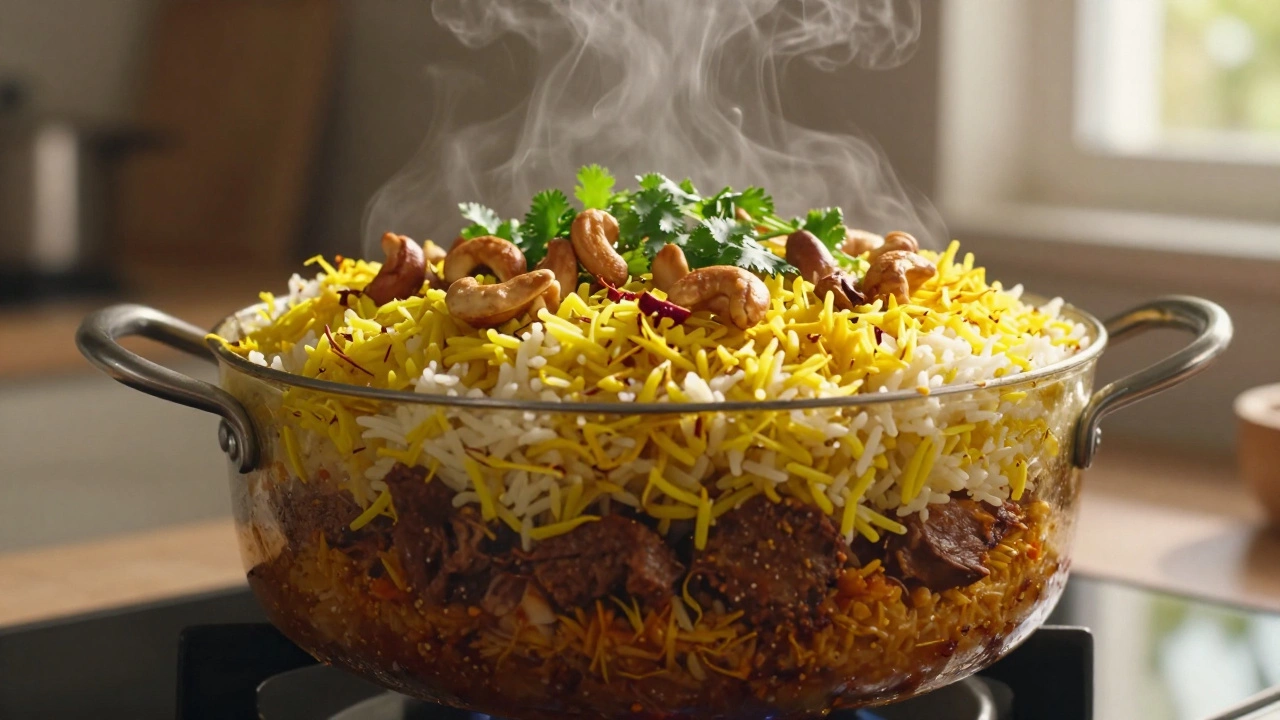
Rice isn’t just filler. It’s a sponge. When you layer the rice over the meat, you’re creating a barrier. The steam from the rice absorbs some of the heat. But only if you do it right.
Don’t dump all the rice on top at once. Layer it in thirds. After the first layer of rice, sprinkle a pinch of saffron milk and a few fried cashews. Then another layer of meat, then rice again. The saffron and nuts add richness that distracts from the heat. The layers give the spice time to mellow as it cooks.
And always rinse your basmati rice until the water runs clear. Starchy rice clumps and traps heat. Clean rice cooks fluffy and even. That’s how you get texture, not heat pockets.
What to do if it’s already too spicy
You’ve stirred it. Tasted it. It’s burning. Don’t panic. Here’s what works:
- Add dairy - Stir in 2-3 tablespoons of plain yogurt or heavy cream. Mix gently. The fat coats your tongue and reduces the burn.
- Add sweetness - A teaspoon of sugar or honey dissolved in a splash of warm water. Stir it in. Taste. You might need a second teaspoon.
- Dilute with more rice - Cook an extra cup of plain basmati rice. Fold it into the biryani. It won’t fix everything, but it spreads the heat thinner.
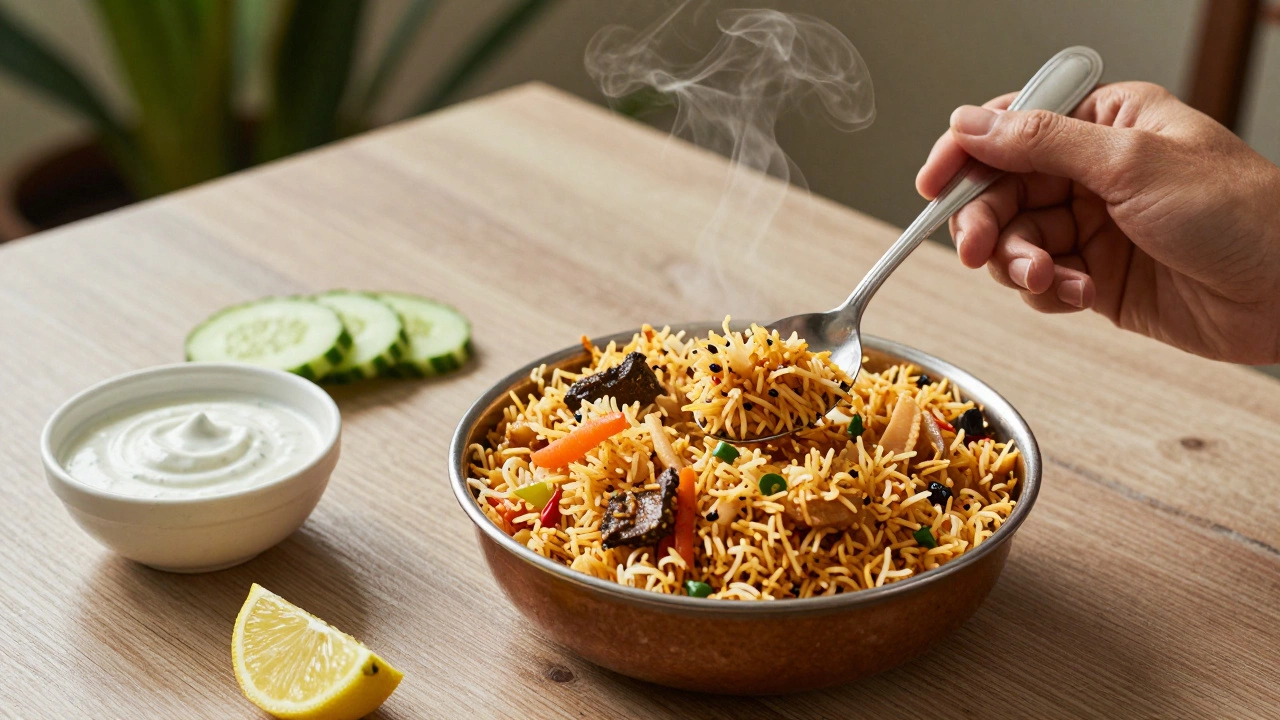
- Top with cooling garnishes - Fresh cilantro, thinly sliced cucumber, or a dollop of raita on the side. These don’t change the dish, but they give your palate a reset.
Never add water. It makes the rice mushy and dilutes flavor. Never add more spices to "balance" it. That’s like pouring gasoline on a fire.
Pro tips for next time
- Always taste your spice mix before adding it to the pot. A pinch on your finger, then lick it. If it’s too hot then, it’ll be unbearable later.
- Keep a small bowl of plain yogurt nearby while you cook. If you taste heat mid-way, dip a spoon in it and stir a bit into the pot.
- Use whole spices (cinnamon, cardamom, cloves) generously. They add fragrance that distracts from heat. Toast them lightly in ghee before adding.
- Buy small quantities of chili powder. It loses potency in 3 months. Old chili powder means you’ll use more to get the same heat-and risk overdoing it.
- Keep a notepad. Note how much chili powder you used, the brand, and how hot it turned out. Next time, adjust.
Why some biryanis are naturally milder
Not all biryani is fiery. Lucknowi biryani, for example, uses almost no chili powder. Instead, it relies on saffron, fried onions, and subtle spices like nutmeg and mace. Hyderabadi biryani can be hot, but it balances with layers of yogurt and rose water. Regional styles teach us that spice isn’t the star-it’s the supporting actor.
Think of biryani like a symphony. The chilies are the drums. The saffron is the strings. The onions are the brass. If the drums are too loud, you don’t turn up the strings. You turn down the drums.
Final rule: Taste, pause, taste again
Spice isn’t something you add once. It’s something you adjust. Taste after marinating. Taste after browning the meat. Taste after layering. Taste after 10 minutes of dum cooking. Each step changes the heat.
And remember: if it feels too hot now, it’ll get hotter as it sits. Biryani tastes better the next day-but so does the burn. So under-season now. You can always add a pinch of chili powder at the end, stirred in with a spoon of ghee and a whisper of kasuri methi.
Great biryani doesn’t make you cry. It makes you come back for seconds.
Can I use milk to reduce spice in biryani?
Milk isn’t ideal. It can curdle when added to hot, acidic dishes. Use yogurt or cream instead. They’re more stable and add richness without breaking the texture. If you only have milk, warm it first and stir it in slowly, but expect a thinner result.
Why does my biryani taste spicy but not flavorful?
Spice and flavor aren’t the same. If your biryani is hot but bland, you’re missing aromatics. Toast whole spices like cumin, cardamom, and cloves before adding them. Use fresh ginger and garlic. Fry onions until golden. Saffron and rose water add depth. Heat without these is just irritation.
Is Kashmiri chili powder less spicy than regular red chili powder?
Yes. Kashmiri chili powder has a Scoville rating of 1,000-2,000 units, while regular red chili powder can be 5,000-10,000. It gives deep red color and mild warmth without the burn. It’s the preferred choice for authentic, balanced biryani.
Should I remove the seeds from green chilies?
Always. Most of the heat in green chilies comes from the seeds and white membranes. Remove them, then chop the flesh finely. You’ll still get flavor and a gentle kick without the mouth-burning intensity.
Can I fix an over-spiced biryani after it’s been served?
Yes. Serve it with plain raita, a side of cucumber slices, or a small bowl of yogurt with a pinch of roasted cumin. These cool your mouth between bites. You can also add a spoonful of cooked plain rice to your plate to dilute the heat as you eat.