Indian Breakfast: Simple, Healthy, and Full of Flavor
When you think of Indian breakfast, a diverse, region-specific morning meal rooted in tradition, fermentation, and local ingredients. Also known as morning Indian cuisine, it's not just about filling up—it's about starting the day with food that’s easy on the stomach, packed with protein, and full of flavor. Unlike Western breakfasts that lean on toast or cereal, Indian breakfasts are built around grains, lentils, and spices that have been used for centuries. This isn’t a one-size-fits-all meal. In the south, people eat idli, steamed rice and lentil cakes made from fermented batter. Also known as South Indian steamed cakes, they’re light, digestible, and often served with coconut chutney and sambar. In the same region, dosa, a thin, crispy fermented crepe made from the same batter as idli. Also known as Indian savory pancake, it’s folded around potato filling or eaten plain with dipping sauces. These aren’t snacks—they’re daily staples, eaten by millions across Tamil Nadu, Karnataka, Andhra, and Kerala.
Head north, and you’ll find upma, a savory semolina porridge cooked with mustard seeds, curry leaves, and vegetables. Also known as Indian breakfast porridge, it’s quick to make, filling, and perfect for busy mornings. In Punjab, people start the day with parathas stuffed with potatoes or paneer, while in Maharashtra, vada pav is the go-to street-side bite. What ties them all together? Fermentation. Many Indian breakfasts rely on natural fermentation to boost nutrition, improve digestion, and add tanginess without vinegar. That’s why idli and dosa are often called healthier than toast—because they’re naturally probiotic. And unlike sugary cereals, these meals don’t spike blood sugar. They keep you full until lunch, thanks to protein from lentils and complex carbs from rice.
There’s no single Indian breakfast—but there’s a pattern. It’s plant-based, rarely processed, and always tied to local harvests. You won’t find buttered toast or syrup here. Instead, you’ll find steamed rice cakes, crispy lentil pancakes, spicy lentil stews, and chutneys made from fresh herbs. Whether you’re looking for something mild like moong dal khichdi or something crunchy like masala dosa, the options are endless. And if you’re watching your sugar intake, you’ll be glad to know most traditional Indian breakfasts contain zero added sugar—just natural sweetness from jaggery or fruit, if any. Below, you’ll find real recipes, comparisons, and tips from people who eat this every day. No fluff. Just what works.
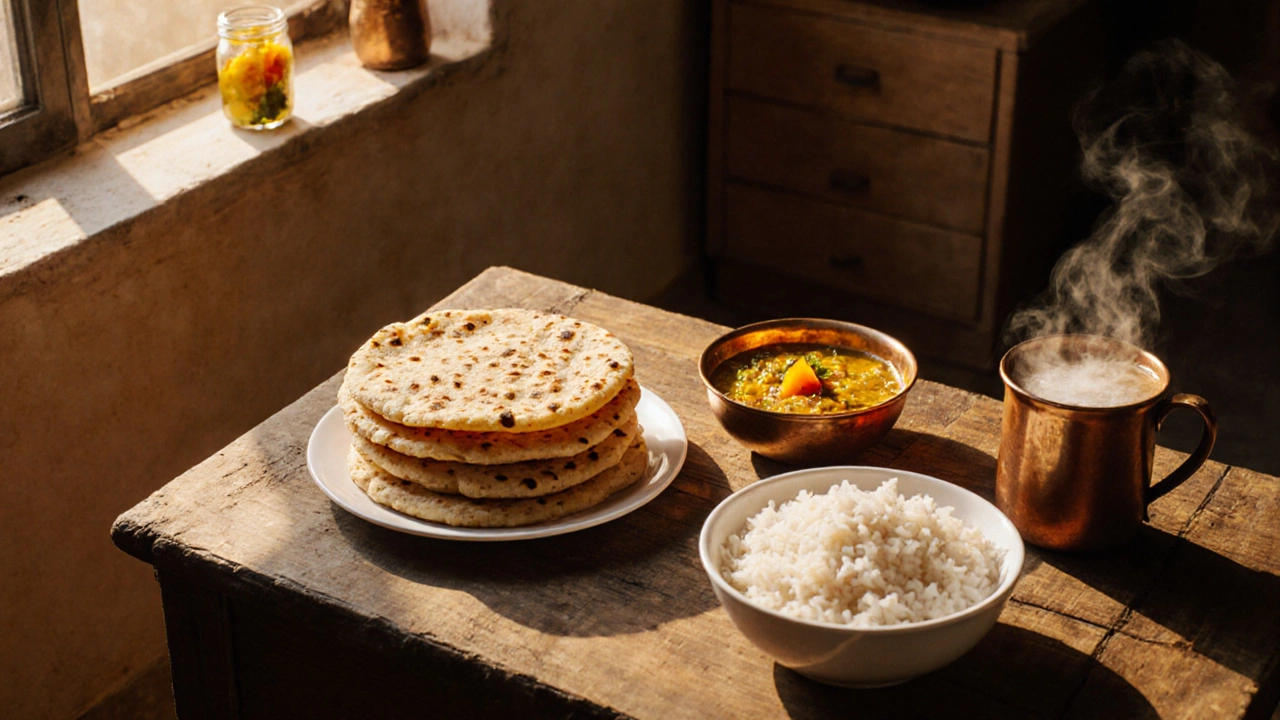
Most Popular Indian Food: What Indians Eat the Most Daily
Discover India's most eaten food, why roti tops the list, regional breakfast habits, quick recipes, nutrition facts, and a handy FAQ for Indian breakfast lovers.
View More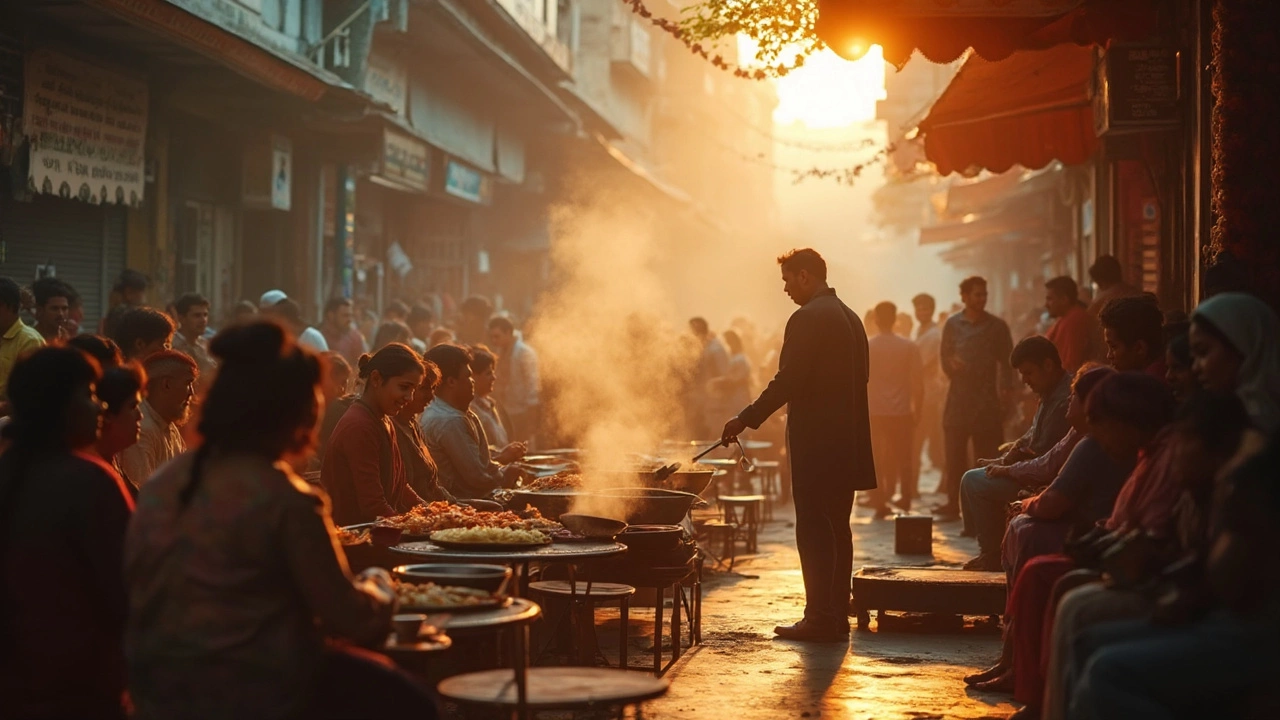
Typical Breakfast Foods in New Delhi: Dishes, Traditions, and Local Favorites
Discover what makes a typical breakfast in New Delhi unique. Learn about dishes, morning traditions, popular spots, and tips for enjoying an authentic Delhi breakfast.
View More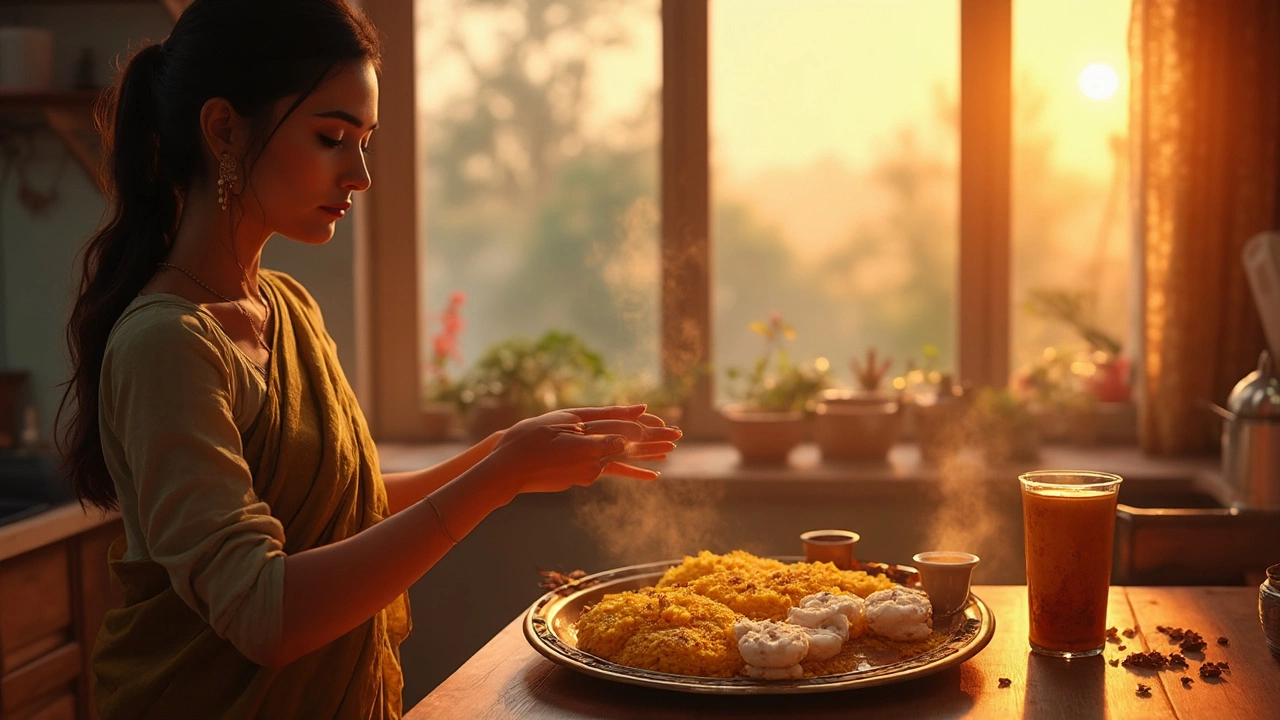
What is Warriors Breakfast?
Discover the 'Warriors Breakfast,' an energizing Indian breakfast meant to kickstart your day with strength and focus. Learn why it's called so, its typical components, and how to whip it up quickly even on busy mornings. Explore variations suitable for different palates and practical tips to integrate them into your routine. The Warriors Breakfast isn't just about food; it's about setting the right tone for an active day.
View More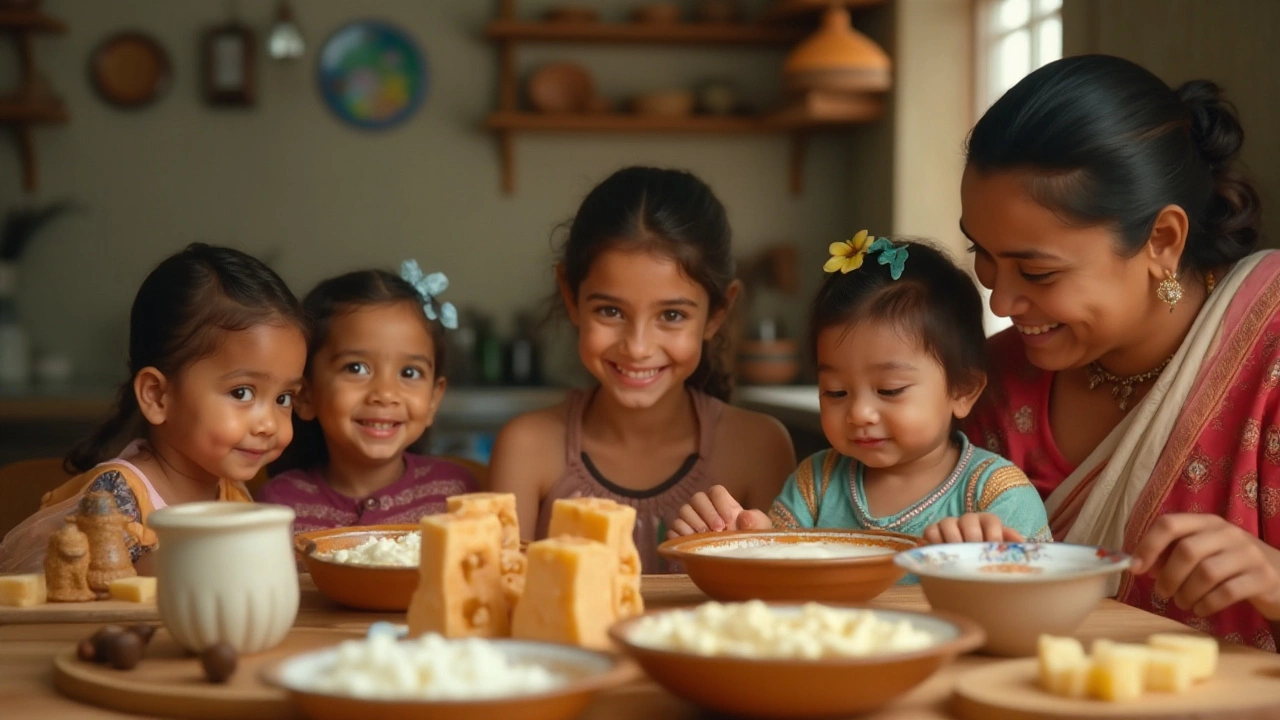
Understanding Cheese's Limited Role in Indian Quick Breakfasts
Cheese remains a relatively niche component in traditional Indian breakfasts, mainly due to cultural preferences, regional flavors, and the dominance of local dairy staples. While some urban areas are embracing various cheese types due to globalization, most Indian households continue favoring local dairy products like paneer, curd, and buttermilk. This article explores the historical, culinary, and nutritional aspects behind cheese's limited presence in Indian breakfast culture, offering insights and context to food enthusiasts and culinary adventurers.
View More