Paneer Texture Calculator
Your Paneer Parameters
Results
Ever made homemade paneer only to find it falling apart in your curry, crumbling like dry cheese, or refusing to hold shape? You’re not alone. Many people who try making paneer at home hit this wall-and it’s not because they’re doing anything wrong. It’s usually just one or two things they missed. Paneer should be soft, springy, and hold together when you press it. If it’s crumbly, something went wrong in the curdling or draining process. Let’s break down exactly why that happens and how to fix it.
It’s Not the Milk-It’s How You Heat It
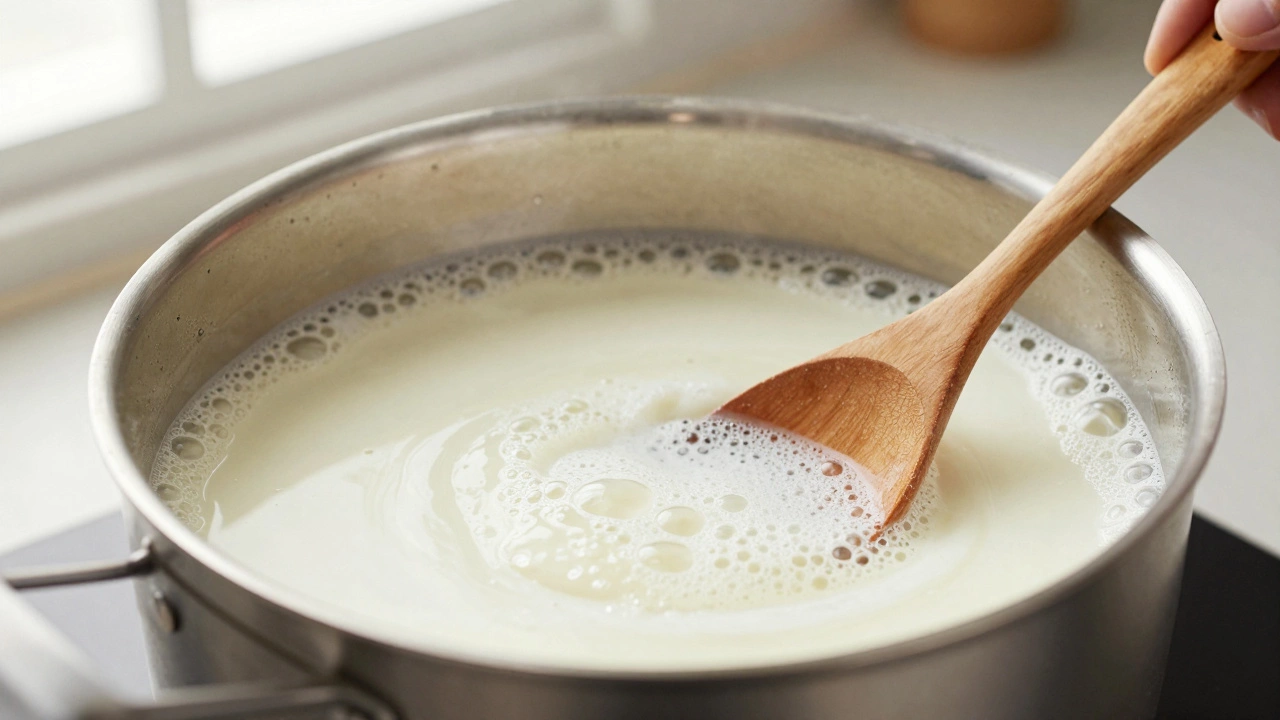
The biggest mistake people make is heating milk too fast. You can’t just dump milk into a pot and crank the heat up. Paneer needs gentle, even heat to form smooth curds. If you heat it too quickly, the proteins denature unevenly. That creates weak, brittle curds that fall apart when you press them. The right way? Slow heat. Bring the milk to a simmer over medium-low heat, stirring occasionally. It should take about 15-20 minutes to get there. You’ll know it’s ready when you see tiny bubbles forming around the edges and a light skin forming on top.
Also, use full-fat whole milk. Low-fat or skim milk won’t work. Paneer needs fat to bind properly. In India, people often use full cream milk with 6-8% fat. In New Zealand, where I live, I use full cream cow’s milk from local dairies. If your milk is below 3.5% fat, your paneer will be dry and crumbly no matter what you do.
The Acid Matters More Than You Think
You don’t need lemon juice or vinegar to make paneer-but you do need the right amount. Too little acid? Curds won’t form properly. Too much? The curds get too tight and lose moisture too fast, turning grainy. The sweet spot is 2-3 tablespoons of lemon juice or white vinegar per liter of milk. Add it slowly, a tablespoon at a time, while stirring gently. Watch the milk separate. When you see clear yellowish whey and big, fluffy curds floating on top, stop adding acid. If you keep adding after that, you’re overdoing it.
Some people use yogurt or citric acid powder. That’s fine too, but citric acid is stronger. Use only 1/2 teaspoon per liter. If you’re using vinegar, go with plain white vinegar-not apple cider or balsamic. Those add flavor and mess with texture.
Draining and Pressing Are the Real Game-Changers
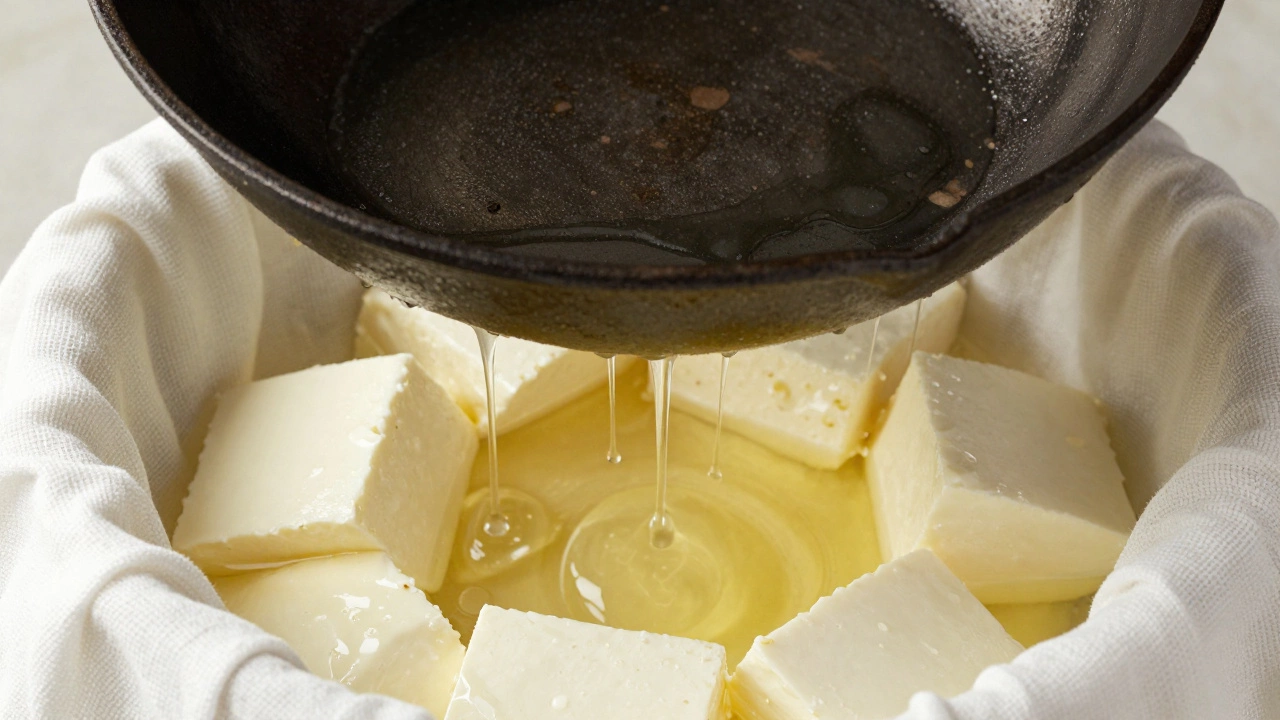
After you strain the curds, most people just let them sit in the cloth for 10 minutes. That’s not enough. Paneer needs pressure to form a solid block. Without it, the curds stay loose and crumbly. Here’s what to do: line a colander with cheesecloth, pour in the curds, fold the cloth over, and place a heavy plate on top. Add a weight-like a cast iron skillet or a couple of canned beans. Let it sit for at least 30 minutes. For firmer paneer (like for grilling), leave it for an hour.
Don’t skip this step. Even if the curds look good, pressing is what turns them from a pile of flakes into a cohesive block. If you’re in a hurry, you can press it for 15 minutes, but you’ll still get some crumbling. Patience pays off.
Temperature Control After Pressing
Once you’ve pressed the paneer, don’t cut it right away. Let it cool slowly at room temperature. If you refrigerate it while it’s still warm, the moisture rushes out, and the texture turns rubbery and brittle. Wait at least 30 minutes after removing the weight before cutting or using it. If you’re planning to fry or grill it, let it rest for an hour. That gives the proteins time to settle and bind.
Also, avoid soaking paneer in water unless you’re trying to soften it for a recipe. Water washes away natural fats and proteins that hold paneer together. If your paneer is already crumbly, soaking it won’t fix it-it’ll make it worse.
What You Shouldn’t Do
- Don’t use ultra-pasteurized milk. It’s treated at high heat, which damages the proteins. Your paneer will never set right.
- Don’t stir the milk after adding acid. Gentle swirling is fine, but vigorous stirring breaks up curds before they form.
- Don’t use a fine mesh strainer. Use cheesecloth or a clean cotton cloth. Fine mesh traps curds and lets too much moisture escape.
- Don’t skip the pressing step. No shortcut here.
Quick Fix for Already Crumbly Paneer
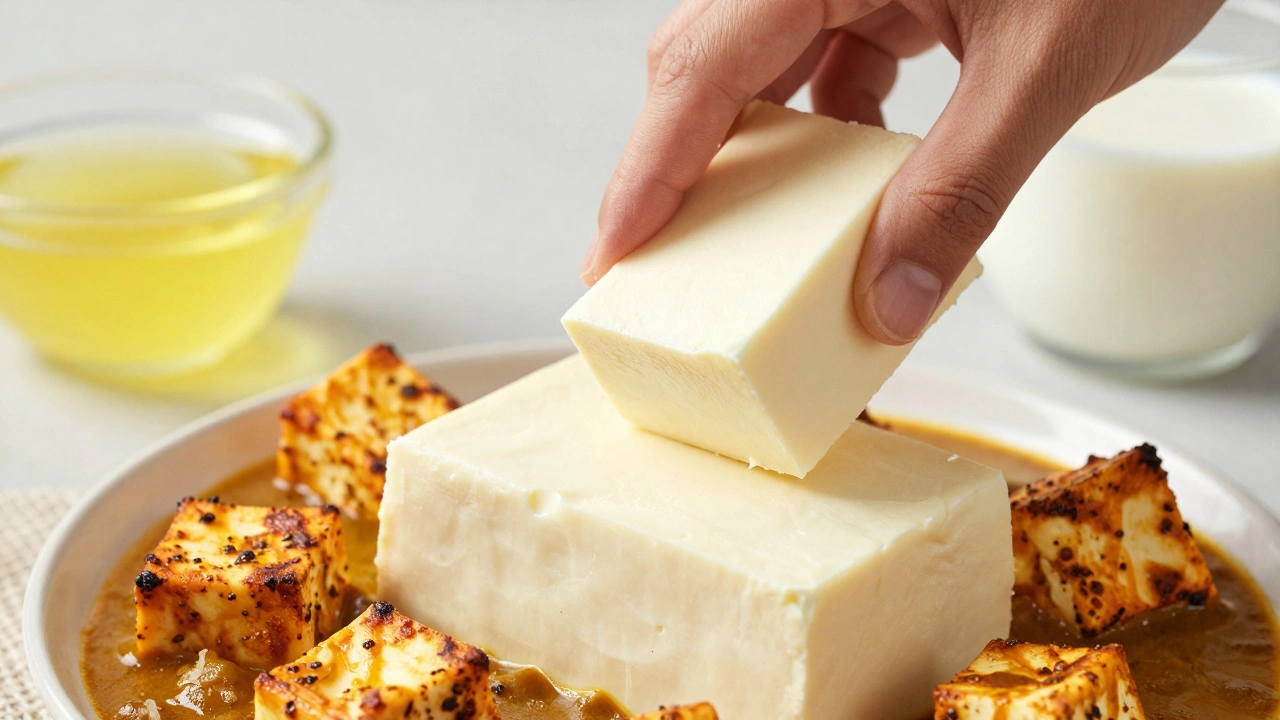
Oops-you already made it and it’s crumbly? Don’t throw it out. You can still use it. Mix the crumbles with a teaspoon of cornstarch and a splash of milk. Press it back into a mold and chill for an hour. It won’t be perfect, but it’ll hold together in curries. Or, use it in stuffed parathas, where texture doesn’t matter as much. Crumbly paneer works great in sabzis or as a topping for chaat.
Pro Tip: Test Your Milk First
Before you make a whole batch, test your milk. Heat a small cup (1/2 cup) of milk slowly. Add a teaspoon of lemon juice. Watch how it curdles. If it forms big, clean curds with clear whey, you’re good. If it’s lumpy, grainy, or doesn’t separate well, switch brands. Some milk has added stabilizers or homogenization that interfere with curdling. In Auckland, I’ve found that organic milk from local farms works best. Avoid milk labeled “ultra-filtered” or “extended shelf life.”
Final Check: Your Paneer Should Feel Like This
Good paneer should be:
- Smooth to the touch, not grainy
- Firm but springy-press it gently and it should bounce back
- Hold its shape when cut
- Not release water when you fry it
If yours doesn’t meet these, go back to the basics: slow heat, full-fat milk, just enough acid, and proper pressing. It’s not rocket science. It’s just chemistry you control with patience.
Can I use powdered milk to make paneer?
No. Powdered milk has been processed at high temperatures and often contains added stabilizers. The proteins are damaged and won’t form proper curds. You’ll end up with a rubbery, crumbly mess. Always use fresh, liquid whole milk.
Why does my paneer turn hard after refrigeration?
Refrigerating paneer too soon traps moisture inside, then forces it out as it chills. This makes the texture dense and tough. Always let paneer cool to room temperature before refrigerating. Store it in a bowl of cold water to keep it soft and moist for up to 3 days.
Can I make paneer with goat’s milk?
Yes, but it’s different. Goat’s milk has smaller fat globules and less casein, so the curds are softer and more delicate. You’ll need to press it longer and use less acid. The flavor is tangier, and it doesn’t hold shape as well for frying. Best for crumbled dishes like paneer bhurji.
Is store-bought paneer better than homemade?
Not necessarily. Many store-bought paneer uses additives like citric acid, stabilizers, or even skim milk to cut costs. Homemade paneer made with full-fat milk and proper technique is softer, tastier, and holds shape better. Plus, you know exactly what’s in it.
How long should I press paneer for grilling?
For grilling or frying, press for 60 minutes with a heavy weight. This removes enough moisture so the paneer doesn’t fall apart on the grill. You can also chill it in the fridge after pressing for an extra hour to firm it up further.