Biryani Time & Texture Estimator
Select a method and click Calculate to see the timeline.
Pro Tip from the Article
The long cook time isn't an accident—it's necessary because biryani combines two completely different cooking processes that need to happen simultaneously without ruining each other.
You’re standing over a pot, watching the clock tick. It’s been an hour, maybe more, and your biryani still isn’t ready. You might be wondering: why can’t I just boil everything together like a stew and be done in twenty minutes? If you’ve ever tried to rush this dish, you know the result is often disappointing-soggy rice, tough meat, and missing that signature aroma. The truth is, biryani isn’t just a recipe; it’s a logistical challenge involving chemistry, physics, and patience.
The long cook time isn’t an accident or a tradition for tradition’s sake. It’s necessary because biryani combines two completely different cooking processes that need to happen simultaneously without ruining each other. On one side, you have tough cuts of meat (or dense vegetables) that need hours of heat to break down collagen into gelatin. On the other, you have delicate grains of Basmati rice that turn to mush if exposed to high heat for too long. Balancing these opposing needs is where the magic-and the time-lies.
The Dual Challenge: Meat vs. Rice
Think about how you cook a curry. You simmer it until the meat falls off the bone. Now think about how you cook plain white rice. You boil it until the water absorbs, usually in 15-20 minutes. If you throw raw rice into a simmering curry, what happens? The rice absorbs the liquid, swells up, and eventually disintegrates before the meat is tender. Conversely, if you cook the rice perfectly and then add raw meat, the meat will be rubbery while the rice is cold or burnt at the bottom.
Biryani solves this by separating the initial cooking stages. Most authentic methods, particularly the Dum Pukht style, involve par-cooking the rice separately from the meat. The rice is boiled only until it’s 70-80% done-still firm to the bite, with a chalky core. This is called "al dente" status. Why go through this trouble? Because once the rice hits the hot gravy, it continues to absorb moisture and steam. If you start with fully cooked rice, it has no room to breathe or absorb flavor without breaking apart. By starting with undercooked rice, you give it time to finish cooking inside the sealed pot, absorbing the spices and fats from the meat layer above it.
The Magic of Layering and Sealing
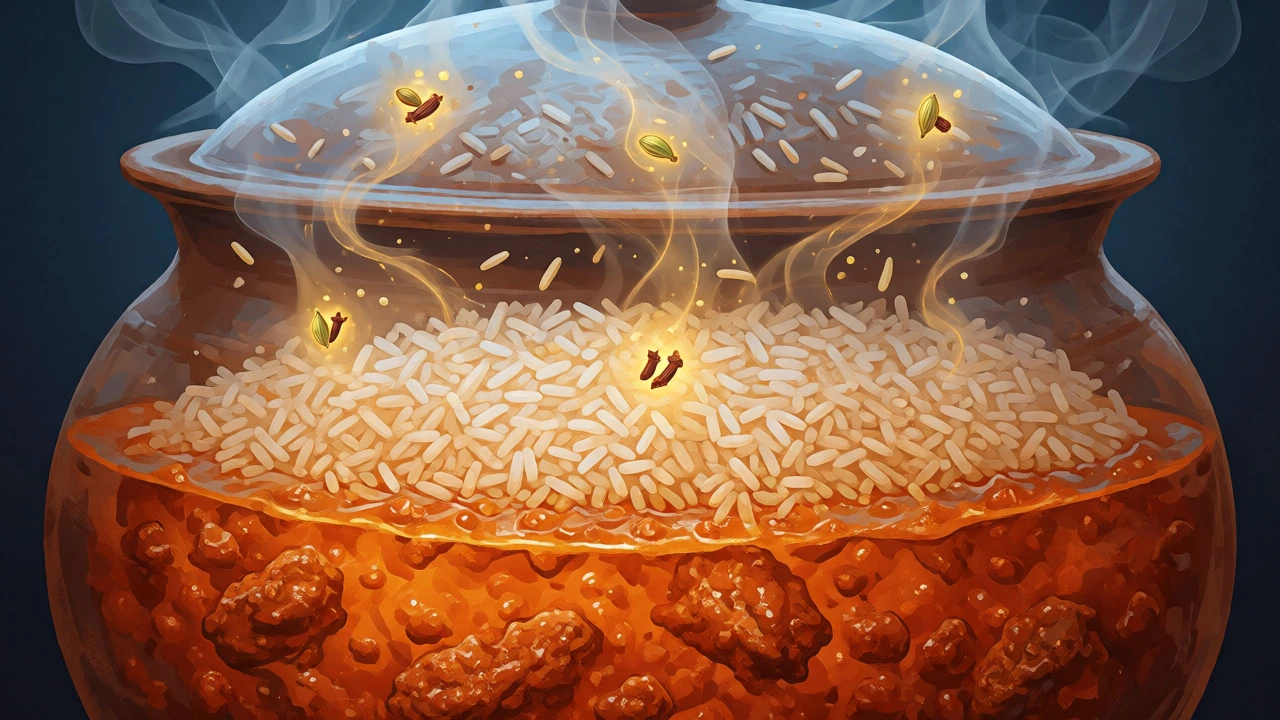
Once the components are prepped, they are layered. This isn’t just for looks. The structure of a biryani pot is a thermal engine. Typically, you start with a base of marinated meat or gravy. Then comes a layer of partially cooked rice. Then more meat, more rice, fried onions (Birista), herbs, and saffron milk.
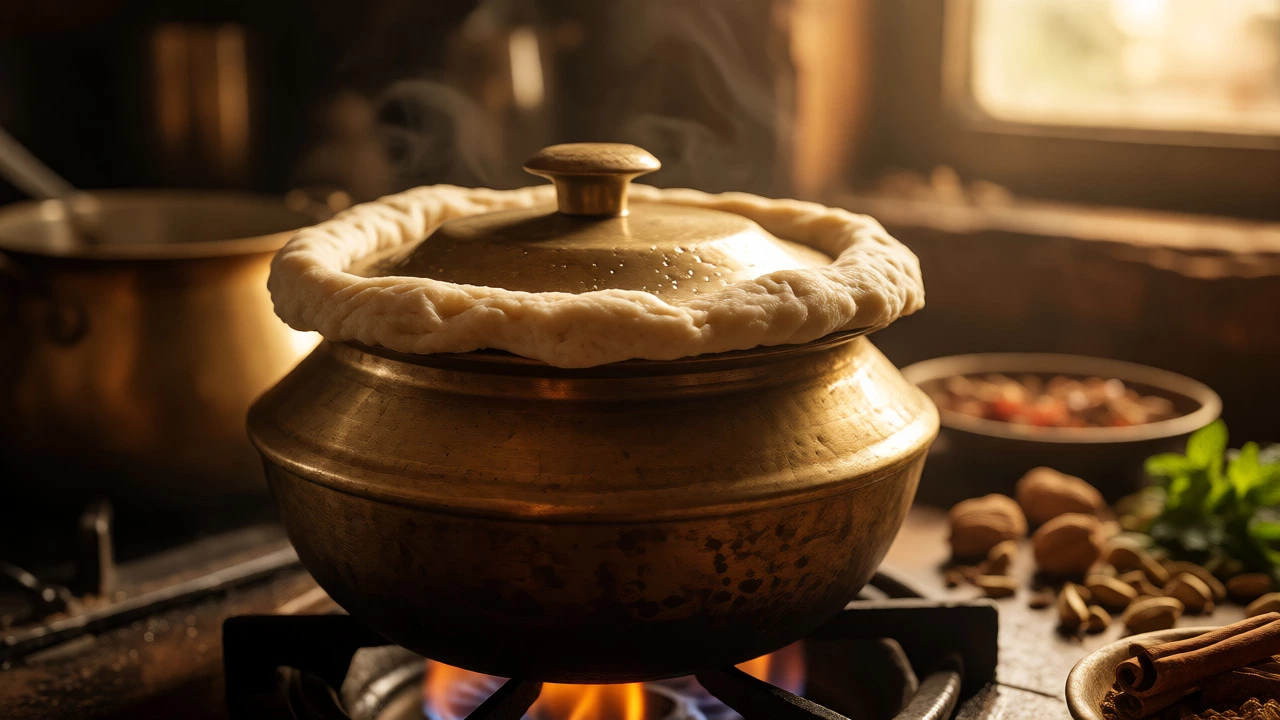
This layering creates distinct zones of temperature and moisture. The bottom layer, closest to the heat source, gets hotter and cooks faster. The top layers rely on trapped steam. This is where the sealing step becomes critical. In traditional Dum cooking, the lid of the pot is sealed with wheat dough. This seal serves three purposes:
- Traps Steam: The water vapor released from the rice and gravy cannot escape. This steam circulates within the pot, ensuring even cooking without drying out the top layers.
- Concentrates Aromas: Volatile compounds from spices like cardamom, cloves, and cinnamon are heavy. If they escape, you lose the perfume of the dish. Trapping them forces them back into the food.
- Regulates Pressure: While not a pressure cooker, the sealed environment builds slight positive pressure, which helps tenderize the meat fibers gently.
If you skip the seal and use a loose lid, the steam escapes. The rice dries out, the bottom burns, and the flavors dissipate into your kitchen instead of infusing the food. This process takes time because low-and-slow heat is required to transfer energy through several inches of dense ingredients without burning the contact point at the bottom.
| Method | Prep Time | Cook Time | Rice Texture | Flavor Integration |
|---|---|---|---|---|
| Traditional Dum (Sealed) | 45-60 mins | 45-60 mins | Distinct, fluffy grains | High (Steam infusion) |
| Pakki Style (Fully Cooked Meat + Rice) | 30 mins | 20-30 mins | Softer, risk of mush | Moderate (Mix-in) |
| Kacchi Style (Raw Meat + Raw Rice) | 20 mins | 60-90 mins | Very soft, creamy | Extreme (One-pot meld) |
| Instant Pot / Pressure Cooker | 15 mins | 15-20 mins | Uniform, sometimes sticky | Low (No browning/searing) |
The Role of Marination and Enzymes
Time isn’t just spent on the stove. A significant portion of the "long" experience begins before you even light the burner. Authentic biryani requires marinating the meat in yogurt, ginger-garlic paste, chili powder, and whole spices for at least 2-4 hours, often overnight.
Why wait so long? Yogurt contains lactic acid and calcium, which help break down muscle proteins. But it’s also the enzymes in papaya (if used) or the acidity itself that tenderizes the meat. Rushing this step means you’ll spend twice as much time cooking to achieve the same tenderness. Furthermore, marination allows the salt and spices to penetrate deep into the meat fibers. If you add spices only at the end, you get surface flavor. With marination, every bite tastes complex.
There’s also the issue of Maillard Reaction. For chicken or mutton biryani, many chefs prefer to lightly sear or fry the marinated meat before layering. This browning adds depth of flavor that boiling alone cannot provide. Doing this properly takes attention and time, especially if you’re cooking large batches.
Resting: The Final Wait
Even after the timer goes off, you aren’t done. You must let the biryani rest for 10-15 minutes before serving. This seems counterintuitive when you’re hungry, but here’s why it matters: during cooking, the starches in the rice are swollen with water and heat. When you disturb the pot immediately, those swollen grains collapse and release their internal moisture, turning the dish into a sticky mess.
Letting it sit allows the steam to redistribute evenly throughout the pot. The grains firm up slightly as they cool marginally, resulting in that separate, non-sticky texture that defines good biryani. Skipping the rest period is the most common mistake home cooks make, leading to complaints that their biryani "turned to porridge."
Can You Speed It Up?
Yes, but you change the dish. Using a pressure cooker can cut the total time to under 45 minutes. However, you lose the textural contrast between layers. The rice tends to become uniform in texture rather than having distinct fluffy pockets. Some modern recipes use the "Pakki" method, where both meat and rice are fully cooked separately and then combined briefly. This is faster but lacks the aromatic complexity of Dum cooking.
If you’re short on time, consider these trade-offs:
- Cut Smaller: Cut meat into smaller pieces to reduce cooking time.
- Use Pre-Cooked Rice: Leftover day-old rice works well for quick stir-fry style biryanis.
- Skip the Seal: Use a tight-fitting lid and low heat, checking frequently to prevent burning.
But remember, if you want that restaurant-style aroma where opening the pot releases a cloud of fragrant steam, there are no shortcuts. The time investment is what transforms simple ingredients into a celebratory feast.
Why is my biryani rice soggy?
Soggy rice usually results from using fully cooked rice before layering or adding too much liquid to the gravy. For proper texture, boil the rice only until it is 70-80% done (it should still have a hard center). Additionally, ensure your gravy is thick enough; excess water will make the rice mushy during the steaming phase.
Do I really need to seal the pot with dough?
While not strictly mandatory for all styles, sealing creates a true "Dum" effect. It traps steam and aromatics, preventing them from escaping. If you don't have dough, you can wrap the lid in aluminum foil tightly before placing it on the pot. This mimics the seal effectively and helps retain moisture and fragrance.
How do I know when the biryani is done?
The best indicator is aroma and texture. After the minimum cooking time (usually 40-50 minutes on low heat), open the pot carefully. The rice should be fully cooked but separate, not clumped. The meat should fall easily from the bone. If the rice is still hard, cover and cook for another 10 minutes. If the bottom smells burnt, remove from heat immediately and serve the top layers first.
Why does my biryani taste bland despite lots of spices?
Blandness often comes from insufficient marination time or lack of fat. Spices are fat-soluble, meaning they need oil or ghee to release their flavor. Ensure you use enough ghee or oil in the marinade and during cooking. Also, taste your gravy before layering-it should be slightly saltier than you want the final dish to be, as the unseasoned rice will dilute the flavor.
Can I make biryani ahead of time?
Yes, biryani often tastes better the next day as the flavors continue to meld. To reheat, sprinkle a few tablespoons of water over the rice, cover tightly, and steam on low heat for 10-15 minutes. Avoid microwaving directly without covering, as it dries out the rice. Adding fresh fried onions or mint leaves upon serving restores freshness.