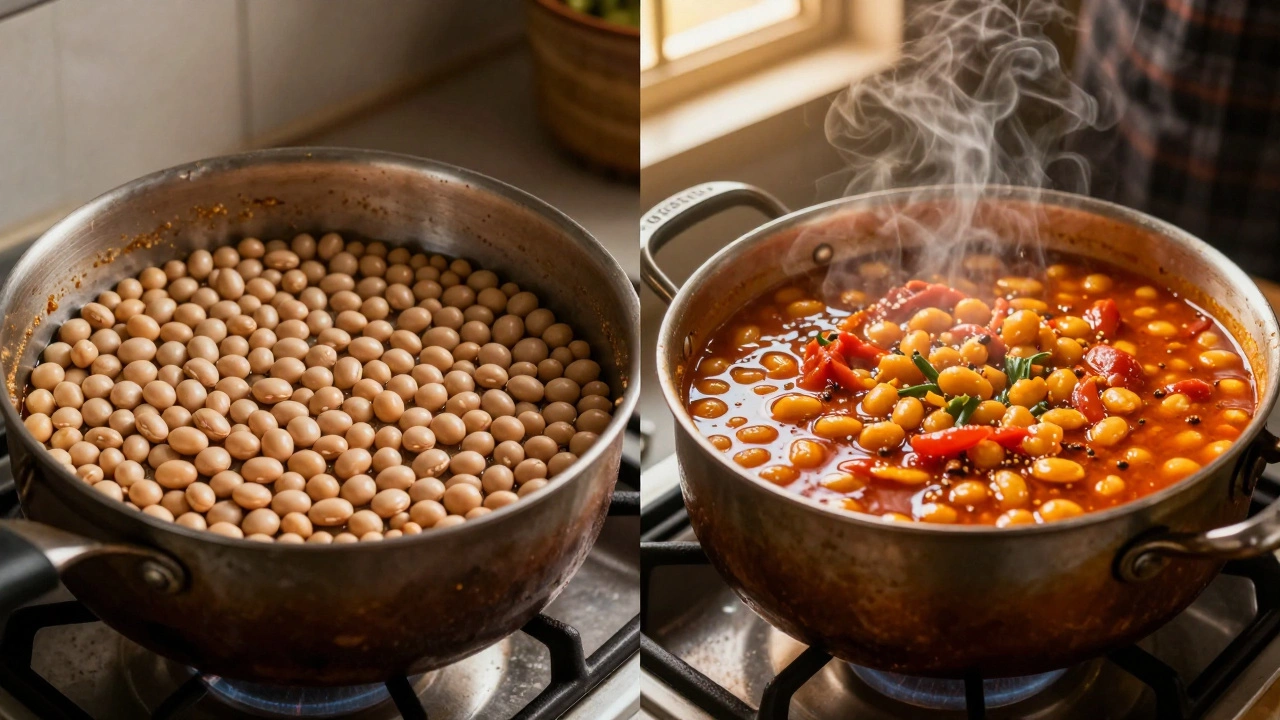
Pulse Soaking Checker
Determine whether your pulse requires soaking before cooking dal. Select your pulse type to get personalized instructions.
Key Rule of Thumb
• Split and skinned? No soak needed.
• Whole and unsplit? Soak for 4+ hours.
• Rajma or chickpeas? Always soak.
When you’re making dal at home, the difference between a creamy, tender dish and a gritty, undercooked mess often comes down to one step: soaking. Not all pulses need it, but skipping it for the ones that do can ruin your meal. If you’ve ever bitten into a hard lentil in your dal, you know what I mean. So which pulses actually need soaking? And why does it matter?
Why Soak Pulses at All?
Soaking isn’t just tradition-it’s science. Dry pulses are dense and packed with starches and anti-nutrients like phytic acid. Soaking for a few hours softens them, cuts down cooking time, and makes them easier to digest. It also helps reduce gas and bloating, which many people blame on lentils when it’s really just undercooked ones.
Think of it like prepping a sponge before you wash dishes. A dry sponge? It won’t absorb water well. A soaked one? It works instantly. Same with pulses. Soaking wakes them up.
Pulses That Definitely Need Soaking
These pulses should always be soaked for at least 4-8 hours (or overnight) before cooking:
- Chana dal (split chickpeas) - These are dense and take forever to cook without soaking. If you skip it, you’ll be waiting over an hour on the stove.
- Whole urad dal (black gram) - Not the split kind. Whole urad dal has a thick skin and needs soaking to soften properly. It’s essential for dishes like dal makhani.
- Moong dal (whole) - Yes, even though split moong dal cooks fast, the whole version (with skin) benefits from soaking. It cuts cooking time by nearly half.
- Rajma (red kidney beans) - These are notorious for causing stomach upset if not soaked and boiled thoroughly. Soak for 8+ hours, then boil for at least 15 minutes before simmering.
- Chickpeas (whole) - Whether you’re making chana masala or hummus, whole chickpeas need soaking. Canned ones are fine, but dried? Always soak.
For these five, soaking isn’t optional. Skip it, and you risk undercooked beans, uneven texture, or even digestive issues.
Pulses That Don’t Need Soaking
Here’s the good news: most split lentils you use for everyday dal don’t need soaking. They’re already been processed to cook quickly:
- Split red lentils (masoor dal) - These cook in 15-20 minutes. Soaking adds nothing but extra time.
- Split yellow lentils (toor dal) - The backbone of South Indian sambar. They soften fast with just a rinse and a boil.
- Split moong dal (yellow or green, skin removed) - This is the most common dal in Indian homes. It cooks in under 20 minutes. No soak needed.
- Split urad dal (white, skin removed) - Used in dosa batter and dal tadka. It cooks fast and doesn’t need soaking.
These are the pulses you’ll find in 9 out of 10 dal recipes. They’re designed for speed. Just rinse, drain, and throw them into the pot.
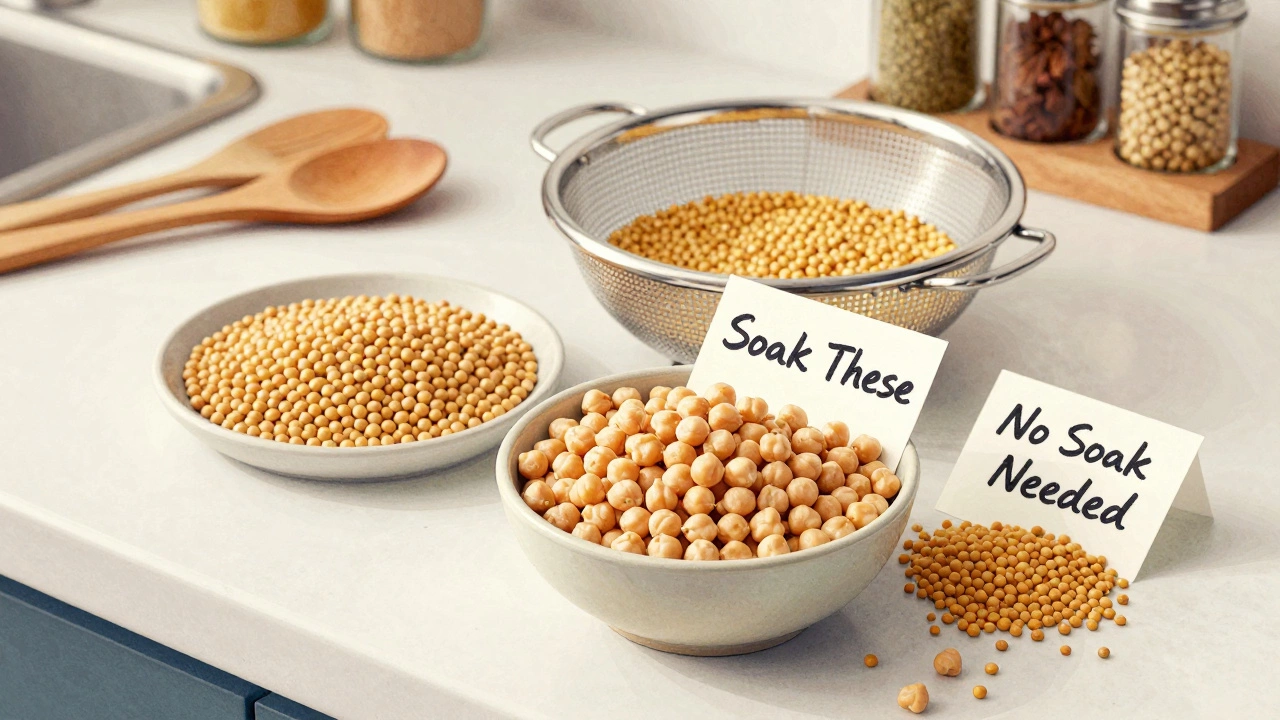
How to Soak Pulses the Right Way
If you’re soaking, here’s how to do it right:
- Use cold water. Hot water can start cooking the outside while leaving the inside hard.
- Use three times the volume of water to pulses. They swell up.
- Add a pinch of salt or a splash of lemon juice. This helps break down phytic acid and improves digestibility.
- Soak for 4-8 hours. Overnight is easiest - just set them before bed.
- Drain and rinse well before cooking. Don’t cook them in the soaking water - it contains compounds that cause gas.
Pro tip: If you’re in a hurry, use the quick-soak method. Boil the pulses for 2 minutes, turn off the heat, cover, and let sit for 1 hour. Then drain and cook.
What Happens If You Skip Soaking?
For pulses that need it, skipping soaking leads to:
- Longer cooking time - you might end up simmering for 90 minutes instead of 40.
- Uneven texture - some beans are mushy, others are still crunchy.
- More gas and bloating - the anti-nutrients aren’t broken down.
- Wasted energy - your stove or pressure cooker works harder than it should.
For example, if you throw unsoaked rajma into a pressure cooker without pre-boiling, you risk undercooking them even after 3 whistles. That’s dangerous. Undercooked kidney beans contain lectin, a toxin that can cause nausea or vomiting.
What About Pressure Cookers?
Some people think pressure cookers make soaking unnecessary. Not true. While they reduce cooking time, they don’t eliminate the need to soften the pulses first. Soaked pulses cook more evenly and safely. For rajma or whole chickpeas, even in a pressure cooker, soak first. Then cook for 6-8 whistles. Skip the soak? You might need 12 whistles - and still end up with some hard bits.
Split lentils? Go ahead and skip soaking. Pressure cooker or stovetop - they’ll be done in 10-15 minutes either way.
Storage Tip: Soak Ahead
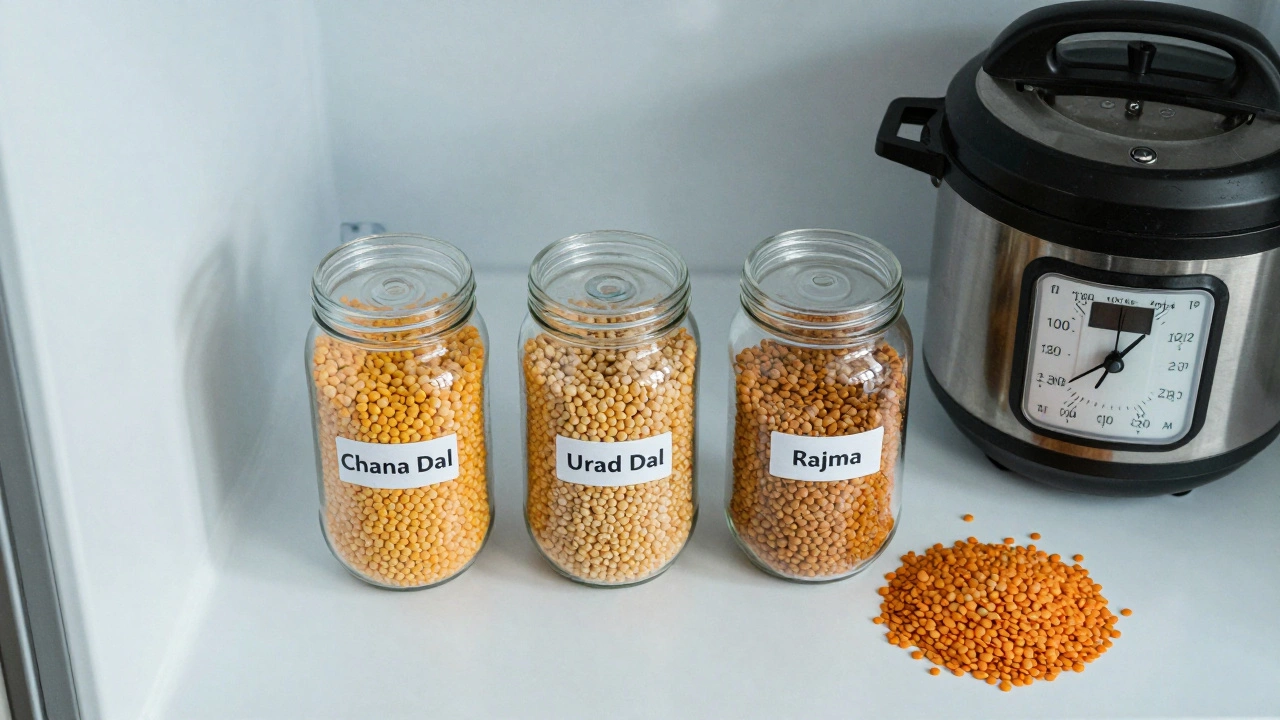
Plan ahead. Soak your pulses the night before, store them in the fridge, and cook them the next day. It’s a game-changer for busy weeks. I keep a few jars in my fridge with soaked chana dal and urad dal ready to go. Makes dal on a weeknight feel like a 10-minute task.
Final Rule of Thumb
Here’s how to remember:
- Split and skinned? No soak needed.
- Whole and unsplit? Soak for 4+ hours.
- Red kidney beans or chickpeas? Soak. Always.
When in doubt, soak. It takes 5 minutes to set up, and it saves you hours of cooking time and a bad meal.
Do I need to soak split red lentils for dal?
No, split red lentils (masoor dal) don’t need soaking. They’re already split and peeled, which lets them cook quickly in 15-20 minutes. Just rinse them under cold water to remove dust, then add them to your pot with water and spices.
Can I soak pulses for too long?
Yes. If you soak pulses for more than 12 hours at room temperature, they can start to ferment or sprout. That’s not bad - it actually increases nutrients - but it changes the texture and flavor. For cooking, stick to 4-8 hours. If you’re soaking overnight, keep them in the fridge to slow fermentation.
Why does soaking reduce gas from lentils?
Soaking breaks down complex sugars called oligosaccharides, which your body can’t digest. These sugars reach your gut bacteria, which ferment them and produce gas. Soaking leaches out some of these sugars, and rinsing removes the rest. Adding lemon juice or salt during soaking helps even more.
Should I soak pulses in hot or cold water?
Always use cold water. Hot water can cook the outer layer unevenly, leaving the center hard. Cold water gently softens the whole pulse. If you’re in a rush, use the quick-soak method: boil for 2 minutes, then let sit covered for 1 hour.
Can I use the soaking water to cook the pulses?
No, don’t use the soaking water. It contains compounds like phytic acid and oligosaccharides that cause bloating and interfere with nutrient absorption. Always drain and rinse the pulses thoroughly before cooking with fresh water.