Find Your Perfect Dosa Oil
Coconut Oil
Nutty, Tropical aroma
Ghee
Rich, Creamy depth
Sunflower Oil
Light, Neutral taste
Mustard Oil
Pungent, Sharp kick
Rice Bran Oil
High heat stable
Butter
Sweet, Western richness
Analysis Result
Match Score
Smoke Point
Pro Tip for This Combo:
There is nothing quite like the sound of a perfectly cooked dosa sizzling on a hot tawa. That distinct crackle tells you the batter has hit the right temperature, spreading thin and lacy across the surface. But have you ever wondered why your dosas sometimes turn out soggy or stick stubbornly to the pan, while restaurant versions are crisp as paper? Often, the culprit isn't your fermentation skills or the grind of your rice-it’s the oil you choose.
Selecting the right fat for cooking is not just about adding flavor; it is a technical decision that affects texture, browning, and health. In South Indian kitchens, this choice is debated with passion. Some swear by traditional coconut oil, while others insist on ghee for that authentic aroma. Modern cooks might reach for neutral vegetable oils or even butter. Each option changes the final result in subtle but significant ways. Understanding these differences helps you control the outcome of every single crepe you make.
The Role of Fat in Dosa Cooking
Before picking a bottle, it helps to understand what oil actually does during the cooking process. When you spread the fermented dosa batter on the pan, the moisture begins to evaporate immediately. Oil creates a barrier between the starches in the batter and the metal surface of the pan. This prevents sticking, which is crucial because tearing the dosa while flipping ruins its structural integrity.
Beyond preventing adhesion, oil facilitates the Maillard reaction. This is the chemical process responsible for the golden-brown color and toasted flavor we love. Different fats have different smoke points-the temperature at which they start to burn and release harmful compounds. If your oil smokes before the dosa crisps up, you end up with a bitter taste and potential health risks. Conversely, if the fat doesn't conduct heat efficiently, the dosa steams rather than fries, resulting in a soft, rubbery texture instead of a crunchy one.
The viscosity of the oil also matters. Thinner oils spread more easily, allowing for a thinner layer that promotes crispiness. Thicker fats like ghee or clarified butter pool slightly, creating localized spots of intense frying. This is why technique varies depending on the fat you use. You cannot treat coconut oil exactly the same way you treat ghee if you want optimal results.
Coconut Oil: The Traditional Favorite
In many parts of Kerala and coastal Karnataka, coconut oil is non-negotiable. It provides a distinct nutty aroma that complements the tangy, fermented notes of the batter. There are two main types to consider: refined and cold-pressed (virgin).
Cold-pressed coconut oil offers the strongest flavor profile. It turns solid below 76°F (24°C), so you often need to warm it slightly before using it to ensure it spreads evenly. This type pairs beautifully with plain masala dosas or those topped with spicy potato fillings. However, its strong scent can overpower delicate variations like rava dosa or cheese dosa. Refined coconut oil, on the other hand, has a higher smoke point and a neutral taste. It behaves similarly to vegetable oil but still contributes to the traditional aesthetic of South Indian breakfasts.
From a health perspective, coconut oil is high in saturated fats, specifically medium-chain triglycerides (MCTs). While recent studies suggest MCTs may offer metabolic benefits, moderation is key due to the saturated fat content. For cooking purposes, its stability at medium-high heats makes it a reliable choice for daily dosa making without breaking down into toxic aldehydes as quickly as some polyunsaturated oils.
Ghee: The Aroma Powerhouse
If you walk into an old-school South Indian restaurant, the air likely smells of ghee. Clarified butter removes the milk solids from regular butter, raising its smoke point to around 485°F (250°C). This allows you to cook at higher temperatures without burning the fat, which is essential for achieving that deep golden crust.
Ghee adds a rich, creamy depth that plain oils simply cannot replicate. It enhances the savory elements of the meal, making it particularly suitable for thicker dosas like set dosa or uttapam. Because ghee is denser, you typically use less of it compared to liquid oils. A small smear around the edges and a drizzle over the top is usually sufficient.
One practical advantage of ghee is its shelf stability. Unlike fresh butter, it does not spoil easily, making it convenient for households that cook frequently. However, it is significantly more expensive than vegetable oils. Many home cooks adopt a hybrid approach: using a cheap neutral oil for the initial cooking and finishing with a teaspoon of ghee for flavor. This balances cost with sensory satisfaction.
Neutral Oils: The Versatile Workhorses
For those who prefer their dosa to taste purely of the fermented batter, neutral oils are the best bet. Sunflower oil, mustard oil, and rice bran oil are common choices in Indian households.
Sunflower oil is widely available and has a light texture. It spreads thinly, encouraging maximum surface area contact with the hot pan, which aids in crisping. Mustard oil, popular in North India and Bengal, has a pungent kick that some people find clashes with the subtle sourness of dosa batter. If you use mustard oil, ensure it is heated until it reaches its smoking point first to remove raw bitterness, then let it cool slightly before applying to the dosa.
Rice bran oil is gaining popularity due to its high smoke point and balanced fatty acid profile. It is stable under high heat and imparts no discernible flavor, making it ideal for experimenting with fusion toppings like paneer tikka or mushroom capsicum. Its neutral nature ensures that the star of the show remains the batter itself.
Butter and Alternatives
Regular unsalted butter is another option, though it requires caution. Because it contains water and milk solids, it burns at lower temperatures (around 350°F or 175°C). To use butter effectively, add it towards the end of the cooking process or mix it with a small amount of oil to raise the overall smoke point. Butter lends a Western-style richness that works surprisingly well with sweet chutneys or fruit-based accompaniments.
Some modern diets call for olive oil. While extra virgin olive oil has a low smoke point and should be avoided for high-heat frying, light or refined olive oil can work in a pinch. It won’t provide the traditional flavor profile, but it will get the job done if that’s all you have on hand. Just avoid heating it to the point of smoking.
Comparison of Cooking Fats for Dosa
| Oil Type | Flavor Profile | Smoke Point | Best For | Cost | |
|---|---|---|---|---|---|
| Coconut Oil | Nutty, Tropical | 350°F - 450°F | Traditional Masala Dosa | Moderate | |
| Ghee | Rich, Creamy | 485°F | Set Dosa, Uttapam | High | |
| Sunflower Oil | Neutral | 450°F | Everyday Plain Dosa | Low | |
| Mustard Oil | Pungent, Sharp | 484°F | Regional Variations | Low | |
| Butter | Sweet, Rich | 350°F | Fusion Toppings | Moderate |
Technique Matters: How to Apply Oil
Even the best oil fails if applied incorrectly. The timing and method of application determine whether your dosa shatters when bitten or bends like plastic. Here is a step-by-step approach for maximum crispiness:
- Preheat the Pan Properly: Your tawa or non-stick skillet must be hot before the batter touches it. Test by sprinkling a few drops of water; they should sizzle and evaporate instantly.
- Spread Thinly: Pour the batter and swirl it quickly. Thick areas take longer to cook and remain soggy. Aim for uniform thinness.
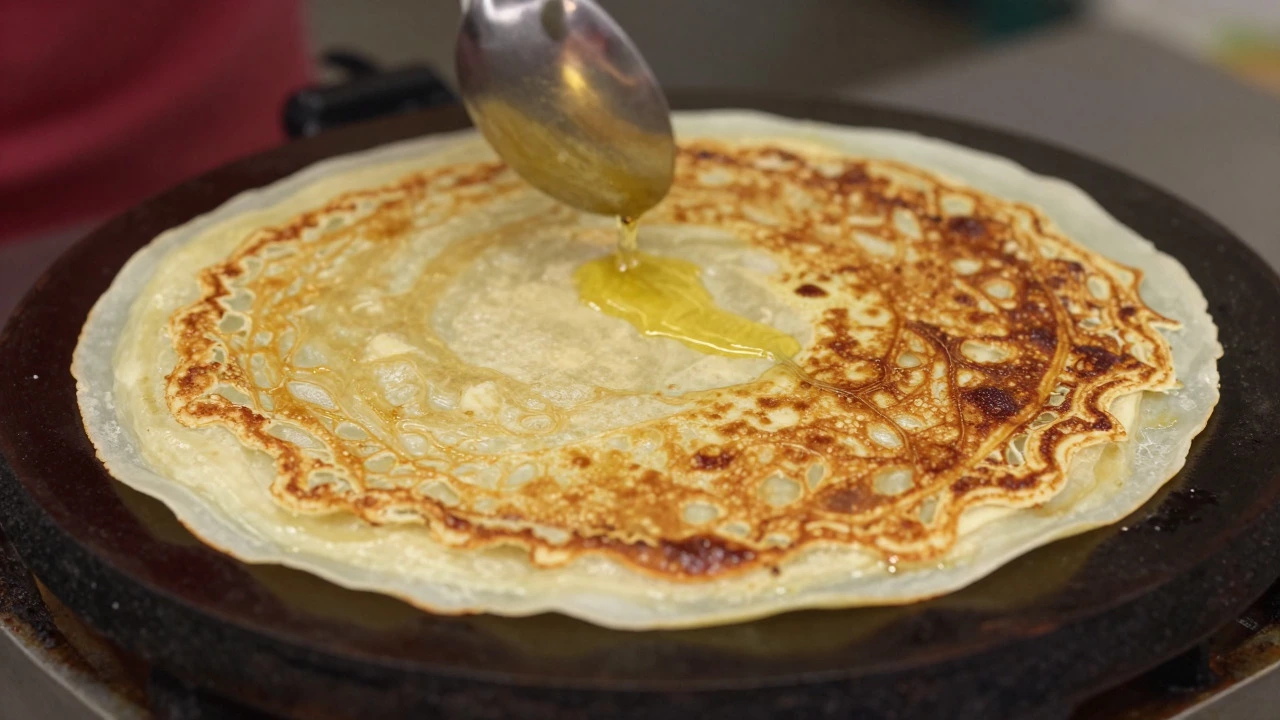
- Apply Oil Strategically: Do not drench the entire surface. Use a brush or a spoon to drizzle oil around the outer rim first. Then, lightly brush the center. This encourages the edges to lift and crisp up while keeping the center pliable enough to flip.
- Wait for the Color Change: Watch closely. When the bottom turns golden brown and the edges begin to pull away from the pan naturally, it is time to flip or fold. Rushing this step leads to sticking.
- Finish with Ghee (Optional): If you used a neutral oil, add a tiny dot of ghee on top just before serving. It melts into the warm crepe, adding aroma without compromising the crunch achieved during cooking.
Troubleshooting Common Issues
If your dosas are sticking despite using oil, check your pan’s condition. Non-stick coatings degrade over time. Scratches create microscopic pockets where batter gets trapped. If your pan is older than three years, consider replacing it. Cast iron pans require seasoning; if they aren’t properly seasoned, they act like magnets for starchy foods.
Another issue is using too much oil. Excess fat saturates the batter, weighing it down and preventing the formation of a dry, crispy crust. The goal is lubrication, not deep-frying. Start with less; you can always add more, but you cannot remove excess once absorbed.
Temperature control is critical. If the pan is too hot, the oil burns before the inside cooks. If it’s too cool, the batter absorbs the oil like a sponge, becoming greasy and limp. Aim for medium-high heat. Adjust based on your stove’s power output.
Health Considerations
Dosa is generally considered a healthy food due to its fermented grain base, which aids digestion. However, the addition of oil adds calories and fat. For weight-conscious individuals, measuring the oil precisely helps manage intake. Using a spray bottle for oil application can reduce usage by up to 50% compared to pouring from a bottle.
Consider rotating your oils. Relying solely on one type limits your nutrient diversity. Alternate between coconut oil for flavor days and sunflower or rice bran oil for everyday meals. This variety ensures you benefit from different fatty acid profiles while avoiding excessive intake of any single saturated fat source.
Final Thoughts on Choosing Your Oil
There is no single "best" oil for dosa; there is only the best oil for your specific preference and context. If you crave tradition and aroma, go for coconut oil or ghee. If you prioritize neutrality and cost-effectiveness, sunflower or rice bran oil serves you well. The key lies in understanding how each fat interacts with heat and batter.
Experimentation is part of the joy of cooking. Try making a batch with coconut oil, then another with ghee, and compare the textures and flavors side by side. Note how the batter behaves differently with each. Over time, you will develop an intuition for which fat suits your mood, your toppings, and your health goals on any given morning.
Can I use olive oil for making dosa?
You can use refined or light olive oil, but avoid extra virgin olive oil. Extra virgin olive oil has a low smoke point and a strong flavor that may clash with the batter. Refined olive oil has a higher smoke point and neutral taste, making it safer for frying, though it lacks the traditional aroma associated with dosa.
Why do my dosas stick even when I use oil?
Sticking usually occurs due to insufficient preheating of the pan, using too little oil, or a degraded non-stick surface. Ensure the pan is hot before adding batter, apply oil generously around the edges, and check if your pan needs replacement. Additionally, flipping too early before the crust forms can cause tearing and sticking.
Is ghee healthier than coconut oil for dosa?
Both ghee and coconut oil are high in saturated fats. Ghee contains conjugated linoleic acid (CLA) and vitamins A, D, E, and K, while coconut oil is rich in medium-chain triglycerides (MCTs). Neither is strictly "healthier"; it depends on your dietary goals. Moderation is key for both. Ghee has a higher smoke point, making it better for high-heat cooking without breaking down.
How much oil should I use per dosa?
For a standard-sized dosa, approximately 1 to 2 teaspoons of oil is sufficient. Apply it primarily around the edges to encourage crisping, with a light brush in the center. Using more than this can make the dosa greasy and heavy, negating the lightness of the fermented batter.
What is the best oil for crispy dosa?
Ghee and refined coconut oil are excellent for achieving crispiness due to their ability to withstand high heat and promote browning. Neutral oils like sunflower or rice bran oil also work well if applied correctly. The key to crispiness is not just the oil type, but ensuring the pan is hot and the batter is spread thinly.