Indian Vegetarianism Explorer
Select a region below to discover its vegetarian status, key dietary influences, and famous local dishes.
Region Name
StatusVegetarian Status
Key Influences
Common Exclusions
Famous Dishes
You might think that because India is famous for its vegetarian culture, everyone there skips the meat. But walk into a restaurant in Kerala or Hyderabad, and you’ll see plenty of non-veg options on the menu. The reality is much more nuanced. Vegetarianism in India isn’t just a diet; it’s deeply tied to religion, geography, and local history. So, which part of India actually eats the most vegetarian food? If you’re looking for the absolute highest percentage, the answer points straight to one specific region: Rajasthan.
But before we pack our bags for the desert, let’s look at why this question matters. Whether you’re planning a trip, trying to understand cultural differences, or just curious about global dietary habits, knowing where vegetarianism thrives helps you navigate menus with confidence. It’s not just about avoiding meat; it’s about understanding the communities that have perfected plant-based cooking over centuries.
The Undisputed Champion: Rajasthan
If you look at the data from the National Family Health Survey (NFHS-5), which is the gold standard for health and demographic data in India, Rajasthan consistently ranks as the state with the highest percentage of vegetarians. We are talking about roughly 30% to 34% of the population identifying as strictly vegetarian. In some districts, particularly those with high Jain populations, that number can climb even higher.
Why Rajasthan? Two main reasons drive this trend. First, the harsh desert climate historically made animal husbandry difficult and expensive. Raising livestock requires water and fodder, both scarce resources in the Thar Desert. Second, the strong influence of Jainism and Vaishnavism plays a huge role. Many Rajasthani communities follow strict dietary codes that exclude root vegetables, eggs, and often garlic and onions, aligning closely with Jain food principles.
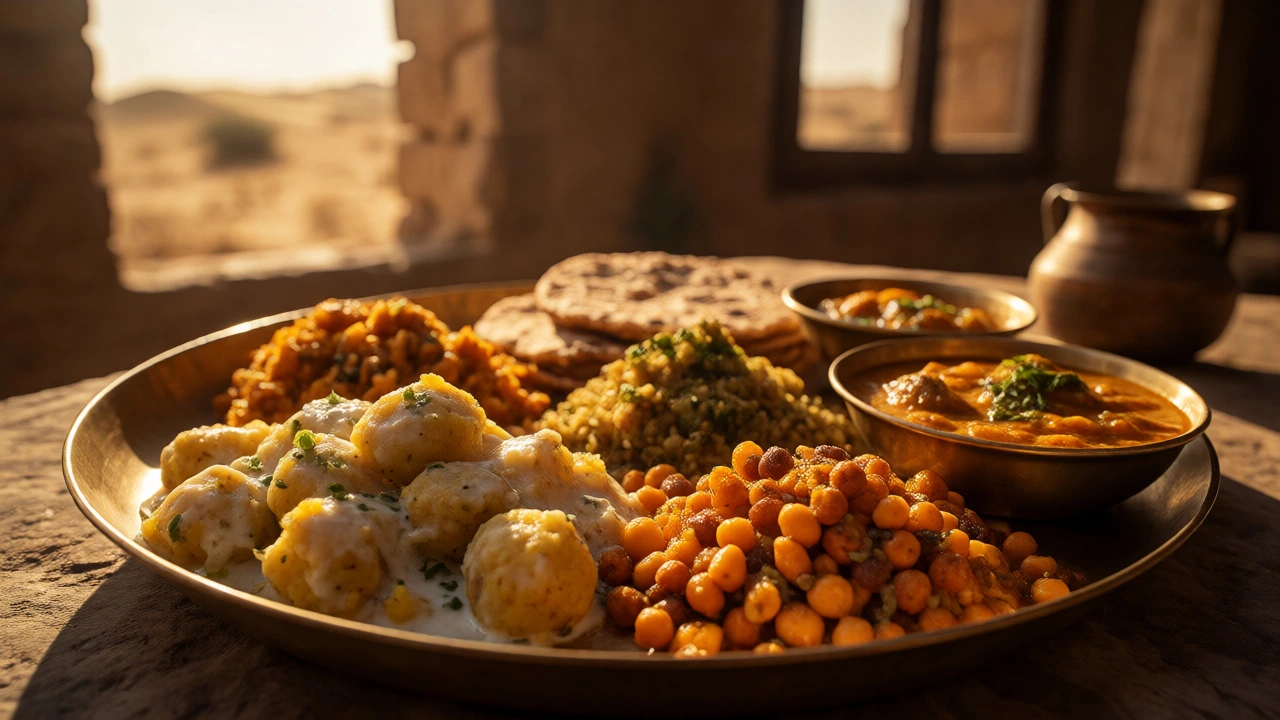
When you eat in Rajasthan, you aren’t just getting a salad. You’re getting rich curries like Gatte ki Sabzi (gram flour dumplings in yogurt sauce) and Ker Sangri (a dish made from dried berries and beans). These dishes prove that vegetarian food in this region is hearty, calorie-dense, and designed to sustain people through hot days and cold nights.
The Religious Heartland: Gujarat
Right next door to Rajasthan sits Gujarat, another heavyweight in the vegetarian arena. While Rajasthan takes the top spot statistically, Gujarat is arguably more famous globally for its vegetarian cuisine. This is largely due to the massive Gujarati diaspora who opened restaurants worldwide, spreading the word about thalis and dhoklas.
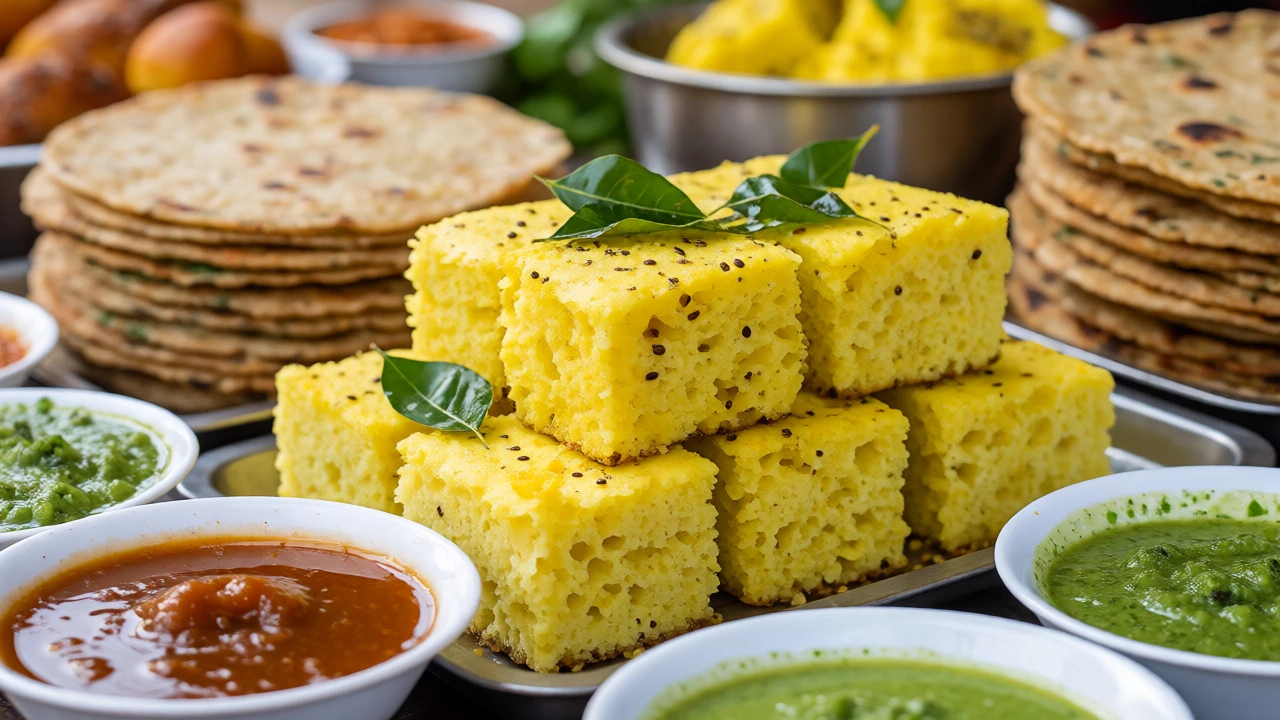
In Gujarat, vegetarianism is often linked to the concept of Sattvic food-food that promotes purity and clarity. A traditional Gujarati meal rarely includes meat. Even in coastal areas where fish would be abundant, many Hindu communities stick to plants. The state has a unique sweet-and-savory flavor profile. Think of Dhokla, steamed cakes made from fermented batter, or Thepla, whole-wheat flatbreads infused with fenugreek leaves. These foods are portable, nutritious, and naturally vegan-friendly if you skip the ghee.
It’s worth noting that while Gujarat is predominantly vegetarian, urban centers like Ahmedabad do have significant non-vegetarian populations, especially among Muslim and Parsi communities. However, the default assumption in a typical Gujarati household is still a meat-free table.
The Southern Exception: Karnataka and Tamil Nadu
People often assume South India is uniformly vegetarian. That’s a myth. Karnataka and Tamil Nadu have large non-vegetarian populations, particularly among Christian and Muslim communities. However, certain pockets within these states are fiercely vegetarian.
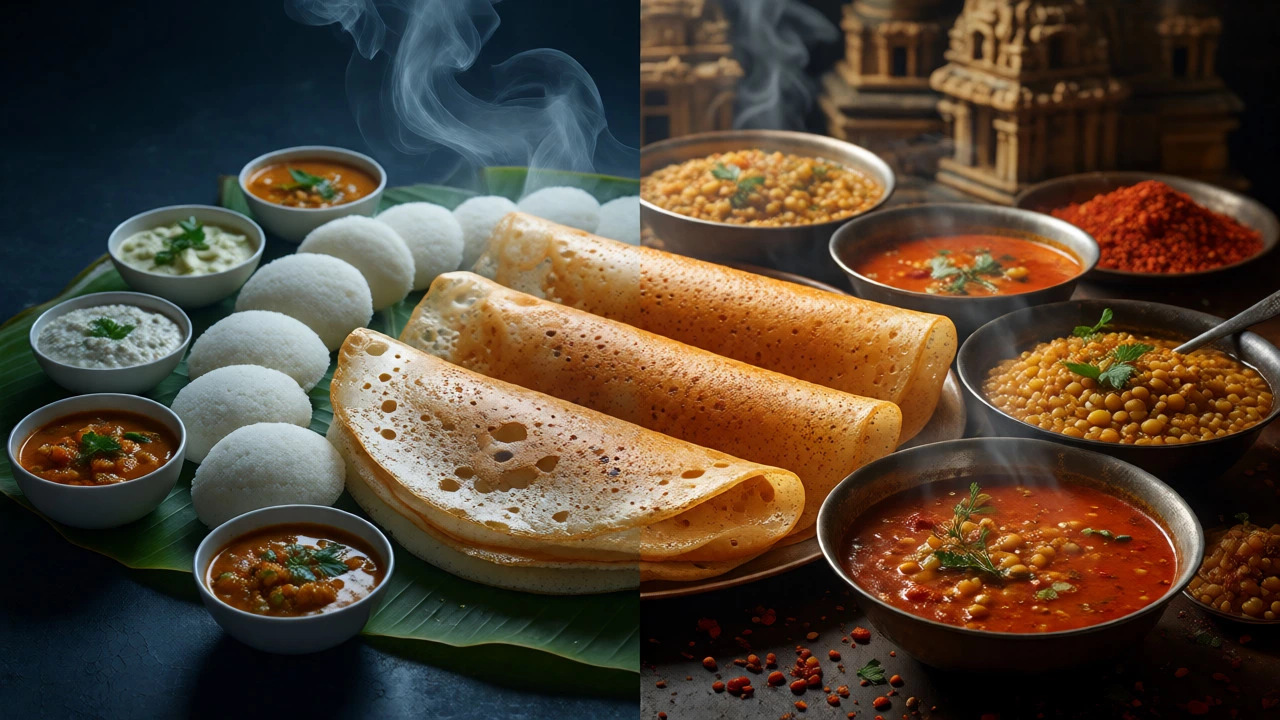
Take Udupi in Karnataka, for example. This coastal town is the birthplace of the famous Udupi cuisine, which is strictly vegetarian and rooted in the Madhva tradition. Udupi restaurants across the world serve dosas, idlis, and sambar without a hint of meat. Similarly, in Tamil Nadu, Brahmin communities maintain strict vegetarian diets. Their cuisine relies heavily on lentils, rice, tamarind, and coconut. Dishes like Sambar and Rasam are staples here, offering complex flavors derived entirely from plants.
However, if you travel to Hyderabad in Telangana, you’ll find yourself in a different world. Hyderabadi Biryani is legendary, and it’s almost always made with goat or chicken. So, while parts of the South are vegetarian hubs, the region as a whole is mixed. Don’t let the stereotype of "South Indian = Vegetarian" fool you when you’re booking your hotel near a busy market.
The Northeast Anomaly
To understand how diverse India is, look at the Northeast. States like Nagaland, Mizoram, and Meghalaya have very low rates of vegetarianism. Here, pork and beef are common ingredients. Fermented bamboo shoots, smoked meats, and spicy chutneys define the palate. If you’re a strict vegetarian traveling here, you need to ask questions. "Is this cooked with pork fat?" is a valid and necessary query. The cultural distance between a Rajasthani thali and a Naga stir-fry is vast, highlighting that "Indian food" is not a single monolith.
Comparing the Vegetarian Hotspots
How do these regions stack up against each other? Let’s break down the key differences in their vegetarian traditions. This comparison helps you decide what kind of culinary experience you’re looking for.
| Region | Estimated Vegetarian % | Key Dietary Influences | Famous Dishes | Exclusions |
|---|---|---|---|---|
| Rajasthan | ~30-34% | Jainism, Desert Climate | Ker Sangri, Gatte ki Sabzi | Meat, often root veg (Jain) |
| Gujarat | ~25-30% | Hindu Sattvic Diet | Dhokla, Thepla, Khichdi | Meat, sometimes onion/garlic |
| Haryana/Punjab | ~15-20% | Agricultural Wealth | Rajma Chawal, Sarson da Saag | Meat (less common in rural homes) |
| Udupi (Karnataka) | High (Local) | Madhva Tradition | Masala Dosa, Sambar | Meat, eggs, root veg (strict) |
Notice the exclusions column. In Rajasthan and parts of Gujarat, being vegetarian doesn’t just mean "no meat." For Jains, it means no potatoes, onions, or garlic because pulling them up kills tiny organisms in the soil. If you’re ordering food in a Jain-run establishment, expect simpler spice profiles but incredibly creative use of spices like asafoetida (hing) to mimic the pungency of onions.
Why Do These Regions Stay Vegetarian?
It’s easy to dismiss this as purely religious, but economics and environment play a huge part. In Rajasthan, water scarcity meant growing crops was safer than raising animals. Crops provide calories per acre more efficiently than livestock. This agricultural reality shaped the taste buds of generations. Over time, the food became comfort food. A Rajasthani person might crave Bajra Roti (millet bread) not because they are forced to eat it, but because it tastes like home.
In Gujarat, the abundance of dairy played a crucial role. With plenty of milk available, people didn’t need to hunt for protein sources. Paneer (cottage cheese), ghee (clarified butter), and yogurt became central to the diet. This allowed for rich, creamy vegetarian dishes that feel indulgent without using meat.
Navigating Menus as a Vegetarian Traveler
If you’re visiting these regions, here is a quick cheat sheet to avoid awkward moments:
- Ask about "Egg": In many Indian contexts, "vegetarian" excludes eggs, but not always. Always clarify if you don’t eat eggs.
- Watch out for "Non-Veg Broth": Sometimes vegetable curries are cooked in chicken stock for extra flavor. Ask specifically if the gravy is water-based or stock-based.
- Look for the Green Dot: In packaged goods and restaurants, a green dot inside a square indicates pure vegetarian. A brown dot usually means contains egg or non-veg traces.
- Street Food Caution: In mixed cities, street vendors might use the same oil for pakoras (fritters) and chicken pieces. Look for dedicated vegetarian stalls, which are plentiful in Gujarat and Rajasthan.
Understanding these nuances makes you a better traveler. You stop guessing and start enjoying. Plus, you support businesses that cater to your needs properly.
The Future of Vegetarianism in India
Is vegetarianism declining? Surprisingly, yes, in some ways. As incomes rise and supply chains improve, access to meat becomes easier in traditionally vegetarian areas. Younger generations in urban centers are experimenting with non-vegetarian diets more than their parents did. However, there’s also a counter-trend. Health-conscious millennials in Mumbai and Bangalore are adopting flexitarian or vegan lifestyles for ethical and environmental reasons, not just religious ones.
This shift creates a new market. Vegan cafes in Delhi and Bangalore offer plant-based alternatives that rival Western standards. Oat milk lattes and jackfruit tacos are becoming common. So, while the traditional heartlands remain vegetarian, the definition of what constitutes a vegetarian meal is expanding beyond dal and roti.
Which city in India has the most vegetarians?
While state-level data is more commonly cited, cities like Surat in Gujarat and Jaipur in Rajasthan have extremely high concentrations of vegetarians. Surat, in particular, is known for its strict adherence to vegetarian diets due to its Jain and Hindu merchant communities.
Is all Indian food vegetarian?
No. Only about 20-30% of Indians are vegetarian depending on the survey. Many regions, including Kerala, Goa, West Bengal, and the Northeast, consume significant amounts of fish, poultry, and red meat. The stereotype of India being wholly vegetarian is inaccurate.
Do vegetarians in India eat eggs?
Traditionally, no. Most Hindus, Jains, and Sikhs consider eggs non-vegetarian. However, in modern urban settings and among younger demographics, some people who identify as "lacto-vegetarian" may include eggs. It is always safest to specify "no egg" when ordering.
What is Jain food?
Jain food is a strict form of vegetarianism that avoids root vegetables (like potatoes, onions, and garlic) because harvesting them disturbs the earth and kills microorganisms. It also excludes honey and often uses minimal heating to preserve life forms. It is prevalent in Rajasthan and Gujarat.
Is South India more vegetarian than North India?
Not necessarily. While parts of South India like Udupi are highly vegetarian, states like Kerala and Andhra Pradesh have high non-vegetarian consumption. North Indian states like Rajasthan and Gujarat generally have higher overall percentages of vegetarians compared to southern coastal states.