Indian Vegetarian Meal Planner
Create your perfect Indian vegetarian feast! Select dishes below to build your meal plan. The tool will analyze nutritional balance and suggest ideal side pairings.
Dal Tadka
Tempered Lentils
Earthy Spicy High ProteinPaneer Butter Masala
Cheese in Tomato Sauce
Creamy Rich High ProteinChana Masala
Chickpea Curry
Tangy Hearty High FiberPalak Paneer
Spinach & Cheese
Earthy Mild Iron RichMasala Dosa
Crispy Rice Crepe
Crispy Fermented Gluten FreeIdli
Steamed Rice Cakes
Soft Fermented Light✨Your Personalized Indian Feast
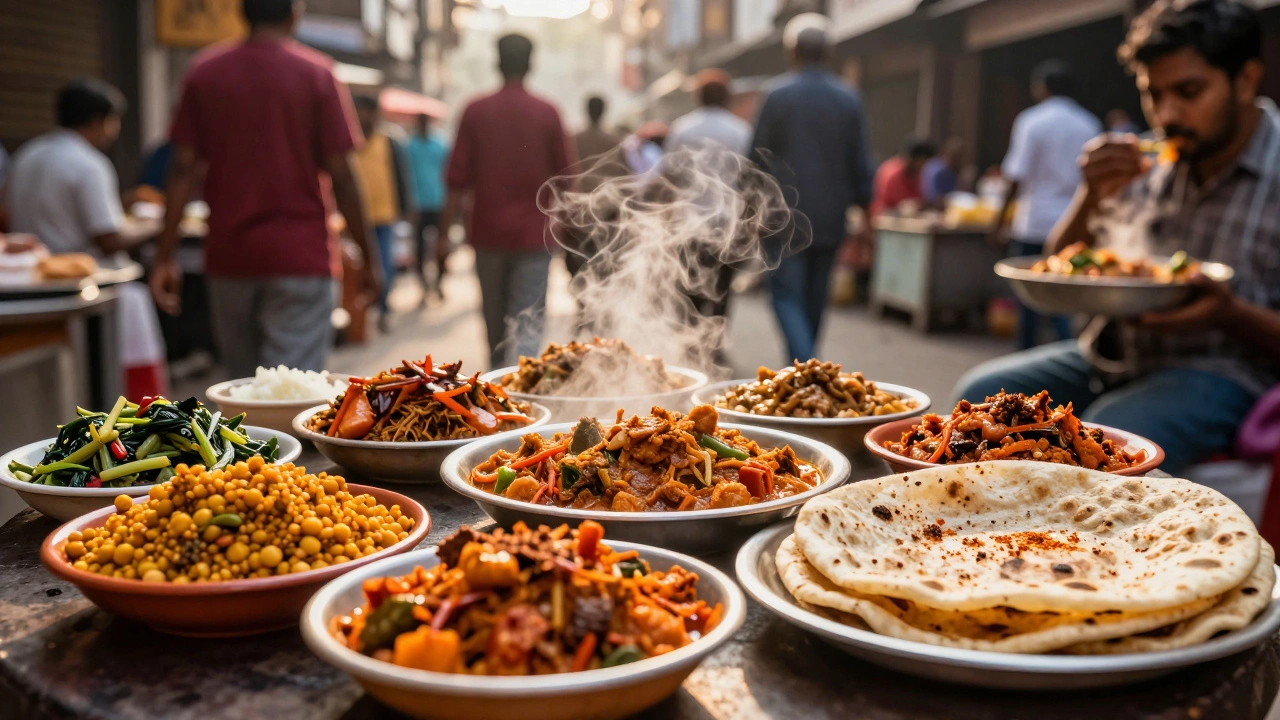
Picture this: You are walking down a busy street in Mumbai or Delhi. The air smells of cumin, coriander, and frying spices. You look around at the food stalls. There is no chicken tikka masala here. No mutton curry. Instead, you see plates piled high with dal (lentils), sabzi (vegetable curries), and fresh roti. This isn't a special health-food district. This is just everyday life for millions of people.
If you have ever wondered which is the No 1 vegetarian country in the world, the answer might surprise you if you aren't paying attention to the data. It isn't Italy, despite their love for pasta. It isn't Israel, which has a booming vegan scene in Tel Aviv. It is India.
India stands alone as the global leader in vegetarianism. But why? Is it just about religion? Or is there something deeper about the culture, the climate, and the history that makes plants the star of the show? Let's break down the numbers, the reasons, and the delicious reality of eating like an Indian vegetarian.
The Numbers: Why India Takes the Gold Medal
When we talk about "most vegetarians," we can look at two different metrics: percentage of the population and total number of people. In both cases, India wins by a landslide.
About 20% to 40% of Indians identify as vegetarians. That means roughly 200 to 400 million people do not eat meat. To put that in perspective, that is more vegetarians than the entire population of the United States. Even if you take the conservative estimate of 20%, that is still double the next closest contender.
Who comes in second? Usually, it’s Israel or Thailand, but they are far behind. Israel has one of the highest *percentages* of vegans per capita (around 5-10%), but because the total population is small, the raw numbers don't compete with India. Thailand has a strong Buddhist influence that encourages meat-free days, but it doesn't translate to a permanent vegetarian lifestyle for the majority.
So, when experts ask who holds the title, India is the undisputed champion. But being vegetarian in India isn't just a dietary choice; it is a cultural identity.
Why Do So Many Indians Eat Vegetarian?
You might think it's all about religion, and you'd be half-right. Religion plays a huge role, but it's not the only factor.
- Hinduism: A core principle in Hinduism is Ahimsa, or non-violence. Many Hindus believe that harming animals creates negative karma. While not all Hindus are vegetarian, the ideal is highly respected. Cows are considered sacred, so beef is rarely eaten, and many avoid all meat to maintain purity.
- Jainism: Jains take non-violence to the extreme. They avoid root vegetables like onions and garlic because pulling them up kills the plant and harms tiny organisms in the soil. If you meet a Jain, expect very strict vegetarian rules.
- Buddhism: Many Buddhists practice vegetarianism out of compassion for living beings. You'll see this strongly in parts of Southern India and Sri Lanka.
- Economics: Historically, meat was expensive. Lentils, rice, and seasonal vegetables were cheap and accessible. For centuries, the average Indian family relied on plant-based foods because it was simply more affordable.
- Climate: India is hot. Heavy meats can feel difficult to digest in tropical heat. Light, spiced vegetable dishes are easier on the stomach and keep you cool.
It's a mix of belief, budget, and biology. And over thousands of years, this combination created a cuisine that doesn't just "do" vegetables-it celebrates them.
Vegetarian Indian Dishes: More Than Just Rice
If you grew up eating meat, you might worry that a vegetarian diet is boring. Indian cuisine proves that wrong immediately. The secret? Spices. Indians use dozens of spices to create complex flavors without relying on animal protein for taste.
Here are some of the most iconic vegetarian Indian dishes that show why this cuisine is so popular worldwide.
1. Dal Tadka (Tempered Lentils)
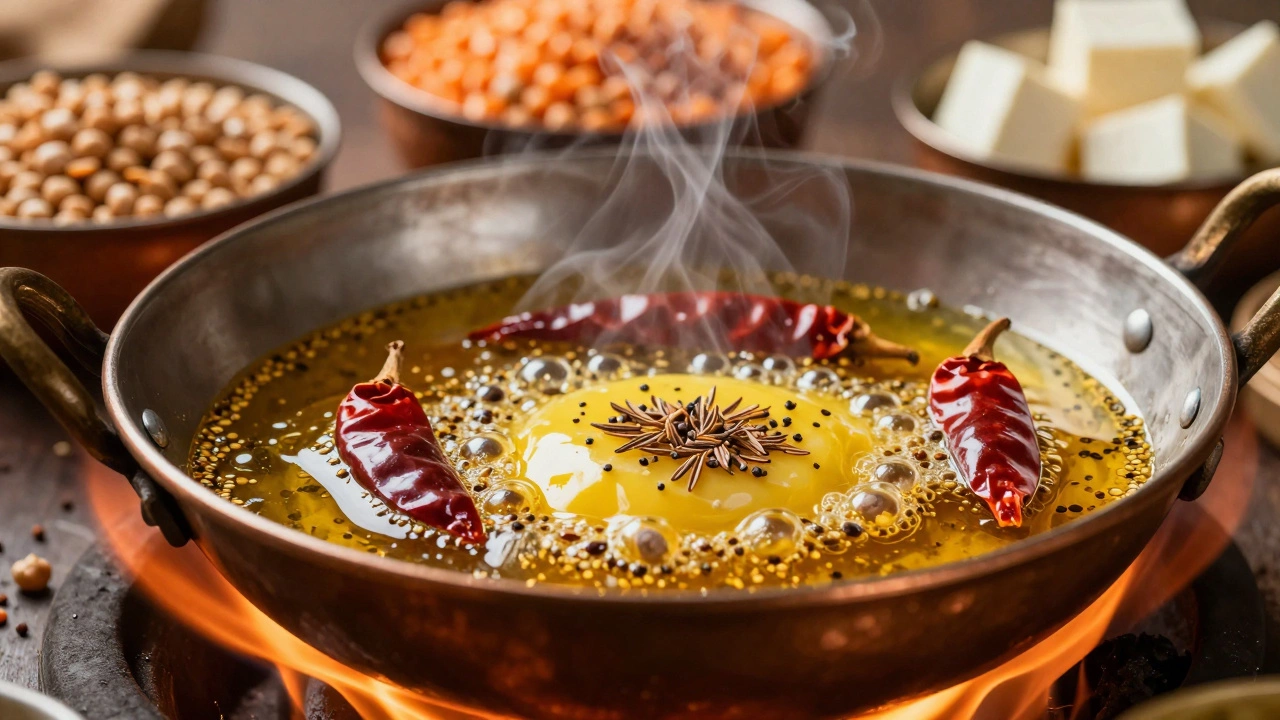
Dal is the backbone of Indian vegetarian cooking. It is basically boiled lentils or beans, seasoned with turmeric and salt. But then comes the tadka. This is where you heat ghee (clarified butter) or oil and fry cumin seeds, mustard seeds, dried red chilies, and garlic until they pop and sizzle. You pour this hot, aromatic mixture over the soft lentils. The result? Creamy, spicy, comforting, and packed with protein.
2. Paneer Butter Masala
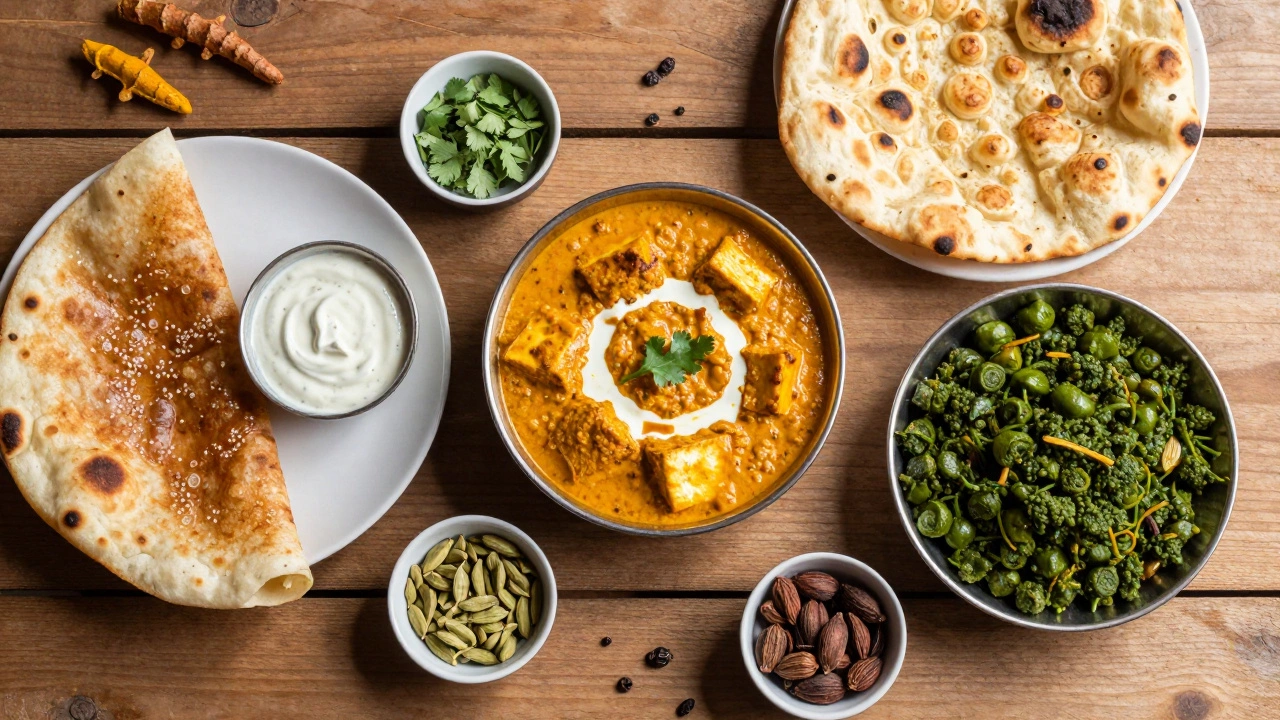
Paneer is a fresh, non-melting cheese made from curdled milk. It is high in protein and acts as a perfect meat substitute. In Paneer Butter Masala, cubes of paneer are simmered in a rich, tomato-based sauce with butter, cream, cashews, and warm spices like garam masala. It is creamy, slightly sweet, and deeply savory. Serve it with naan bread, and you have a meal that feels luxurious.
3. Chana Masala (Chickpea Curry)
Chickpeas are tough, hearty, and hold their shape well. Chana Masala involves cooking chickpeas in a tangy onion-tomato gravy with amchur (dry mango powder) and fenugreek leaves. It is often served with rice or chapati. It is cheap, filling, and incredibly flavorful. Street vendors sell this by the bucketload across the country.
4. Palak Paneer
This dish combines spinach (palak) and paneer. The spinach is blended into a smooth green puree and cooked with spices. The paneer cubes are added at the end. It looks vibrant green and tastes earthy and rich. It is also super healthy, loaded with iron and vitamins.
5. Dosas and Idlis (South Indian Staples)
In South India, rice and lentil batter is fermented and cooked. A dosa is a thin, crispy crepe, often stuffed with potato filling. An idli is a steamed cake, soft and fluffy. Both are naturally gluten-free (if made with pure rice/lentil) and are usually eaten with coconut chutney and sambar (a lentil-vegetable stew). These are breakfast foods that could easily be lunch or dinner.
| Dish Name | Main Ingredient | Key Flavor Profile | Best Paired With |
|---|---|---|---|
| Dal Tadka | Lentils | Earthy, Spicy, Savory | Rice or Roti |
| Paneer Butter Masala | Cheese (Paneer) | Creamy, Rich, Tomato-based | Naan Bread |
| Chana Masala | Chickpeas | Tangy, Hearty, Spiced | Chapati or Jeera Rice |
| Palak Paneer | Spinach & Cheese | Green, Earthy, Mildly Spiced | Basmati Rice |
| Dosa | Rice & Lentil Batter | Crispy, Fermented, Tangy | Coconut Chutney |
How India Influences Global Vegetarian Trends
India didn't just invent vegetarianism; it exported the idea that plants can be exciting. As Indian communities moved to the UK, USA, Canada, and Australia, they brought their kitchens with them.
In the West, vegetarianism used to mean boiled broccoli and sad salads. Then came Indian restaurants. Suddenly, people realized that a curry could be just as satisfying as a steak. Today, "vegan curry" is a standard menu item in London and New York. Brands like Beyond Meat and Impossible Foods often cite Indian spice blends as inspiration for making plant-based meats taste real.
Even yoga, which originated in India, has helped spread vegetarian habits globally. People who start practicing yoga often learn about Ahimsa and choose to reduce meat consumption. It is a cultural package deal: mind, body, and plate.
Challenges in Being Vegetarian in India
It sounds idyllic, but there are challenges. One major issue is nutrition. Because many Indian vegetarian diets rely heavily on refined carbs (white rice, white flour) and lack variety in proteins, issues like anemia (low iron) and vitamin B12 deficiency are common. B12 is found almost exclusively in animal products. Without supplements or fortified foods, long-term vegetarians in India often struggle with energy levels.
Another challenge is hidden non-veg ingredients. Some traditional snacks use egg as a binder, or fish sauce as a flavor enhancer. If you are a strict vegetarian traveling in India, you need to ask questions. However, most restaurants clearly label "Veg" (green dot) and "Non-Veg" (brown dot) on menus, which helps immensely.
Can You Try an Indian Vegetarian Diet?
You don't need to move to India to benefit from this way of eating. The principles are simple:
- Focus on Legumes: Make lentils, chickpeas, and beans a staple. They provide fiber and protein.
- Use Whole Spices: Don't just use salt. Use cumin, coriander, turmeric, and cardamom. They add flavor and anti-inflammatory benefits.
- Vary Your Greens: Spinach, okra, bitter gourd, and bottle gourd are common in India. Try adding these to your weekly shopping list.
- Ferment When Possible: Foods like dosa batter, idli, and even yogurt aid digestion and gut health.
Start with one meal a day. Make a simple dal or a chickpea salad. You will find that your palate expands quickly. Once you get used to the depth of flavor that spices provide, processed meat starts to taste bland by comparison.
Final Thoughts on the World's Top Vegetarian Nation
India is the No 1 vegetarian country not because of a government mandate, but because of a deep-rooted cultural harmony between people, animals, and nature. It shows us that you don't need meat to have a full, flavorful, and satisfying life.
Whether you are looking to cut down on meat for health reasons, environmental concerns, or ethical beliefs, Indian cuisine offers a roadmap. It proves that vegetables aren't just a side dish-they can be the main event.
Is India the only country with a large vegetarian population?
No, other countries like Nepal, Bangladesh, and Thailand have significant vegetarian populations due to religious influences. However, India has the largest absolute number and one of the highest percentages globally.
Are all Indians vegetarian?
No. While 20-40% are vegetarian, the majority of Indians do eat meat, particularly chicken, goat, and fish. Regional differences play a big role; for example, coastal areas eat more fish, while North India consumes more dairy and wheat.
What is the difference between Jain and Hindu vegetarianism?
Hindu vegetarians typically avoid meat, fish, and eggs but may eat dairy and root vegetables. Jains follow a stricter diet, avoiding all root vegetables (onions, garlic, potatoes) to prevent harm to soil organisms, and many also avoid honey.
Is Indian vegetarian food healthy?
It can be very healthy, rich in fiber, vitamins, and antioxidants from spices. However, some traditional dishes are high in oil, ghee, and refined carbs. Balancing portions and choosing whole grains over white rice/flour improves nutritional value.
Where can I find authentic vegetarian Indian dishes outside India?
Look for restaurants labeled as "Pure Veg" or those specializing in regional cuisines like Gujarati, Rajasthani, or South Indian. These places often focus entirely on plant-based ingredients and offer a wider variety of authentic dishes than general Indian restaurants.