Biblical Diet Timeline Explorer
Select a Period
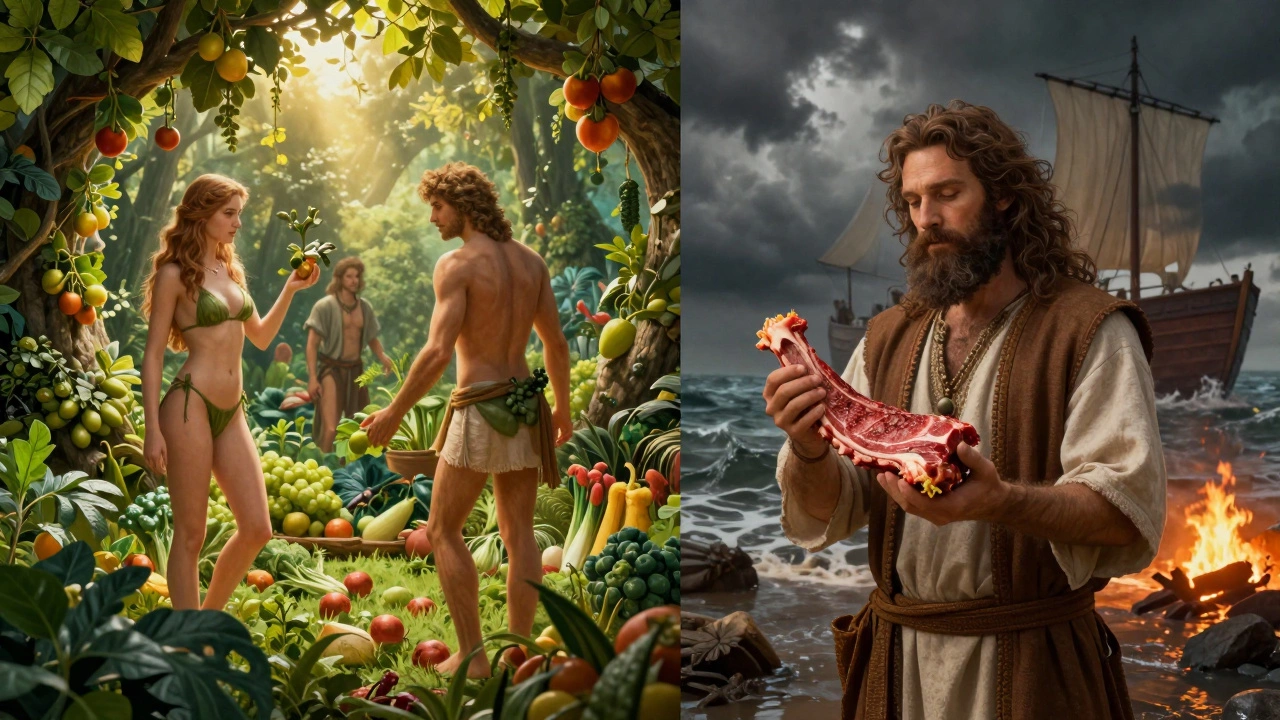
The Original Plant-Based Menu
Before the Fall, in a state of innocence.
God gives vegetation as food for humans and animals. No mention of meat.
"Behold, I have given you every plant yielding seed which is on the surface of all the earth... they shall be for food."
The Official Permission Slip
After the Flood, survival becomes priority.
God explicitly changes the rules to include moving things that live. Blood consumption remains forbidden.
"Every moving thing that lives shall be food for you. As I gave you the green plants, I give you everything."
Clean vs. Unclean
Under the Mosaic Law given to Moses.
Animals are divided into clean (cows, sheep) and unclean (pigs, shellfish). Eating meat isn't banned, but ritual purity matters.
"These you may eat of all that are in the waters... But all those in the sea or in the rivers which do not have fins and scales... you shall regard as unclean."
All Foods Declared Clean
New Testament era, Jesus and the Apostles.
Jesus eats fish publicly. Peter receives a vision declaring all foods clean. Nothing is to be refused if received with thanksgiving.
"What God has cleansed, do not call common."
You’ve heard the argument before. Someone claims that God originally designed humans to eat only plants, so eating meat is a deviation from divine intent. If you’re cooking vegetarian indian dishes every day, this idea might feel familiar. But if you open the Bible and look for a direct command saying "Thou shalt not eat meat," you’ll find something surprising: it isn’t there. In fact, the text tells a different story-one where meat-eating is permitted, regulated, and even celebrated.
This question often comes up in conversations about faith and food, especially in cultures like India where vegetarianism is deeply tied to spirituality and tradition. For Christians navigating these cultural lines, understanding what the scripture actually says can be liberating. It removes the guilt of eating non-veg and clarifies the freedom believers have regarding their plates. Before we get into the recipes, let’s clear up the confusion by looking at the key passages people usually cite.
The Garden of Eden: The Original Plant-Based Menu
The strongest argument for biblical vegetarianism starts in Genesis. In Genesis 1:29-30, God gives vegetation as food for both humans and animals. He says, "Behold, I have given you every plant yielding seed which is on the surface of all the earth... they shall be for food." At first glance, this looks like a permanent mandate for a vegan lifestyle. There is no mention of meat here. Adam and Eve were eating fruit, nuts, and seeds in the garden.
However, context matters. This was before the Fall. It was an ideal state of innocence. When sin entered the world, the conditions changed. Many theologians argue that this verse describes the *initial* provision, not a perpetual law for all humanity throughout history. Think of it like a starter kit. It worked for paradise, but once humans left the garden, survival required adaptation. We didn't stay in Eden forever, so we shouldn't assume our diet stays exactly as it was in that specific moment.
Noah’s Ark: The Official Permission Slip
If Genesis sets the stage, Noah gets the spotlight. After the Great Flood, the world needed repopulating. Survival was the priority. In Genesis 9:3, God explicitly changes the rules. He tells Noah, "Every moving thing that lives shall be food for you. As I gave you the green plants, I give you everything." This is a clear shift. Meat is now included in the menu.
Some point out that God also places restrictions here, specifically forbidding the consumption of blood (Genesis 9:4). This shows that while meat was allowed, it had to be treated with respect. The life of the animal was sacred because it belonged to God. For Indian cooks, this concept resonates. We often think about the purity and treatment of ingredients. The Bible doesn't ban meat; it just asks for reverence in how it's prepared. This passage effectively ends the idea that Christians must be vegetarians based on Old Testament law.
Old Testament Laws: Clean vs. Unclean
Later, under the Mosaic Law given to Moses, Israelites received detailed dietary guidelines in Leviticus 11 and Deuteronomy 14. These laws divided animals into "clean" and "unclean." Cows, sheep, and goats were clean. Pigs, shellfish, and certain birds were unclean. Notice something important? Eating meat wasn't banned. Eating *specific types* of meat was restricted.
This distinction is crucial. If God wanted everyone to be vegetarian, He wouldn't have bothered listing which meats were okay to eat. He would have just said "no meat." Instead, He created a system for ritual purity. For many Jewish people today, and historically for Christians following these laws, this meant avoiding pork or shellfish, not avoiding beef or chicken entirely. In India, where cows are revered, this creates an interesting cross-cultural dialogue. The Bible permits beef (as long as the animal is clean), while Hindu tradition forbids it. Both are valid spiritual choices, but neither is a universal Christian commandment against all meat.
| Period/Book | Dietary Rule | Key Verse |
|---|---|---|
| Genesis 1 (Eden) | Plant-based only | Gen 1:29 |
| Genesis 9 (Noah) | Meat permitted (no blood) | Gen 9:3 |
| Leviticus 11 (Moses) | Clean vs. Unclean meats | Lev 11:2-47 |
| Acts 10 (Peter) | All foods declared clean | Acts 10:15 |

New Testament: Jesus and the Apostles Eat Fish
Move forward to the New Testament, and the picture becomes even clearer. Jesus Christ, the central figure of Christianity, ate fish. In Luke 24:42-43, after His resurrection, the disciples offered Him a piece of broiled fish, and He ate it in front of them. Why did He do this? To prove He had a physical body, not a ghost. If eating meat were a sin, Jesus would never have done it publicly.
The apostles followed suit. Peter had a vision in Acts 10 where God told him to kill and eat animals previously considered unclean. God’s message was blunt: "What God has cleansed, do not call common." This wasn't just about food; it was about breaking down barriers between Jews and Gentiles. By declaring all foods clean, the early church opened the door for non-Jewish converts who didn't follow kosher laws. Paul, writing to Timothy, affirmed this in 1 Timothy 4:4-5, stating that "every creature of God is good, and nothing is to be refused if it is received with thanksgiving."
For those living abroad, like here in Auckland, this freedom allows us to enjoy local lamb or seafood without religious hesitation. It means your dinner table can reflect your culture-whether that’s curry with paneer or tandoori chicken-without compromising your faith.
Why Do Some Christians Choose Vegetarianism?
If the Bible allows meat, why do some Christians choose to be vegetarian? The reasons are usually ethical or health-related, not scriptural mandates. Some believe in stewardship of the earth, arguing that industrial farming harms creation. Others seek to minimize suffering, aligning with the Christian value of compassion. Still, others simply prefer the taste and health benefits of plants.
This is a matter of conscience. Romans 14 addresses this directly. Paul writes that one person believes they may eat anything, while another, whose faith is weak, eats only vegetables. He urges believers not to judge each other over these issues. If you eat meat, don’t despise the vegetarian. If you’re vegetarian, don’t condemn the meat-eater. Both should act in faith and give thanks to God.
In India, this dynamic plays out daily. You might have a Christian friend who eats non-veg and a Hindu friend who is strictly veg. They can share a meal if they focus on the fellowship, not the food. Understanding that the Bible doesn’t force a vegetarian diet helps bridge these gaps. It allows for mutual respect rather than pressure.
Speaking of respectful connections, whether you're seeking community in your local church or exploring new social circles in different cities, building genuine relationships often starts with shared values and open minds. Just as we navigate dietary differences with grace, we can approach new acquaintances with curiosity. For instance, if you ever travel to Central Asia and want to understand the local social landscape better, resources like this directory offer insights into how services are organized in places like Almaty, though obviously, the context is quite different from a Sunday potluck!
Biblical Principles for Eating Well
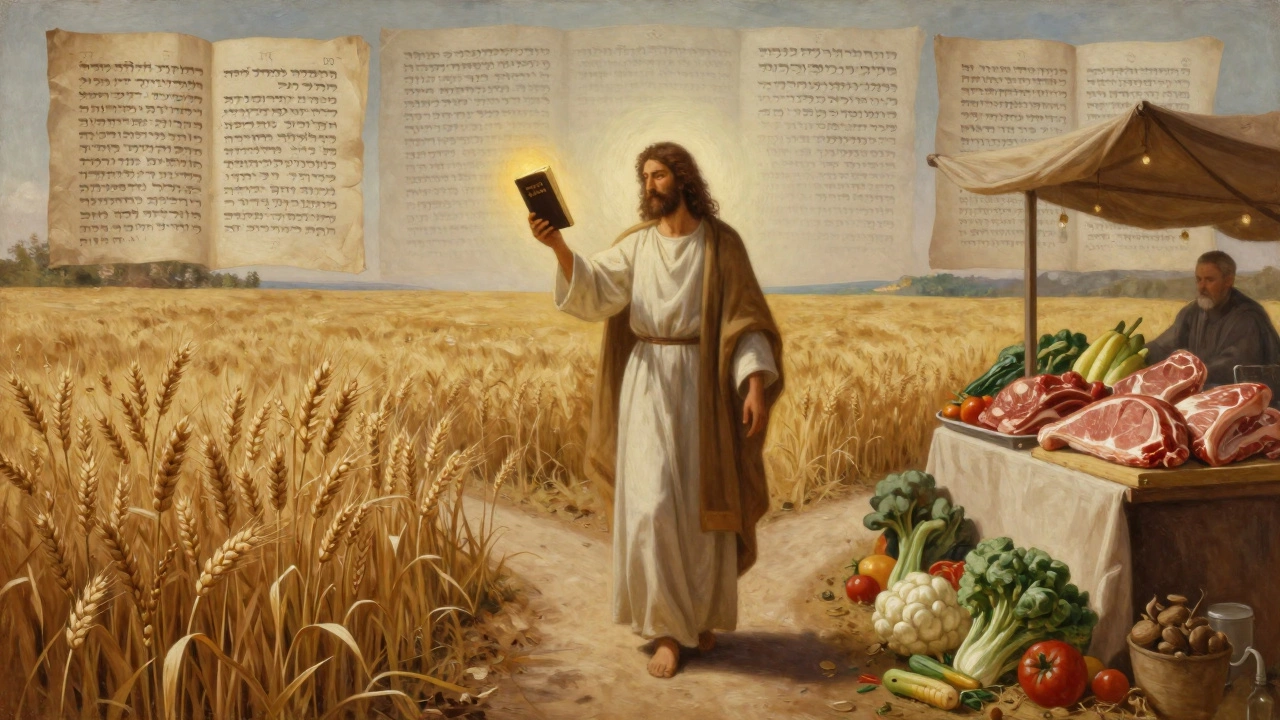
While the Bible doesn't dictate a specific diet, it does offer principles for how we should eat. Moderation is key. Proverbs warns against gluttony and drunkenness. We are called to honor God with our bodies (1 Corinthians 6:19-20). This means taking care of our health. Whether you choose a plant-based diet or include meat, the goal is nourishment and gratitude.
Gratitude is huge in Scripture. Before meals, Christians say grace. We thank God for the bread, the wine, the vegetables, and the meat. This practice reminds us that food is a gift, not a right. It shifts our focus from entitlement to appreciation. When you sit down to a plate of dal makhani or chana masala, take a moment to appreciate the effort, the ingredients, and the provider.
Vegetarian Indian Dishes That Please Everyone
Since many of us love Indian cuisine, let’s talk about how to make vegetarian dishes that satisfy everyone, regardless of their dietary choice. The beauty of Indian cooking is its depth of flavor. You don’t need meat to create a hearty, satisfying meal. Here are a few ideas that align with the spirit of hospitality found in the Bible.
- Chickpea Curry (Chole): Chickpeas are packed with protein and fiber. Simmer them in a tangy tomato-onion gravy with spices like cumin, coriander, and garam masala. Serve with fluffy basmati rice or warm naan bread. It’s filling, affordable, and delicious.
- Paneer Tikka Masala: Paneer is a fresh cheese that holds up well in curries. Marinate cubes in yogurt and spices, grill them until charred, then toss in a creamy tomato sauce. It mimics the texture of meat tikka, making it a hit with omnivores too.
- Sabzi Roti: A simple dish of seasonal vegetables (like spinach, carrots, or potatoes) cooked with minimal oil and served with whole wheat flatbread. It’s wholesome, easy to digest, and reflects the simplicity of the Garden of Eden’s produce.
- Lentil Soup (Dal Tadka): Lentils are a staple in Indian kitchens. Cook yellow lentils until soft, then temper with mustard seeds, curry leaves, and garlic. It’s comforting, nutritious, and perfect for sharing with friends who have different dietary needs.
These dishes show that vegetarianism can be vibrant and exciting. You don’t have to sacrifice flavor to stick to plants. And if your guests want meat, you can easily add a side of grilled chicken or fish without conflict. The table becomes a place of unity, not division.
Making Peace at the Dinner Table
Ultimately, the Bible teaches us to love our neighbors. This includes respecting their food choices. If you’re hosting a dinner party, consider offering a mix of options. Have a rich vegetable curry alongside a mild chicken dish. Label the dishes clearly. Let people choose what feels right for them.
Avoid preaching over the food. Don’t tell your vegetarian guest that they’re missing out on meat, and don’t tell your meat-eating friend that they’re harming the planet. Keep the conversation light and joyful. Focus on the company, the stories, and the joy of breaking bread together. That’s the heart of Christian fellowship.
As you plan your next meal, remember that your diet is a personal journey. Whether you’re drawn to the plant-based wisdom of the Old Testament or the freedom of the New, trust God to guide you. Listen to your body, respect your conscience, and enjoy the incredible variety of foods available to us. From the spices of India to the produce of New Zealand, there’s plenty to celebrate.
Does the Bible forbid eating meat?
No, the Bible does not forbid eating meat. While Genesis 1:29 describes a plant-based diet in the Garden of Eden, Genesis 9:3 explicitly permits meat consumption after the Flood. Jesus and the apostles also ate meat, confirming it is acceptable for Christians.
Why do some Christians choose to be vegetarian?
Many Christians choose vegetarianism for ethical, environmental, or health reasons, not because the Bible commands it. They may wish to reduce animal suffering, protect the environment, or improve their personal health. The Bible encourages acting according to one's conscience (Romans 14).
Is it a sin to eat non-vegetarian food?
No, it is not a sin to eat non-vegetarian food. The New Testament declares all foods clean (Acts 10:15). However, believers are asked to avoid causing others to stumble. If eating meat offends a fellow believer with a weaker conscience, it may be wise to abstain in their presence for the sake of love.
What does the Bible say about blood in food?
The Bible prohibits consuming blood, as seen in Genesis 9:4 and Acts 15:20. This is because blood represents life, which belongs to God. Most modern meat processing drains blood from animals, so standard grocery store meat is generally considered acceptable by most Christian denominations.
Are there specific vegetarian verses in the Bible?
There are no verses that command all Christians to be vegetarian. Genesis 1:29 mentions plants as food in Eden, and Psalm 104:14 speaks of God providing grass for cattle and plants for man. However, these are descriptive or poetic, not prescriptive laws for all time. The broader biblical narrative permits meat.