Cardamom Sweetness Enhancer Calculator
The article explains that cardamom can make desserts taste 20% sweeter without adding more sugar. This calculator shows how much sugar you can reduce while maintaining the same perceived sweetness.
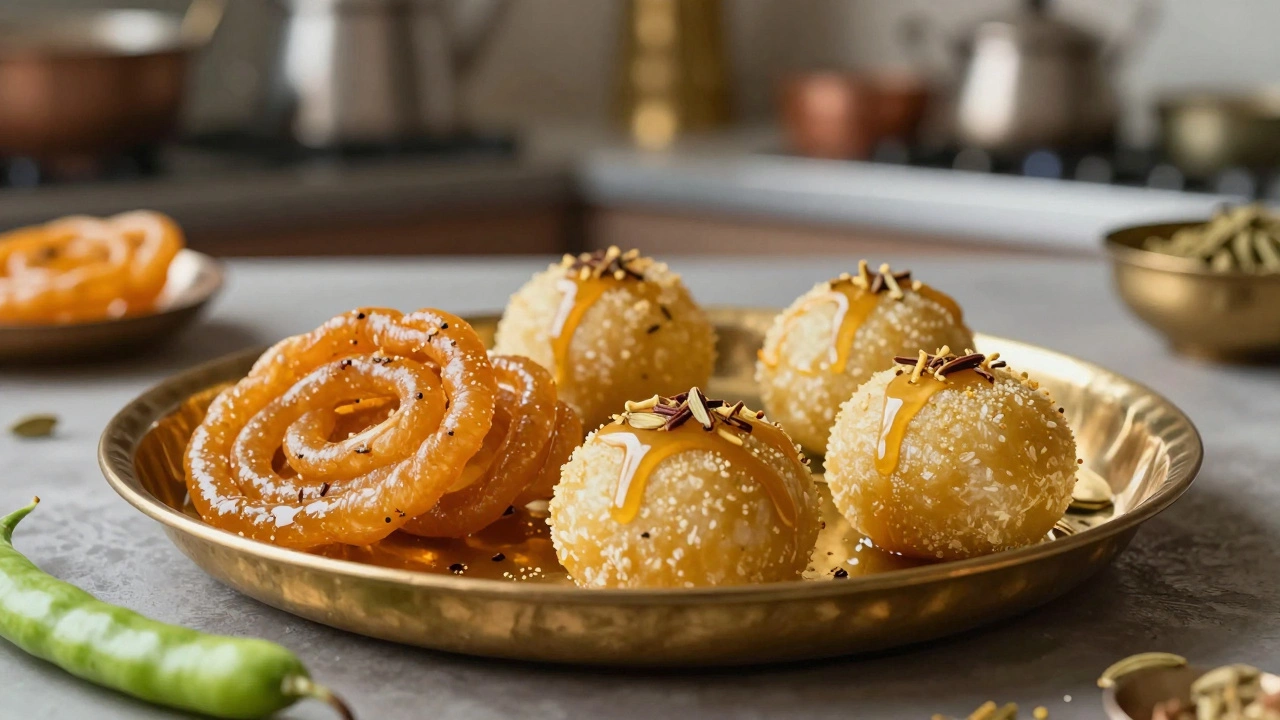
When you bite into a warm jalebi drizzled with syrup or taste the creamy richness of kheer, you’re not just tasting sugar. There’s something deeper, warmer, and more mysterious hiding in those flavors. It’s not vanilla. It’s not honey. It’s a spice - quiet, fragrant, and essential. That’s cardamom. The sweet spice in Indian food isn’t just an ingredient; it’s the soul of many desserts, the hidden whisper that turns plain milk into something magical.
Cardamom: The Real Sweet Spice
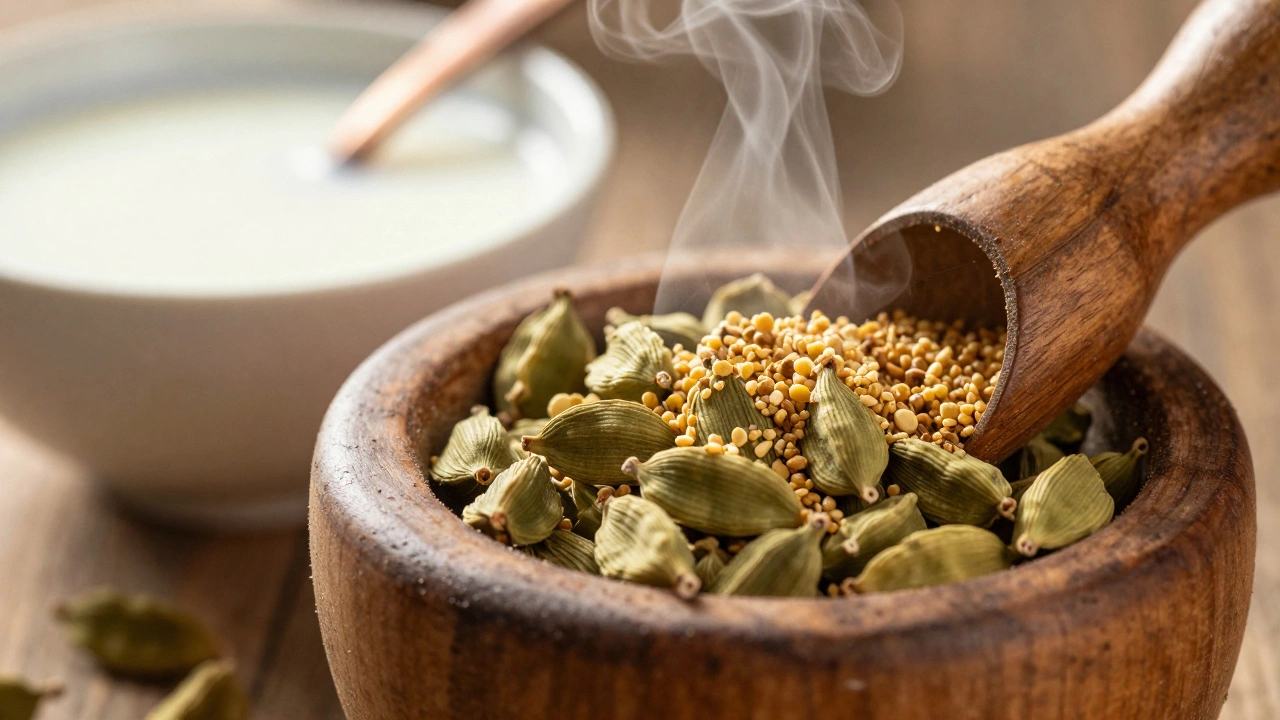
Cardamom isn’t just sweet. It’s floral, citrusy, and slightly peppery, with a cool aftertaste that lingers like a sigh. In Indian kitchens, green cardamom pods - tiny, jewel-like, and packed with seeds - are crushed open to release their aroma. They’re added to rice pudding, stirred into chai, folded into dough for sweet breads, and even ground into sugar for sprinkling over halwa. You won’t find cardamom in a spice rack labeled ‘sweet spices’ in Western stores, but in India, it’s as common as cinnamon in apple pie.
It’s used in both savory and sweet dishes, but its role in desserts is unmatched. In gulab jamun, cardamom cuts through the syrup’s heaviness. In rasgulla, it lifts the milk-based sweetness. Even in simple kheer, just two crushed pods make the difference between ordinary and unforgettable. The seeds inside the pod are where the magic lives. Grinding them fresh releases oils that evaporate quickly, so pre-ground cardamom powder loses its punch fast.
Why Not Cinnamon or Cloves?
People often assume cinnamon is the sweet spice in Indian food. It’s true - cinnamon sticks are used in biryanis and desserts like phirni. But cinnamon has a bold, woody heat. It doesn’t lift sweetness; it deepens it. Cloves? They’re pungent, almost medicinal. They’re used sparingly, usually in meat dishes or masala chai. Neither carries the same delicate, airy sweetness that cardamom does.
Saffron is another contender. It’s expensive, luxurious, and adds a golden hue and subtle honey-like note to sweets like kesar pista kulfi. But saffron doesn’t have the same aromatic lift. It’s more about color and luxury than flavor. Cardamom, on the other hand, is affordable, widely available, and used daily. It’s the spice that makes Indian sweets feel personal, not just fancy.
The Science Behind the Sweetness
Cardamom’s flavor comes from essential oils - mainly terpinyl acetate and 1,8-cineole. These compounds interact with your taste buds differently than sugar. Sugar hits the sweet receptors directly. Cardamom tricks your brain into perceiving sweetness by stimulating the olfactory system. It’s why a pinch of cardamom can make a dessert taste richer, even if you reduce the sugar by 20%.
Studies from the Indian Institute of Food Processing Technology show that desserts made with whole cardamom pods have higher consumer preference ratings than those using synthetic vanilla or artificial sweeteners. The natural complexity of cardamom balances sweetness without cloying. That’s why Indian grandmothers never rely on sugar alone. They use cardamom to make sweets feel indulgent, not heavy.
Other Sweet Spices in Indian Desserts
Cardamom isn’t alone. Indian sweets often layer flavors. Nutmeg, ground fine, adds warmth to barfi and ladoo. Fennel seeds - yes, fennel - are toasted and crushed into sweet treats like mysore pak, giving a mild licorice note that’s refreshing. Rose water and kewra (pandanus flower extract) aren’t spices, but they’re used like them: to elevate sweetness with floral perfume.
But here’s the thing: none of these replace cardamom. They complement it. In a classic ras malai, you’ll find cardamom in the milk, rose water in the syrup, and a dusting of saffron on top. Cardamom is the base. Everything else is decoration.
How to Use Cardamom Right
Buying cardamom pods? Look for plump, green pods with no cracks. If they’re brown or brittle, they’re old. Avoid pre-ground powder unless you’re in a hurry - it loses flavor in weeks.
- For desserts: Crush 2-3 pods with the flat side of a knife, then remove the husks and grind the seeds into a fine powder.
- For milk-based sweets: Simmer whole pods in milk for 10 minutes, then remove them before adding sugar.
- For doughs: Grind seeds into flour before mixing. Don’t add them last - they need time to release flavor.
- For chai: Add 2-3 crushed pods to the pot with tea leaves. Remove before serving.
Pro tip: Store cardamom pods in an airtight jar away from light. Keep them whole until use. Ground cardamom lasts only 2-3 months. Whole pods? Up to a year.
Why This Matters Beyond Desserts
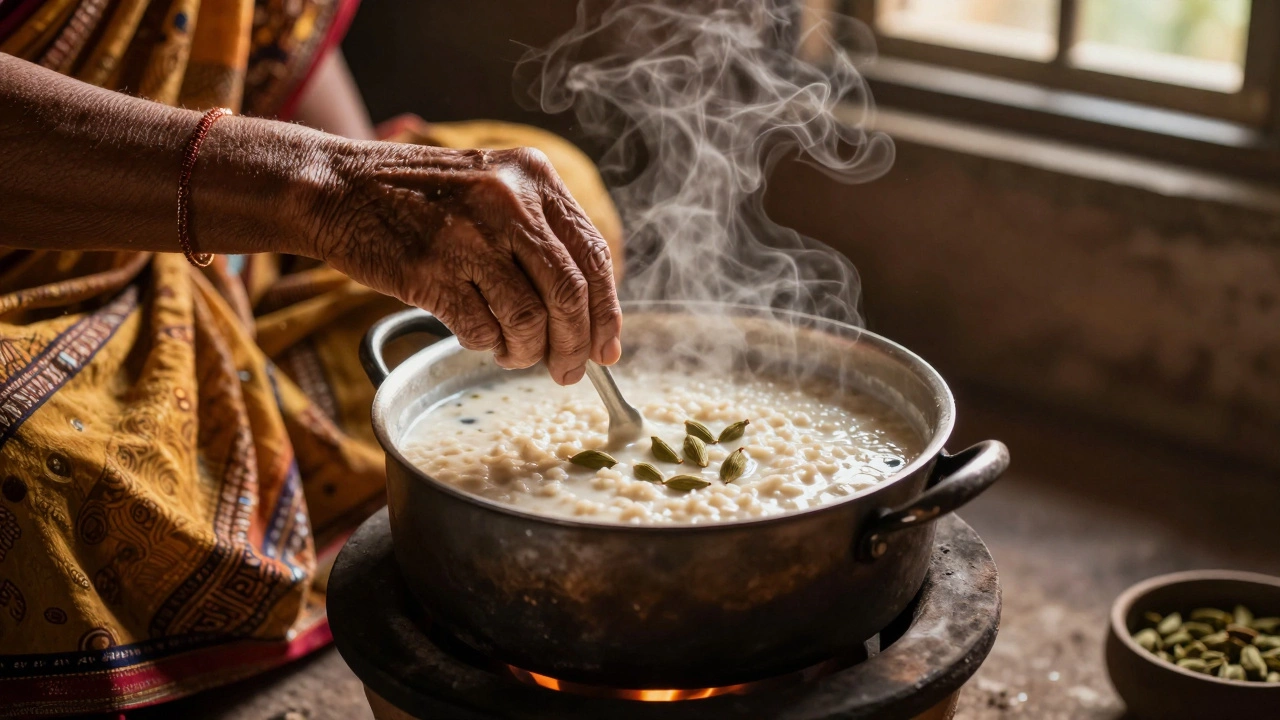
Cardamom isn’t just a flavor. It’s cultural. In South India, it’s added to rice during festivals. In Punjab, it’s mixed into gur (jaggery) balls for winter. In Bengal, it’s the secret in mishti doi - sweet yogurt that’s fermented with cardamom-infused milk. It’s passed down in families, not recipes. You don’t find cardamom in a cookbook. You find it in your grandmother’s hand, crushing pods while humming a lullaby.
That’s why replacing cardamom with vanilla in an Indian dessert doesn’t work. It changes the soul of the dish. You might get something sweet, but you lose the connection - to tradition, to memory, to the quiet comfort of a spice that’s been warming Indian kitchens for centuries.
Where to Find It
Cardamom is grown mostly in Kerala, Karnataka, and Tamil Nadu. You’ll find it in any Indian grocery store. Look for the green pods - not the black ones, which are used for savory dishes. If you’re shopping online, check the harvest date. Fresh cardamom has a bright, almost citrusy smell. If it smells musty or flat, walk away.
Don’t be fooled by ‘cardamom flavoring’ in bottles. Those are synthetic. Real cardamom costs more - but you only need a pinch. A 50-gram pack of whole pods lasts months. And it’s worth every rupee.
Try This: Simple Cardamom Milk
Want to taste the sweet spice the Indian way? Make this:
- Heat 1 cup of whole milk in a small pot.
- Add 3 green cardamom pods, lightly crushed.
- Simmer on low for 8 minutes. Don’t boil.
- Strain out the pods.
- Add 1 teaspoon of jaggery or sugar, if you like.
- Sip warm. No garnish needed.
This is how millions of Indians start their mornings. It’s not fancy. It’s not Instagrammable. But it’s real. And it’s the reason Indian sweets taste like home.
Is cardamom the only sweet spice in Indian food?
No, but it’s the most essential. Other spices like nutmeg, fennel, and saffron add sweetness in different ways, but cardamom is the one that’s used daily and universally across regions. It’s the backbone of sweetness in Indian desserts.
Can I substitute cardamom with vanilla in Indian recipes?
You can, but it won’t taste the same. Vanilla is one-note and sweet. Cardamom has layers - citrus, floral, spicy - that balance sugar without overwhelming it. Substituting vanilla for cardamom turns an Indian dessert into a Western one. You lose the cultural depth.
What’s the difference between green and black cardamom?
Green cardamom is sweet, floral, and used in desserts and drinks. Black cardamom is smoky, earthy, and used in savory dishes like biryani and meat curries. They’re not interchangeable. If a recipe calls for cardamom in a sweet dish, it always means green.
Why does my cardamom taste bitter?
You probably used too much or boiled it too long. Cardamom seeds are potent. One or two pods per cup of milk is enough. Also, if you’re using pre-ground powder, it might be old. Freshly ground seeds taste bright, not bitter. Always crush whole pods just before using.
Where is cardamom grown in India?
The best cardamom comes from the Western Ghats - especially Kerala, Karnataka, and Tamil Nadu. These regions have the right humidity and altitude for high-quality pods. Indian cardamom is considered the finest in the world, with a stronger, more complex flavor than Guatemalan or Thai varieties.
If you want to understand Indian sweets, start with cardamom. Not the sugar. Not the milk. Not the fried dough. The spice. That’s where the magic begins.