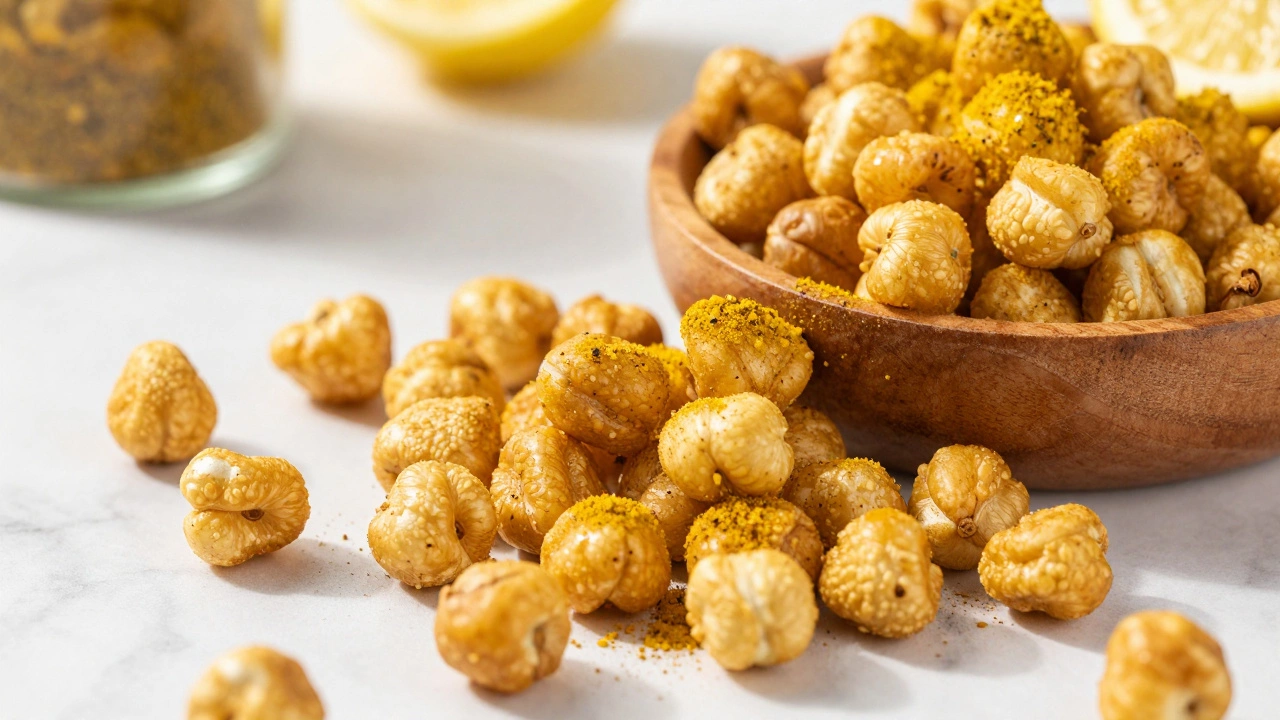
Healthy Indian Snack Finder
Let’s be honest: most traditional Indian snacks are loaded with refined flour (maida), deep-fried in oil, and dusted with salt that could strip paint. Samosas, pakoras, and namkeens taste amazing, but they sit heavy in your stomach and spike your blood sugar. You don’t have to give up snacking to eat well. The real question isn’t just what tastes good, but what fuels your body without crashing it an hour later.
If you are looking for the single "most" healthy option, there isn’t one magic bullet. However, if we judge by nutrient density, satiety, and glycemic impact, Roasted Makhana (Fox Nuts) takes the crown. It is light, high in magnesium, low in calories, and versatile enough to be savory or sweet. But depending on whether you need protein, fiber, or a quick energy boost, other contenders like Sprouted Moong Chaat or Boiled Chana might actually serve you better. Let’s break down the best options so you can pick what fits your hunger and health goals.
The Gold Standard: Roasted Makhana (Fox Nuts)
Makhana, also known as fox nuts or lotus seeds, has exploded in popularity over the last few years, and for good reason. Unlike potato chips or even roasted chana, makhana is incredibly low in fat and calories while being surprisingly filling. A typical 30-gram serving contains only about 35 calories, yet it provides a decent amount of fiber and protein.
Why does it beat out other crunchy snacks? First, it is naturally gluten-free. Second, it is rich in antioxidants like gallic acid, which helps reduce inflammation. When you roast them with a little turmeric, black pepper, and sea salt instead of frying them in oil, you create a snack that supports heart health rather than harming it.
- Calories: ~35 kcal per 30g
- Protein: ~1g
- Fiber: ~1.5g
- Key Benefit: High in magnesium and potassium, low glycemic index.
The trick is preparation. Store-bought makhana often comes coated in sugar or excessive salt. Make it at home using an air fryer or a dry pan. Toss raw makhana with a teaspoon of ghee, chaat masala, and lemon juice. Roast until crisp. This simple swap turns a potential sugar bomb into a metabolic-friendly treat.
The Protein Powerhouse: Sprouted Moong & Boiled Chana
If your goal is muscle repair or staying full for hours, carbs alone won’t cut it. You need protein. In the Indian pantry, two legumes stand out: moong dal (green gram) and chana (chickpeas). But here is the catch: how you prepare them changes everything.
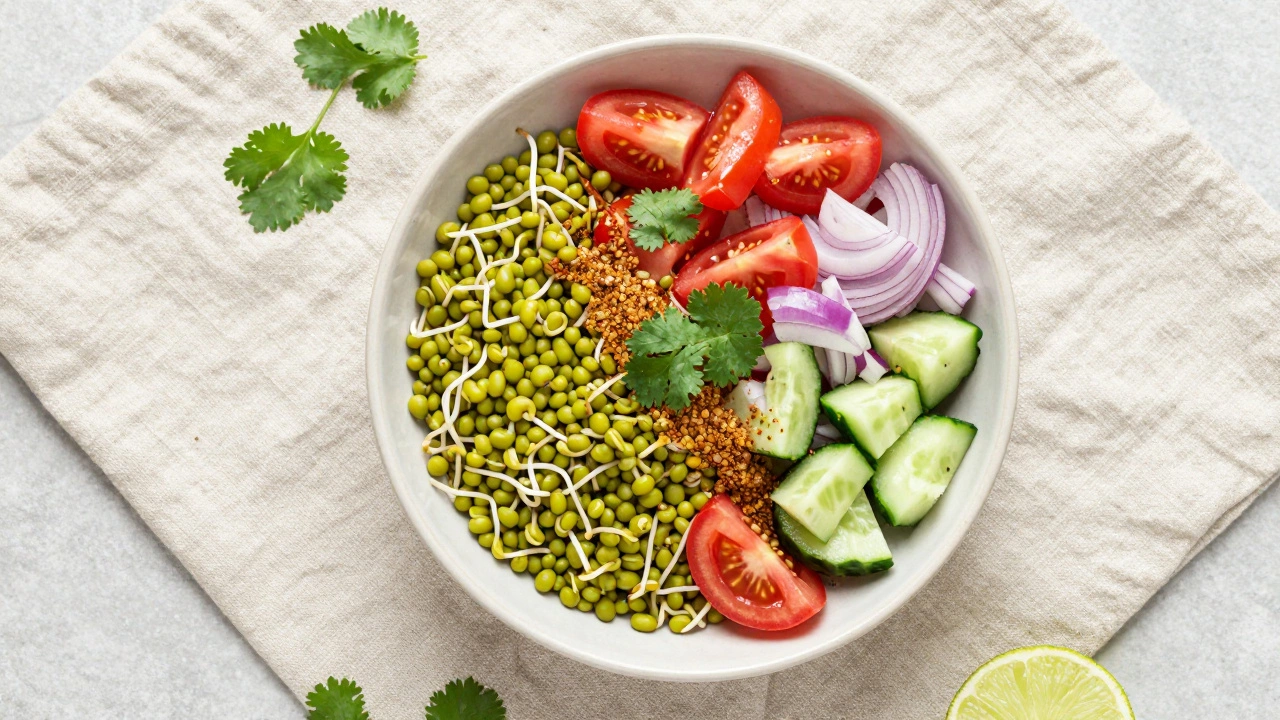
Regular boiled chana is great, but Sprouted Moong is superior. Sprouting breaks down complex carbohydrates and anti-nutrients like phytic acid, making the nutrients more bioavailable. This means your body absorbs more iron, zinc, and B vitamins from sprouted moong than from cooked lentils.
| Snack Type | Calories | Protein | Fiber | Glycemic Impact |
|---|---|---|---|---|
| Sprouted Moong Salad | ~70 kcal | 6g | 4g | Low |
| Boiled Chana | ~164 kcal | 8.9g | 7.6g | Low-Medium |
| Poha (Flattened Rice) | ~350 kcal | 4g | 2g | High |
To make this a snack, don’t just boil them. Turn them into a chaat. Mix sprouted moong with diced cucumbers, tomatoes, onions, and a squeeze of lime. Add a pinch of roasted cumin powder. This combination provides a slow-release energy source that prevents the mid-afternoon slump. For chana, avoid the spicy red chili powder overload found in street-side packets. Stick to turmeric, coriander powder, and black salt.
Fiber-Rich Options: Multigrain Toast & Vegetable Cutlets
Fiber is the unsung hero of weight management. It slows down digestion and keeps blood sugar stable. Traditional Indian breakfasts like puris or parathas are often made with white flour, which offers zero nutritional value beyond empty calories. Swap these for multigrain alternatives.
A slice of Multigrain Bread toasted and topped with mashed avocado or a thin layer of peanut butter is a legitimate snack. Look for bread where the first ingredient is whole wheat or oats, not enriched flour. If you crave something savory, homemade vegetable cutlets are excellent-provided you bake or shallow-fry them instead of deep-frying.
Use grated carrots, beans, and potatoes mixed with besan (gram flour) instead of maida for binding. Besan adds plant-based protein and lowers the glycemic load of the potato. Serve these cutlets with mint chutney rather than ketchup. The enzymes in fresh mint aid digestion, making this snack feel lighter despite its hearty nature.
Nature’s Candy: Fresh Fruit & Nuts
Sometimes you just want something sweet. Reaching for a cookie or a chocolate bar triggers a dopamine hit followed by a crash. Nature offers a better alternative: fruit paired with nuts. This combination balances fructose (fruit sugar) with healthy fats and protein, preventing rapid insulin spikes.
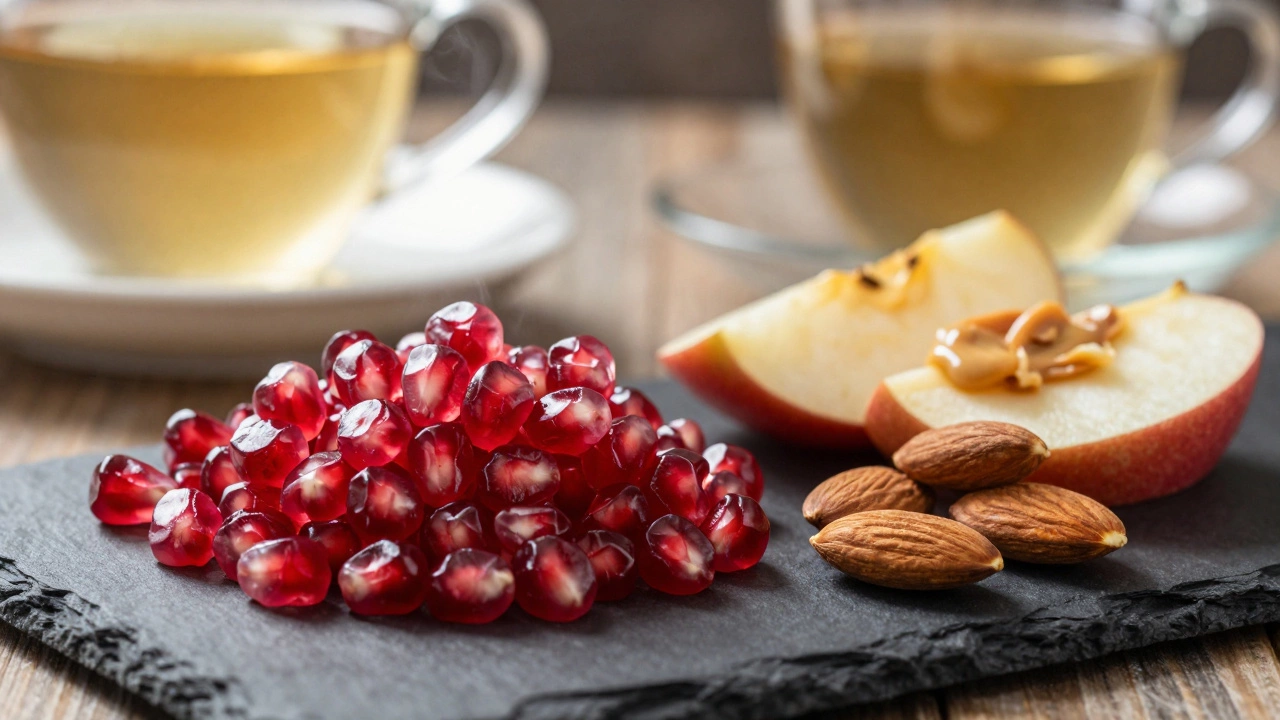
Pomegranate is a staple in Indian households for a reason. It is packed with polyphenols, which protect heart health. Pair a cup of pomegranate arils with five almonds. Almonds provide monounsaturated fats that keep you satiated. Another great option is apple slices with a tablespoon of almond butter. The crunch satisfies the craving for texture, while the fiber aids gut health.
Be careful with dried fruits. While convenient, raisins or dates are calorie-dense and easy to overeat. One date has roughly 66 calories; three dates equal a small meal. Stick to fresh fruits when possible, or limit dried portions to a small handful.
Hydration Snacks: Cucumber & Watermelon
Often, we mistake thirst for hunger. If you find yourself snacking frequently, try eating high-water-content foods first. Cucumber and watermelon are nearly 95% water. They add volume to your stomach without adding significant calories.
Cucumber sticks dipped in yogurt or hummus make for a refreshing afternoon bite. Yogurt adds probiotics, which support gut health-a crucial factor in overall immunity and metabolism. In Ayurveda, cooling foods like cucumber are recommended during hot weather to balance body heat. These snacks are particularly useful if you are trying to cut down on late-night eating habits, as they are light and unlikely to disrupt sleep.
Common Pitfalls to Avoid
Even healthy ingredients can become unhealthy based on preparation. Here is what to watch out for:
- Hidden Sugars: Many "health bars" or packaged fruit juices contain added sugars. Read the label. If sugar is listed in the top three ingredients, put it back.
- Excessive Oil: Even olive oil has calories. When roasting nuts or vegetables, use a spray bottle to apply oil evenly rather than pouring it directly.
- Portion Distortion: Nuts are healthy, but 100 grams of cashews contain over 600 calories. Stick to a small fist-sized portion.
- Processed "Healthy" Snacks: Packaged popcorn often contains artificial flavors and preservatives. Popcorn kernels popped at home with air are far superior.
How to Choose the Right Snack for Your Goal
Your best snack depends on what your body needs at that moment. Are you hungry because you skipped lunch, or are you bored? Do you need energy for a workout, or do you need to wind down before bed?
If you need sustained energy, go for complex carbs and protein like sprouted moong or chana. If you need a quick fix without heaviness, choose cucumber or berries. If you are craving crunch, reach for roasted makhana or unsalted nuts. Listening to your body’s signals is more important than sticking to a rigid list. Flexibility ensures you stick to healthy habits long-term rather than burning out on restriction.
Is makhana really healthier than peanuts?
Yes, in terms of calories and fat content. Makhana is significantly lower in calories and fat compared to peanuts. Peanuts are higher in protein and healthy fats, making them more satiating but also more calorie-dense. If you are watching your weight strictly, makhana is the better choice. If you need longer-lasting energy, peanuts are superior.
Can I eat Indian snacks late at night?
It is generally better to avoid heavy snacks close to bedtime. Opt for light, easily digestible options like a small bowl of warm milk with turmeric, a few soaked almonds, or cucumber slices. Avoid spicy, oily, or high-carb snacks like samosas or biscuits, as they can disrupt sleep and cause acidity.
Are store-bought roasted chana snacks healthy?
Many store-bought varieties are heavily processed with added salt, sugar, and artificial flavors. Check the ingredient list. Pure roasted chana with minimal seasoning is healthy. If the packet lists "flavor enhancers" or high sodium content, it is better to buy raw chana and roast it at home with spices you control.
What is the best snack for weight loss?
The best snack for weight loss is one that creates a calorie deficit while keeping you full. High-volume, low-calorie foods like cucumber, celery, and makhana are excellent. Protein-rich options like boiled eggs or sprouted moong also help by reducing overall hunger throughout the day. Consistency matters more than the specific food choice.
How much should I snack per day?
Most adults benefit from one or two small snacks between meals to maintain steady energy levels. Aim for snacks that contain 100-200 calories. Listen to your hunger cues; if you are not hungry, skip the snack. Over-snacking, even on healthy foods, can lead to weight gain if it pushes you over your daily caloric needs.