Rice and Dal Cost Calculator
Calculate the cost of making rice and dal - the most common Indian meal eaten by millions daily. Compare its affordability to other meals like burgers.
Meal Cost Calculator
Regional Variations
Regional variations may slightly affect ingredients and cost
Cost Breakdown
Per serving, rice and dal costs less than 0.50 - 1/10th the cost of a burger meal
Ask someone in India what they eat every day, and the answer won’t be biryani, butter chicken, or paneer tikka. It’ll be something quieter, simpler, and deeply rooted in routine: rice and dal, often served with a side of vegetables and a spoonful of yogurt or pickle. This isn’t just a meal-it’s the backbone of Indian home cooking, eaten by millions across cities, towns, and villages every single day.
Rice and Dal: The Unspoken National Dish
You won’t find this combo on fancy restaurant menus, but you’ll find it in almost every Indian kitchen. In the north, it’s jeera rice with yellow dal made from toor or chana. In the south, it’s steamed white rice with sambar-a lentil stew thickened with tamarind and spices. In the east, it’s steamed rice with masoor dal and a dollop of mustard oil. In the west, it’s plain rice with dal tadka, fried with cumin and dried red chilies.
The beauty of rice and dal lies in its balance. Rice gives you energy from carbohydrates. Dal-made from lentils like toor, moong, masoor, or urad-brings protein, fiber, and iron. Together, they form a complete amino acid profile, something even nutritionists recognize as a smart, plant-based combo. It’s cheap, easy to cook, and keeps you full for hours.
Why This Meal Dominates Indian Homes
There’s a reason rice and dal isn’t just popular-it’s universal. For most Indian families, meals are planned around availability, cost, and tradition. Rice is grown in abundance across the country, from Punjab to Kerala. Lentils are among the most affordable sources of protein. A kilo of toor dal costs less than $1 in most places. A bag of rice lasts a week for a family of four.
Unlike complex dishes that need hours of prep, rice and dal can be made in under 30 minutes. You can cook rice in a pot while the dal simmers on another burner. No fancy equipment needed. No special ingredients. Just a stove, water, salt, turmeric, and maybe a pinch of cumin.
It’s also deeply cultural. In many households, the first solid food a baby eats is khichdi-a mix of rice and dal. At funerals, it’s served as prasad. During festivals, it’s the base dish that gets upgraded with ghee or garnishes, but never replaced. Even in cities where people eat pizza or noodles for lunch, dinner often returns to rice and dal.
How It’s Actually Served
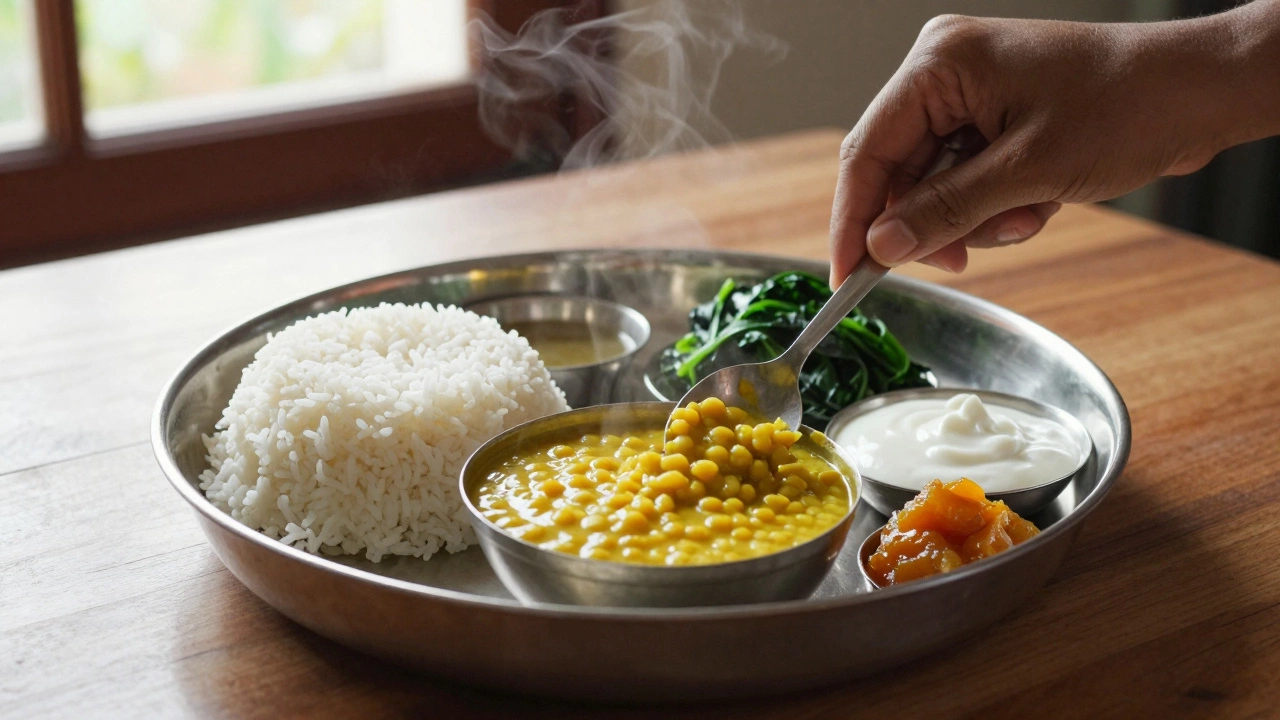
Don’t picture a fancy plated meal. In most homes, it’s served on a thali-a round metal plate. A small mound of rice goes on one side. Dal sits in a depression in the center. A spoonful of sautéed vegetables-like potatoes, cauliflower, or spinach-goes beside it. A dollop of plain yogurt cools the spices. A teaspoon of mango pickle adds tang. Sometimes, a crispy papadum cracks on the side.
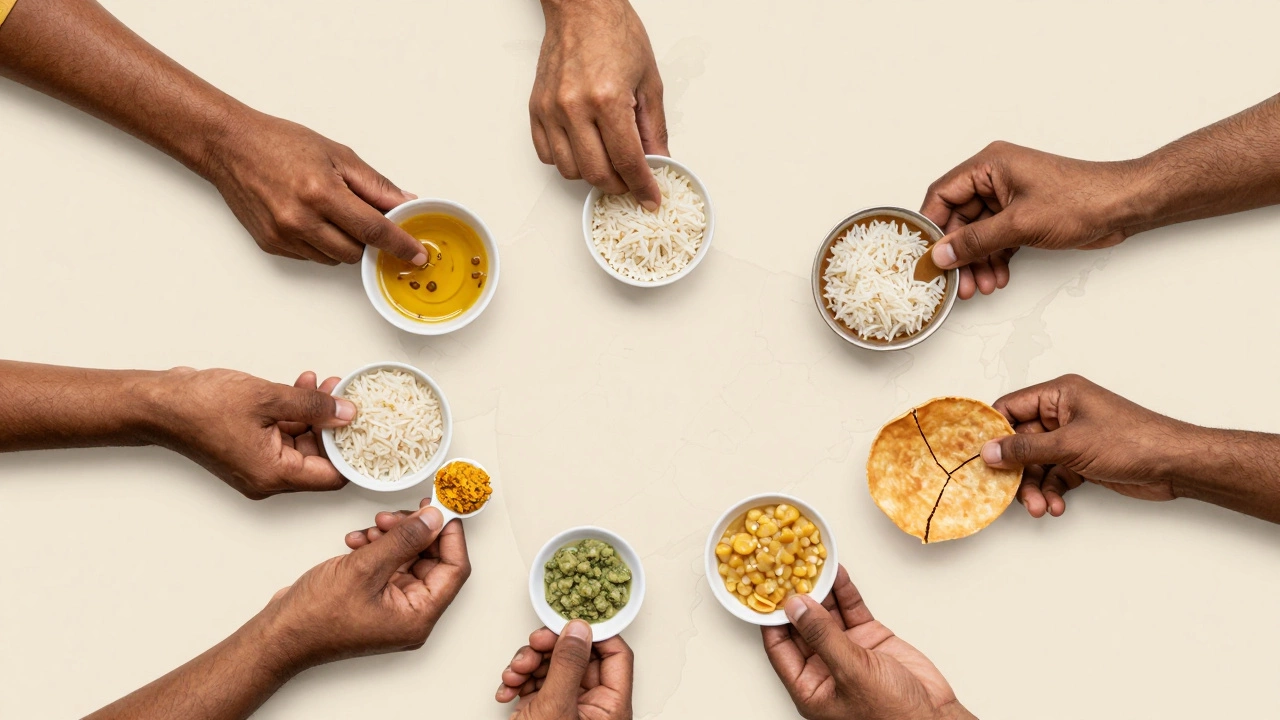
People mix it all together with their fingers. Yes, fingers. It’s not messy-it’s intentional. The warmth of the food, the texture of the rice, the creaminess of the dal, the crunch of the papad, the heat of the pickle-it all blends in your hand. It’s sensory eating. It’s connection.
Variations Across Regions
While the base is the same, every region puts its own stamp on it:
- North India: Jeera rice with yellow toor dal, tempered with garlic and dried red chilies. Often paired with a simple stir-fried spinach or bottle gourd.
- South India: Steamed white rice with sambar and coconut chutney. Sambar uses tamarind, lentils, and vegetables like drumstick and pumpkin. It’s tangy, spicy, and deeply aromatic.
- East India: Rice with masoor dal, finished with a tempering of mustard seeds and dried red chilies. Often eaten with mashed potatoes and a side of fried fish.
- West India: Rice with dal tadka, made with urad dal and a generous splash of sesame oil. Sometimes served with a thin roti on the side.
- Central India: Khichdi-rice and moong dal cooked together with turmeric and cumin. Often eaten with ghee and yogurt.
Even within states, there are differences. In rural Bihar, dal might be cooked with dried mango powder for sourness. In Tamil Nadu, sambar might include jaggery for a hint of sweetness. In Maharashtra, it’s common to add roasted peanuts to the dal for crunch.
It’s Not Just Food-It’s Routine
For many Indians, the rhythm of the day is tied to this meal. Breakfast might be idli or paratha. Lunch could be a heavier curry with rice. But dinner? Dinner is almost always rice and dal. It’s the anchor. It’s the reset button.
Even in households where both parents work full-time, dinner is rarely skipped. It’s the one meal that doesn’t need planning. Leftover rice? Reheat it. Leftover dal? Warm it up. Add a few chopped tomatoes or a handful of spinach? Done. It’s the ultimate zero-waste meal.
It’s also the meal that survives migration. Indian families in New Zealand, the UK, or the US still make rice and dal. They might buy lentils from an Asian grocery, use a rice cooker, and skip the tempering oil-but they still make it. It’s comfort. It’s identity.
Why Other Meals Don’t Replace It
You might think that with urbanization and global food trends, dishes like pasta, noodles, or burgers would take over. But they haven’t. Why?
- Cost: A plate of rice and dal costs less than $0.50 to make. A burger meal costs 10 times that.
- Accessibility: Rice and lentils are available everywhere, even in small towns without supermarkets.
- Health: It’s naturally gluten-free, low in fat, and high in fiber. No processed ingredients.
- Taste: It’s not bland. The tempering of spices-cumin, mustard seeds, curry leaves, dried chilies-gives it depth. Every region has its own version.
Even when people eat out, they often order a thali. The thali is just rice and dal, plus sides. It’s the most ordered meal in Indian restaurants, from roadside stalls to fine-dining places.
How to Make It at Home
Here’s the simplest version you can make in under 30 minutes:
- Rinse 1 cup of white rice and cook it with 2 cups of water until soft.
- In a separate pot, add 1/2 cup of toor dal (split pigeon peas) with 2 cups of water, a pinch of turmeric, and salt. Bring to a boil, then simmer for 20 minutes until mushy.
- Heat 1 tablespoon of oil or ghee in a small pan. Add 1 tsp cumin seeds, 2 dried red chilies, and a few curry leaves. Let them sizzle for 10 seconds.
- Pour the tempering over the cooked dal. Mix well.
- Serve hot with a side of steamed vegetables or plain yogurt.
That’s it. No fancy spices. No hours of prep. Just food that nourishes.
What Makes It So Enduring?
Rice and dal endures because it doesn’t need to be trendy. It doesn’t need Instagram filters. It doesn’t need to be photographed under soft lighting. It just needs to be eaten.
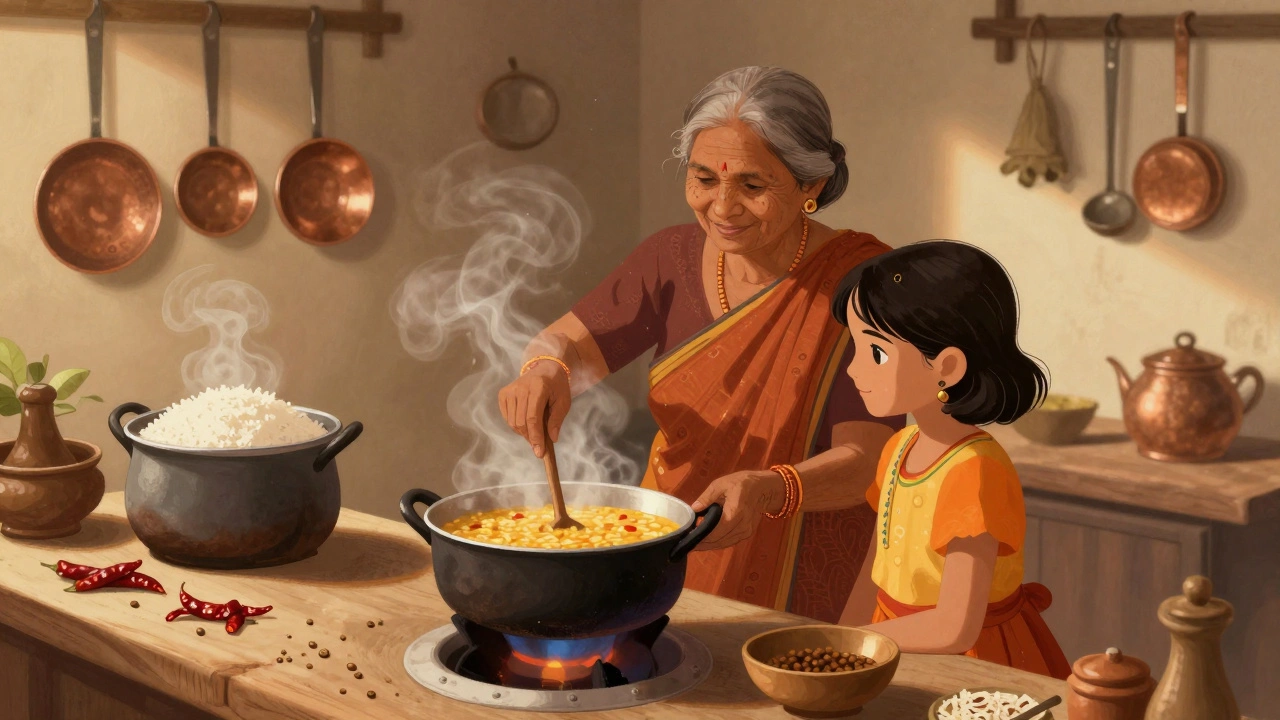
It’s the meal that feeds students, farmers, office workers, and grandmothers. It’s the meal that connects generations. A grandmother teaches her granddaughter how to tell when the dal is done by the way it thickens. A father teaches his son how to mix the rice and dal just right so the flavors blend without turning into mush.
This isn’t a recipe. It’s a ritual. And that’s why, despite all the change in the world, rice and dal remains the most common Indian meal.
Is rice and dal the same as khichdi?
No, but they’re related. Rice and dal are cooked separately and then combined on the plate. Khichdi is rice and lentils (usually moong dal) cooked together in one pot, often with turmeric and cumin. Khichdi is softer, more porridge-like, and often eaten when someone is sick or during fasting. Rice and dal is the everyday version-firmer, more distinct, and served with sides.
Can I use any lentil for dal?
Yes, but each lentil gives a different flavor and texture. Toor dal is the most common for daily meals-it’s creamy and mild. Masoor dal cooks faster and has a reddish color. Moong dal is sweet and light, often used in khichdi. Urad dal is earthy and thick, great for tadka. Don’t use chana dal (split chickpeas) for everyday dal-it’s too chewy and better suited for snacks or curries.
Why do Indians eat with their hands?
It’s not about tradition for the sake of it. Eating with your fingers lets you feel the temperature, texture, and mix of flavors as you combine rice, dal, and vegetables. The warmth of the food softens the rice and releases the oils from the tempering. It’s a tactile experience that makes the meal more satisfying. It’s also practical-no need for extra utensils in homes where meals are eaten quickly.
Is rice and dal healthy?
Yes, it’s one of the most balanced meals in the world. Rice provides energy, dal provides protein and fiber, and the combination gives you all nine essential amino acids-something plant-based diets often struggle with. Add vegetables and yogurt, and you’ve got a meal with vitamins, probiotics, and minerals. It’s low in fat, no added sugar, and naturally gluten-free.
Can I make rice and dal without oil?
You can, but you’ll miss the flavor. The tempering step-frying cumin, mustard seeds, or curry leaves in oil or ghee-is what gives dal its aroma and depth. Without it, the dal tastes flat. But if you’re avoiding oil, you can skip the tempering and add a squeeze of lemon juice or a pinch of asafoetida (hing) to boost flavor. It won’t be the same, but it’ll still be nourishing.