Indian Sweet Ingredient & Syrup Guide
Ingredient Profile: Gulab Jamun
Hard Mawa (Khoya)
Made by cooking milk until solids are dense and brittle. Essential for frying without breaking.
Sugar Syrup Consistency Reference
| Stage Name | Temperature | Test Method | Common Uses |
|---|---|---|---|
| Single Thread | 103°C - 110°C | Pull fingers apart; one thin thread forms | Rasgulla, Phirni |
| Soft Ball | 112°C - 116°C | Dip spoon in cold water; forms a soft ball | Gulab Jamun soaking syrup |
| Hard Crack | 149°C+ | Forms brittle threads in cold water | Jalebi batter coating, Boondi |
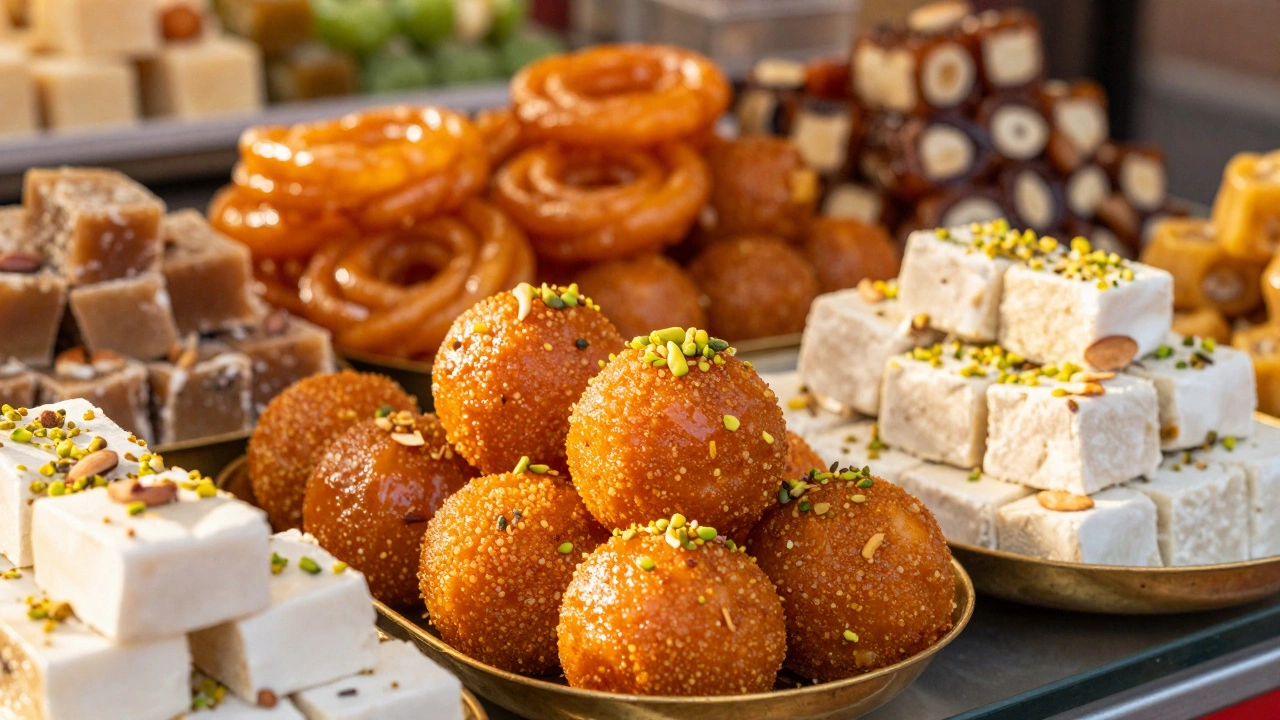
Walk into any sweet shop in India, and you are greeted by a mountain of colors: orange ladoos, white barfis, golden jalebis. But if you look past the vibrant turmeric and pistachio dust, there is one unifying thread that ties almost every single one of these treats together. It is not just sugar. While sweetness is the goal, the main ingredient that defines the texture, richness, and cultural identity of most traditional Indian sweets is actually Mawa (also known as Khoya or Khoa).
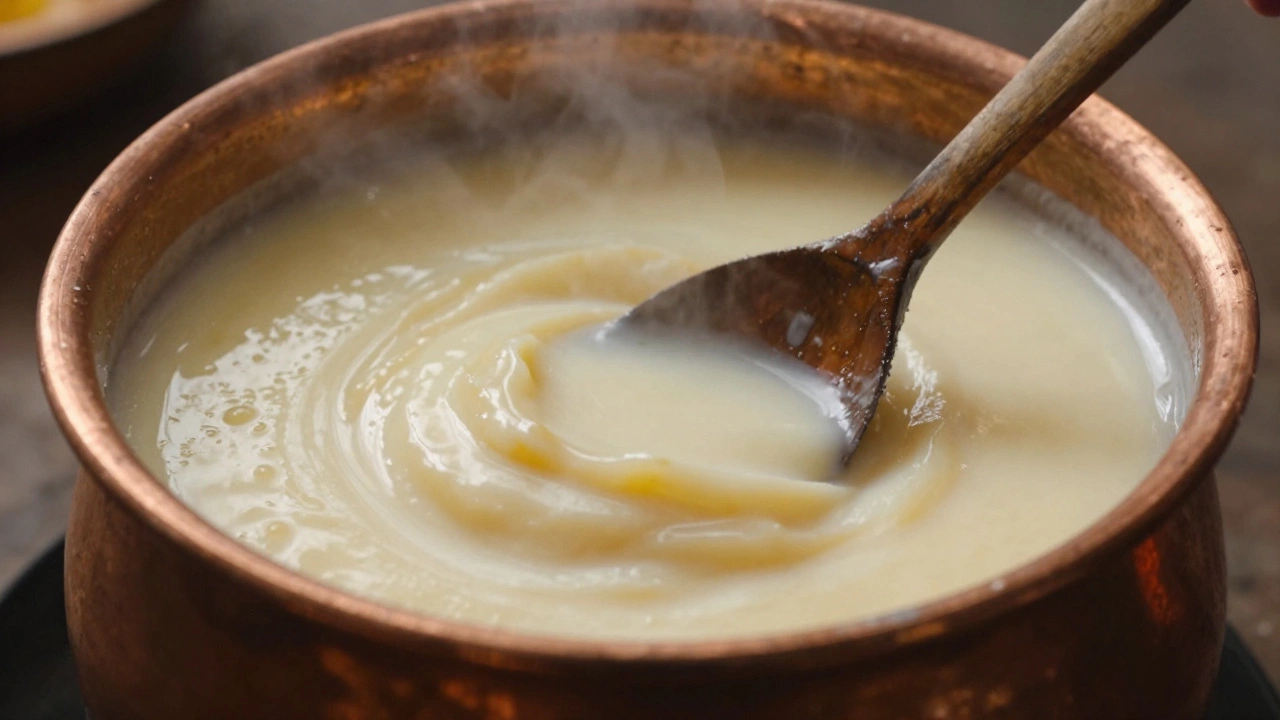
Mawa is reduced milk solids. You take gallons of milk, boil it down until all the water evaporates, and you are left with this dense, creamy, caramelized paste. It is the backbone of Gulab Jamun, Rasgulla, Kaju Katli, and countless festive offerings. However, calling it just "milk" misses the point. The magic lies in how Indian cuisine transforms dairy, sugar, and fat into distinct textures.
The Holy Trinity: Mawa, Sugar, and Ghee
To understand Indian sweets, you have to look at the three pillars that support them. Most Western desserts rely on flour and eggs for structure. Indian sweets rarely do. Instead, they use a combination of dairy reduction, crystallization, and emulsification.
- Mawa (Khoya): This is the body. Whether it is crumbly, soft, or hard, mawa provides the chewiness and richness that makes a sweet feel indulgent rather than just sugary.
- Sugar Syrup (Chashni): This is the soul. Unlike baking where sugar is mixed into dough, here sugar is often cooked into specific consistencies-thread stage, soft ball, or hard crack-to soak into or coat the main ingredient.
- Ghee: This is the finish. Clarified butter adds aroma, prevents sticking, and gives that glossy sheen to barfis and ladoos.
If you remove mawa from a Gulab Jamun, you get a bread-like dumpling. If you remove the sugar syrup, it is just dry dough. But the mawa is what makes it an Indian sweet. It is the defining characteristic that separates a cake from a Karanji or a cookie from a Burfi.
Understanding Mawa: The Heart of Indian Desserts
Mawa is not a store-bought powder you simply mix with water. Traditional mawa is made by simmering full-fat milk for hours. As the water boils off, the proteins and fats coagulate, creating a solid mass. There are different types of mawa depending on how long you cook it:
- Soft Mawa: Cooked briefly, retains some moisture. Used for smooth fillings like in Motichoor Ladoo.
- Crumbly Mawa: Cooked longer, breaks apart easily. Perfect for Barfi and Ladoo bases.
- Hard Mawa: Cooked until it turns brown and brittle. Used for deep-fried sweets like Gulab Jamun.
In modern times, you can buy ready-made khoya blocks in supermarkets, but homemade mawa has a distinct nutty, caramelized flavor that processed versions struggle to replicate. The ratio is roughly 10 liters of milk to produce 1 kilogram of mawa. That concentration is why it is so expensive and so prized.
The Science of Sugar Syrup Consistency
While mawa is the main structural ingredient, sugar is the main flavor driver. But in Indian cooking, sugar is never just "sugar." It is manipulated through heat to achieve specific stages. Knowing these stages is crucial because getting them wrong means your sweets will either be soggy or rock-hard.
| Stage Name | Temperature (Approx) | Test Method | Common Uses |
|---|---|---|---|
| Single Thread | 103°C - 110°C | Pull fingers apart; one thin thread forms | Rasgulla, Phirni |
| Soft Ball | 112°C - 116°C | Dip spoon in cold water; forms a soft ball | Gulab Jamun soaking syrup |
| Hard Crack | 149°C+ | Forms brittle threads in cold water | Jalebi batter coating, Boondi |
For example, if you make Rasgulla, you need a single-thread syrup. If the syrup is too thick, the cheese balls won't absorb enough liquid and will remain dense. If it is too thin, they will dissolve. Precision here matters more than the brand of sugar you use.
Regional Variations: When Milk Isn't King
While mawa dominates North Indian and Mughlai-influenced sweets, other regions play by different rules. In Bengal and Odisha, the main ingredient is often Chhena (fresh cottage cheese). Chhena is curdled milk strained of its whey. It is moist, spongy, and lacks the caramelized depth of mawa. This is why Bengali sweets like Rasgulla and Sandesh taste lighter and fresher compared to their North Indian counterparts.
In South India, particularly Karnataka and Andhra Pradesh, rice and lentils take center stage. Mysore Pak, for instance, relies on besan (gram flour), sugar, and massive amounts of ghee. Here, the main ingredient isn't milk solids but gram flour, which creates a crumbly, melt-in-the-mouth texture entirely different from mawa-based sweets.
Coconut is another major player in Kerala and coastal regions. Payasam (a pudding) might use vermicelli or rice, but the sweetness often comes from jaggery or coconut milk, offering a tropical twist to the standard dairy-sugar profile.
Ghee: The Flavor Enhancer
You cannot talk about Indian sweets without mentioning ghee. While it is not always the "main" ingredient by volume, it is essential for flavor and texture. Ghee has a high smoke point and a rich, nutty aroma that vanilla extract tries to mimic in Western baking.
In sweets like Mysore Pak, ghee acts as the binder. The ratio of ghee to flour can be 1:1 or even higher. Without sufficient ghee, Mysore Pak becomes dry and crumbly in a bad way. With the right amount, it dissolves on the tongue. In Barfi, ghee is used to fry the mawa slightly before mixing with sugar, adding layers of complexity to the taste.
Nuts and Dry Fruits: The Texture Contrast
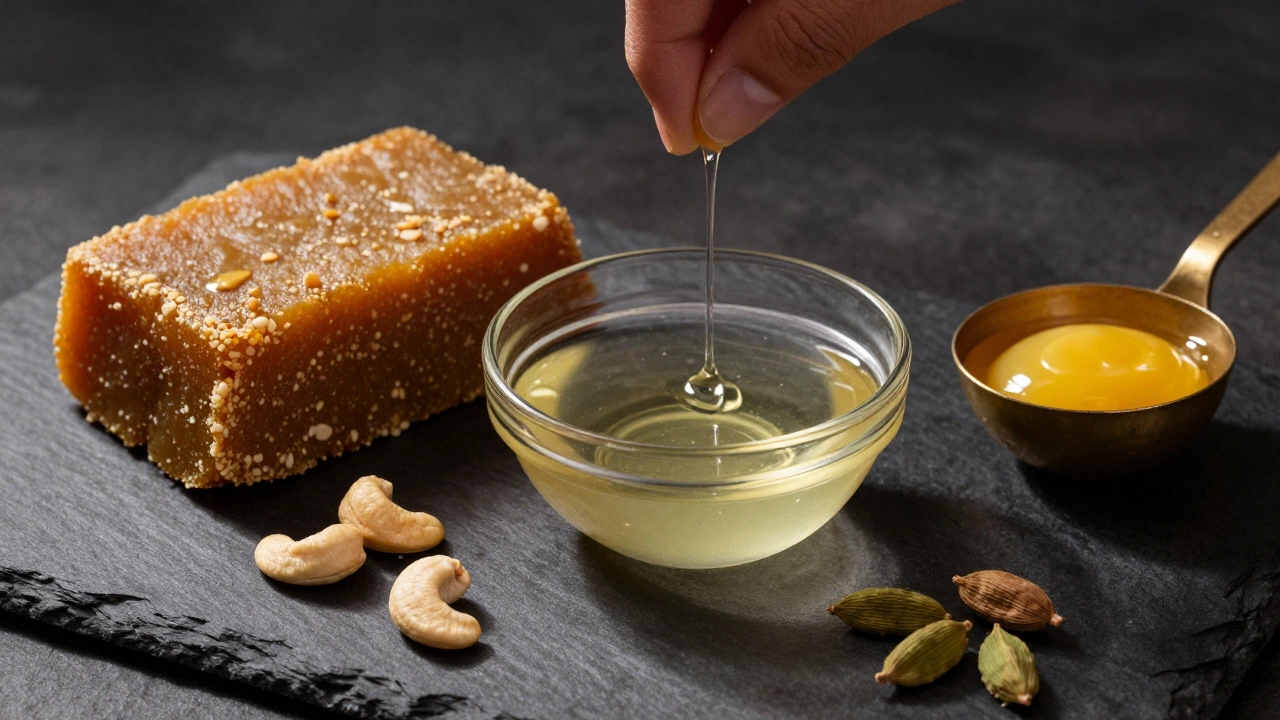
Once the base is set with mawa or chhena, Indian sweets are almost always finished with nuts. Pistachios, almonds, cashews, and raisins are not just garnishes; they provide a necessary textural contrast to the soft, sometimes mushy, nature of the dessert. They also add healthy fats, balancing the high sugar content.
Kaju Katli, for example, is primarily made of cashew paste. Here, the nut is the main ingredient, not an add-on. This highlights the diversity within the category: while mawa is the most common base, nuts can take the lead in premium varieties.
Common Mistakes When Making Indian Sweets at Home
If you are trying to recreate these sweets, watch out for these pitfalls:
- Using low-fat milk: Mawa requires full-fat milk. Low-fat milk will not reduce properly and will result in a grainy, non-creamy texture.
- Ignoring syrup temperature: Never guess. Use a candy thermometer or the cold water test. Overcooked syrup burns the outside of Gulab Jamuns, leaving the inside raw.
- Skipping the resting time: Many sweets, like Barfi, need to set for several hours. Cutting them too early results in a mess.
- Over-kneading mawa: For soft sweets, over-kneading develops gluten-like structures in the milk proteins, making the sweet rubbery instead of soft.
Health Considerations and Modern Alternatives
Traditional Indian sweets are calorie-dense. A single Gulab Jamun can contain as much sugar as a soda. However, there is a growing trend toward healthier alternatives. Jaggery is replacing refined sugar in many households, offering trace minerals and a lower glycemic index. Coconut sugar is another popular swap.
Some bakers are experimenting with almond flour or oat flour to create gluten-free, lower-carb versions of Barfi. While these lack the authentic mouthfeel of mawa, they serve a purpose for those managing diabetes or weight. Remember, the authenticity of the taste comes from the slow-cooked dairy, so shortcuts often compromise flavor.
Is mawa the same as paneer?
No, they are different. Paneer is fresh cheese made by curdling milk with acid (like lemon juice) and straining it immediately. Mawa is made by boiling milk until the water evaporates, concentrating the solids. Mawa is denser, richer, and sweeter than paneer.
Can I use condensed milk instead of mawa?
You can use condensed milk as a shortcut for some recipes, but the texture will be softer and less authentic. Condensed milk still contains water and added sugar, whereas mawa is pure reduced milk solids. For best results, cook the condensed milk further to evaporate excess moisture.
Why do Indian sweets taste so heavy?
The heaviness comes from the high density of milk solids (mawa) and the generous use of ghee and sugar. Unlike cakes which are airy due to leavening agents, Indian sweets are compact and rich, designed to be eaten in small portions.
What is the difference between Khoya and Mawa?
There is no difference. Mawa is the term commonly used in North India, while Khoya is preferred in West and South India. Both refer to the same reduced milk solid ingredient.
How long do Indian sweets last?
Sweets containing mawa and ghee can last up to 2 weeks at room temperature if stored in an airtight container. Those with fresh cream or fruit fillings should be refrigerated and consumed within 3-5 days. Sugar acts as a preservative, extending shelf life.