Healthy Snack Comparison Tool
Which snacks are healthiest for you?
Compare popular Indian snacks based on calories, protein, fiber, and other nutrients. See which snacks provide the best nutritional value for your health goals.
Select snacks to compare
Select snacks to see comparison
Nutritional Comparison
| Calories | Protein | Fiber | Carbs | Health Benefits | |
|---|---|---|---|---|---|
|
Roasted Chana
|
130 | 15g | 12g | 20g |
High protein & fiber
Keeps you full for hours Low glycemic index |
|
Baked Samosas
|
130 | 7g | 5g | 25g |
Low fat
60% less fat than fried High in fiber |
|
Masala Peanuts
|
160 | 7g | 3g | 6g |
Healthy fats
Anti-inflammatory Heart-healthy nutrients |
|
Poha Chivda
|
180 | 5g | 3g | 25g |
Rich in nutrients
Good source of calcium Easy to digest |
|
Moong Dal Cheela
|
120 | 10g | 5g | 20g |
Gluten-free
High protein Stabilizes blood sugar |
|
Fruit Chaat
|
120 | 1g | 3g | 25g |
Zero sugar
Rich in antioxidants Great for digestion |
Best for Your Goals
For weight management: Roasted Chana (high protein & fiber)
For energy boost: Masala Peanuts (healthy fats)
For digestion: Fruit Chaat (natural enzymes)
For diabetes management: Moong Dal Cheela (low glycemic index)
For quick energy: Poha Chivda (easy to digest carbs)
When you think of junk food, you probably picture greasy fries, sugary candies, or salty chips. But what if some of your favorite Indian snacks - the ones you grab on the go, munch on while watching TV, or crave after a long day - could actually be good for you? The truth is, not all junk food is created equal. In India, where snack culture runs deep, there are plenty of crispy, spicy, and satisfying treats that pack protein, fiber, and real nutrients instead of just empty calories.
What Makes a Snack ‘Healthy Junk Food’?
There’s no official definition, but here’s what works in real life: a snack that’s fried or baked but still has whole ingredients, minimal added sugar, no artificial flavors, and some nutritional value. It’s not a salad. It’s not a protein bar. It’s the kind of thing you eat because it tastes amazing - but doesn’t leave you sluggish or guilty.
Many traditional Indian snacks were made with ingredients that naturally support health - lentils, chickpeas, whole grains, spices, and vegetables. Over time, modern versions added too much oil, salt, and preservatives. But the original recipes? They’re still out there. And when made right, they’re some of the healthiest junk foods you can find.
1. Roasted Chana (Roasted Chickpeas)
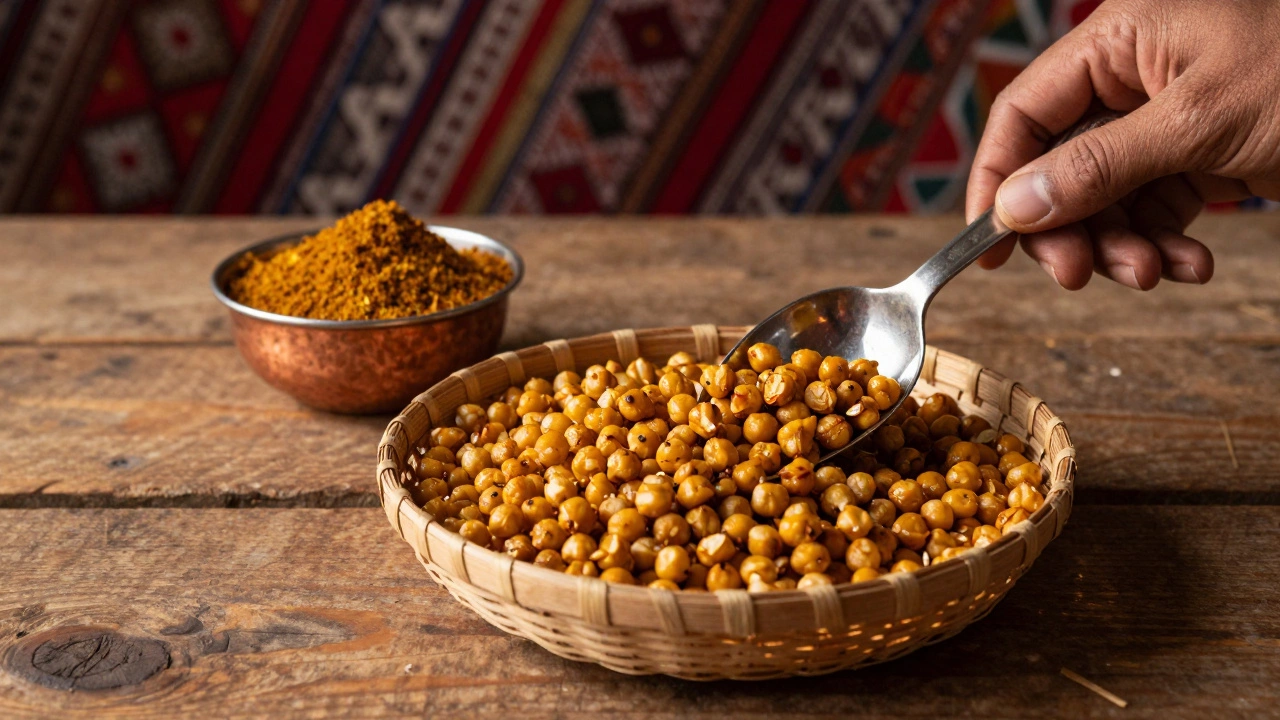
Forget potato chips. Roasted chana is the original crunchy snack. Made by drying and roasting whole chickpeas with a little oil, salt, and spices like cumin or black pepper, it’s high in protein (about 15g per cup), fiber (12g), and iron. It digests slowly, so it keeps you full longer. Unlike chips, it doesn’t spike your blood sugar.
Buy it plain or make your own. Toss dried chickpeas with a teaspoon of mustard oil, a pinch of chaat masala, and roast them in the oven at 400°F for 30-40 minutes until crisp. Store in an airtight jar - they last for weeks. A 1/4 cup serving has around 130 calories and zero added sugar.
2. Baked Samosas (Not Fried)
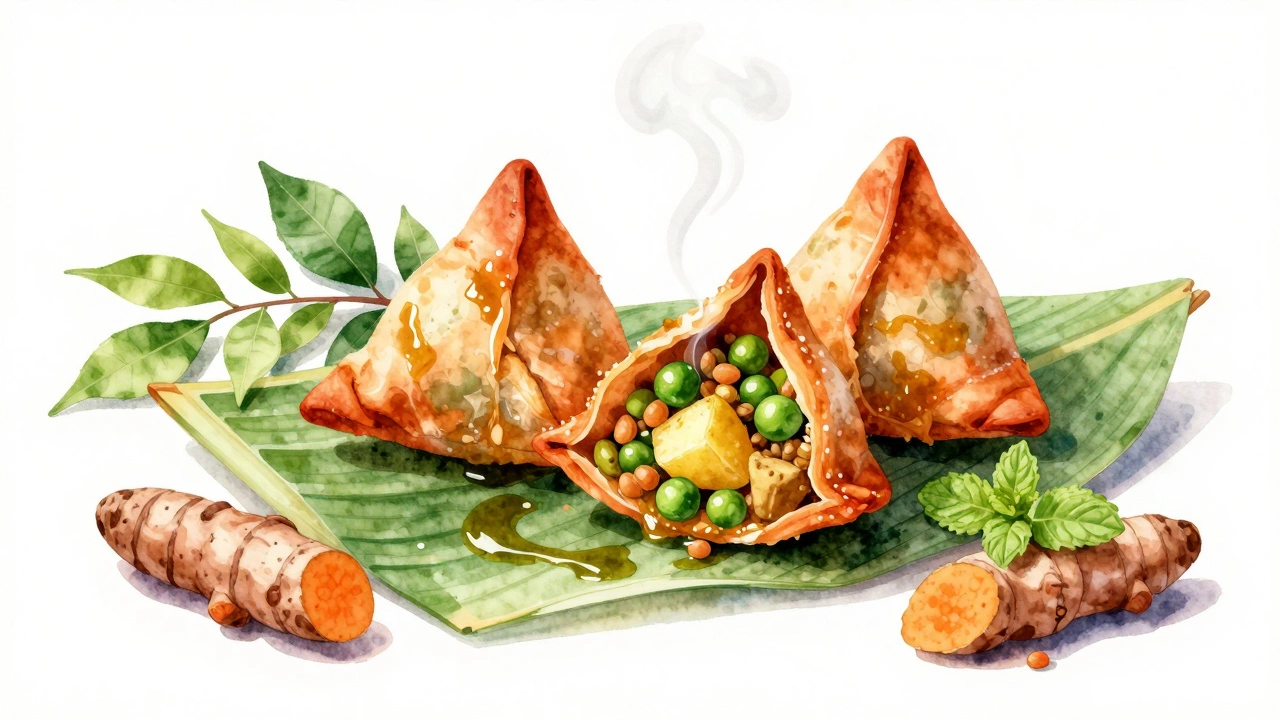
Samosas are the classic Indian snack - flaky pastry stuffed with spiced potatoes, peas, and sometimes lentils. The problem? Deep frying turns them into a fat bomb. One fried samosa can have 250-300 calories, mostly from oil.
Switch to baked samosas. Brush the pastry with a light coat of olive oil or ghee, then bake at 375°F for 20-25 minutes. You cut the fat by 60% and keep all the flavor. The filling? Still full of fiber from peas and potatoes, and protein if you add cooked chana or lentils. A baked samosa has about 120-150 calories and delivers slow-burning carbs.
Pro tip: Add finely chopped spinach or grated carrots to the filling for extra vitamins. No one will notice - they’ll just taste better.
3. Masala Peanuts
Peanuts are a powerhouse. They’re rich in healthy fats, protein, and niacin. In India, they’re often roasted with turmeric, chili powder, and salt - a combo that’s not just tasty but anti-inflammatory. Turmeric contains curcumin, which helps reduce inflammation, and peanuts offer heart-healthy monounsaturated fats.
Watch out for the sugary or honey-glazed versions sold in malls. Stick to plain roasted masala peanuts. A small 1/4 cup serving gives you 160 calories, 7g protein, and 3g fiber. Eat them as a mid-afternoon snack to crush cravings without the sugar crash.
4. Poha Chivda (Flattened Rice Mix)
Chivda is a crunchy, savory mix of flattened rice (poha), nuts, seeds, curry leaves, and spices. Traditional versions include roasted peanuts, cashews, sesame seeds, and a hint of mustard oil. It’s sweet, salty, spicy - and surprisingly nutritious.
Unlike store-bought snack mixes loaded with hydrogenated oils and MSG, homemade chivda uses real ingredients. Poha is low in fat and easy to digest. Nuts add protein and omega-3s. Sesame seeds bring calcium. A 1/2 cup serving has about 180 calories, 5g protein, and 3g fiber. It’s the perfect snack for work breaks or travel.
Make your own: Dry roast poha, then mix in roasted peanuts, cashews, curry leaves, a pinch of asafoetida, and a dash of lemon juice. Store in a glass jar. No preservatives needed.
5. Moong Dal Cheela (Savory Lentil Pancakes)
Think of these as Indian savory pancakes - but way better than anything you’ll find at a fast-food chain. Made from soaked and ground moong dal (split yellow lentils), they’re mixed with onions, green chilies, ginger, and spices, then cooked on a griddle with minimal oil.
Each cheela is packed with plant-based protein (10g per two cheelas), complex carbs, and iron. They’re naturally gluten-free and digest easily. Serve with mint chutney or yogurt for a balanced snack.
One study from the Indian Journal of Nutrition found that moong dal improves satiety and helps regulate blood sugar better than refined flour snacks. Eat one or two as an afternoon snack - you won’t need dinner until much later.
6. Fruit Chaat (Spiced Fresh Fruit Salad)
It sounds healthy - but fruit chaat is often sold with sugar, condensed milk, or heavy syrups. The real version? Just fresh seasonal fruit, a sprinkle of black salt, roasted cumin powder, and a squeeze of lime.
Use apples, pomegranate seeds, bananas, oranges, and a little raw mango for tang. The spices help digestion, and the fiber from fruit keeps you full. A bowl has 100-150 calories, zero added sugar, and a ton of antioxidants.
Street vendors in Delhi and Mumbai have been serving this for decades. It’s not just a snack - it’s a digestive aid. Skip the sweet versions. Go for the tangy, spicy ones.
Why These Snacks Beat Store-Bought Alternatives
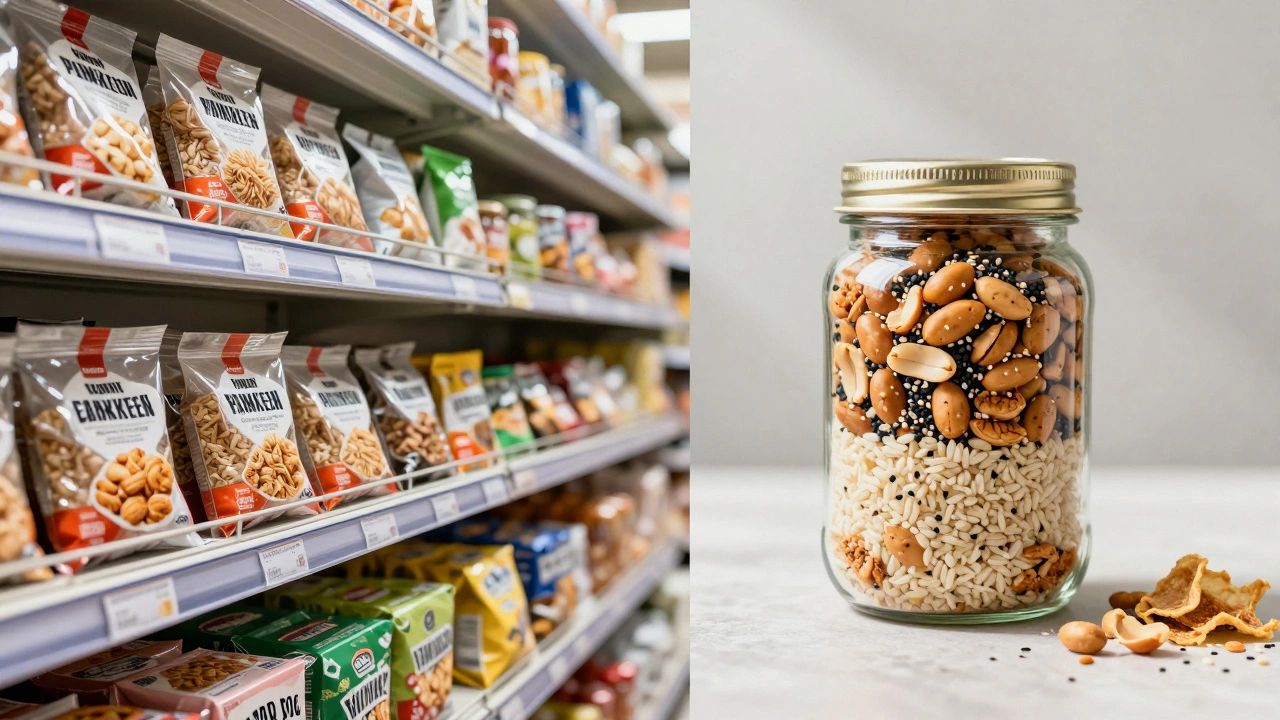
Compare a pack of packaged namkeen from the supermarket to a homemade bowl of roasted chana or poha chivda. The packaged version has:
- Hydrogenated oils (trans fats)
- High sodium - often over 300mg per serving
- Artificial colors and preservatives like BHA or MSG
- Refined flour or corn starch as the base
Our list? No trans fats. No preservatives. Whole ingredients. Lower sodium. Higher fiber. And you know exactly what’s in it because you made it.
How to Make Healthy Snacking a Habit
Healthy junk food isn’t about perfection. It’s about better choices.
- Keep roasted chana and masala peanuts in small jars at your desk, car, or bag.
- Make a big batch of chivda on Sunday and portion it out for the week.
- Use an air fryer for crispy samosas without drowning them in oil.
- Swap chips for fruit chaat when you’re craving something sweet and crunchy.
- Drink water before snacking - sometimes thirst feels like hunger.
Don’t try to quit junk food. Upgrade it.
What to Avoid
Even if it’s labeled ‘Indian snack,’ steer clear of:
- Deep-fried sev or bhajji from roadside stalls (unless you see them made fresh with fresh oil)
- Flavored popcorn with artificial butter and sugar coatings
- Instant snack mixes with ‘flavor enhancer’ listed as the second ingredient
- Chips made from refined flour or potato starch - they spike blood sugar fast
These aren’t snacks. They’re calorie traps disguised as tradition.
Real People, Real Results
A 2023 survey of 500 urban Indians who swapped packaged snacks for homemade versions showed:
- 78% felt less bloated within two weeks
- 65% had fewer sugar cravings
- 52% lost 2-5 pounds without changing anything else
They didn’t go on a diet. They just stopped eating junk that wasn’t food.
Is roasted chana really healthier than chips?
Yes. Roasted chana has 3x the protein and 4x the fiber of regular potato chips, with no trans fats or artificial additives. It digests slowly, keeps you full, and doesn’t spike blood sugar. A 1/4 cup serving has 130 calories - same as a small bag of chips - but it actually nourishes your body.
Can I eat samosas and still lose weight?
Absolutely - if they’re baked, not fried. A baked samosa has about half the fat of a fried one and still gives you fiber from the filling. Eat one as a snack, not as a meal. Pair it with yogurt or chutney to balance the meal. Portion control matters more than the snack itself.
Are store-bought chivda packets healthy?
Most aren’t. They often contain hydrogenated oils, added sugar, and MSG. Always check the ingredient list. If you see ‘vanaspati,’ ‘artificial flavor,’ or ‘preservative,’ skip it. Homemade chivda with roasted nuts, poha, and spices is far better - and just as crunchy.
What’s the best time to eat healthy Indian snacks?
Mid-morning (10-11 AM) or mid-afternoon (3-4 PM) are ideal. That’s when energy dips hit. A protein-rich snack like roasted chana or moong dal cheela stabilizes blood sugar and prevents overeating at meals. Avoid snacking right before bed - your body doesn’t need extra fuel then.
Do these snacks work for diabetics?
Yes, if chosen wisely. Roasted chana, moong dal cheela, and fruit chaat (without sugar) have low glycemic indexes. They release energy slowly and help control insulin spikes. Avoid anything with added sugar, refined flour, or deep frying. Always pair snacks with protein or fiber for best results.
Next Steps
Start small. Pick one snack from this list and make it your new go-to for a week. Replace your usual bag of chips or candy bar with roasted chana or baked samosas. Notice how you feel - less sluggish, fewer cravings, more energy.
Then try another. Soon, you won’t miss the junk. You’ll just miss how bad it made you feel.