Turmeric Dosage & Absorption Calculator
Enter your dish details and click "Analyze My Curry" to see the recommended turmeric amount and health insights.
Recommended Turmeric Amount
0 tsp
Total for entire potAbsorption Efficiency
Culinary Tips
You stir a pot of simmering chicken curry, and suddenly everything turns that vibrant, appetizing gold. It’s not just color-it’s flavor, history, and health all rolled into one powder. If you’ve ever looked at your spice rack and wondered, "What is this bright yellow stuff?", you’re asking about Turmeric, a rhizome from the ginger family that has been the backbone of South Asian cuisine for thousands of years. It’s the single most recognizable ingredient in almost every curry dish you’ll encounter, from a simple dal to a rich Mughlai chicken korma.
But here’s the thing: turmeric isn’t just there to make your food look pretty. It’s complex. It can be bitter if you use too much, it stains everything it touches (goodbye, white countertops), and its health benefits are often misunderstood. As someone who cooks Indian food weekly in Auckland, I’ve learned that mastering this one spice changes how you approach curry entirely. Let’s break down exactly what turmeric is, why it’s non-negotiable in curries, and how to use it without ruining your dish.
The Botanical Reality Behind the Powder
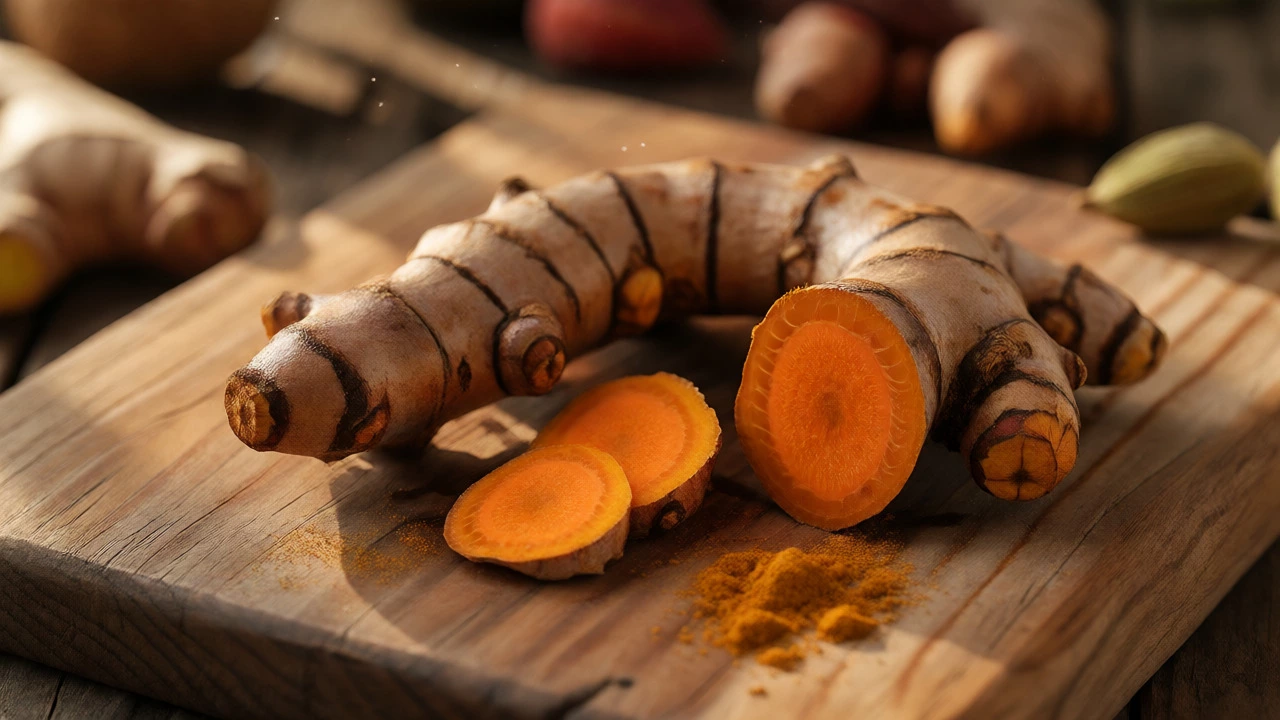
Before we talk about recipes, let’s clear up a common confusion. When people ask about the "golden yellow spice," they are almost always referring to dried and ground root of the plant Curcuma longa. This plant belongs to the Zingiberaceae family, which means it’s a close cousin to ginger and cardamom. While ginger gives you that sharp, zesty heat, turmeric offers an earthy, slightly peppery, and mildly bitter note. It doesn’t dominate the flavor profile like cumin or coriander might; instead, it acts as a foundational base.
In fresh form, the rhizome looks remarkably similar to ginger but with a deep orange interior. However, you rarely see fresh turmeric in standard grocery stores outside of specialized Asian markets. Most home cooks rely on the dried powder because it’s shelf-stable and potent. One teaspoon of powder is roughly equivalent to two inches of fresh root, though the flavor intensity varies. If you’re buying it, look for brands that specify high curcumin content-curcumin being the active compound responsible for both the color and the anti-inflammatory properties.
Why Turmeric Is Non-Negotiable in Chicken Curry
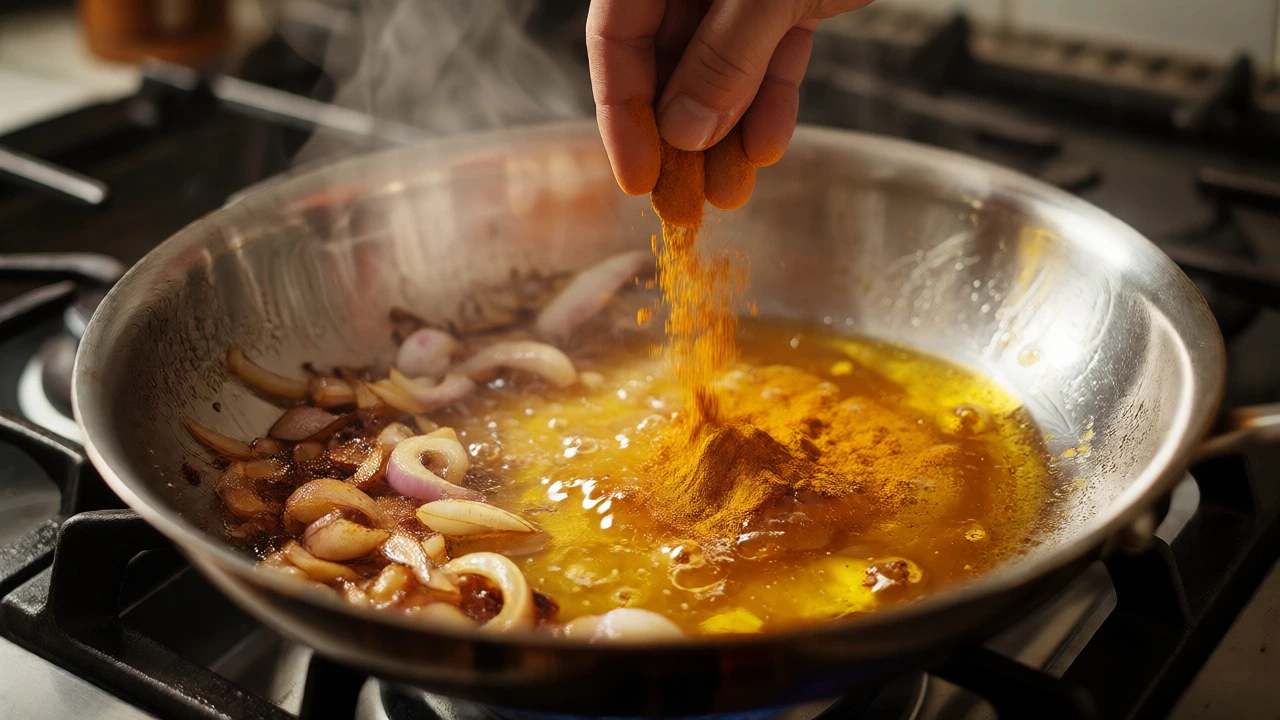
If you omit turmeric from a chicken curry recipe, you don’t just lose the color. You lose the balance. In Indian culinary science, spices work in synergy. Turmeric pairs specifically with fat and acid to unlock its full potential. In a typical chicken curry, you start by heating oil or ghee. Adding turmeric directly to hot oil blooms the spice, releasing volatile oils that smell warm and woody rather than dusty.
Consider a basic Chicken Tikka Masala or a homestyle North Indian chicken curry. The process usually goes like this: onions fry until brown, garlic and ginger paste go in, then the powdered spices. If you skip turmeric here, the gravy remains pale and flat. The yellow hue signals to our brains that the dish is rich and savory. Moreover, turmeric helps tenderize meat slightly due to its enzymatic activity, although this effect is mild compared to yogurt marinades.
There’s also a preservative aspect. Historically, before refrigeration, turmeric was used to keep cooked meats safe longer because of its antimicrobial properties. While you don’t need it for preservation today, that legacy remains in traditional recipes. Removing it feels wrong to many home cooks because the dish simply doesn’t taste "complete" without that underlying earthy warmth.
Turmeric vs. Saffron: Clearing Up the Confusion
A frequent question I get is whether saffron can replace turmeric for color. The short answer? No. They are completely different entities with different roles. Saffron comes from the crocus flower and costs a fortune per gram. It provides a subtle floral aroma and a lighter, more delicate yellow-orange tint. Turmeric, conversely, is affordable, pungent, and intensely yellow.
| Feature | Turmeric | Saffron |
|---|---|---|
| Source | Rhizome (root) of Curcuma longa | Stigmas of Crocus sativus flower |
| Flavor Profile | Earthy, bitter, peppery, warm | Floral, honey-like, metallic notes |
| Color Impact | Deep, opaque golden-yellow | Bright, translucent yellow-orange |
| Cost | Very Low ($5-$10/kg) | Extremely High ($5,000+/kg) |
| Primary Use | Base spice in curries, rice, lentils | Garnish, Biryani, Desserts, Paella |
You might see both in a premium Biryani. Turmeric marinates the chicken for depth, while saffron milk is drizzled over the top for aroma and luxury. But for a standard weeknight chicken curry? Stick to turmeric. Using saffron for color alone is a waste of money unless you specifically want that floral perfume.
The Science of Absorption: Why Black Pepper Matters
This is where many home cooks miss out on health benefits. You’ve probably heard that turmeric reduces inflammation. That’s true, but only if your body can absorb it. The main active compound, Curcumin, has poor bioavailability on its own. It passes through your digestive system quickly without being utilized effectively.
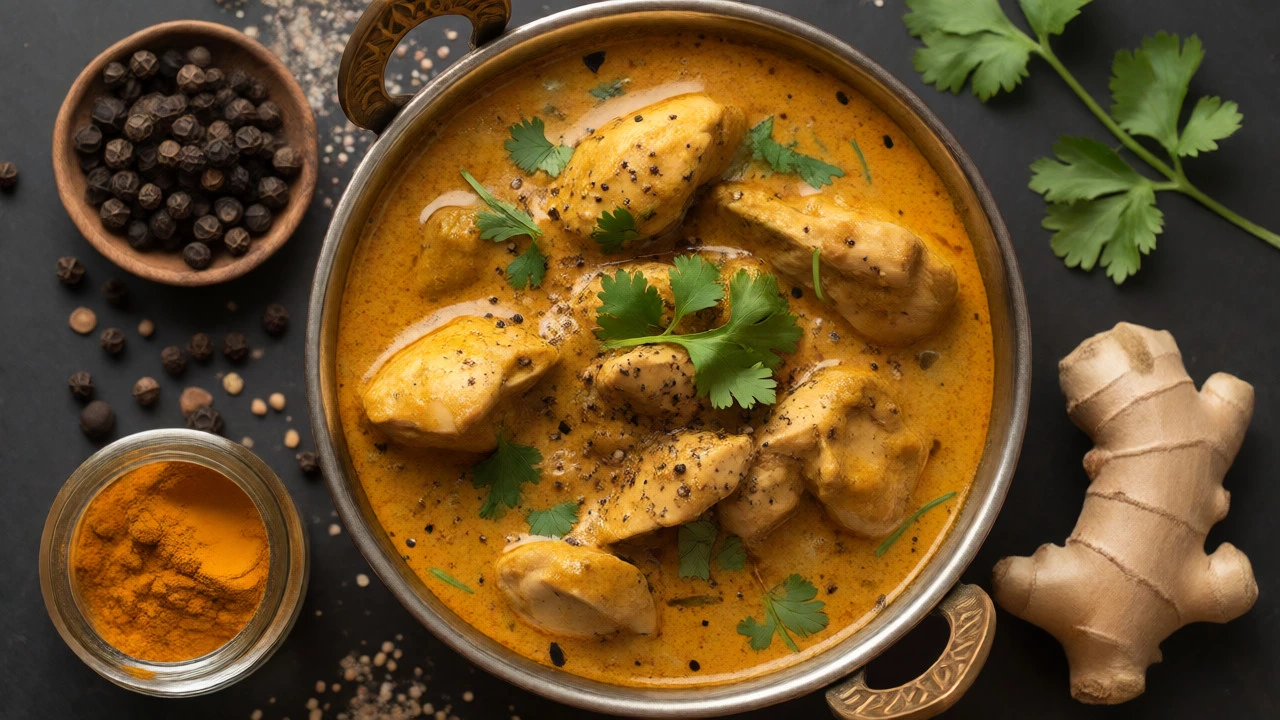
Enter black pepper. A compound called piperine in black pepper inhibits certain enzymes in the liver that break down curcumin. Studies suggest that combining turmeric with black pepper can increase curcumin absorption by up to 2,000%. This isn’t just a health hack; it’s a culinary tradition. Almost every authentic curry recipe includes black pepper alongside turmeric. So when you’re making your masala paste, don’t skip the cracked black pepper. It ensures you get the nutritional value while adding a necessary kick of heat that balances turmeric’s bitterness.
Another tip: pair it with fat. Curcumin is lipophilic, meaning it dissolves in fats. Cooking turmeric in ghee, coconut oil, or heavy cream significantly boosts absorption. A dry sprinkle of turmeric into water-based soups won’t give you nearly the same benefit as stirring it into a creamy chicken korma.
Cooking Mistakes to Avoid with Turmeric
Turmeric is forgiving, but not invincible. Here are three pitfalls I’ve seen countless times:
- Adding it too late: If you dump turmeric into the pot after the chicken is cooked, you’ll end up with raw, dusty specks floating in your gravy. Always add powdered spices early, during the onion-frying stage, to cook out the raw edge.
- Overusing it: More isn’t better. Too much turmeric makes the dish taste medicinal and overly bitter. For a standard pot serving four people, half a teaspoon to one teaspoon is usually enough. Start small; you can always add more, but you can’t take it away.
- Ignoring the stain: Turmeric stains plastic containers, wooden spoons, and countertops instantly. If you use a wooden cutting board, rub it with lemon juice and salt immediately after chopping fresh turmeric. For plastic Tupperware, wash it right away; otherwise, you’ll have yellow containers forever.
Beyond Color: Health Claims and Reality
Let’s address the elephant in the room: the health hype. Yes, turmeric is powerful. Research published in journals like The Lancet and by institutions like Johns Hopkins Medicine confirms curcumin’s antioxidant and anti-inflammatory effects. It’s linked to reduced risk of heart disease, improved brain function, and lower markers of arthritis pain.
However, eating curry once a week won’t cure chronic conditions. The amount of curcumin in a typical meal is modest. If you’re relying on turmeric for serious health issues, dietary supplements with standardized extracts are more effective than culinary use. But as part of a balanced diet? Absolutely. It adds nutrients without calories, supports digestion, and makes vegetables and lean proteins like chicken more palatable. Think of it as a healthy habit, not a miracle drug.
How to Spot Quality Turmeric
Not all turmeric powders are created equal. Adulteration is common. Some cheap brands mix turmeric with other yellow dyes or fillers like wheat flour. Here’s how to check quality at home:
- The Smell Test: Fresh, good-quality turmeric has a distinct, earthy, slightly musty aroma. If it smells faint or chemical-like, it’s old or diluted.
- The Water Test: Drop a pinch of powder into a glass of warm water. Pure turmeric will slowly dissolve and turn the water yellow, leaving some sediment at the bottom. If it dissolves instantly and completely, it might contain starches or fillers. If it floats unnaturally or leaves a weird residue, be suspicious.
- Color Intensity: Look for a deep, vibrant orange-yellow. Pale yellow suggests low curcumin content or age. The powder should feel fine and uniform, not clumpy or gritty.
Buying whole turmeric roots and grinding them yourself yields the best flavor, but for convenience, reputable organic brands are perfectly fine. Store it in an airtight container away from light. Sunlight degrades curcumin rapidly, so keeping it in a dark cupboard extends its potency.
Final Thoughts on Your Curry Game
So, next time you reach for that little jar of golden powder, remember you’re holding one of the most important tools in your kitchen. It’s not just about making your chicken curry look Instagram-worthy. It’s about building flavor layers, aiding digestion, and tapping into centuries of culinary wisdom. Master the timing-add it early with fat-and respect the dosage. Do that, and your curries will transform from bland to brilliant.
Is turmeric the same as curry powder?
No. Turmeric is a single spice made from the ground root of the Curcuma longa plant. Curry powder is a blend of multiple spices, including turmeric, cumin, coriander, fenugreek, and others. Turmeric is typically the primary ingredient that gives curry powder its yellow color, but curry powder contains additional flavors that turmeric alone does not provide.
Can I substitute fresh turmeric for powder?
Yes, but you need to adjust the quantity. Generally, use 3 parts fresh turmeric for every 1 part dried turmeric powder. For example, if a recipe calls for 1 teaspoon of powder, use 1 tablespoon of freshly grated turmeric. Note that fresh turmeric has a brighter, more citrusy flavor and less bitterness than the dried version. Be careful when handling fresh turmeric as it stains hands and surfaces more aggressively than the powder.
Why does my turmeric taste bitter?
Turmeric naturally has a slight bitterness, especially if used in large quantities. If your dish tastes overly bitter, you likely added too much turmeric or didn't cook it long enough. Spices need to be "bloomed" in hot oil or ghee to mellow their harsh edges. Additionally, ensure you aren't using expired turmeric, which can develop off-flavors. Balancing the bitterness with a touch of sweetness (like caramelized onions or a pinch of sugar) and acidity (like tomato or lemon juice) helps mask the bitterness.
Does turmeric lose its color when cooked?
Turmeric is quite stable regarding color during normal cooking temperatures. However, prolonged exposure to high heat or acidic environments can cause it to fade slightly or shift towards a duller yellow. To maintain the brightest golden hue, add turmeric early in the cooking process to bloom the flavor, but avoid boiling the curry vigorously for hours on end if color retention is critical. Adding a splash of lemon juice at the very end can sometimes brighten the appearance again.
Is it safe to eat turmeric every day?
For most people, consuming turmeric in culinary amounts (such as in daily curries or teas) is safe and beneficial. However, excessive consumption, particularly in supplement form, can lead to side effects like stomach upset, nausea, or diarrhea. People with gallbladder issues, kidney stones, or those taking blood-thinning medications should consult a doctor before significantly increasing their turmeric intake. Moderation is key; sticking to typical recipe amounts is generally considered safe for healthy adults.