Diabetic Indian Meal Carb Calculator
165 calories, 30g protein, 3g fat, 0g sugar
120 calories, 15g protein, 4g fat, 10g carbs
150 calories, 4g protein, 9g fat, 18g carbs
220 calories, 12g protein, 16g fat, 12g carbs
180 calories, 6g protein, 5g fat, 28g carbs
120 calories, 3g protein, 0.5g fat, 25g carbs
120 calories, 5g protein, 1g fat, 20g carbs
110 calories, 2g protein, 0.5g fat, 22g carbs
0 calories, 0g protein, 0g fat, 0g carbs
15 calories, 0g protein, 0g fat, 3g carbs
60 calories, 3g protein, 0g fat, 4g carbs
20 calories, 1g protein, 0g fat, 4g carbs
When you have diabetes, eating Indian food doesn’t mean giving up flavor-it means making smarter choices. Many assume Indian cuisine is all heavy rice, fried snacks, and sugary desserts, but that’s not true. Traditional Indian cooking has always leaned on whole grains, lentils, spices, and grilled meats. The real trick is knowing which dishes to pick and which to skip.
Why Tandoori Chicken Is a Top Choice
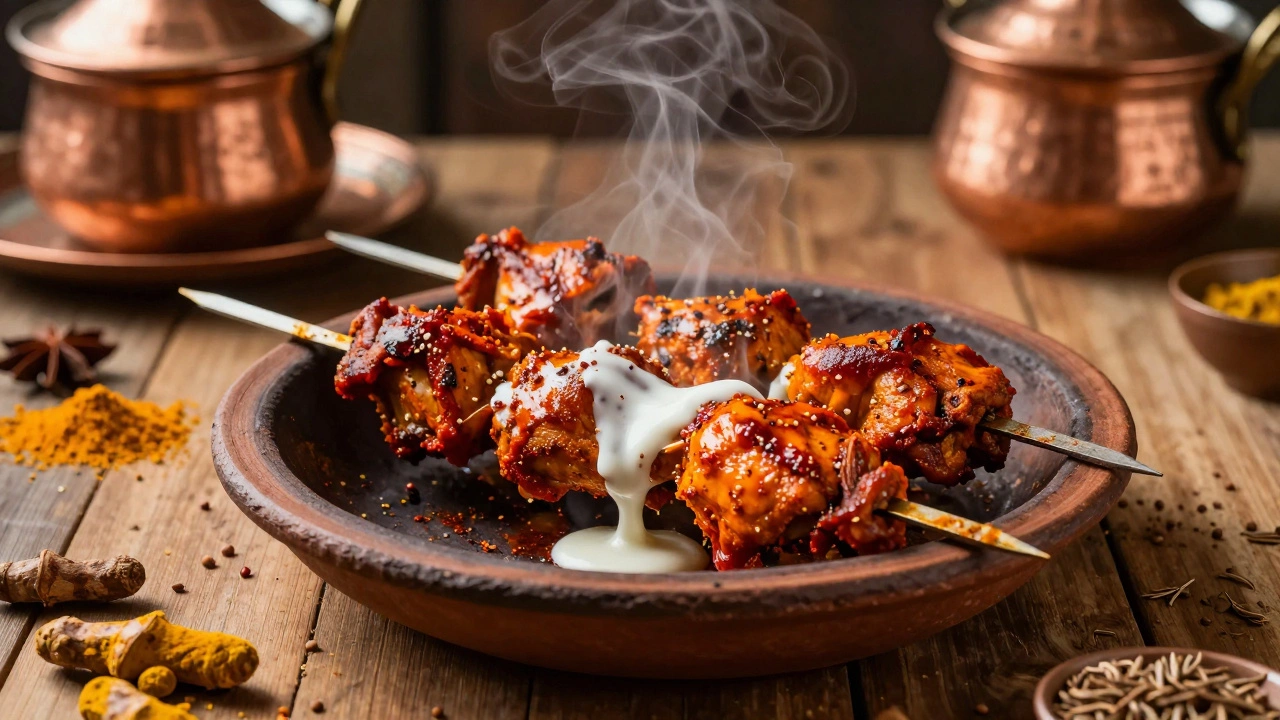
Tandoori chicken is one of the best Indian dishes for diabetics. It’s marinated in yogurt and spices like turmeric, cumin, and garam masala, then cooked in a clay oven (tandoor) or under a broiler. No deep frying. No batter. Just lean chicken breast soaked in tangy, aromatic flavors.
The yogurt base adds protein and probiotics, while the spices help manage blood sugar. Studies show turmeric may improve insulin sensitivity, and cumin has been linked to lower fasting glucose levels. A 100-gram serving of tandoori chicken has about 165 calories, 3 grams of fat, and zero added sugar. It’s also high in protein-around 30 grams-which keeps you full longer and prevents blood sugar spikes.
Compare that to a plate of butter chicken, which often uses cream, butter, and sugar to thicken the sauce. Tandoori chicken skips all that. If you’re ordering out, ask for it without sauce or with a side of plain yogurt instead of raita made with sugar.
Other Diabetic-Friendly Indian Dishes
Once you know tandoori chicken works, expand your list. Here are five more Indian foods that are naturally low in carbs and high in nutrients:
- Palak Paneer (with modifications) - Spinach is rich in fiber and magnesium, both helpful for blood sugar control. Use low-fat paneer or reduce the amount of cheese. Skip the cream and use a splash of water or unsweetened almond milk instead.
- Moong Dal Chilla - These savory pancakes made from split mung beans are packed with protein and fiber. They’re naturally gluten-free and have a glycemic index under 40. Top them with grated carrot or cucumber instead of chutney with added sugar.
- Baingan Bharta - Roasted eggplant mashed with tomatoes, onions, and spices. Eggplant is low in carbs and high in fiber. Make sure it’s not cooked with too much oil-use a non-stick pan and spray with a little olive oil instead.
- Vegetable Stir-Fry with Millet - Swap white rice for kodo millet or foxtail millet. These ancient grains have a glycemic index of 50 or lower, compared to white rice’s 73. Add bell peppers, zucchini, and spinach for extra fiber.
- Buttermilk (Chaas) - Not the sweetened kind. Plain, unsweetened buttermilk with a pinch of roasted cumin and salt helps digestion and keeps blood sugar steady. It’s a traditional drink in many Indian homes for a reason.
What to Avoid Completely
Some Indian foods are off-limits if you’re managing diabetes. Even if they seem healthy, they can wreck your blood sugar:
- White rice - Especially basmati rice, which has a high glycemic index. It spikes glucose fast.
- Samosas and pakoras - Deep-fried, doughy snacks loaded with refined flour and often filled with potatoes and peas. One samosa can have 25 grams of carbs.
- Sweetened yogurt (raita, lassi) - Many store-bought or restaurant raitas have sugar added. Even lassi, a yogurt drink, is often sweetened with sugar or honey.
- Naan bread - Made with refined flour, sometimes butter or sugar. A single naan can equal two slices of white bread in carbs.
- Indian desserts - Gulab jamun, jalebi, kheer, and rasgulla are pure sugar bombs. One piece of gulab jamun can have 30 grams of sugar.
Smart Swaps That Work
You don’t have to give up Indian food-you just need to tweak it. Here are simple swaps that keep the taste but cut the carbs:
- Swap white rice for brown rice, quinoa, or millet. Millet has more fiber than brown rice.
- Use whole wheat roti instead of naan. A small whole wheat roti has about 15 grams of carbs, while a naan has 30-40.
- Make chutneys without sugar. Use mint, coriander, tamarind, and green chili. Tamarind is naturally sour and has fiber.
- Use coconut milk sparingly. It’s high in fat, not carbs, but too much can slow metabolism. Stick to 1-2 tablespoons per serving.
- Season with fenugreek seeds (methi). Soak a teaspoon overnight and add it to dal or curries. Studies show it helps lower post-meal glucose.
Real-Life Example: A Diabetic-Friendly Indian Meal Plan
Here’s what a balanced Indian meal looks like for someone with type 2 diabetes:
- Breakfast: Moong dal chilla with mint chutney and a boiled egg.
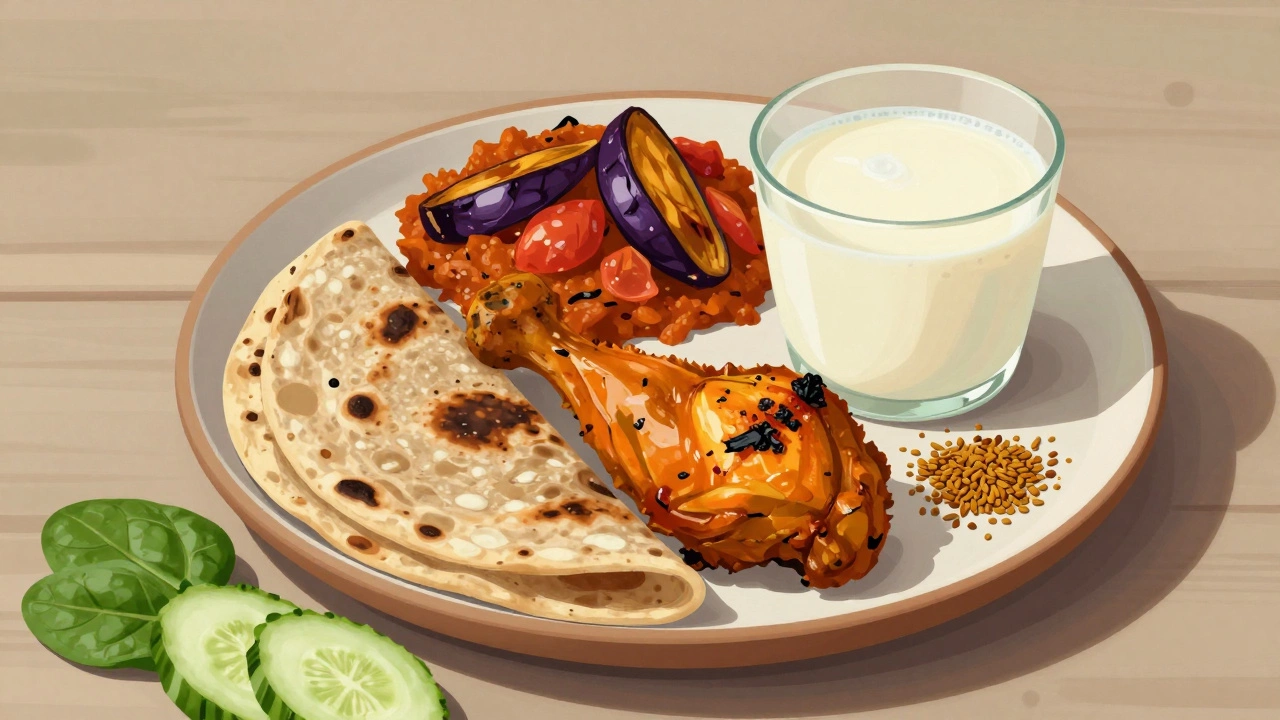
- Lunch: Tandoori chicken (2 pieces), 1 small whole wheat roti, sautéed spinach with garlic, and a side of buttermilk.
- Dinner: Baingan bharta (1 cup), ½ cup millet, and cucumber-tomato salad with lemon and black salt.
- Snack: A handful of roasted chana (chickpeas) or 2 almonds.
This meal plan gives you 45-50 grams of carbs per day, mostly from fiber-rich sources. It’s not restrictive-it’s sustainable. And yes, you still get the bold flavors you love.
Spices Are Your Secret Weapon
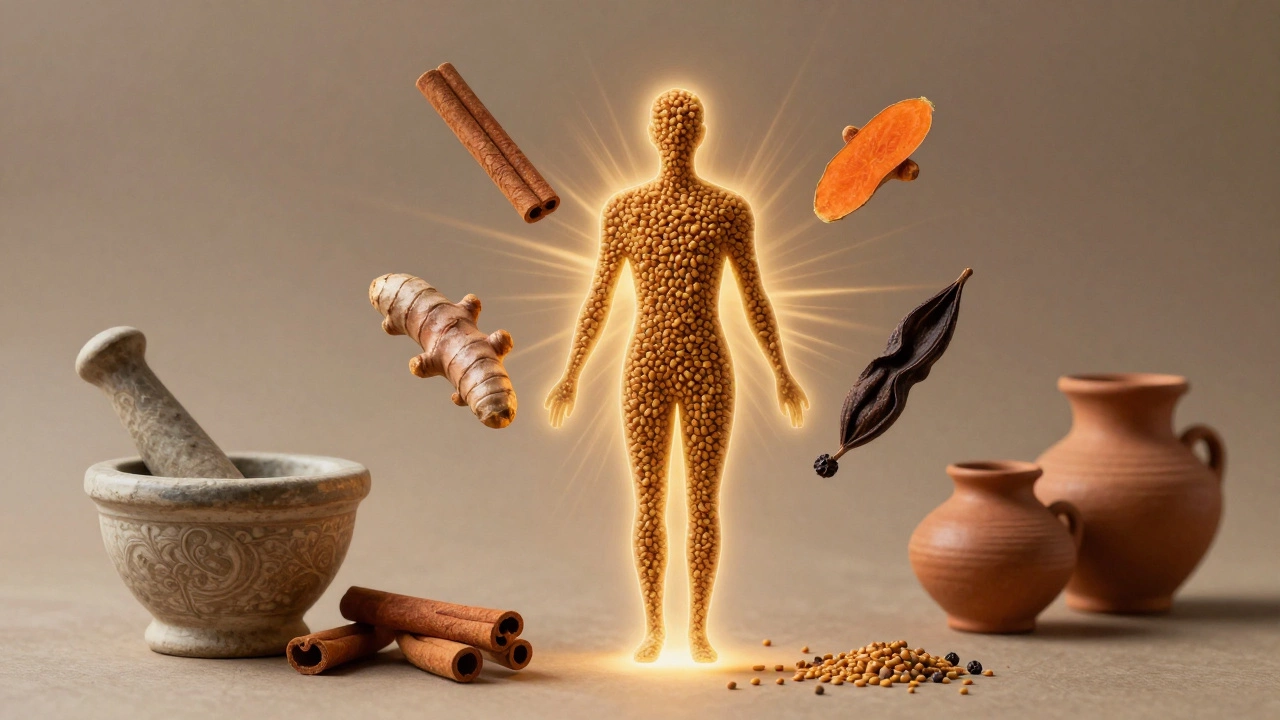
Indian cooking doesn’t just taste good-it can be medicine. Cinnamon, fenugreek, turmeric, and black pepper all have science-backed benefits for diabetics:
- Cinnamon - May reduce fasting blood sugar by 10-29% in some studies.
- Fenugreek - Slows carbohydrate digestion and improves insulin response.
- Turmeric - Reduces inflammation linked to insulin resistance.
- Black pepper - Enhances absorption of curcumin in turmeric.
Don’t just sprinkle them on food. Cook with them. Toast whole spices in oil before adding veggies or lentils. That releases their active compounds.
Final Tip: Watch Portions, Not Just Ingredients
Even healthy foods can raise blood sugar if you eat too much. A serving of dal should be about ½ cup. One roti is enough. Two pieces of tandoori chicken are plenty. Use smaller plates. Measure once. Then enjoy.
Indian food for diabetics isn’t about deprivation. It’s about returning to the roots-whole ingredients, slow cooking, and smart spice use. You don’t need to cook like a chef. Just cook like your grandmother did-before sugar and refined flour took over.
Can diabetics eat tandoori chicken?
Yes, tandoori chicken is one of the best Indian dishes for diabetics. It’s grilled, not fried, and contains no added sugar. A 100-gram serving has about 30 grams of protein and only 3 grams of fat. The yogurt marinade and spices like turmeric and cumin may even help improve insulin sensitivity. Just avoid versions served with sugary sauces or butter.
Is Indian food generally good for diabetics?
Traditional Indian food can be excellent for diabetics if you choose wisely. Dishes based on lentils, vegetables, grilled meats, and whole grains are naturally low-glycemic. But many modern versions load up on white rice, fried snacks, sugar, and cream. The key is sticking to home-style cooking and avoiding restaurant versions with hidden sugars and oils.
What Indian bread is best for diabetics?
Whole wheat roti is the best choice. It’s made from coarse flour, has more fiber, and a lower glycemic index than naan or paratha. Millet roti (made with kodo or foxtail millet) is even better-it has more protein and fewer carbs than wheat. Avoid refined flour breads like naan, which can spike blood sugar quickly.
Can diabetics eat dosa?
Traditional dosa made from fermented rice and lentil batter can be okay in small portions, but it’s still high in carbs. A single dosa can have 30-40 grams of carbs. Opt for ragi dosa (finger millet) or methi dosa (fenugreek), which have lower glycemic indexes. Skip the coconut chutney if it’s sweetened, and go for plain tomato chutney instead.
What Indian snacks are safe for diabetics?
Roasted chana (chickpeas), soaked methi seeds, cucumber slices with lemon, and plain yogurt with cumin are safe. Avoid samosas, pakoras, and sweetened snacks like sev. Even roasted nuts should be unsalted and unsweetened. A small handful of almonds or walnuts makes a better snack than any fried Indian snack.