India's Breakfast Finder
Discover the perfect Indian breakfast based on your dietary needs and time constraints.
Dish Name
TagDescription goes here.
Ask ten people what constitutes a "national" breakfast in India, and you might get fifteen different answers. It’s not just because Indians love their food; it’s because the country’s culinary map is wildly diverse. From the steaming rice cakes of the south to the spicy parathas of the north, there is no single dish that every citizen eats on a Tuesday morning. However, if we look at popularity, accessibility, and cultural penetration, one contender stands out above the rest: Idli paired with Dosa.
But calling Idli-Dosa the sole national breakfast feels like saying pizza is the only American food. It’s iconic, yes, but it ignores the massive influence of North Indian staples like Poha, Upma, and Paratha. To truly understand what India eats for breakfast, you have to look beyond a single menu item and examine the regional powerhouses that dominate the morning table across the subcontinent.
The Case for Idli and Dosa as the De Facto Standard
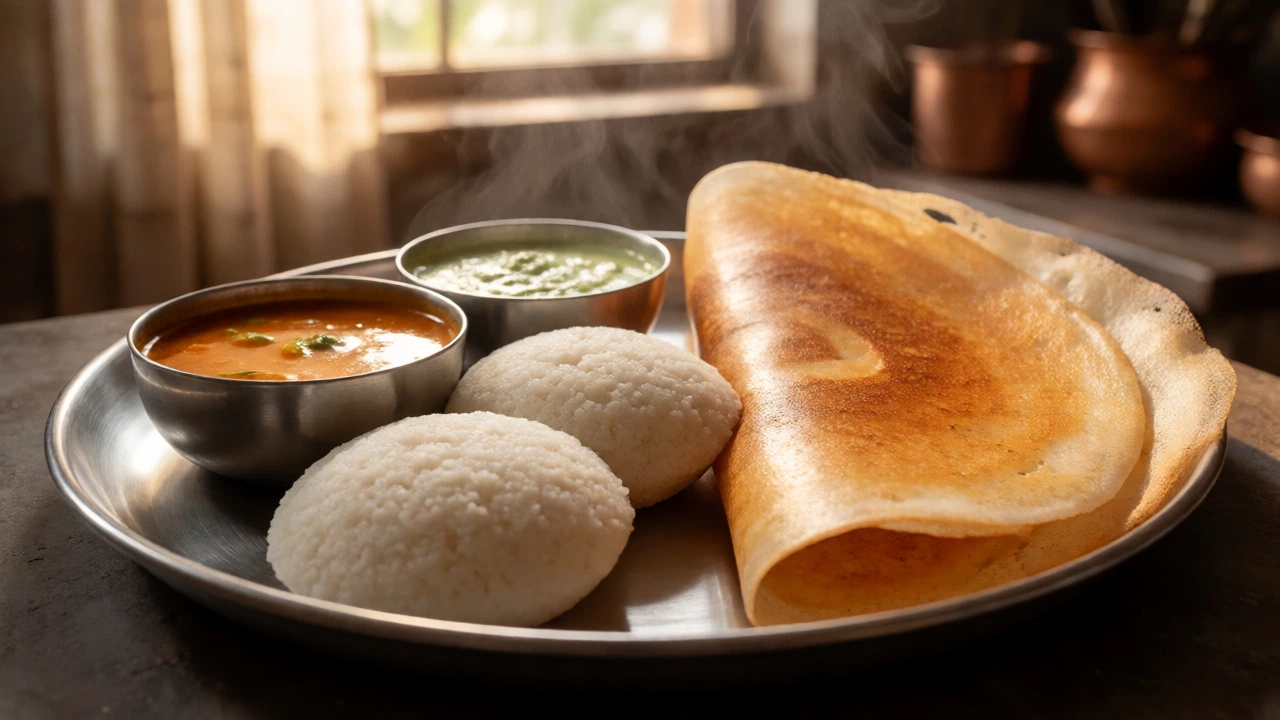
If you walk into a typical urban household or a roadside eatery in Bangalore, Chennai, or even Mumbai, you will find Dosa, a fermented crepe made from rice and urad dal batter. Its companion, Idli, a soft, steamed cake made from the same fermented batter, is arguably the most universally recognized Indian breakfast item globally. Why do these two hold such a high status?
First, they are gluten-free by default. In a country where wheat consumption is high in the north and rice in the south, Idli and Dosa bridge the gap through fermentation. The process breaks down anti-nutrients, making them easier to digest than many heavy grain-based meals. Second, they are incredibly scalable. You can make them in a tiny kitchen with a basic grinder, or produce thousands daily in commercial kitchens using automated dispensers.
While technically rooted in South Indian cuisine, their spread has been aggressive and successful. Today, you’ll find Idli-Sambar combinations in Delhi cafes and Dosa counters in Kolkata street stalls. This ubiquity gives them a claim to the "national" title that other dishes lack. They are cheap, healthy, and require minimal cooking skill once the batter is ready.
The Northern Contenders: Paratha, Poha, and Bread Pakora
Northern India, however, plays by different rules. If you travel from Delhi to Punjab or Rajasthan, the morning rhythm shifts entirely. Here, Paratha, a whole-wheat flatbread typically stuffed with potatoes, cauliflower, or paneer reigns supreme. Unlike the light Idli, a Paratha is dense, calorie-rich, and often cooked with ghee or oil, providing sustained energy for cold winters and physically demanding work days.
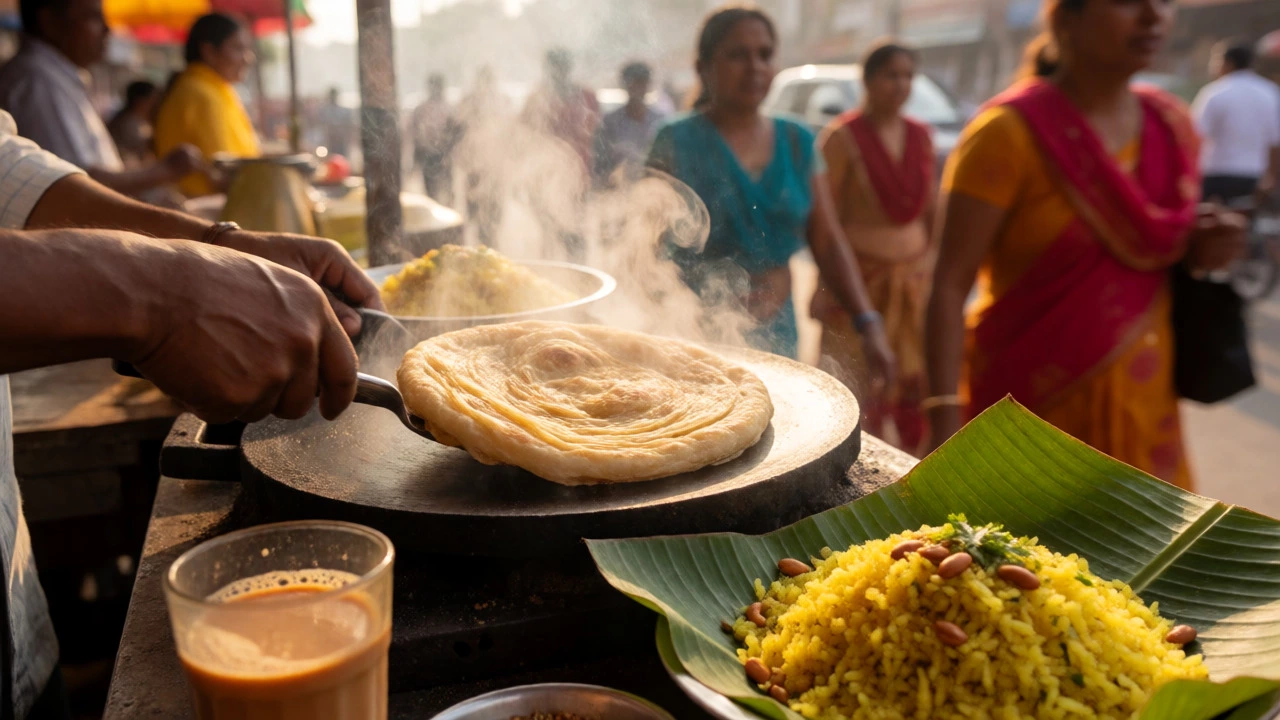
Then there is Poha, a flattened rice dish stir-fried with mustard seeds, turmeric, peanuts, and onions. Originating from Maharashtra but beloved across central and northern states, Poha is the ultimate quick-fix breakfast. It requires no soaking (if using thin poha), cooks in under ten minutes, and is vegan-friendly. For students and working professionals who skip elaborate meals, Poha is a lifesaver.
We also cannot ignore the colonial influence visible in cities like Kolkata and Mumbai. Bread Omelette and Bread Pakora are deeply entrenched habits. In Kolkata, a plate of fluffy bread omelette with chai is a ritualistic start to the day. In Mumbai, cutting-chai accompanied by a crispy pakora or vada pav is less about nutrition and more about social fuel. These items prove that "national" doesn't always mean "traditional indigenous"; sometimes, it means what works best for the modern lifestyle.
Regional Specialties That Challenge the Title
While Idli-Dosa and Paratha-Poha fight for dominance, several regional dishes have cult followings that could easily claim the national crown within their zones. Ignoring them would paint an incomplete picture of India’s morning landscape.
- Uttapam: A thick pancake made from the same batter as Dosa, topped with onions, tomatoes, and chilies. It’s heartier than a standard Dosa and often preferred by families with children.
- Upma: A savory porridge made from semolina (rava) or broken wheat. It’s mild, comforting, and widely consumed in Karnataka, Tamil Nadu, and Andhra Pradesh.
- Kachori: Deep-fried pastries stuffed with spiced lentils or peas, popular in Uttar Pradesh and Rajasthan. Often served with sabzi (curry) or pickle.
- Appam: A bowl-shaped pancake made from fermented rice milk and coconut milk, common in Kerala and parts of Tamil Nadu. Served with stew or egg roast.
- Sabudana Khichdi: Made from tapioca pearls, this is a staple during fasting periods but eaten regularly in Gujarat and Maharashtra for its quick preparation time.
Each of these dishes solves a specific problem. Appam provides hydration and electrolytes in humid coastal climates. Kachori offers high calories for harsh winters. Sabudana provides instant energy without heaviness. The diversity isn’t accidental; it’s adaptive.
Nutritional Breakdown: Which Breakfast Wins?
If we treat "national breakfast" as a health metric rather than just a cultural symbol, which option performs best? Let’s compare the top contenders based on average nutritional profiles per serving.
| Dish | Primary Ingredient | Approx. Calories | Protein (g) | Prep Time | Best For |
|---|---|---|---|---|---|
| Idli | Fermented Rice/Dal Batter | 39 kcal/piece | 1.8 | Low (batch prep) | Weight loss, digestion |
| Dosa | Fermented Rice/Dal Batter | 100-150 kcal | 3-4 | Medium | Energy boost, variety |
| Paratha | Whole Wheat Flour + Ghee | 260-300 kcal | 7 | High | Winter, physical labor |
| Poha | Flattened Rice | 150-180 kcal | 3 | Very Low | Quick mornings, vegans |
| Upma | Semolina (Rava) | 150-200 kcal | 4 | Low | Comfort, kids, elders |
Data shows that Idli wins on low-calorie density and digestive ease due to fermentation. Paratha wins on protein and satiety. Poha wins on speed. There is no objective "best," only the best for your specific context. However, Idli’s ability to be eaten by diabetics, infants, and the elderly simultaneously gives it a unique versatility score that few other foods match.
Why Fermentation Matters More Than Flavor
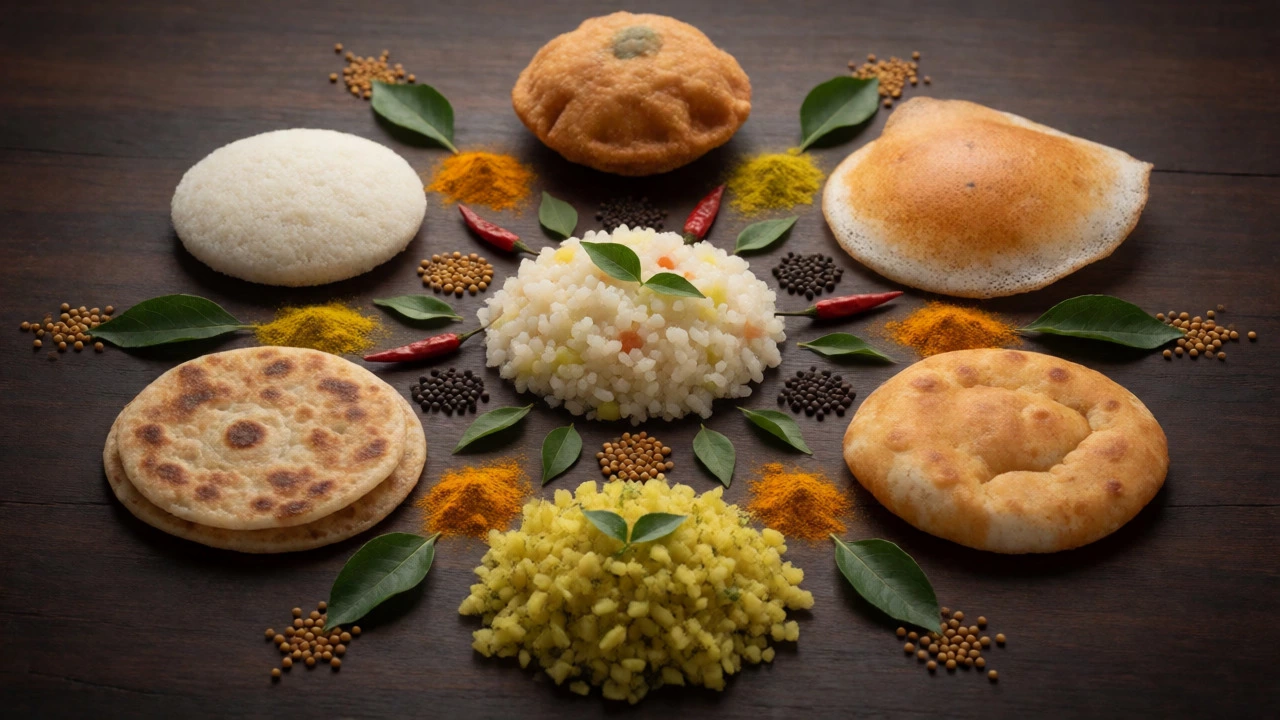
You might wonder why so many traditional Indian breakfasts rely on fermentation. Idli, Dosa, Uttapam, and even some regional versions of Pitha in Assam use fermented batters. This isn’t just for taste; it’s a survival hack developed centuries ago.
Fermentation increases the bioavailability of nutrients. It produces B vitamins and probiotics that support gut health. In pre-refrigeration India, fermenting rice and lentil batter allowed households to prepare fresh, nutritious meals quickly without needing to cook grains from scratch every morning. The bacteria do the hard work overnight. When you wake up, the batter is already partially digested, requiring only heat to finish the job.
This biological advantage explains why these dishes survived industrialization and urbanization. While Western fast food relies on preservatives and sugar, Indian breakfast staples rely on natural preservation through acidity and microbial activity. It’s a smart, sustainable model that modern nutritionists are now re-evaluating.
The Modern Shift: Convenience vs. Tradition
Today, the definition of breakfast in India is changing. Young professionals in tech hubs like Bangalore and Hyderabad are increasingly turning to oats, smoothies, and continental options. Yet, when asked what they miss most when abroad, expats rarely cite avocado toast. They crave the smell of sambar hitting hot rice or the crispness of a freshly flipped dosa.
Commercial brands have capitalized on this nostalgia. Ready-to-cook mixes for Idli, Dosa, and Poha are now available globally. This suggests that while eating habits shift, the emotional anchor remains tied to traditional flavors. The "national" breakfast isn’t disappearing; it’s adapting. We see fusion dishes like Quinoa Dosa or Multigrain Idli gaining traction, proving that the core identity-savory, fermented, vegetable-accompanied-is strong enough to withstand modification.
So, is there a single national breakfast? Technically, no. Culturally, yes. If forced to pick one representative dish that spans class, region, and age groups, Idli takes the prize. It is affordable, healthy, non-controversial regarding dietary restrictions (mostly), and universally loved. But remember, in India, breakfast is never just one thing. It’s a rotating carousel of regional pride, seasonal availability, and personal preference.
Is there officially a declared national breakfast of India?
No, the Government of India has not officially declared a single national breakfast. Unlike the national fruit (mango) or national animal (tiger), breakfast remains a decentralized, culturally diverse choice. However, Idli and Dosa are widely considered the de facto representatives due to their pan-Indian popularity.
Why is Idli considered healthier than Paratha?
Idli is steamed, not fried, and made from fermented rice and lentil batter. This makes it lower in calories, easier to digest, and rich in probiotics compared to Paratha, which is typically made from refined or whole wheat flour and cooked with significant amounts of ghee or oil.
Can I eat Indian breakfast if I am gluten-free?
Yes, many Indian breakfasts are naturally gluten-free. Idli, Dosa, Uttapam, Appam, and Poha are all made from rice, lentils, or corn, containing no wheat. Just ensure that accompaniments like chutneys or sambar do not contain hidden gluten additives.
What is the fastest Indian breakfast to prepare?
Poha is generally the fastest, taking less than 10 minutes if using thin-flaked poha that doesn't require extensive soaking. Bread Omelette is also extremely quick, requiring only 5-7 minutes. Both require minimal ingredients and cleanup.
Do Indians eat eggs for breakfast?
Yes, especially in coastal regions, Kerala, Goa, and among non-vegetarian communities across the country. Egg bhurji (scrambled eggs), omelettes, and boiled eggs are common additions to or replacements for traditional vegetarian breakfasts like Poha or Idli.