Indian Sweets Preference Calculator
Discover which Indian dessert best matches your taste preferences. Select your ideal texture, sweetness level, and occasion to find your perfect sweet treat.
When you think of Indian sweets, what comes to mind? Sticky, syrup-soaked balls? Golden fried spirals? Creamy rice puddings? There’s no single answer - but there is a shortlist of desserts that no Indian celebration skips, and no visitor forgets. India doesn’t have one "best" dessert. It has five that fight for the crown, each with its own story, texture, and soul. If you’ve only tried one, you haven’t tasted India.
Gulab Jamun: The Soft, Syrupy King
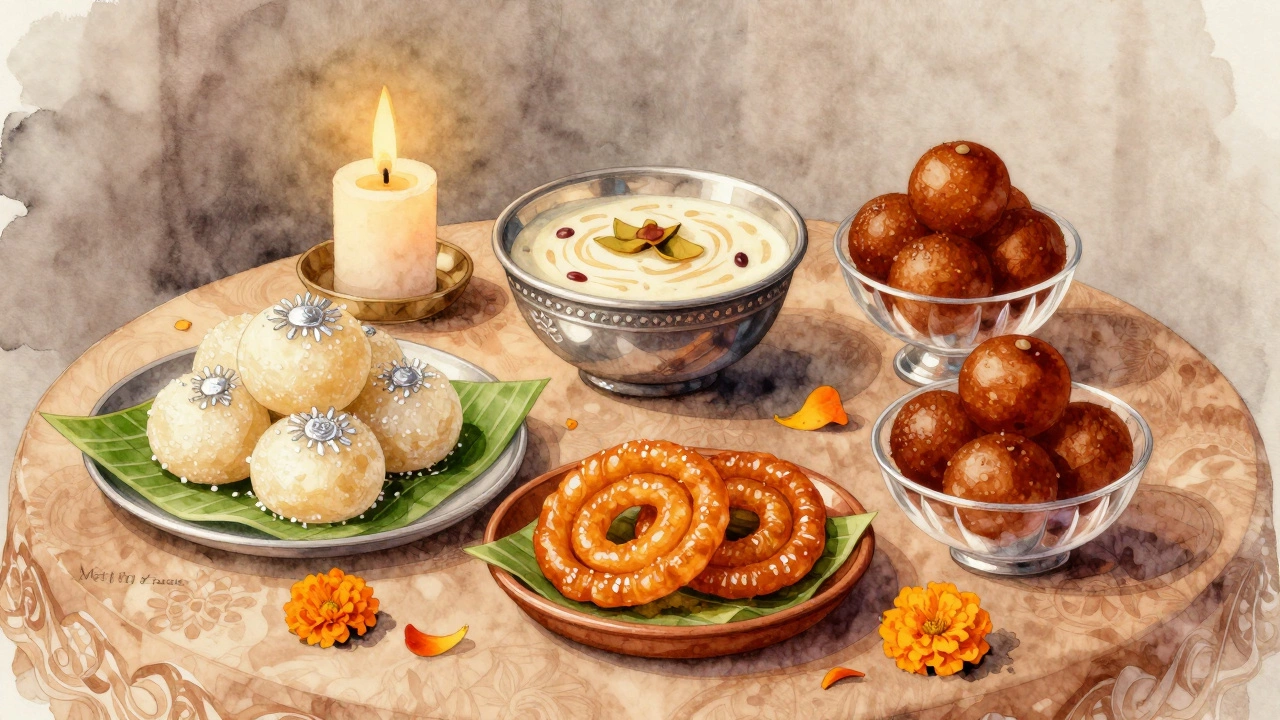
Picture this: warm, golden-brown dumplings, soaked in sugar syrup so thick it clings to your spoon. That’s Gulab Jamun a deep-fried milk-solid dumpling soaked in flavored syrup, traditionally made from khoya (reduced milk) and flour. It’s the dessert you get at weddings, Diwali parties, and roadside stalls alike. The magic isn’t in the frying - it’s in the syrup. Cardamom, rose water, and a hint of saffron turn simple sugar into something aromatic and unforgettable. In North India, it’s not just a dessert - it’s a ritual. You bite into it, and it melts like warm butter. No crunch, no chew - just surrender.
Jalebi: The Crispy, Tangy Showstopper
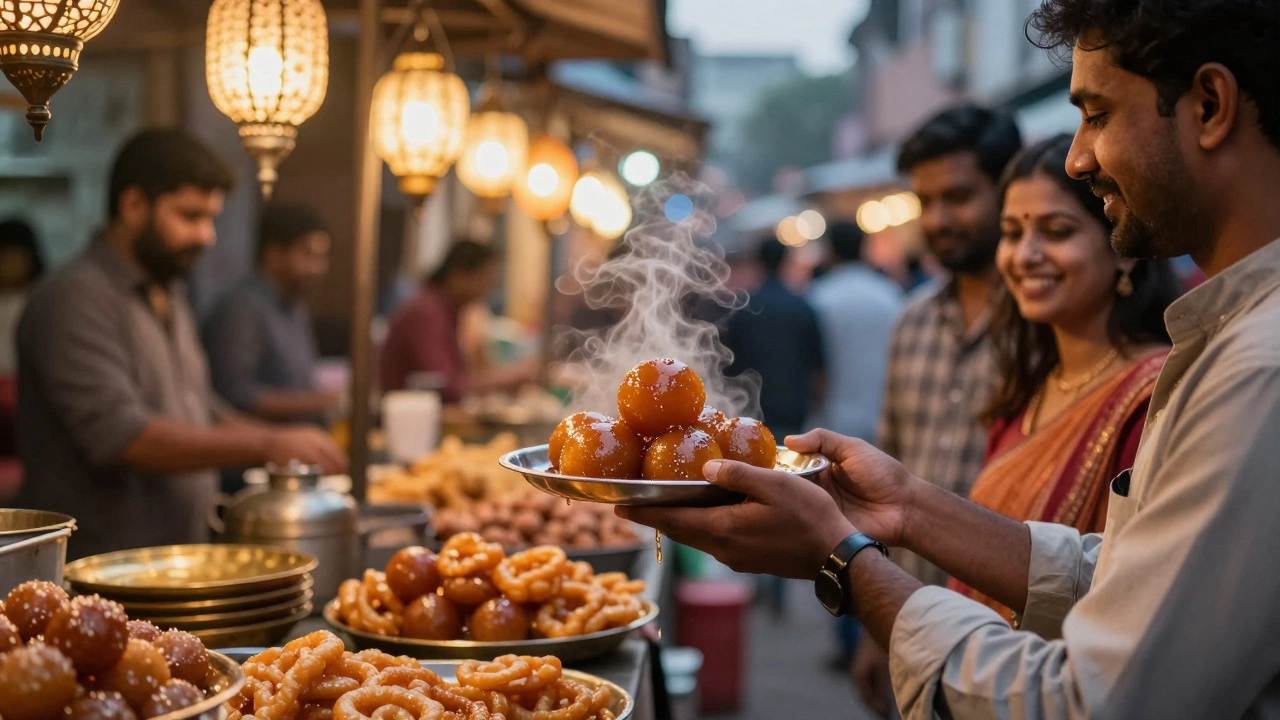
If gulab jamun is the quiet hero, Jalebi a bright orange, spiral-shaped fried batter soaked in sugar syrup, known for its crisp texture and tangy-sweet flavor is the loud party guest. Made from fermented batter poured into hot oil in swirling patterns, jalebi gets its signature crunch from the frying and its syrupy punch from soaking. It’s best eaten hot, right off the vendor’s tray. In Maharashtra, they add a splash of lemon juice to cut the sweetness. In Gujarat, it’s served with rabri - a thickened milk dessert. The contrast of crispy edges and soft center? Pure genius. You’ll find it in markets from Jaipur to Kolkata, still warm, still glistening, still irresistible.
Rasgulla: The Juicy, Delicate Contender
Rasgulla a soft, spongy cheese ball cooked in light sugar syrup, originating from Eastern India and known for its melt-in-mouth texture comes from the east - Odisha and West Bengal both claim it as their own. Made from chhena (fresh cottage cheese), these little balls are boiled in syrup until they swell like sponges. The texture? Like biting into a cloud that’s been dipped in honey. It doesn’t need garnish. No nuts, no saffron, no rose petals. Just the clean sweetness of milk and sugar, balanced perfectly. In Bangladesh, they make it bigger. In Kolkata, they serve it chilled. But no matter where, the goal is the same: a dessert that dissolves on your tongue without leaving a greasy aftertaste.
Kheer: The Comfort Bowl
Kheer a creamy rice pudding made with milk, rice, sugar, and cardamom, often garnished with nuts and served warm or chilled is what you make when you want to feel safe. It’s the Indian version of rice pudding, but richer, slower, and more aromatic. Made by simmering basmati rice in milk for hours until it breaks down into a velvety porridge. Then you add sugar, cardamom, and a handful of toasted almonds or pistachios. In temples, it’s offered as prasad. At home, it’s the dessert you serve after a heavy meal. In South India, they use payasam - a thicker version with jaggery and coconut milk. In Punjab, they add vermicelli. But the core? Always milk, rice, and time. It’s not flashy. But it’s the one dessert that feels like a hug.
Peda: The Fudgy Classic
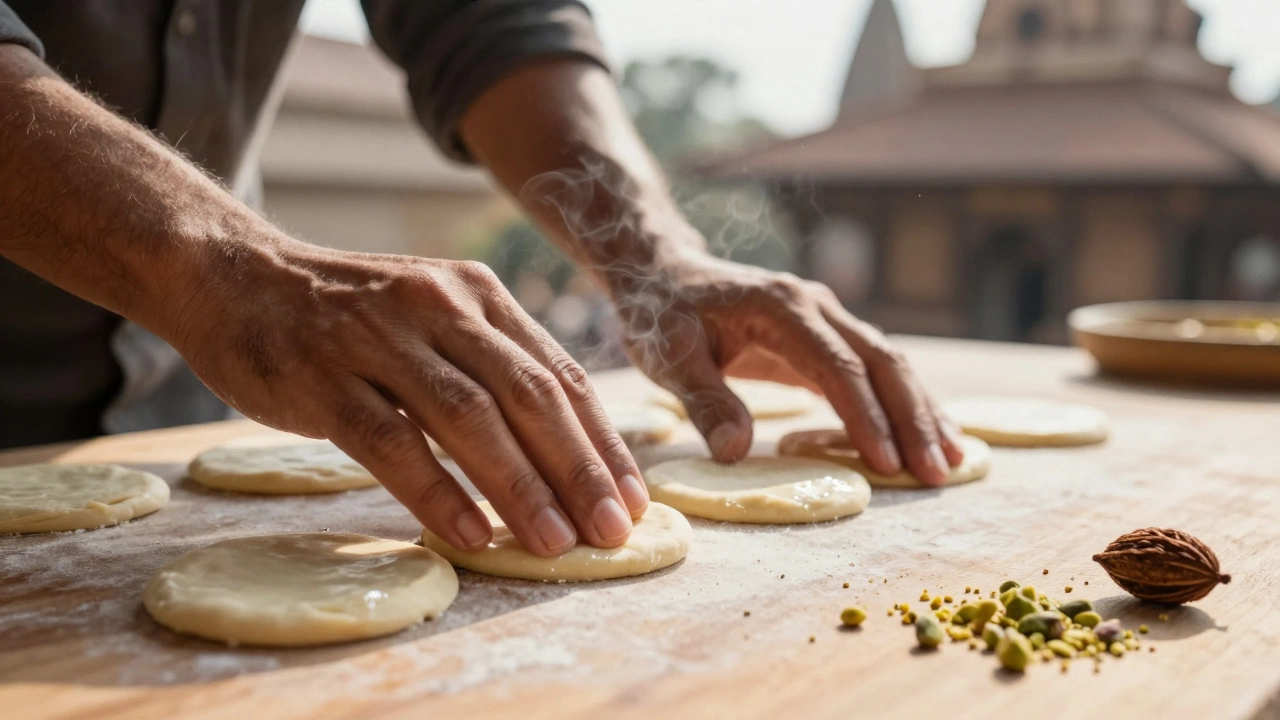
Peda a dense, fudge-like sweet made from khoya, sugar, and cardamom, shaped into small discs and often garnished with nuts comes from Mathura - the birthplace of Lord Krishna. It’s not as flashy as jalebi or as juicy as rasgulla. It’s dense, fudgy, and melts slowly in your mouth. Made from khoya (milk solids), sugar, and a whisper of cardamom, it’s pressed into small rounds and dusted with silver leaf or chopped pistachios. You don’t eat peda to impress. You eat it because it tastes like childhood. In Uttar Pradesh, they make it with condensed milk. In Rajasthan, they add saffron. But the truth? It doesn’t need tricks. Just good milk, slow cooking, and patience.
Why There’s No Single "Best"
India’s dessert culture isn’t about ranking. It’s about context. Gulab jamun wins at festivals. Jalebi rules street corners. Rasgulla is the monsoon favorite. Kheer is the post-wedding calm. Peda is the temple offering. Each one fits a moment. Trying to pick one as "the best" is like picking the best season - you’ll always miss the others. What matters is that you try them all. Not just once. But in different cities. With different families. At different times of year.
How to Taste Them Like a Local
- Go for fresh. Jalebi and gulab jamun lose magic if they sit too long.
- Ask for house-made. Chain stores use powdered milk. Real ones use slow-cooked khoya.
- Try them with tea. A strong masala chai cuts the sweetness perfectly.
- Don’t skip the syrup. That’s where the flavor lives - don’t just eat the sweet, drink the soak.
- Visit during festivals. Diwali, Eid, Holi - that’s when every household makes their version.
What You Should Skip
Don’t waste your time on packaged sweets. The ones in plastic boxes from supermarkets? They’re made with hydrogenated oils and artificial flavors. Real Indian desserts are made daily. They’re perishable. That’s why they’re so good. If it doesn’t look handmade, it probably isn’t.
Where to Find Them Outside India
Outside India, your best bet is a local Indian bakery or sweet shop. In Auckland, you’ll find them in suburbs like Mt. Roskill or Onehunga. Look for shops with glass cases full of golden, syrupy treats. Ask for "fresh jalebi" or "homemade rasgulla" - they’ll know what you mean. Don’t be shy. Most owners are proud of their recipes and will gladly let you taste.
Is gulab jamun the most popular Indian dessert?
Gulab jamun is one of the most widely recognized, especially outside India, but it’s not necessarily the most popular everywhere. In West Bengal, rasgulla takes the crown. In Gujarat, you’ll find more peda and kheer. Popularity varies by region, season, and occasion. What’s true everywhere? If you serve gulab jamun at a party, people will eat it - and ask for seconds.
Can I make Indian sweets at home without special ingredients?
You can, but the flavor changes. Khoya (reduced milk) is hard to replace. Some use condensed milk, but it’s sweeter and less creamy. For rasgulla, you can make chhena from whole milk and lemon juice. For jalebi, fermented batter is key - don’t skip the overnight rest. You won’t get the exact texture without the right ingredients, but you’ll still get something delicious. Start with kheer - it only needs rice, milk, sugar, and cardamom.
Are Indian desserts too sweet?
They can be - but that’s the point. Indian sweets aren’t meant to be subtle. They’re meant to celebrate. The sugar isn’t an accident; it’s tradition. But balance matters. Good sweets use cardamom, rose, or saffron to lift the sweetness. And they’re always served in small portions. One piece is enough. Eat slowly. Let the flavor unfold. You’ll find it’s not cloying - it’s comforting.
Which Indian dessert is the healthiest?
None are "healthy" by modern standards - they’re all sugar and fat. But if you had to pick, kheer made with whole milk, brown rice, and minimal sugar has more nutrients than fried sweets. It’s also easier to digest. Rasgulla is lower in fat than gulab jamun since it’s boiled, not fried. But the real health benefit? Eating them slowly, with family, on special days. That’s the real recipe.
Why do Indian sweets use so much milk?
Because India has one of the world’s oldest dairy cultures. Cows and buffaloes have been central to rural life for thousands of years. Milk, cream, and paneer weren’t just food - they were wealth. So naturally, sweets became a way to honor that. Slowly reducing milk into khoya takes hours, but it concentrates flavor and texture. That’s why Indian sweets taste so rich - they’re made from the essence of milk, not just added sugar.