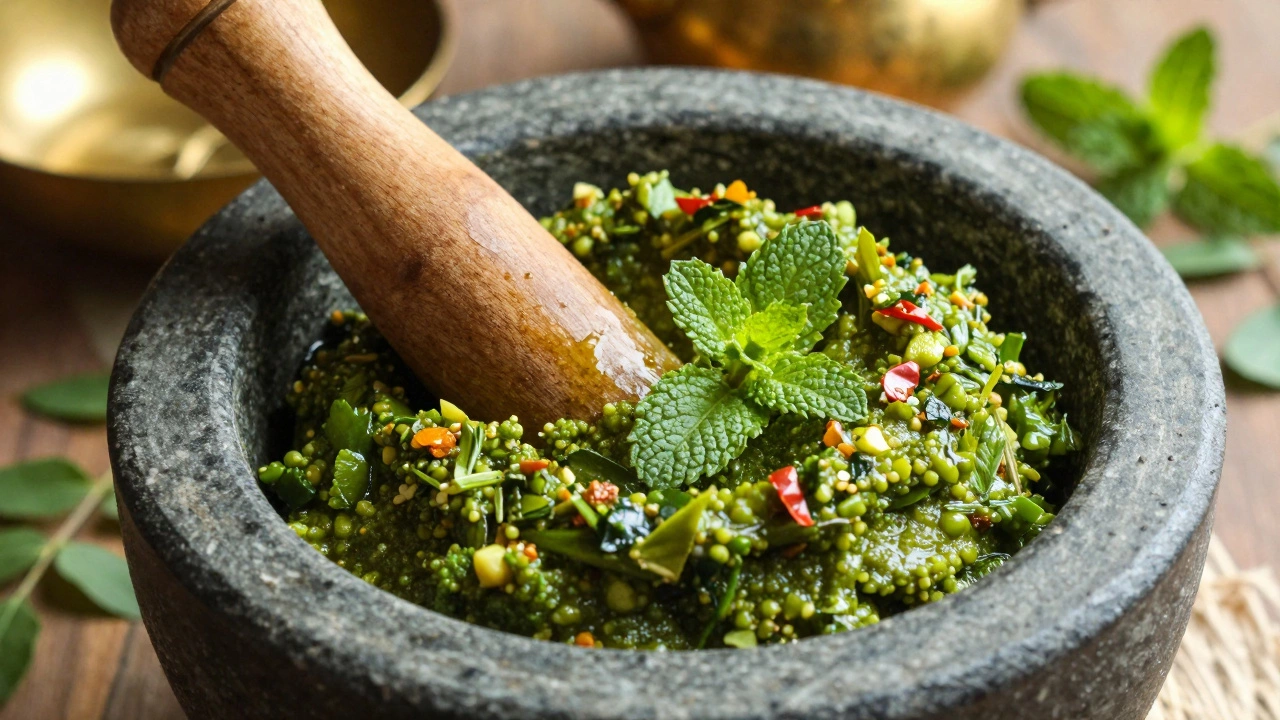
When you hear the word "chutney," you might picture a vibrant, spicy-sweet condiment served alongside dosas, samosas, or biryanis. But if you’re new to Indian cooking-or just curious-someone might ask you: "What is chutney called in English?" The short answer? It’s not called anything else. Chutney is chutney.
Chutney doesn’t have an English name because it’s not a translation-it’s a category
There’s no single English word that fully captures what chutney is. You can’t just swap it out for "sauce," "relish," or "jam" and expect the same flavor, texture, or use. Chutney is its own thing. It’s a condiment made by cooking or grinding fruits, vegetables, herbs, and spices together. The result? A thick, tangy, sweet, spicy, or sour paste that enhances meals.
Think of it like this: you wouldn’t call salsa "Mexican ketchup," even though both are tomato-based. Same logic applies here. Chutney has its own history, techniques, and regional variations that go beyond simple translation.
Why "sauce" or "relish" doesn’t cut it
People often try to explain chutney by comparing it to Western condiments. But here’s why those comparisons fall short:
- Sauce is too broad. Tomato sauce, béchamel, and hollandaise are all sauces-but none of them taste like mint chutney or tamarind chutney.
- Relish is usually crunchy, pickled, and savory. Think corn relish or cucumber relish. Chutney can be smooth, sweet, and cooked down for hours.
- Jam is mostly fruit + sugar, meant to be spread on toast. Chutney? It’s often savory, spiced with cumin, mustard seeds, or chili, and used as a side, not a spread.
Even the most similar Western counterparts don’t replicate the balance of flavors found in traditional Indian chutneys. A good coconut chutney, for example, combines the creaminess of coconut, the tang of tamarind, the heat of green chilies, and the earthiness of curry leaves-all in one bite. No Western condiment does that.
The origins of the word "chutney"
The word "chutney" comes from the Hindi word "chatni" (चटनी), which itself comes from the Sanskrit "chatnī," meaning "to lick" or "to taste." That tells you something important: chutney was never meant to be just a side-it was meant to be savored.
British colonists in India encountered chutneys in the 17th and 18th centuries and brought the word-and the concept-back home. They even started making their own versions with apples, plums, and vinegar. But they never replaced the original. They just added another variation to the family.

Common types of chutney-and how they’re used
There are dozens of chutneys across India, each tied to a region, season, or dish. Here are a few you’re likely to encounter:
- Mint-Coriander Chutney - Fresh, green, spicy. Served with samosas, pakoras, and grilled meats.
- Tamarind Chutney - Sweet and sour. A classic with chaat, vadas, and street snacks.
- Coconut Chutney - Creamy, mild, slightly nutty. Common in South Indian meals with idli and dosa.
- Tomato Chutney - Cooked down with garlic, chili, and jaggery. Used as a side with rice or dal.
- Mango Chutney - Sweet, tangy, and thick. Often preserved in jars. Eaten with cheese, bread, or as a dip.
Each one has a different texture, shelf life, and purpose. Some are eaten fresh the same day. Others are cooked with sugar and vinegar to last for months. That’s why calling them all "sauces" misses the point.
What do English speakers say when they can’t find the word?
If you’re explaining chutney to someone who’s never tried it, you might say:
- "It’s an Indian condiment made from fruits or herbs and spices. Think of it like a spicy jam or a zesty relish."
- "It’s not exactly like salsa or ketchup-it’s more complex, with layers of sweet, sour, and heat."
- "It’s what gives Indian food its punchy, bright finish."
But here’s the thing: even if you use those descriptions, you still say "chutney." No one in a London restaurant says, "We’ll bring you the tomato sauce" when they mean tomato chutney. They say "chutney." Because the word has stuck.

Chutney isn’t just food-it’s culture
Every household in India has its own chutney recipe. Grandmas make it with stone grinders. Moms use blenders. Street vendors make it fresh every morning. Some families use jaggery. Others use dates or raw mango. The variations are endless.
That’s why chutney doesn’t need an English name. It’s not a foreign object to be labeled. It’s a living tradition. When you taste it, you’re not just eating a sauce-you’re tasting centuries of regional cooking, seasonal ingredients, and family secrets.
Final thought: Don’t translate it. Experience it.
If you’re wondering what chutney is called in English, the best answer isn’t a word. It’s a bowl. A spoon. A bite. Try mint chutney on a crispy samosa. Taste tamarind chutney with a warm dosa. Let the flavors surprise you. You’ll realize you don’t need a translation. You just need to taste it.
Is chutney the same as salsa?
No, chutney and salsa are not the same. Salsa is usually raw, chunky, and based on tomatoes, onions, and cilantro. Chutney is often cooked, smoother, and includes ingredients like tamarind, coconut, jaggery, or mustard seeds. The flavor profiles are completely different-salsa is bright and acidic, while chutney balances sweet, sour, spicy, and earthy notes.
Can I substitute chutney with ketchup?
You can use ketchup in a pinch if you’re out of chutney, but it won’t taste the same. Ketchup is sweet and vinegary with tomato as the main ingredient. Chutney has more complexity-spices like cumin, fenugreek, or curry leaves, and often includes coconut, mint, or tamarind. Ketchup lacks the depth and texture of authentic chutney. It’s better to try making a simple version than to rely on ketchup.
Why is chutney called "chutney" in English if it’s Indian?
The word "chutney" entered English during British colonial rule in India. The British adopted the Hindi word "chatni" and kept the original spelling and pronunciation. Over time, it became part of English culinary vocabulary, especially in countries with Indian communities. Unlike other foods that got renamed (like "curry" becoming a generic term), "chutney" stayed true to its roots because there was no exact English equivalent.
Are there any English versions of chutney?
Yes, British and American cooks have made their own versions since the 1800s. Apple chutney, plum chutney, and even pear chutney with ginger and cloves are common in UK pantries. These are often called "chutney" too-because the term stuck. They’re not Indian, but they follow the same idea: cooked fruit + spices + vinegar, used as a condiment with cheese, meats, or sandwiches.
How long does homemade chutney last?
Fresh chutneys like mint or coriander last 3-5 days in the fridge if stored in an airtight container. Cooked chutneys with vinegar and sugar-like tamarind or mango-can last 3-6 months when properly sealed in sterilized jars. Always check for mold or off smells before using. Freezing is also an option for longer storage.
If you’ve ever wondered what chutney is called in English, now you know: it’s not called anything else. And that’s okay. Some things don’t need translation. They just need to be tasted.