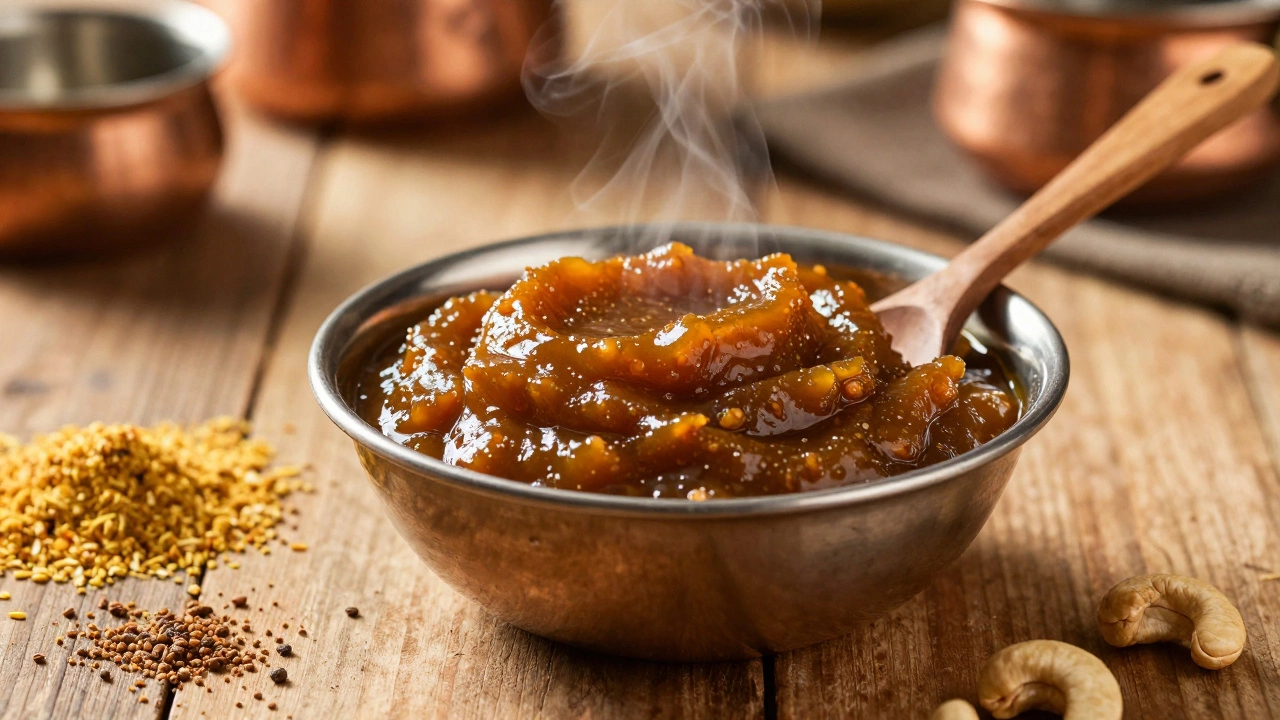
Chutney Thickener Finder
Find your perfect thickener
Select your chutney type to see the best natural thickener for ideal consistency
Select Chutney Type
Recommended Thickener
Select a chutney type above
Choose your chutney type to see recommendation
Why this works
Select your chutney type to see explanation
Ever made a chutney that turned out too runny? You’ve crushed the ingredients, simmered it down, even let it cool-but when you spoon it onto your dosa, it just slides right off. That’s not a mistake. It’s a missing thickening agent. Chutneys aren’t meant to be watery sauces. They should cling to food, hold their shape, and deliver flavor in every bite. The secret isn’t just cooking longer-it’s knowing what to add to make it stick.
Why Chutney Needs Thickening
Traditional Indian chutneys rely on texture as much as taste. A coconut chutney should be creamy enough to spread. A tamarind chutney needs to coat the edges of samosas without dripping. A mint chutney shouldn’t pool at the bottom of the bowl. Water from tomatoes, onions, or fresh herbs can dilute the mixture, especially if you’re blending it raw or using a food processor. Heat helps evaporate moisture, but sometimes you need something more.
Thickening agents don’t just change consistency-they stabilize flavor. When chutney is too thin, the spices settle, the acidity overwhelms, and the sweetness gets lost. A good thickener holds everything together so every spoonful tastes balanced.
Top Natural Thickening Agents for Chutney
You don’t need powdered starches or gums from a supermarket aisle. Traditional Indian kitchens use real food to thicken chutney. Here are the most effective options, ranked by how often they’re used and how well they work.
- Roasted gram flour (besan) - This is the gold standard. Toasted until golden and nutty, besan absorbs liquid without turning gummy. Add 1-2 teaspoons while cooking, stir constantly, and let it simmer for 3-5 minutes. It adds a subtle earthiness that complements tamarind and chili. Used in nearly every North Indian tamarind chutney.
- Ground coconut - Fresh or dried, ground coconut thickens while adding creaminess. It works best in coconut or peanut chutneys. Use 2-3 tablespoons of finely ground coconut, blended into the mixture. It doesn’t make it sweet-it makes it rich.
- Ground roasted peanuts or cashews - Especially good in peanut chutney or spicy green chutneys. Roast them lightly, grind to a fine powder, and stir in during the last minute of cooking. They add body and a nutty depth that water alone can’t replicate.
- Ground rice or rice flour - A quiet hero. A teaspoon of rice flour mixed with cold water and stirred into simmering chutney thickens quickly without altering flavor. It’s what you’d find in South Indian chutneys served with idli or vada.
- Finely grated ginger or jaggery - Not traditional thickeners, but they help. Ginger releases pectin when cooked, and jaggery dissolves slowly, creating a syrupy base. Used together in mango or date chutneys, they naturally reduce and thicken over time.
What Not to Use
Some kitchen hacks sound smart but ruin chutney. Avoid these:
- Cornstarch - It creates a glossy, slippery texture that feels artificial. Chutney should taste like food, not glue.
- Arrowroot or tapioca starch - These work in desserts, not savory chutneys. They turn slimy when cooled and mask the spice profile.
- Commercial xanthan gum - Overkill. One tiny pinch can turn your chutney into a rubbery paste. You don’t need industrial ingredients for home cooking.
- Adding too much sugar - Sugar doesn’t thicken. It just makes it sweeter. If your chutney is watery, sugar won’t fix it-it’ll make it worse.
How to Use Thickening Agents Step by Step
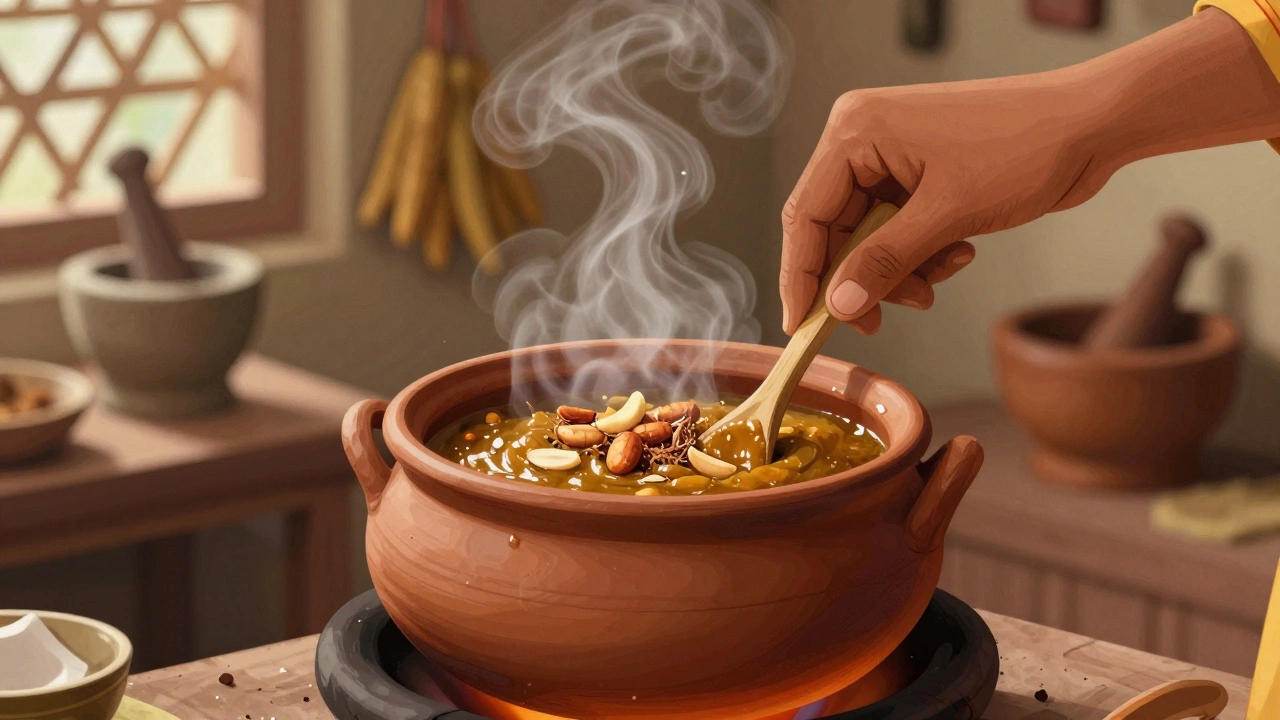
Here’s how to get it right every time:
- Start with your base ingredients: tomatoes, mint, coconut, tamarind, etc.
- Blend or grind until smooth. Don’t skip this step-chunky bits won’t thicken evenly.
- Heat the mixture in a heavy-bottomed pan over medium-low heat. Let it bubble gently.
- While stirring, add your thickener in small amounts. Start with 1 teaspoon.
- Cook for 3-5 minutes after adding. This lets the starches activate and the moisture evaporate.
- Test consistency: Dip a spoon, run your finger across the back. If the line holds, it’s ready.
- Let it cool. Chutney thickens more as it sits. If it’s still too thin after cooling, reheat and add another ½ teaspoon of thickener.
Thickening by Cooking Time
Before you reach for any thickener, try this: simmer longer. Many chutneys just need time. Tamarind chutney, for example, can take 20-30 minutes to reduce properly. Stir occasionally. Let the bubbles get slower. The smell will change-from sharp and acidic to deep and caramelized. That’s when the natural sugars concentrate and the texture thickens on its own.
Some chutneys, like raw mint or coriander chutney, are meant to be fresh and loose. That’s fine. But if you’re storing it for more than a day, even those benefit from a light toast of besan or a sprinkle of ground rice stirred in after blending.
Storage and Texture Changes
Chutney thickens more in the fridge. That’s normal. If your chutney looks too stiff after refrigerating, stir in a teaspoon of warm water or lemon juice. Don’t reheat it unless you’re serving it hot-heat breaks down the flavor. The thickener you used will hold up fine cold.
Coconut-based chutneys may separate in the fridge. That’s okay. Just stir well before using. The oil rises, but the texture stays intact. If it turns grainy, it’s because you used dried coconut without soaking it first. Always soak dried coconut in warm water for 15 minutes before grinding.
What Works Best for Different Chutney Types
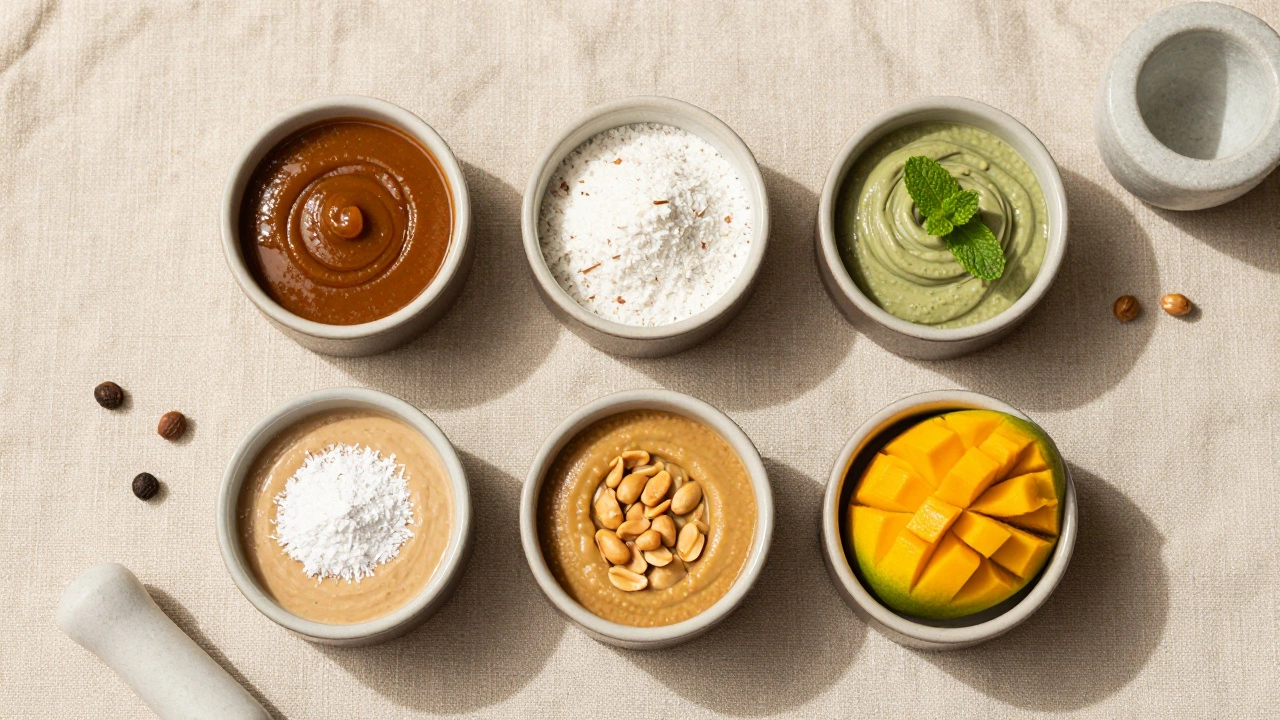
Not all chutneys need the same fix. Here’s what to use by type:
| Chutney Type | Best Thickener | Why It Works |
|---|---|---|
| Tamarind Chutney | Roasted besan | Binds the sour-sweet base, adds body without masking spice |
| Coconut Chutney | Ground coconut | Same ingredient, just more of it-no extra flavor, just creaminess |
| Mint/Cilantro Chutney | Ground rice flour | Neutral, doesn’t alter herb flavor, holds texture when stored |
| Peanut Chutney | Roasted peanuts | Thickens and deepens flavor at the same time |
| Mango Chutney | Jaggery + slow simmer | Natural pectin from fruit + sugar syrup = perfect jam-like texture |
Pro Tip: The 2-Minute Fix
If you’re serving chutney right away and it’s too thin, here’s a trick used by street vendors in Mumbai: take a small pinch of roasted besan, mix it with a splash of cold water to make a paste, and whisk it into the hot chutney. Stir for 30 seconds. It thickens instantly. No waiting. No risk of lumps. Just smooth, clingy chutney.
Final Thought: Flavor First, Texture Second
Thickening isn’t about making chutney heavy. It’s about making it intentional. The right thickener doesn’t hide the spice-it carries it. The best chutneys aren’t the thickest. They’re the ones where every ingredient sings, and the texture holds the song in place.
Can I use flour to thicken chutney?
Regular wheat flour isn’t recommended. It can leave a raw, starchy taste and make chutney cloudy. If you must use flour, use rice flour instead-it’s neutral, gluten-free, and blends cleanly. Roasted gram flour (besan) is still the better choice for flavor and texture.
Why does my chutney separate in the fridge?
Separation happens when oils from coconut, peanuts, or sesame rise to the top. It’s normal, especially in raw or uncooked chutneys. Just stir well before using. To prevent it, make sure you blend thoroughly and use a thickener like besan or ground nuts that bind the oils.
Is there a thickener that works for both sweet and sour chutneys?
Yes-roasted gram flour (besan) works in both. It’s neutral enough for sweet mango chutney and strong enough for tangy tamarind. It doesn’t alter the flavor profile, just adds body. Ground rice flour is another good all-rounder.
Can I thicken chutney without cooking it?
You can, but it’s limited. For raw chutneys like mint or cilantro, blending in ground roasted peanuts or cashews adds body without heat. A teaspoon of rice flour mixed into cold water and stirred in can also help, but it won’t thicken as much as when heated. For best results, even raw chutneys benefit from a quick 2-minute warm-up after blending.
How long does chutney last once thickened?
Thickened chutney lasts 7-10 days in the fridge, sealed in a clean jar. If you’ve used besan or ground nuts, it can last up to 2 weeks. Always use a dry spoon to scoop it out-moisture introduces bacteria. For longer storage, freeze in ice cube trays and thaw as needed.