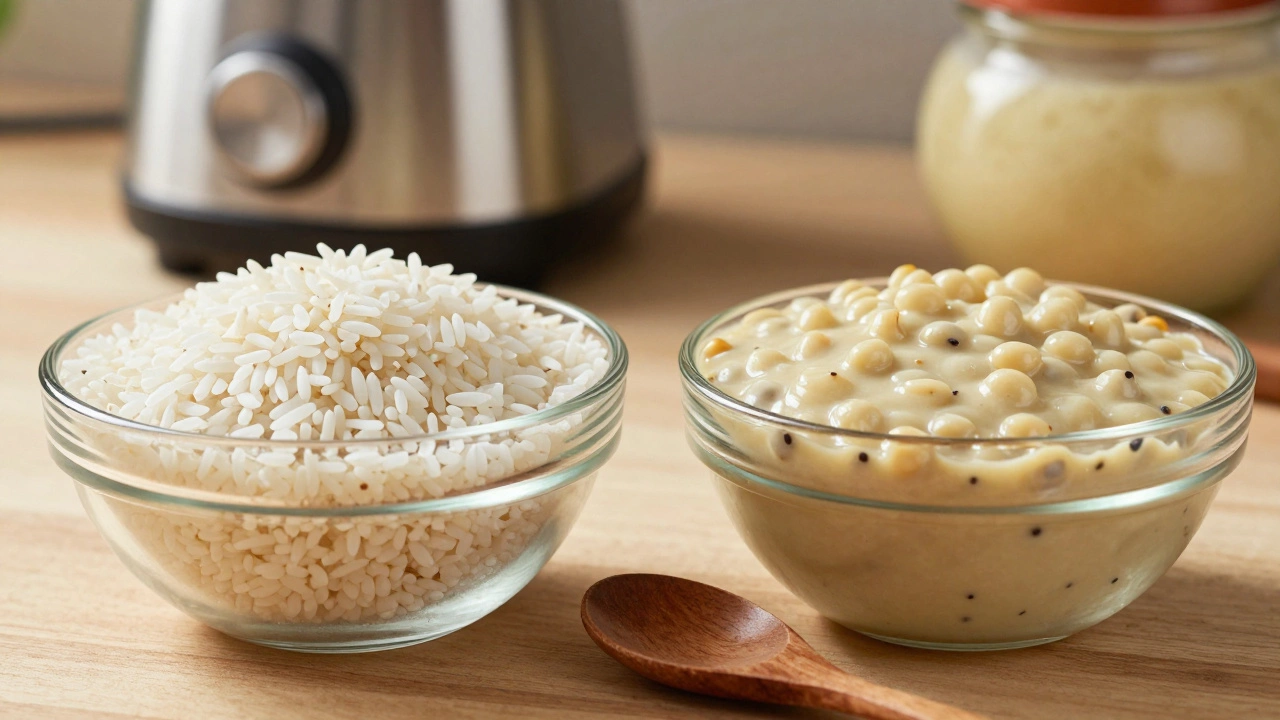
Dosa Batter Ratio Calculator
Enter values and click calculate to see results.
Have you ever made a batch of dosa that just didn't rise? Or maybe it came out dense and rubbery instead of light and crisp? Often, the culprit isn't your technique-it's the ratio of urad dal, which is black gram lentils without skin. In traditional South Indian cooking, this humble ingredient is the engine room of the batter. But what happens when you decide to throw more of it into the mix?
Adding more urad dal to your dosa batter changes everything. It transforms the texture, alters the fermentation process, and shifts the flavor profile. While the standard recipe usually calls for a specific balance between rice and lentils, tweaking this ratio can be a game-changer-or a disaster-if you don't know what to expect. Let's break down exactly how increasing the proportion of urad dal affects your final dish.
The Science Behind the Fluffiness
To understand why adding more urad dal matters, we first need to look at what it actually does in the batter. Rice provides structure and starch, but urad dal provides protein and fiber. More importantly, urad dal is rich in amino acids like arginine and lysine. These are food for the wild yeast and bacteria that live on the surface of your grains.
When you ferment the batter, these microorganisms produce carbon dioxide gas. This gas gets trapped in the gluten network formed by the proteins in the urad dal. Think of it like blowing up a balloon inside a net. The more protein (from the urad dal), the stronger the net, and the more gas it can hold before bursting. So, if you increase the amount of urad dal, you generally get a batter that rises significantly more. The result? A dosa that is thicker, puffier, and has a spongy interior similar to a pancake or an idli.
However, there is a limit. If you go too far with the urad dal, the batter becomes too elastic. Instead of spreading thin and crisp, it might shrink back on the hot tawa (griddle) like a rubber band. Finding that sweet spot is key.
Texture Changes: From Crispy to Spongy
The most immediate change you will notice is in the mouthfeel. A standard masala dosa batter typically uses a ratio of about 3 parts rice to 1 part urad dal. This creates a batter that spreads easily and fries up with a delicate, shattering crispness.
If you bump up the urad dal to equal parts-say, a 1:1 ratio with rice-you are moving away from a traditional crispy dosa toward something closer to a thin idli or a soft crepe. The exterior won't be as glass-like; it will have more chew. The interior will be moist and airy rather than dry and brittle. For some people, especially those who prefer softer dosas that they can fold over fillings without them breaking, this is a huge upgrade.
But beware: more urad dal means less starch. Starch is what gives the dosa its rigid crunch. Without enough rice, your dosa might feel heavy or doughy. It won't hold its shape as well when you try to roll it. If you are making a stuffed dosa, a higher urad dal content can actually help because the batter is more pliable and less likely to crack when folded around spicy potato filling.
Flavor Profile: Earthier and Stronger
Rice is relatively neutral. It acts as a canvas. Urad dal, on the other hand, has a distinct earthy, nutty flavor. When you increase the quantity of urad dal, this flavor becomes much more pronounced. Some purists argue that a good dosa should taste primarily of toasted rice and ghee. Others love the robust, slightly bitter undertones that extra lentils bring.
This shift in flavor also affects how the dosa pairs with chutneys and sambar. A dosa with high urad dal content stands up better to strong, tangy accompaniments like a spicy coconut chutney or a tomato-based sambar. The subtle flavors of the batter won't get lost. Conversely, if you are serving a delicate mango chutney, the earthiness of the lentils might clash.
Also, keep in mind that urad dal ferments faster than rice. A batter with more lentils might develop a sharper, more sour taste if left to ferment for too long. You'll need to watch the clock closely to avoid an overly acidic bite.
Fermentation Dynamics: Faster Rise, Shorter Window
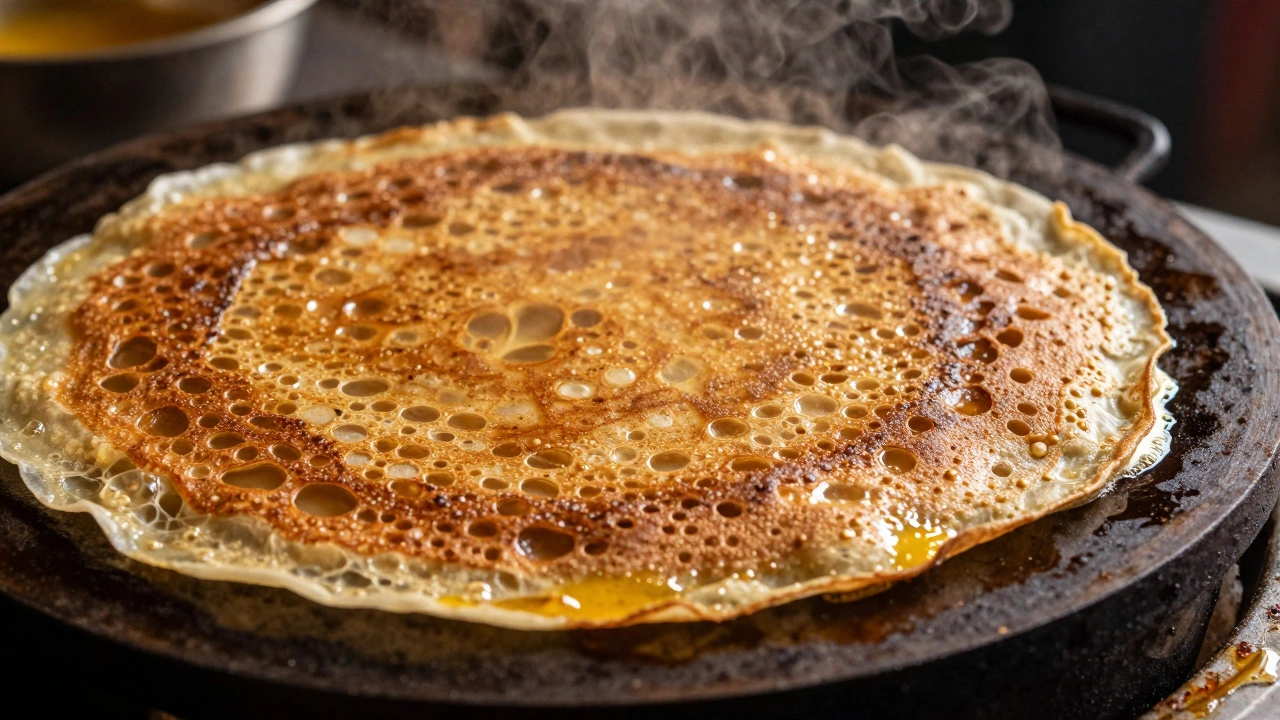
One of the biggest practical challenges with adding more urad dal is managing fermentation. Because urad dal is packed with nutrients that feed bacteria, a batter with a higher lentil ratio will rise much faster. In warm weather, like summer in Auckland or Chennai, a high-urad-dal batter can double in size in just 4 to 6 hours. A standard batter might take 8 to 12.
This rapid rise comes with a risk: over-fermentation. If you leave the batter out too long, it can become too sour and watery. The structure breaks down, and the dosa loses its ability to hold air bubbles. You end up with a flat, limp mess. To counter this, many home cooks recommend refrigerating the batter after the initial rise. The cold slows down the bacterial activity, allowing you to control the sourness and maintain the texture.
If you are using a pressure cooker method to cook the urad dal before grinding (a common shortcut), note that cooked dal ferments differently than raw soaked dal. Cooked dal yields a softer, fluffier result but doesn't spread as thinly. Raw, soaked urad dal ground into a smooth paste is essential for that classic lacy texture.
How Much Is Too Much? Recommended Ratios
So, what is the ideal amount? There is no single "correct" answer, but here are three common scenarios based on the urad dal-to-rice ratio:
- Standard Crispy Dosa (3:1 Ratio): Three cups of rice to one cup of urad dal. This is the gold standard for restaurant-style masala dosas. It offers the best balance of crispness and lift.
- Soft & Puffy Dosa (2:1 Ratio): Two cups of rice to one cup of urad dal. Ideal for beginners who struggle to spread the batter thinly. The dosa is easier to handle and has a pleasant, cake-like interior.
- Idli-Dosa Hybrid (1:1 Ratio): Equal parts rice and urad dal. This creates a very thick, fluffy pancake. It’s great for breakfast but won't give you that satisfying crunch. It’s essentially a thin idli.
Going beyond a 1:1 ratio is rarely recommended for dosas. At that point, you are essentially making a lentil pancake, which lacks the structural integrity provided by the rice starch. The batter may become too sticky to spread properly, requiring excessive oil to prevent sticking, which defeats the purpose of a healthy breakfast.
| Urad Dal Ratio | Texture | Crispiness | Best For |
|---|---|---|---|
| Low (3:1 Rice:Urad) | Thin, delicate | High | Masala Dosa, Plain Dosa |
| Medium (2:1 Rice:Urad) | Spongy, soft | Medium | Stuffed Dosas, Beginner Friendly |
| High (1:1 Rice:Urad) | Thick, cake-like | Low | Breakfast Pancakes, Idli-Dosa |
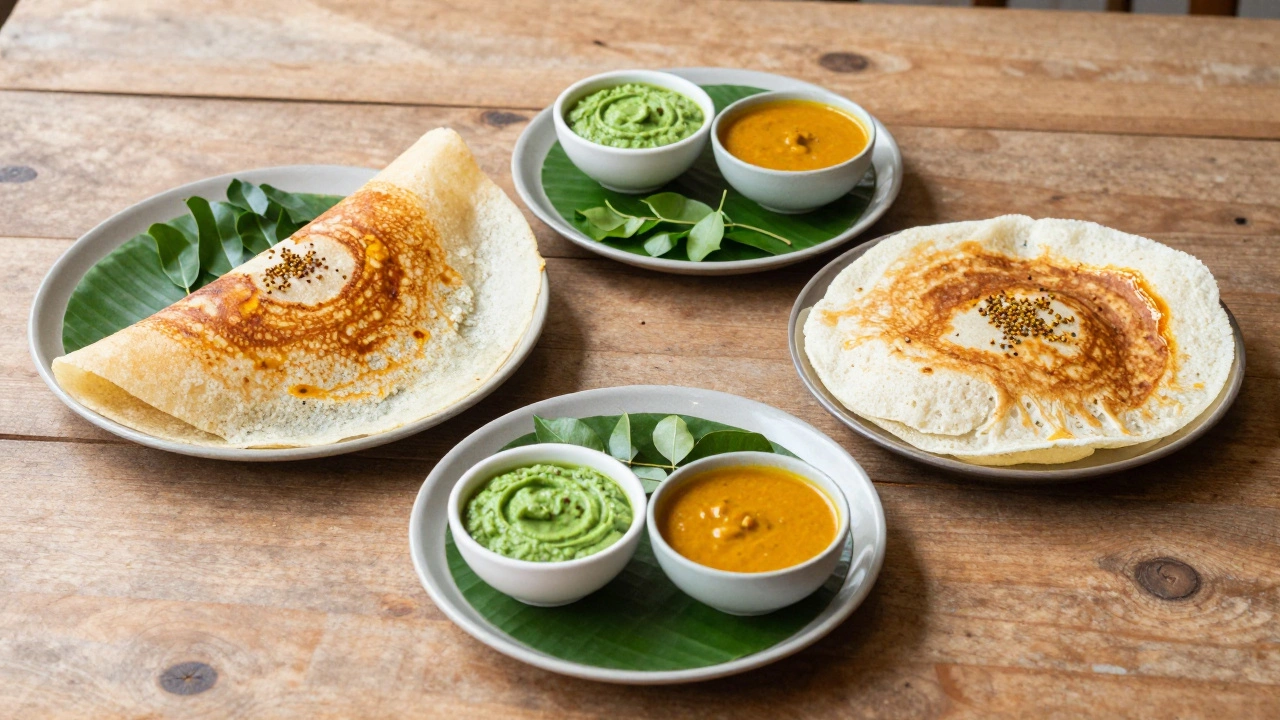
Tips for Success with High-Urad-Dal Batter
If you decide to experiment with more urad dal, keep these tips in mind to ensure success:
- Grind Smoothly: Urad dal must be ground into a silky-smooth paste. Any grittiness will ruin the texture. Use enough water during grinding to achieve a ribbon-like consistency when dropped from a spoon.
- Don't Over-Mix After Fermentation: Once the batter has risen, mix it gently. Vigorous stirring will knock out all the precious air bubbles you worked so hard to create. Just enough to combine the rice and dal layers is sufficient.
- Use a Hot Tawa: Thicker batters require more heat to set quickly. If your tawa isn't hot enough, the dosa will absorb too much oil and become greasy. Test by sprinkling a few drops of water; they should sizzle and evaporate instantly.
- Add Semolina (Suji): If you find the batter too sticky or elastic, add a small amount of fine semolina. It adds structure without altering the flavor significantly, helping the dosa spread better.
Common Mistakes to Avoid
A frequent error is assuming that more urad dal automatically equals better fermentation. While it helps the batter rise, it can also lead to separation. If the batter looks curdled or has large pockets of liquid on top, it has over-fermented. In this case, you can salvage it by mixing in a little fresh rice flour or semolina to stabilize it.
Another mistake is neglecting the type of rice. If you increase the urad dal, you might want to use a short-grain rice like Ponni or Sona Masoori. Long-grain basmati rice is too fragile and can make the batter loose, even with extra lentils. Stick to sturdy, starchy rices that can stand up to the protein-heavy batter.
Finally, don't forget the salt. Adding salt after fermentation is a common practice, but if you are using a high-protein batter, the salt helps tighten the gluten structure. Adding it right before cooking ensures the best texture.
Conclusion: Experimentation Is Key
There is no wrong way to eat dosa, but there are ways that work better for specific preferences. If you crave that iconic, paper-thin crunch, stick to the traditional low-urad-dal ratio. But if you prefer a hearty, fluffy, and comforting breakfast that feels more substantial, increasing the urad dal is a fantastic move. It turns a simple snack into a protein-packed meal. Start with a 2:1 ratio and adjust from there. Your taste buds-and your digestive system-will thank you for the extra fiber and protein.
Can I use only urad dal for dosa without rice?
Technically, yes, but it won't be a traditional dosa. A batter made solely of urad dal will be very dark, dense, and lack the characteristic crispness. It will resemble a thick lentil pancake or a savory crepe. For a proper dosa texture, rice is essential to provide the starch needed for crispness and structure.
Does adding more urad dal make dosa healthier?
Yes, it does. Urad dal is rich in protein, iron, and dietary fiber compared to white rice. By increasing the proportion of urad dal, you boost the nutritional value of your dosa, making it a more balanced meal with a lower glycemic index. It keeps you fuller for longer.
Why did my dosa shrink back on the pan when I added more urad dal?
This happens because urad dal contains gluten-like proteins that create elasticity. If the batter is too elastic, it contracts when heated. To fix this, ensure your tawa is sufficiently hot, and consider adding a tablespoon of semolina or rice flour to the batter to reduce elasticity and improve spreadability.
Should I soak urad dal longer if I am using more of it?
No, the soaking time remains the same regardless of quantity. Typically, urad dal should be soaked for 1 to 2 hours until it doubles in size. Over-soaking can make it mushy and difficult to grind into a smooth paste. The key is to grind it thoroughly with adequate water to achieve a fluffy consistency.
Can I substitute white urad dal with black skinned urad dal?
Yes, you can use black skinned urad dal, but you must remove the skins before grinding for a traditional dosa. If you leave the skins on, the batter will be coarse and dark, resulting in a rough texture known as 'Kodi Dosa' or 'Ragi Dosa' style, which is delicious but different from the smooth, crispy masala dosa.