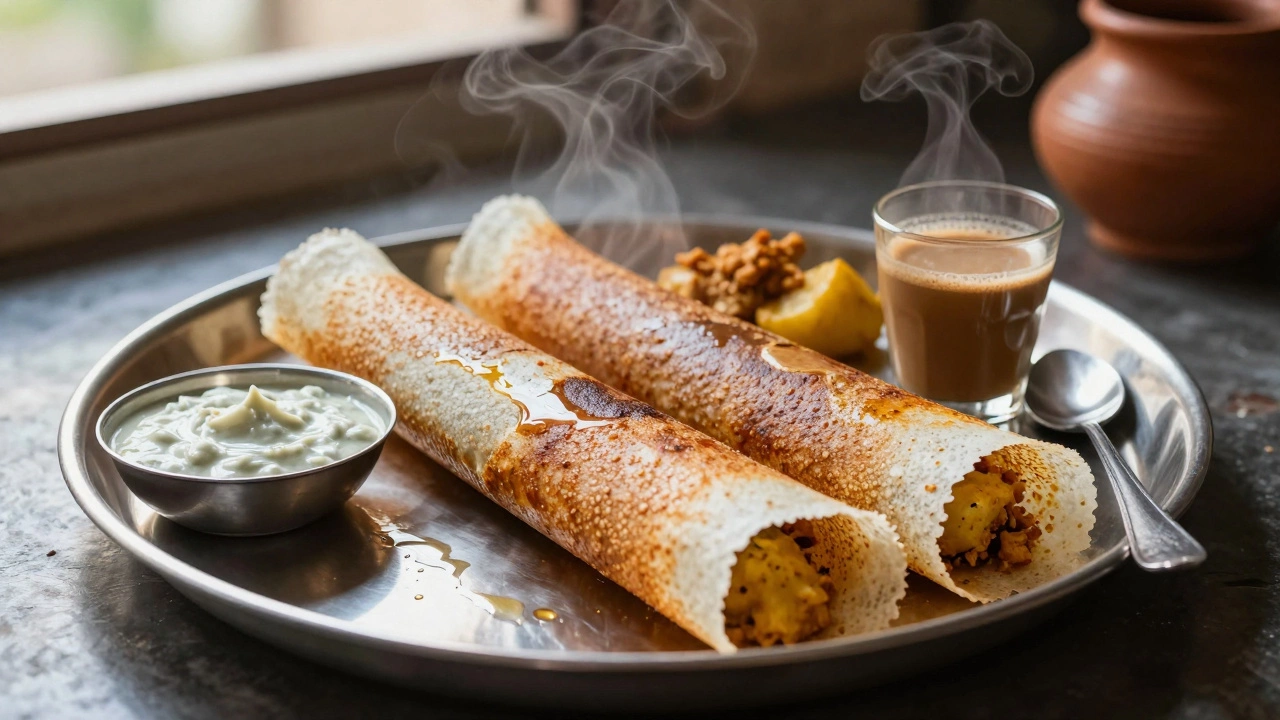
Dosa Glycemic Impact Calculator
How Your Dosa Affects Blood Sugar
Dosa's high glycemic load can cause blood sugar spikes, especially for people with diabetes or insulin resistance. Calculate your meal's impact using the options below.
Blood Sugar Impact Assessment
Key Recommendations
- Consider multigrain dosa instead of regular rice dosa
- Use minimal oil or non-stick pan
- Add protein-rich sides like sprouted lentils or paneer
- Avoid high-sugar chutneys and potato fillings
Most people think of dosa as a healthy, traditional Indian breakfast-crispy, light, and made from fermented rice and lentils. But if you eat it every day, especially with lots of oil or chutney, it might not be as good for you as you think. The truth is, dosa has several downsides that aren’t talked about much, even though they can affect your energy, weight, and blood sugar over time.
High in Refined Carbs and Low in Protein
The classic dosa batter is mostly white rice and urad dal. White rice is a refined grain, meaning most of its fiber and nutrients have been stripped away during milling. A single dosa made from 1/2 cup of dry batter contains about 45 grams of carbohydrates, mostly simple sugars that break down quickly in your body. That’s more than a slice of white bread, and you’re probably eating two or three at breakfast.
While urad dal adds some protein, the ratio is still skewed. A typical dosa gives you only 5-6 grams of protein. For comparison, two eggs have 12 grams. If you’re relying on dosa as your main morning meal, you’re missing out on the protein your body needs to stay full and stabilize blood sugar. That’s why many people feel hungry again by 10 a.m.-even after a big plate of dosa.
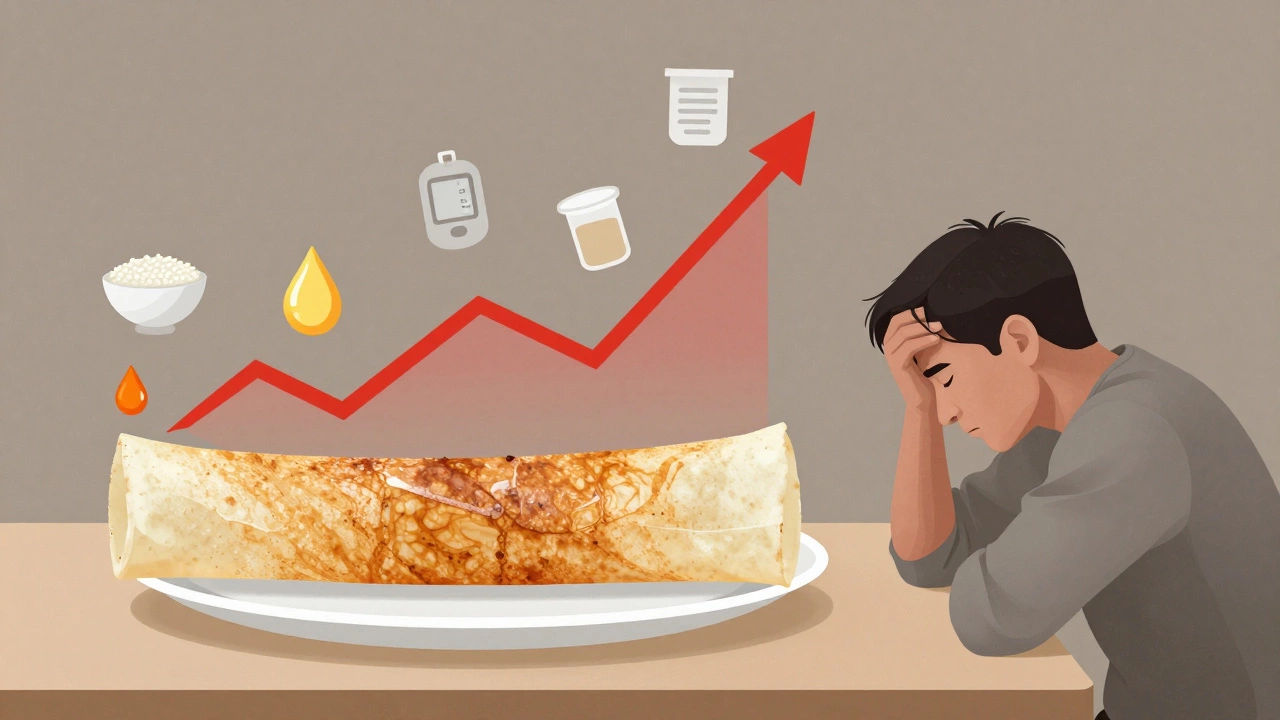
High Glycemic Load Can Spike Blood Sugar
The fermentation process in dosa batter does improve digestibility and adds some probiotics, but it doesn’t lower the glycemic index enough to make it safe for people with prediabetes or insulin resistance. Studies show that fermented rice-based foods still have a glycemic index of 70-80, which is considered high. When you eat dosa with coconut chutney or potato masala filling, you’re adding even more sugar and starch.
A 2023 study from the Indian Journal of Medical Research tracked 1,200 adults who ate dosa daily for six months. Those with a sedentary lifestyle saw a 12% average increase in fasting blood sugar levels. Even people without diabetes reported more afternoon crashes and cravings after meals centered around dosa.
Deep-Fried Versions Add Unhealthy Fats
Not all dosas are created equal. The thin, crispy version you get at street stalls is often fried in reused oil. Many vendors use palm oil or low-quality vegetable oil because it’s cheap and stays hot longer. Repeated heating breaks down these oils into trans fats and free radicals, which are linked to inflammation and heart disease.
Even if you make dosa at home, most recipes call for brushing the pan with oil or ghee to get that crisp texture. One dosa can soak up 1-2 tablespoons of oil. That’s 120-240 extra calories, mostly from fat. If you eat dosa five days a week, you’re adding over 60,000 extra calories a year-roughly 17 pounds of body weight.
Low in Fiber and Micronutrients
White rice and urad dal aren’t bad on their own, but they’re not nutrient-dense either. Dosa lacks significant amounts of vitamins A, C, D, E, and K. It doesn’t provide much iron, calcium, or zinc either. If you’re eating dosa as your main breakfast, you’re likely missing out on the nutrients you need to support your immune system, bones, and skin.
Compare that to oatmeal with chia seeds and berries, or a vegetable upma with peanuts and curry leaves. Those options offer fiber, antioxidants, and healthy fats. Dosa doesn’t. Even the sambar served with it is mostly water and lentils, with little vegetable content unless you load it up yourself.
Can Cause Bloating and Digestive Issues
While fermentation helps break down phytic acid and makes nutrients more absorbable, it also produces gas. If you’re not used to fermented foods, eating dosa daily can lead to bloating, flatulence, or stomach discomfort. People with IBS or sensitive guts often report worse symptoms after eating dosa, especially when paired with spicy chutneys or pickles.
Also, the combination of starch and oil can slow digestion. Many people feel sluggish after eating dosa-not because it’s heavy, but because their body is working hard to process a large load of carbs and fat at once. That’s not the kind of energy boost you want to start your day with.
Not Ideal for Weight Loss or Metabolic Health
If you’re trying to lose weight or manage metabolic syndrome, dosa isn’t the best choice-even if it’s labeled "healthy." The combination of high carbs, low protein, and hidden fats makes it easy to overeat without feeling satisfied. One study from the National Institute of Nutrition found that participants who replaced their daily dosa with a high-protein breakfast (like scrambled tofu with spinach) lost 2.3 kg more over 12 weeks, even when calorie intake stayed the same.
Plus, the rapid spike and crash in blood sugar from dosa can increase hunger hormones like ghrelin. That leads to snacking later in the day, often on sugary or fried foods. It’s a cycle: dosa → sugar crash → cravings → more carbs → weight gain.
What About Whole Grain or Multigrain Dosa?
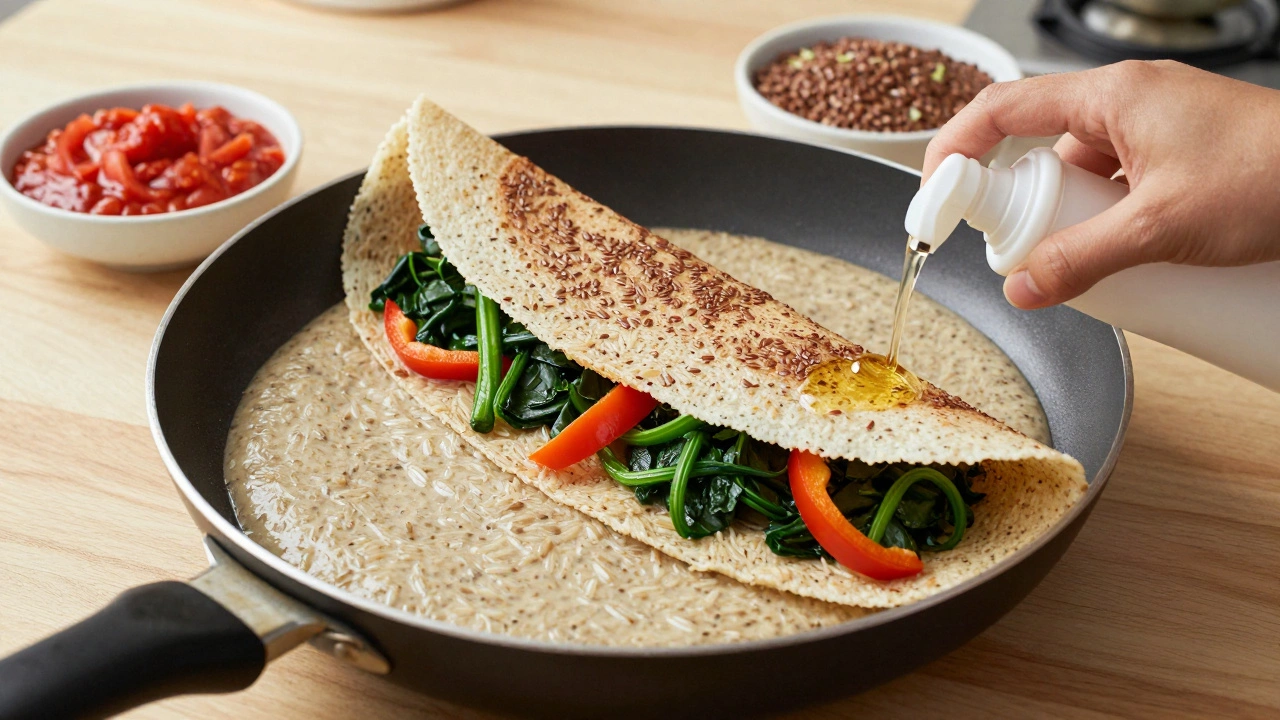
There’s good news: you can make dosa healthier. Swapping white rice for brown rice, ragi (finger millet), or jowar (sorghum) boosts fiber, protein, and minerals. Adding oats, quinoa, or flaxseed to the batter increases omega-3s and slows digestion. A multigrain dosa can have up to 8 grams of fiber and 10 grams of protein-close to the nutritional profile of a whole grain pancake.
Also, cooking dosa on a non-stick pan with just a light spray of oil reduces fat by 70%. Skip the potato filling. Add sautéed vegetables like bell peppers, spinach, or mushrooms inside. Use tomato chutney instead of coconut chutney to cut down on sugar and saturated fat.
These small changes turn dosa from a carb-heavy snack into a balanced meal. But you have to be intentional about it. Most restaurants and even home cooks stick to the traditional recipe because it’s quick and familiar.
Who Should Avoid Dosa?
You should limit dosa if you:
- Have type 2 diabetes or prediabetes
- Are trying to lose weight and struggling with cravings
- Have digestive issues like IBS or bloating after fermented foods
- Need more protein in your morning meals (athletes, older adults, pregnant women)
- Are on a low-carb or ketogenic diet
That doesn’t mean you have to quit dosa forever. But if you eat it every day, you’re missing out on better options. Try rotating it with other breakfasts: idli with sambar, poha with peanuts, or besan chilla with yogurt. Variety keeps your nutrition balanced.
Bottom Line: Dosa Isn’t Bad-But It’s Not Perfect
Dosa is a cultural staple with a long history and real benefits: it’s gluten-free, vegetarian, and easy to digest when fermented properly. But calling it a "healthy breakfast" without context is misleading. Its high carb load, low protein, and potential for fried oil make it a risky daily choice for many people.
If you love dosa, enjoy it-but don’t make it your default. Change the batter. Change the cooking method. Change what you eat with it. Small tweaks make a big difference. And if you’re feeling sluggish after breakfast, it might not be the coffee-it might be the dosa.
Is dosa good for weight loss?
Plain dosa made with whole grains and cooked with minimal oil can fit into a weight loss plan, but it’s not ideal as a daily breakfast. Most dosas are high in refined carbs and low in protein, which can lead to hunger and cravings later in the day. For weight loss, pair dosa with protein-rich sides like sprouted lentils or paneer, and avoid deep-fried versions.
Does dosa cause bloating?
Yes, for some people. The fermentation process in dosa batter produces gas, which can cause bloating, especially if you’re not used to fermented foods. Eating dosa with spicy chutneys or pickles can make this worse. People with IBS or sensitive digestion often report discomfort after eating dosa daily.
Is dosa better than bread?
It depends. Regular white bread and traditional dosa are similar in carbs and calories. But dosa made with whole grains and legumes has more protein and fiber than white bread. However, if the dosa is fried in oil or served with sugary chutney, it can be worse than whole grain bread. Choose whole grain dosa with no added oil for the best option.
Can diabetics eat dosa?
Diabetics can eat dosa occasionally, but not daily. Traditional dosa has a high glycemic index and can spike blood sugar. To make it safer, use multigrain batter (brown rice, ragi, jowar), avoid frying, skip potato fillings, and pair it with high-protein sides like sprouts or tofu. Monitor your blood sugar after eating it to see how your body reacts.
Why do I feel tired after eating dosa?
You’re likely experiencing a blood sugar crash. Dosa is high in fast-digesting carbs and low in protein and fat, which means your blood sugar spikes quickly and then drops sharply within a couple of hours. This drop triggers fatigue, brain fog, and cravings. Adding protein or healthy fats to your meal can help stabilize your energy.