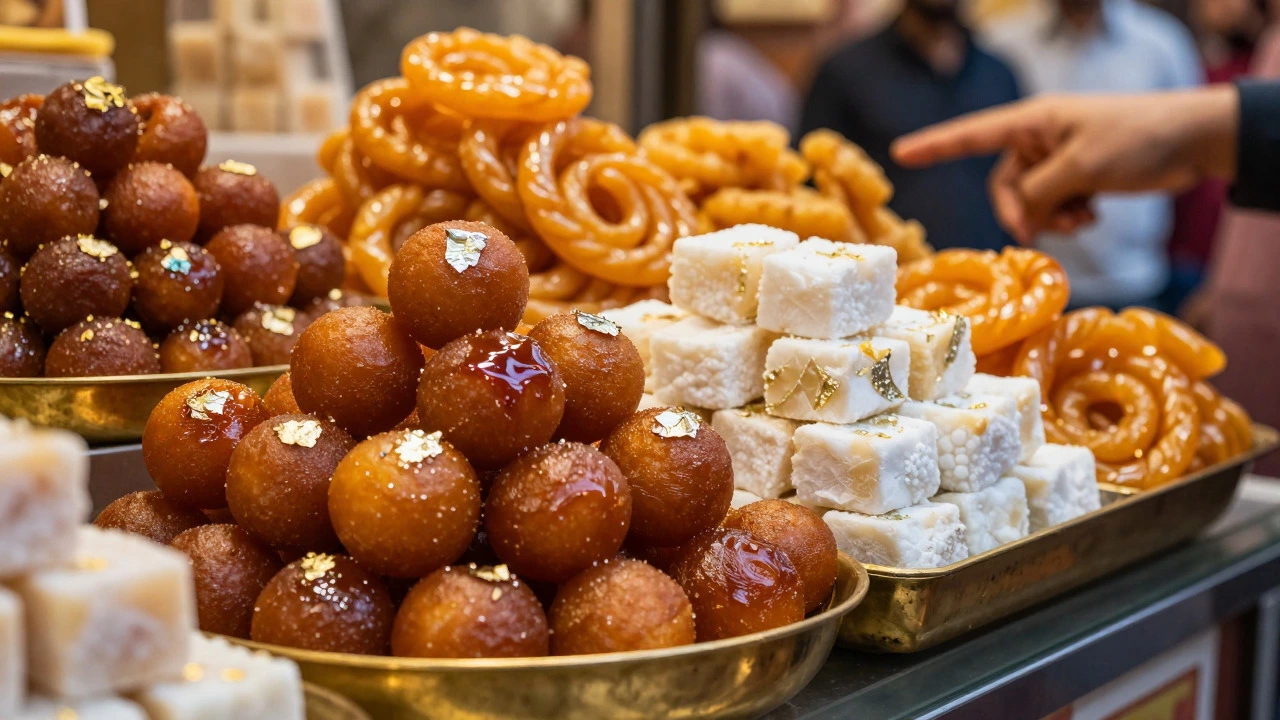
Mithai Matcher: Find Your Perfect Indian Sweet
Not sure what to order? Answer these simple questions to find the perfect Mithai for your mood.
Quick Reference Table
| Sweet Type | North (Hindi/Punjabi) | East (Bengali/Odia) | South (Tamil/Telugu/Kannada) | West (Marathi/Gujarati) |
|---|---|---|---|---|
| Rice Pudding | Kheer | Payesh | Payasam | Aamras / Sheera |
| Milk Fudge | Barfi | Sandesh | Srikhand | Basundi |
| Gram Flour Balls | Besan Laddoo | Luchi* | Sundal* | Dhokla* |
| Carrot Pudding | Gajar Ka Halwa | Gajer er Payesh | Gajjar Halwa | Gajar Halwa |
| Fried Sweet | Jalebi | Jilapi | Imarti | Shankarpali |
*Note: Some items listed under East/West/South may be savory accompaniments or specific local variants rather than direct equivalents.
You walk into a sweet shop in Delhi or Mumbai, and the counter is piled high with golden spheres, syrup-soaked diamonds, and crumbly balls. You point at one, but you don't know what to call it. Is it Mithai or a specific regional delicacy like Gulab Jamun? The answer isn't simple because "sweets" in India aren't just sugar-they are cultural markers, religious offerings, and regional identities wrapped in milk solids, flour, and ghee.
The umbrella term for all these confections is Mithai. But using that single word is like calling every car a "vehicle." It technically works, but it misses the nuance. If you want to order confidently, understand the menu, or appreciate the culinary heritage, you need to know the specific names. This guide breaks down the most common types of Indian sweets, why they are named what they are, and how to distinguish them from one another.
The Umbrella Term: What is Mithai?
In Hindi and many other North Indian languages, Mithai refers to any sweet dish, typically made from dairy products, flour, sugar, and nuts. Unlike Western desserts, which often rely on eggs and butter, traditional Mithai leans heavily on khoya (dried milk solids) and ghee (clarified butter). This gives them a dense, rich texture that feels more substantial than a cake or cookie.
The word itself comes from the Sanskrit root madhu, meaning honey or sweetness. Over centuries, this evolved into mishri (rock sugar) and eventually mithai. When you ask locals, "What are sweets called in India?", they will almost always reply, "It's mithai." But if you press further, asking about the specific item, you'll get a name tied to its ingredients, shape, or origin.
Categorized by Base Ingredient
To make sense of the hundreds of varieties, it helps to categorize them by their primary base. Most Indian sweets fall into three buckets: Milk-based, Flour-based, and Syrup-based.
Milk-Based Sweets (The Dairy Heavyweights)
These are the most popular in North India. They rely on reducing milk until it becomes solid or semi-solid.
- Kheer or Payasam: A rice pudding made by simmering rice, vermicelli, or broken wheat in milk until thick, then flavored with cardamom and saffron. In South India, it’s called Payasam and often uses jaggery instead of white sugar.
- Rasgulla: Spongy, white balls made from chhena (fresh cottage cheese) soaked in light sugar syrup. Originating from Bengal, these are soft, airy, and melt in your mouth. There is also a fried version called Rasgulla or Gulab Jamun variants, but the classic Bengali Rasgulla is boiled, not fried.
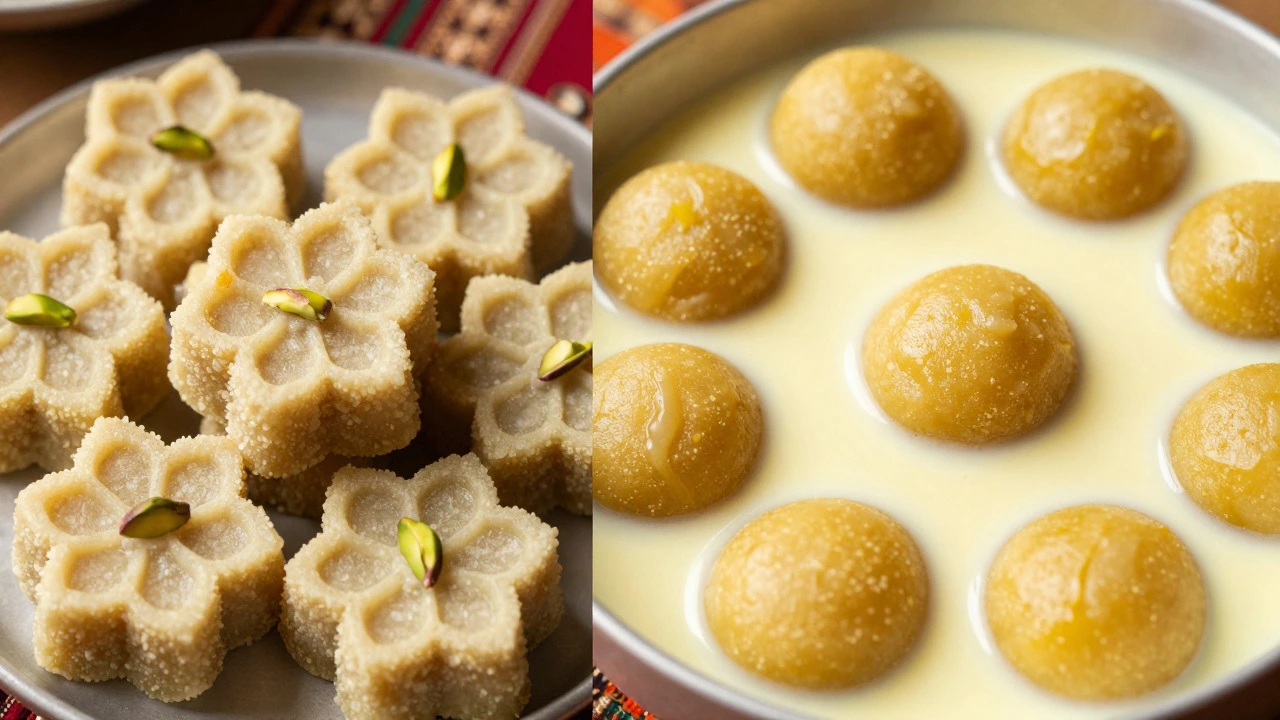
- Sandesh: A delicate Bengali sweet made from fresh chhena kneaded with sugar and molded into intricate shapes. Unlike Rasgulla, Sandesh is dry and crumbly, often flavored with pistachios or rose water.
- Barfi: A dense, fudge-like sweet made from condensed milk and sugar, cut into diamond or square shapes. It can be plain (white), chocolate-flavored, or infused with fruits like mango or strawberry.
Flour and Grain-Based Sweets
These use wheat flour, gram flour (besan), or semolina as the main structure.
- Laddoo: Round balls made from various flours, such as besan (gram flour) or atta (whole wheat), bound together with ghee and sugar. Besan Laddoo is nutty and grainy; Atta Laddoo is earthy and often served during festivals.
- Jalebi: Crispy, orange-colored spirals of fermented batter deep-fried and immediately dipped in sugar syrup. The key here is the fermentation, which gives Jalebis their signature tang and crispness. They are best eaten hot.
- Halwa: A broad category of puddings made from semolina (suji), carrots (gajar), or lentils, cooked slowly with ghee and sugar. Gajar Ka Halwa (carrot halwa) is a winter staple, while Suji Ka Halwa is a quick everyday treat.
Syrup-Soaked and Fried Delicacies
These are indulgent, calorie-dense treats where frying meets sweetness.
- Gulab Jamun: Deep-fried dumplings made from khoya and flour, soaked in a rose-scented sugar syrup. The name translates to "Rose Berry," referring to the rosewater in the syrup and the berry-like shape of the dumpling. This is arguably the most famous Indian sweet globally.
- Malpua: Pancake-like discs made from flour, milk, and sugar, fried and soaked in syrup. Often served with rabri (thickened sweetened milk), Malpuas are popular during Holi and Chhath Puja.
Regional Names and Variations
India’s linguistic diversity means one sweet often has multiple names depending on the state. Knowing these variations prevents confusion when traveling.
| Sweet Type | North India (Hindi/Punjabi) | East India (Bengali/Odia) | South India (Tamil/Telugu/Kannada) | West India (Marathi/Gujarati) |
|---|---|---|---|---|
| Rice Pudding | Kheer | Payesh | Payasam | Aamras (if mango-based) / Sheera |
| Milk Fudge | Barfi | Sandesh | Srikhand (yogurt-based) | Basundi |
| Gram Flour Balls | Besan Laddoo | Luchi (accompaniment) | Sundal (savory/sweet mix) | Dhokla (steamed, savory-sweet) |
| Carrot Pudding | Gajar Ka Halwa | Gajer er Payesh | Gajjar Halwa | Gajar Halwa |
| Fried Sweet | Jalebi | Jilapi | Imarti (spiral variant) | Shankarpali |
Notice how Payasam in the South is thicker and often uses coconut milk, whereas Kheer in the North relies on full-fat cow milk. Similarly, Sandesh in Bengal is distinct from Barfi in Punjab because Sandesh uses fresh chhena, while Barfi uses reduced milk solids (khoya).
Why Are They Named That Way?
Many Indian sweet names describe their appearance, texture, or preparation method. Understanding the etymology makes them easier to remember.
- Gulab Jamun: As mentioned, Gulab means rose, and Jamun is a local blackberry fruit. The sweet resembles the size and color of a jamun berry after soaking in syrup.
- Laddoo: Derived from the word laddu, which implies a round lump. It’s descriptive of the shape.
- Barfi: Possibly derived from the Persian word barf, meaning snow, due to its white, smooth appearance.
- Rasmalai: Ras means juice or liquid, and Malai means cream. These are flat chhena discs soaked in thickened, saffron-infused milk.
How to Order Like a Local
If you’re at a sweet shop, don’t just say "give me some mithai." Here’s a cheat sheet for ordering based on what you might crave:
- For something moist and syrupy: Ask for Gulab Jamun or Rasgulla.
- For something dry and crumbly: Ask for Sandesh or Barfi.
- For something crispy: Ask for Jalebi or Malpua.
- For something creamy: Ask for Rasmalai or Kheer.
- For something nutty: Ask for Peda (milk fudge with nuts) or Besan Laddoo.
Also, note that freshness matters. Mithai with high milk content (like Rasmalai or Sandesh) spoils quickly and should be eaten within 24 hours. Dry sweets like Barfi or Laddoo last longer, sometimes up to a week.
The Cultural Significance of Mithai
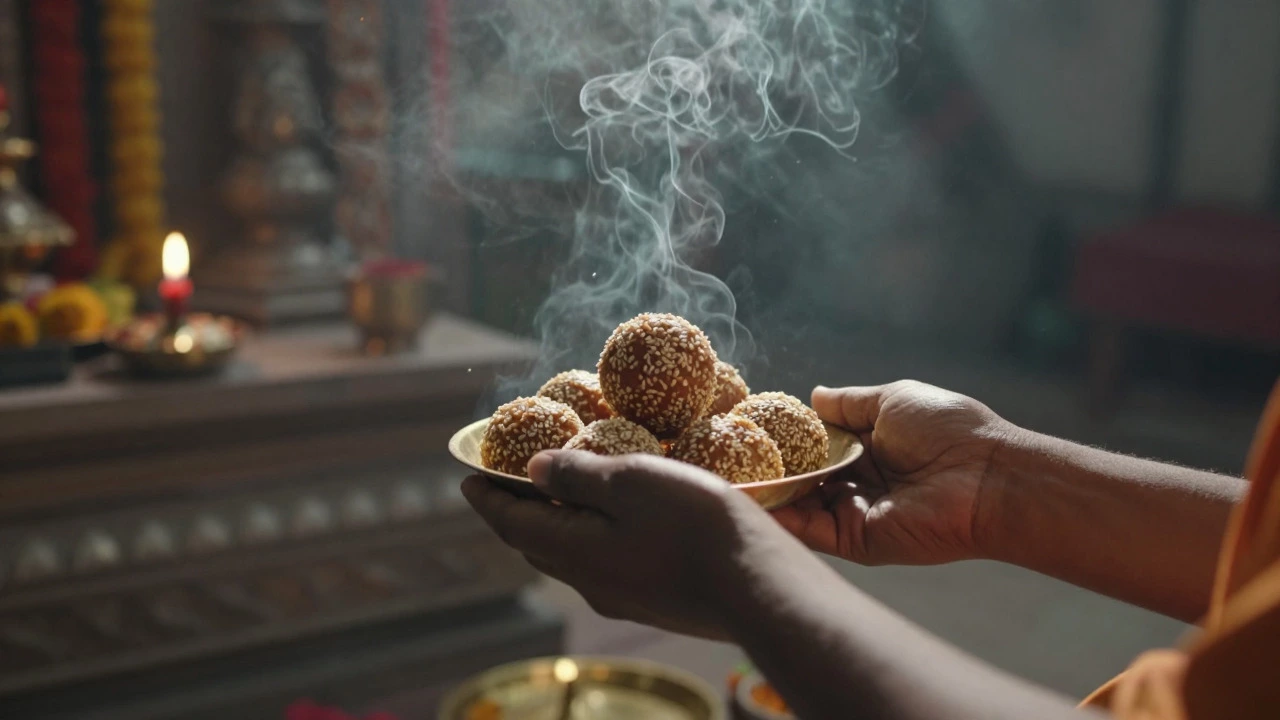
You cannot discuss Indian sweets without mentioning their role in rituals. Sweets are not just food; they are prasad (religious offering). When you visit a temple, you receive small portions of sweets as a blessing. During weddings, exchanging boxes of mithai symbolizes sharing joy. At births, deaths, and festivals, specific sweets are mandatory.
For example, Til Ladoo (sesame seed balls) are essential during Makar Sankranti (winter harvest festival) because sesame seeds generate heat in the body. Modak (sweet dumplings) are offered to Lord Ganesha during Ganesh Chaturthi. Knowing the name of the sweet often tells you the occasion it belongs to.
Common Misconceptions
One big mistake outsiders make is assuming all Indian sweets are extremely sugary. While true for syrup-heavy items like Jalebi, many traditional sweets use natural sweeteners like dates, figs, or jaggery (unrefined cane sugar). Another misconception is that they are all heavy. Soups and puddings like Kheer can be light, especially when made with low-fat milk or plant-based alternatives.
Finally, don't confuse Mithai with Chaat. Chaat is savory street food (like Samosa or Pani Puri), while Mithai is strictly sweet. Though some chaats have sweet elements (like tamarind chutney), they belong to a different culinary category.
Frequently Asked Questions
What is the difference between Gulab Jamun and Rasgulla?
Gulab Jamun is made from khoya (dried milk solids) and flour, deep-fried, and soaked in thick, rose-scented syrup, giving it a brown exterior and dense interior. Rasgulla is made from chhena (fresh curdled milk), boiled in thin sugar syrup, resulting in a white, spongy, and airy texture. Gulab Jamun is richer and heavier; Rasgulla is lighter and juicier.
Are Indian sweets healthy?
Traditional Indian sweets are generally high in calories, sugar, and saturated fats due to ghee and milk solids. However, some use healthier bases like whole grains (Atta Laddoo), nuts, or natural sweeteners like dates. They are best enjoyed in moderation as part of a balanced diet, rather than daily staples.
What is Khoya?
Khoya, also known as Mawa, is dried evaporated milk solids. It is made by slowly heating milk until all moisture evaporates, leaving behind a dense, granular substance. It serves as the base for many North Indian sweets like Barfi, Peda, and Gulab Jamun.
Why do Indian sweets taste different from Western desserts?
Indian sweets rely heavily on dairy reduction (khoya/mawa) and spices like cardamom, saffron, and rose water, rather than vanilla or chocolate. The cooking methods involve slow-cooking milk and frying in ghee, creating caramelized, nutty flavors absent in typical Western cakes or cookies.
Can I find vegan options among Indian sweets?
Yes, though less common. Look for sweets made from coconut milk, almond milk, or soy. Examples include certain types of Barfi made with cashews, Coconut Laddoos, and Fruit Chaat. Always ask the vendor if ghee or dairy was used, as ghee is ubiquitous in traditional preparations.