Gulab Jamun Party Planner & Calculator
Event Details
Shopping List & Cost Estimate
Ingredients Needed:
Ask any Indian family who holds the crown among Indian sweets, and you will hear a chorus of opinions. Some swear by the royal grandeur of Kaju Katli, while others argue for the rustic charm of Jalebi. But if you look at weddings, festivals, and everyday tea breaks across every state in India, one name rises above the rest. That name is Gulab Jamun.
It is not just a sweet; it is a cultural constant. Whether you are in Mumbai, Delhi, Kolkata, or Chennai, this deep-fried milk dumpling soaked in rose-scented syrup commands respect. It is the default gift when visiting elders, the centerpiece of Diwali platters, and the ultimate comfort food after a long day. But why does this humble sphere reign supreme? Let’s break down what makes it the undisputed king of Indian mithai.
The Anatomy of a Legend: What Makes Gulab Jamun Special?
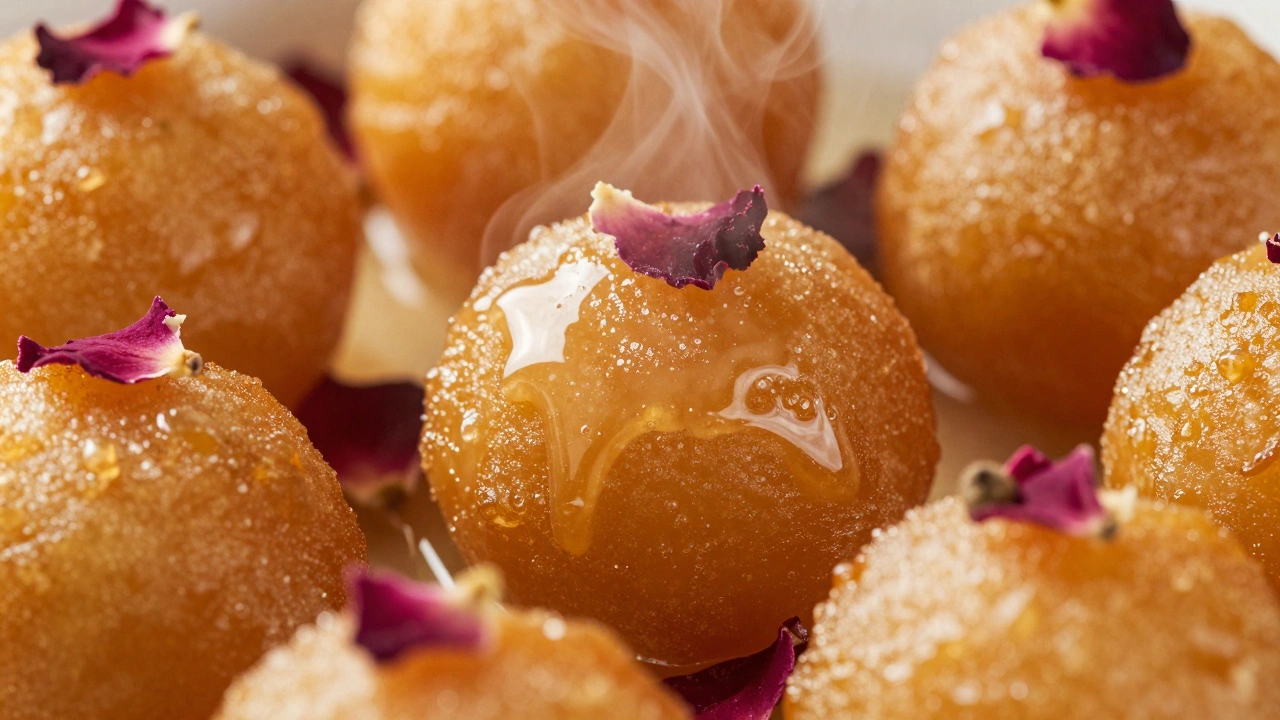
To understand its dominance, we have to look at what goes into it. At its core, Gulab Jamun is a popular South Asian sweet made from khoya (reduced milk) or milk powder, fried until golden brown, and soaked in sugar syrup flavored with cardamom and rose water. It sounds simple, but the technique is where the magic happens.
Unlike many other sweets that rely on expensive nuts or intricate shaping, Gulab Jamun relies on texture and temperature. The dough must be soft enough to expand during frying but firm enough to hold its shape. If the oil is too hot, it burns outside and stays raw inside. Too cold, and it absorbs too much oil, becoming greasy rather than spongy. When done right, it is pillowy, moist, and bursts with flavor in every bite.
This accessibility is key. You don’t need a specialized kitchen or rare ingredients. Most households have milk, flour, and sugar. This democratization of luxury means everyone can make it, eat it, and love it. It bridges the gap between home-cooked care and restaurant-quality indulgence.
A Tale of Two Regions: North vs. South Styles
One reason Gulab Jamun wins over competitors like Rasgulla or Peda is its adaptability. While the classic version is associated with North India, different regions have put their own spin on it, creating a national consensus around the base concept.
| Sweet Name | Primary Region | Main Ingredient | Texture Profile | Cooking Method |
|---|---|---|---|---|
| Gulab Jamun | Pan-India (North Origin) | Khoya/Milk Powder | Spongy, Soft | Deep Fried + Syrup |
| Rasgulla | East India (Bengal/Odisha) | Chenna (Cottage Cheese) | Spongy, Bouncy | Boiled in Syrup |
| Bobbatlu/Poli | South India (Andhra/Karnataka) | Wheat Flour + Jaggery | Flatbread-like | Shallow Fried |
| Kaju Katli | West/North India | Cashew Paste | Firm, Melt-in-mouth | Roasted + Cut |
In Bengal, you might find Bhapa Gupi or variations that use chenna instead of khoya, making them lighter. In Gujarat, they often add a hint of saffron and pistachios, turning them into a festive gold standard. Even in the West, where Kaju Katli is king, Gulab Jamun finds a loyal following because it pairs perfectly with chai. No other sweet offers that specific combination of warmth, sweetness, and aroma that cuts through the bitterness of black tea so effectively.
The Cultural Throne: Festivals and Family Ties
Food in India is never just about taste; it is about emotion. Gulab Jamun sits at the heart of these emotional connections. Think about Diwali. Every household prepares a batch. The smell of frying milk solids fills the air, signaling that the festival has truly begun. It is the first thing offered to guests, regardless of whether they are close relatives or distant acquaintances.
Consider the scenario of a new baby’s arrival. Families prepare Annaprashan ceremonies, and Gulab Jamun is almost always part of the distribution box sent to neighbors and friends. It signifies prosperity and sweetness entering the home. Compare this to Barfi or Ladoo-while popular, they lack the same universal "celebratory" aura. A box of dry fruits is healthy, but it doesn’t feel like a party. A plate of Gulab Jamun feels like a hug.
There is also the element of nostalgia. For millions of Indians living abroad, the taste of homemade Gulab Jamun is the closest link to their childhood kitchens. Store-bought versions exist, but nothing beats the memory of your grandmother adjusting the flame and testing the syrup consistency with her finger. This emotional anchor cements its status as the king.
Why It Beats the Competition: A Practical Breakdown
You might ask, "What about Jalebi?" Jalebi is incredible, yes. But it has limitations. It is best eaten fresh, within hours of being made. Once it cools, it hardens. Gulab Jamun, however, actually improves overnight. The syrup penetrates deeper, making the center even more luscious. This shelf-life advantage makes it practical for large gatherings where not everyone eats at the exact same time.
Then there is the price factor. Kaju Katli is delicious but expensive due to cashews. Making a large batch for a wedding can cost thousands of rupees. Gulab Jamun uses milk and flour, which are significantly cheaper. You can feed a hundred people Gulab Jamun without breaking the bank, yet still deliver a sense of luxury. This economic efficiency makes it the smart choice for hosts who want to impress without overspending.
How to Make Perfect Gulab Jamun at Home
If you want to experience why it is the king, you have to make it yourself. Here is a simplified guide to getting that perfect spongy texture.
- Prepare the Dough: Mix 1 cup of milk powder, 1/4 cup of all-purpose flour (maida), 1 tsp baking soda, and 2-3 tbsp of warm milk. Knead gently. Do not overwork it, or the jamuns will become hard. Add ghee if the dough feels dry.
- Shape Them: Divide the dough into small, smooth balls. Ensure there are no cracks. Any crack will cause the ball to burst or absorb too much oil during frying.
- Fry Slowly: Heat ghee or oil on low-medium flame. Drop the balls in. Fry them slowly, turning occasionally, until they are deep golden brown. This slow process ensures the inside cooks evenly.
- Make the Syrup: While frying, boil 1 cup of sugar with 1 cup of water. Add a pinch of cardamom powder and a few drops of rose water. Cook until the syrup reaches a one-string consistency (when you pull your fingers apart, a single thread of syrup forms).
- Soak Immediately: As soon as the jamuns come out of the oil, drop them into the warm syrup. Let them soak for at least 2-3 hours. They should be soft and juicy.
The secret isn’t fancy ingredients; it’s patience. Rushing the frying step is the number one mistake beginners make. Take your time, and you’ll see why this sweet deserves its title.
Modern Twists on a Classic
The king adapts. In recent years, chefs have experimented with flavors to keep Gulab Jamun relevant to younger palates. We now see Chocolate Gulab Jamun, where cocoa powder is added to the dough and chocolate syrup replaces the traditional rose-water mix. There is also Rasmalai-style Gulab Jamun, where the fried balls are soaked in thickened, flavored milk instead of clear sugar syrup.
These innovations prove its versatility. Unlike some traditional sweets that resist change, Gulab Jamun embraces it. This ability to evolve while keeping its core identity intact is another trait of true royalty.
Health Considerations and Moderation
Let’s be real: Gulab Jamun is not a health food. It is high in sugar and fat. However, portion control is everything. Eating two small pieces as a dessert after a meal is very different from eating five on an empty stomach. Many modern recipes now use jaggery instead of refined sugar for a slightly lower glycemic index, or reduce the amount of ghee used in frying. You can also make smaller, bite-sized versions called "Mini Gulab Jamuns" to satisfy cravings without overindulging.
For those watching their sugar intake, the focus should be on frequency rather than elimination. Enjoy it during festivals or special occasions, savor every bite, and appreciate the craftsmanship. That is the Indian way of enjoying sweets-with mindfulness and joy.
Is Gulab Jamun healthier than other Indian sweets?
Not necessarily. Like most Indian mithai, it is high in calories, sugar, and fat. However, compared to sweets loaded with pure ghee and nuts like Burfi, it may have a slightly lower fat content per piece depending on how much oil is absorbed during frying. The key is portion size. Two small Gulab Jamuns are a reasonable treat, whereas a single large Barfi can contain similar calories but feels denser.
Can I make Gulab Jamun without milk powder?
Yes, traditionally it is made with Khoya (mawa), which is reduced milk solids. If you have access to fresh Khoya, grate it and mix it with a little flour to bind. This method yields a richer, more authentic taste. Milk powder is simply a convenient, faster alternative for modern home cooks.
Why do my Gulab Jamuns burst while frying?
Bursting usually happens for two reasons: either the dough was not kneaded smoothly and has air pockets/cracks, or the oil temperature was too high. Ensure your dough balls are perfectly smooth before frying, and always start with medium-low heat. The jamuns need time to cook through without burning the outside.
How long can Gulab Jamun stay fresh?
At room temperature, they last for 2-3 days if stored in an airtight container. In the refrigerator, they can last up to a week. However, refrigeration can sometimes make them harder. To restore softness, let them come to room temperature or microwave them for 10-15 seconds before serving.
What is the difference between Gulab Jamun and Rasgulla?
The main differences are ingredients and cooking method. Gulab Jamun is made from Khoya/milk powder and is deep-fried before soaking in syrup. Rasgulla is made from Chenna (cottage cheese) and is boiled directly in the sugar syrup. Rasgulla is white and bouncy, while Gulab Jamun is dark brown and spongy.