Perfect Chicken Curry Spice Simulator
Master the art of layering flavors. Click through each stage to learn when to add specific spices for maximum aroma and depth.
Why Order Matters
Spices have different burn points and solubility levels. Hard whole spices need oil (tempering) to release flavor, while delicate powders like coriander lose aroma if cooked too long. Garam masala is volatile and must be added last to preserve its complex perfume.
You know that moment when you bite into a restaurant curry and think, "How do they get it so good?" It’s rarely the secret ingredient. It’s usually the right mix of spices added in the correct order. If your homemade chicken curry tastes flat or one-dimensional, you’re likely missing key players in the flavor game. This isn’t about hoarding fifty jars in your pantry. It’s about mastering the core handful that actually move the needle on taste.
The Foundation: Why Order Matters More Than Ingredients
Most beginners dump everything into the pot at once. That’s a mistake. Spices have different solubility levels and burn points. Hard, whole spices like cumin seeds need oil to release their oils (a process called tempering). Powders like turmeric burn instantly if not protected by moisture or fat. Understanding this hierarchy is the first step to fixing bland curries. You aren't just adding flavor; you're building layers.
| Semantic Entity | Primary Function | Best Added When | Flavor Profile |
|---|---|---|---|
| Turmeric | Color and earthy base | With onions/garlic paste | Bitter, warm, earthy |
| Cumin | Nutty depth | Tempered in oil or ground with coriander | Toasty, warm, slightly bitter |
| Coriander Powder | Citrusy body and thickness | After tomatoes cook down | Lemon-y, sweet, mild |
| Garam Masala | Aromatic finish | Last 5 minutes of cooking | Complex, sweet, warming |
| Red Chili Powder | Heat and color | Early stage with wet ingredients | Pungent, spicy, vibrant |
Turmeric: The Unsung Hero of Color and Health
If there is one non-negotiable, it’s turmeric. It’s a bright yellow root from the ginger family that provides the signature golden hue to most Indian curries. But don’t just use it for looks. Turmeric contains curcumin, a compound linked to anti-inflammatory benefits. However, raw turmeric powder can taste muddy if overused. The trick? Bloom it in hot oil or mix it into the onion-garlic-ginger paste before adding liquids. This activates the compounds and mellows the bitterness. In my kitchen here in Auckland, I always buy organic turmeric powder because the difference in vibrancy compared to stale supermarket brands is night and day.
Cumin and Coriander: The Power Couple
You will rarely see a curry recipe that calls for one without the other. They are the yin and yang of Indian cooking. Cumin brings a deep, nutty warmth, while coriander adds a light, citrusy brightness. Think of cumin as the bass guitar and coriander as the rhythm guitar. Together, they create the savory backbone of the dish. For chicken curry specifically, I prefer using whole cumin seeds tempered in oil at the very start. This releases essential oils that coat the chicken pieces. Then, I add ground coriander later. Why? Because ground coriander loses its delicate aroma quickly. Adding it too early turns it dusty. Wait until the tomatoes have broken down into a thick masala base, then stir in the coriander powder. Let it cook for a minute to remove the raw flour-like taste.
Garam Masala: The Finishing Touch
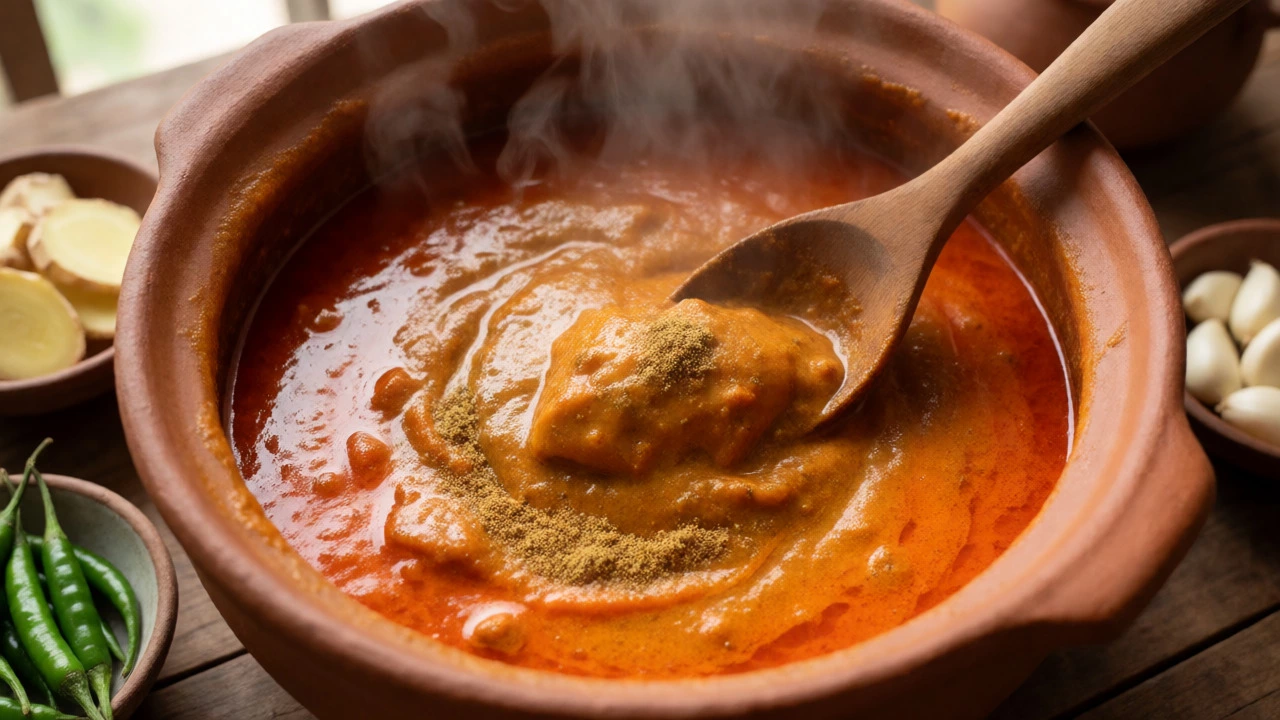
Many people treat garam masala incorrectly, dumping it in at the beginning. Big mistake. Garam masala is a blend of warming spices-usually cinnamon, cardamom, cloves, black pepper, and mace. These aromatics are volatile. High heat kills them. If you add garam masala at the start, you lose the complex perfume that makes curry smell incredible. Instead, sprinkle it over the finished dish, five minutes before turning off the heat. Or better yet, mix a teaspoon into a splash of cream or yogurt and swirl it in at the end. This technique, known as *tadka* or finishing tempering, preserves the top notes. Your curry will smell like a restaurant the moment you lift the lid.
Chili Powder vs. Fresh Chilies: Managing Heat
Heat is subjective, but structure is not. You need two types of heat: background warmth and sharp kick. Use red chili powder for the background warmth. It integrates seamlessly into the gravy, providing a consistent, low-level burn that doesn’t overpower the other flavors. Kashmiri chili powder is excellent here because it offers intense red color without extreme heat. For the sharp kick, use fresh green chilies. Slit them lengthwise and toss them in during the last few minutes of simmering. This keeps their vegetal, grassy note intact. Never rely solely on cayenne pepper unless you want pure burn. Cayenne lacks the fruity complexity of traditional Indian chili powders.
Secret Weapons: Kasuri Methi and Amchur
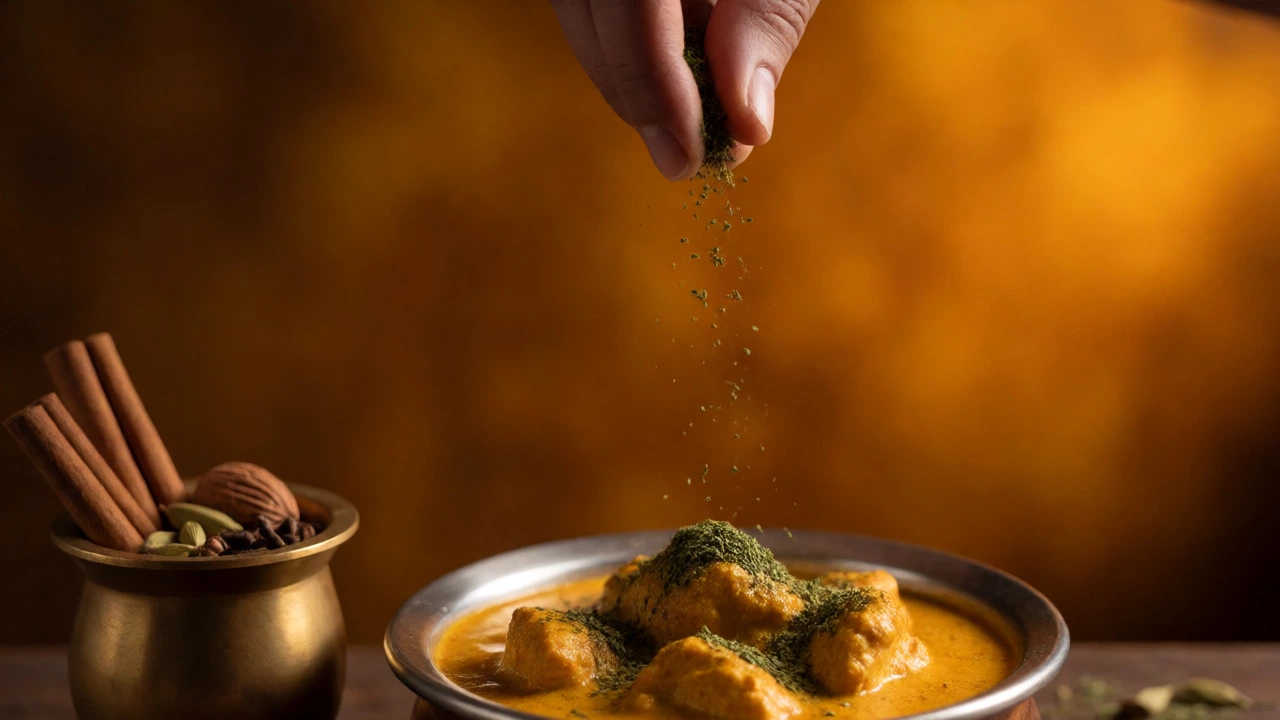
Once you master the basics, these two elevate your chicken curry from "good" to "unforgettable." Kasuri Methi (dried fenugreek leaves) has a maple-syrup-like aroma that pairs beautifully with creamy sauces. Crush a tablespoon between your palms and sprinkle it over the curry just before serving. It sounds weird, but trust me-it works magic on butter chicken or korma-style dishes. Then there is Amchur (dry mango powder). Indian food balances rich fats with acidity. If your curry feels heavy or greasy, amchur cuts through it without the watery dilution of lemon juice. Add half a teaspoon towards the end. It provides a tangy punch that wakes up the palate.
Common Pitfalls to Avoid
- Using old spices: Ground spices lose potency after six months. Smell them before buying. If they don’t hit you immediately, they won’t hit your curry.
- Skipping the bloom: Never add dry powders directly to boiling water. Always fry them in oil or ghee first to unlock flavor.
- Over-salting early: Salt draws moisture out of chicken. Season lightly at the start, adjust at the end. Remember, reduction concentrates salt.
- Ignoring acid: A curry without acid tastes muddy. Always finish with a squeeze of lime, a dash of vinegar, or amchur.
Putting It All Together: A Quick Chicken Curry Framework
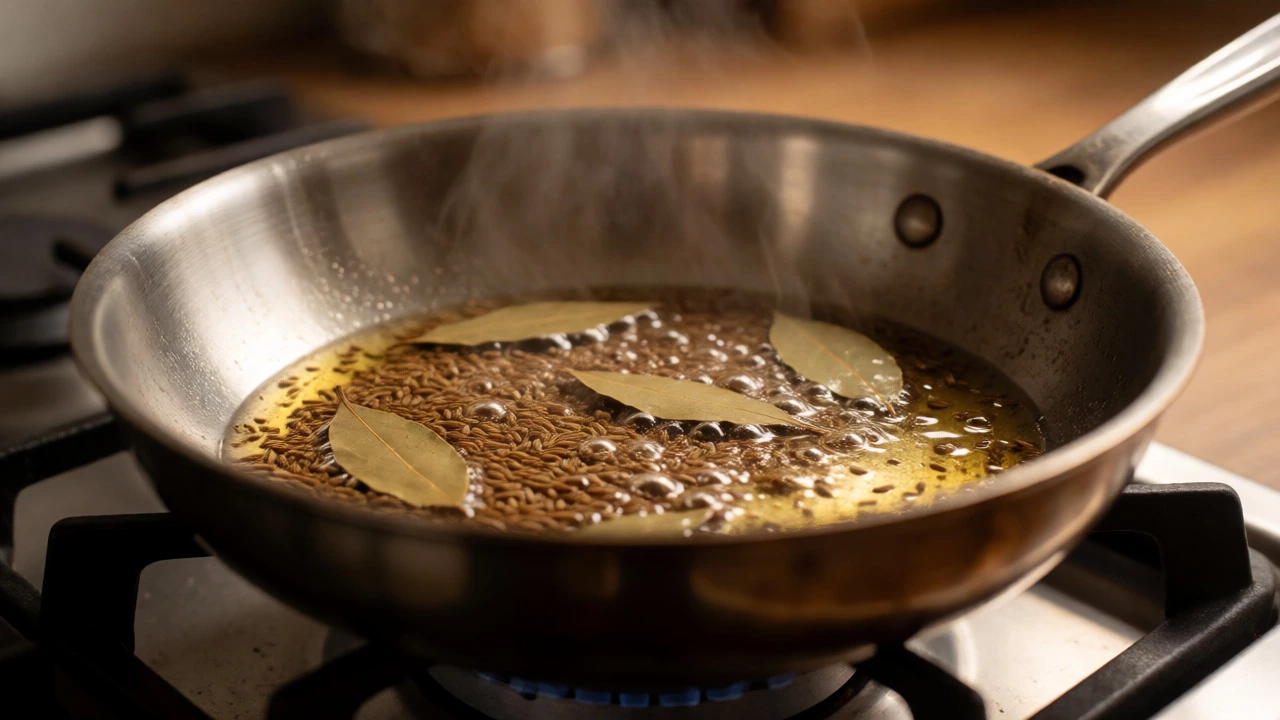
Here is a simple mental model for assembling your spices. Start with whole spices in hot oil (cumin seeds, bay leaf). Add aromatics (onion, garlic, ginger). Cook until browned. Add powdered spices (turmeric, chili, coriander) and fry for 30 seconds. Add tomatoes and cook until oil separates. Add chicken and sear. Add liquid (water or stock) and simmer. Finish with garam masala, kasuri methi, and fresh cilantro. This sequence ensures every spice performs its job correctly.
What is the most important spice in curry?
While opinions vary, cumin and coriander form the foundational base of most North Indian curries. However, turmeric is visually essential, and garam masala provides the characteristic aromatic finish. There is no single "most important" spice; it is the synergy of the blend that matters.
Can I substitute garam masala with individual spices?
Yes, but you must replicate the blend. Mix equal parts cinnamon, cardamom, cloves, and black pepper. Add a pinch of nutmeg or mace. Note that store-bought garam masala often includes star anise or bay leaf, which adds complexity hard to match exactly with home mixes.
Why does my curry taste bitter?
Bitterness usually comes from burnt spices or too much turmeric. If you fried your onions or spices too aggressively, they char and turn bitter. Alternatively, using excessive turmeric powder can introduce a metallic, bitter edge. Reduce turmeric quantity and ensure gentle frying temperatures.
Is curry powder the same as Indian spices?
No. Western "curry powder" is a British adaptation designed for convenience, typically containing turmeric, coriander, cumin, and fenugreek. Authentic Indian cooking uses individual spices added at specific stages. Curry powder tends to be more uniform and less nuanced than freshly prepared spice blends.
How long do ground spices last?
Ground spices retain peak flavor for 6 to 12 months. Whole spices last 2 to 3 years. Store them in airtight containers away from light and heat. If your spice jar sits above the stove, steam and heat degrade it faster. Buy small quantities frequently rather than large bulk bags.