Traditional Indian Curry
When you think of traditional Indian curry, a rich, spiced stew made with vegetables, meat, or legumes, simmered in a sauce built from toasted spices and aromatics. Also known as kari, it’s not one dish—it’s hundreds, shaped by village, season, and family tradition. This isn’t the thick, creamy sauce you get at a chain restaurant. Real Indian curry starts with whole spices toasted in oil—cumin, mustard seeds, fenugreek—then ground fresh or left whole to bloom in fat. The base? Onions, garlic, ginger, tomatoes. Nothing more. No pre-made pastes. No canned coconut milk unless you’re in Kerala. Every region has its own version: the fiery red curries of Andhra, the coconut-heavy ones of Goa, the slow-cooked mutton curries of Lucknow, the mild, yogurt-based ones of Punjab.
What makes a curry Indian isn’t just the spice mix—it’s the technique. curry spices, a blend of dried seeds, roots, and pods ground to release their oils and aromas are never added raw. They’re fried in ghee or oil until fragrant, then water or stock is added to deglaze and build depth. The Indian cooking, the art of layering flavors through timing, temperature, and sequence is what turns simple ingredients into something unforgettable. You don’t just add turmeric—you bloom it. You don’t just throw in chili—you fry it with garlic until it softens. And you never rush it. A good curry simmers for hours, letting the meat tenderize and the spices meld. Even vegetarian curries, like chana masala or dal makhani, follow this rule: time is the secret ingredient.
What you won’t find in most Western versions? Cream. Butter. Heavy sauces. Real Indian curry gets its body from ground nuts, roasted lentils, or slow-reduced tomatoes—not dairy. The richness comes from technique, not calories. And the heat? It’s adjustable, not fixed. In Tamil Nadu, they use dried red chilies. In Bengal, green chilies and mustard oil. In the north, it’s Kashmiri chili for color, not burn. This is why no two curries taste the same, even from the same kitchen. Your grandmother’s curry is different from your neighbor’s. That’s the point.
Below, you’ll find real recipes from real kitchens across India—not just the popular ones, but the quiet, everyday curries that families make on weekdays, the ones that don’t make it to cookbooks but live in memory. You’ll learn how to build flavor from scratch, how to fix a bland curry, and why some dishes are never made without a specific spice. Whether you’re new to Indian food or you’ve been cooking it for years, there’s something here that will change how you think about curry.
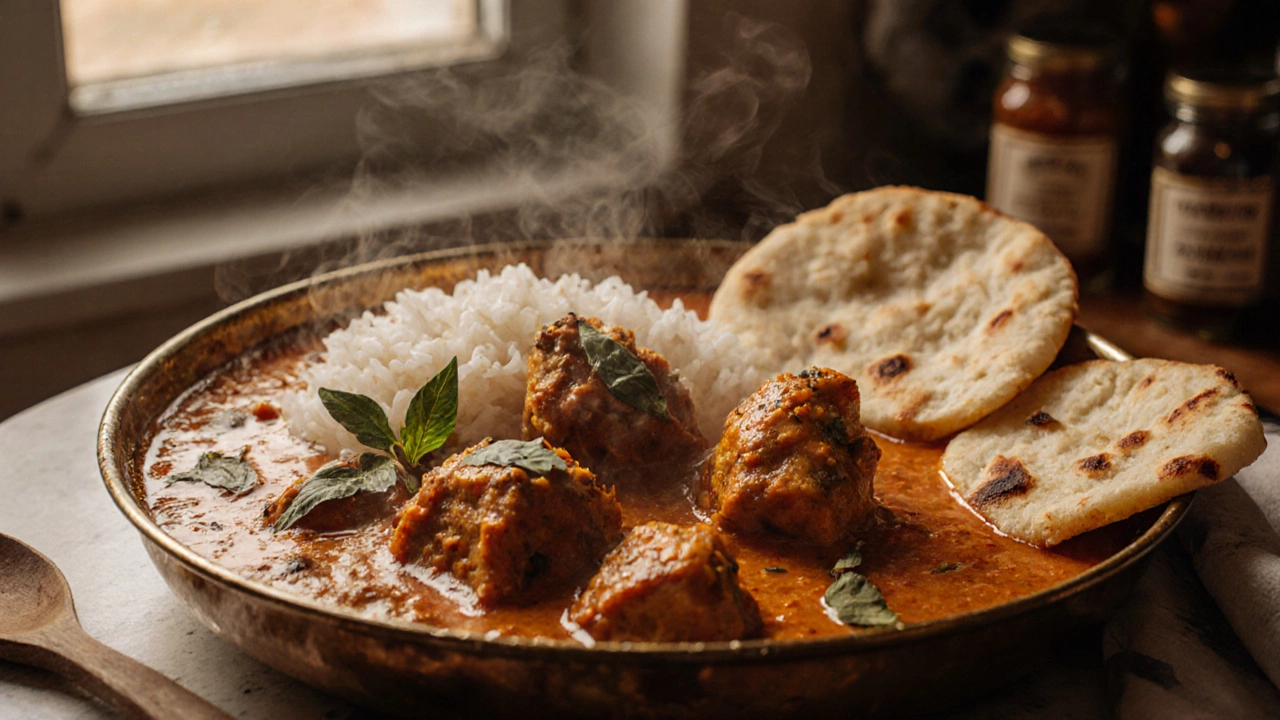
What Is the #1 Indian Dish? The Truth Behind India’s Most Loved Meal
Butter chicken is the #1 Indian dish worldwide-not because it's the spiciest, but because it's easy, creamy, and universally loved. Learn why it dominates menus from Delhi to Auckland.
View More