Strict Indian Vegetarian: Real Meals, No Meat, No Compromise
When people say strict Indian vegetarian, a dietary practice rooted in South Asian culture that excludes all meat, fish, eggs, and often dairy. Also known as vegan Indian diet, it’s not just about avoiding animal products—it’s a way of eating shaped by religion, region, and generations of kitchen wisdom. This isn’t the same as being vegetarian in the West. In India, a strict vegetarian often avoids even onion and garlic, not because of taste, but because of spiritual beliefs tied to Ayurveda and Jain principles. Others avoid dairy out of ethical or lactose concerns. The common thread? Every bite must be plant-based, clean, and intentional.
What does this look like on a plate? Think dairy-free Indian dishes, meals made without milk, ghee, paneer, or yogurt, relying instead on coconut, nuts, and legumes for creaminess and protein. A bowl of moong dal khichdi cooked in mustard oil, topped with roasted cumin and fresh coriander. A plate of steamed idli with coconut chutney made from fresh grated coconut and green chilies—no yogurt in sight. Even traditional sweets like jalebi or kheer can be made without milk, using almond or oat milk bases. These aren’t trendy adaptations—they’re centuries-old practices revived by modern cooks who care about health, ethics, or both.
The beauty of a strict Indian vegetarian, a dietary practice rooted in South Asian culture that excludes all meat, fish, eggs, and often dairy lifestyle is how naturally diverse it is. In Gujarat, meals are sweet and mild, built around lentils and millet rotis. In Tamil Nadu, coconut-based curries and tamarind rice dominate. In Maharashtra, peanut chutney and jowar bhakri are everyday staples. You won’t find a single recipe that fits all, but you’ll find consistency: no animal products, no shortcuts, just bold flavors from spices like asafoetida, fenugreek, and black mustard seeds. And yes, it’s protein-rich. Lentils, chickpeas, soy, and pumpkin seeds are the unsung heroes here.
Many assume plant-based means bland. That’s not true here. A strict Indian vegetarian meal can be spicy, tangy, crunchy, and deeply satisfying. It’s the kind of eating that keeps sugar low, digestion smooth, and energy steady—all without needing supplements or fancy superfoods. You don’t need to be religious to follow this way. You just need to care about what’s on your plate.
Below, you’ll find real recipes, honest comparisons, and practical tips from people who live this every day. Whether you’re cutting out dairy, exploring Jain food traditions, or just looking for healthier Indian meals without compromise, these posts give you the tools to eat well—without missing a single flavor.
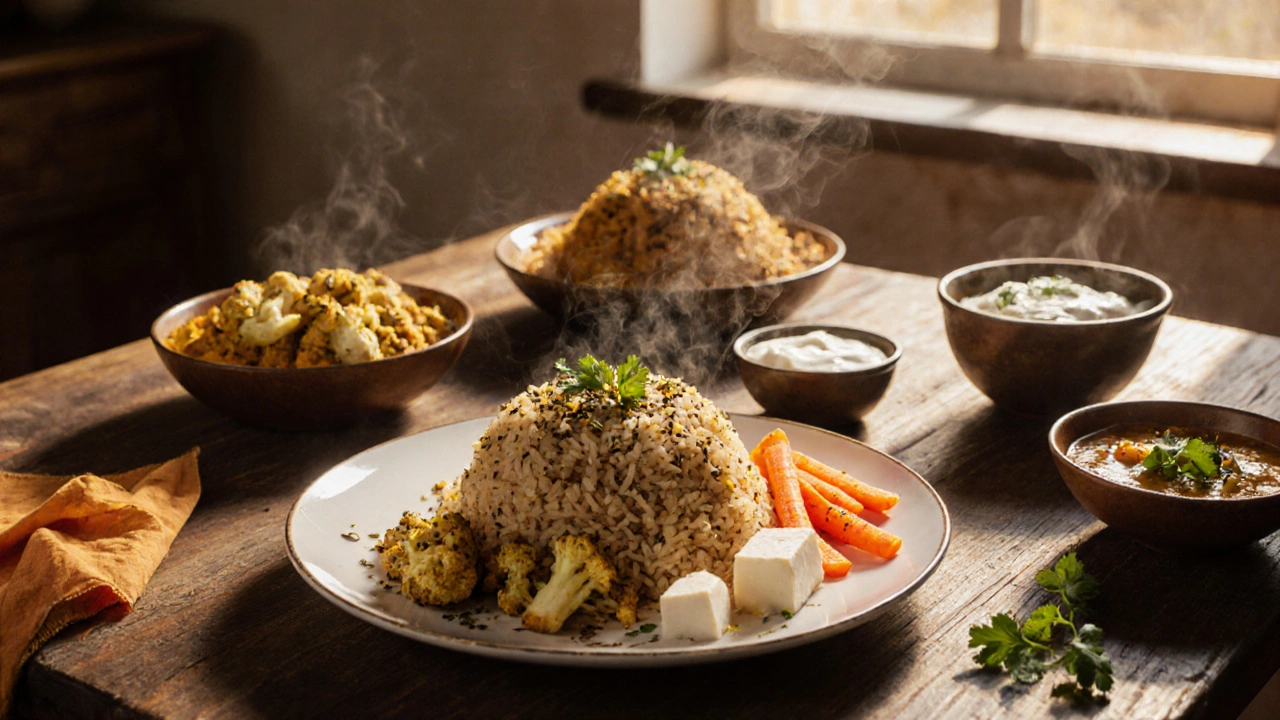
What Is Strict Indian Vegetarian? Definition, Rules, and Common Foods
Explore the exact meaning of strict Indian vegetarianism, its rules, allowed foods, common pitfalls, regional variations, and practical cooking tips for a fully compliant diet.
View More