Smooth Dosa Batter: How to Get the Perfect Texture Every Time
When you pour smooth dosa batter, a thin, fermented mixture of rice and urad dal used to make crispy South Indian pancakes. Also known as dosa batter, it’s the foundation of one of India’s most loved breakfasts. If your batter is lumpy, too thick, or doesn’t spread, it’s not the pan—it’s the batter. The difference between a crisp, golden dosa and a soggy, stuck mess comes down to just three things: soaking time, fermentation, and water quality.
Most people skip the details. They grind rice and dal together, leave it overnight, and hope for the best. But fermented dosa batter, a living culture of wild yeast and lactic acid bacteria that develops over 8–12 hours needs the right environment. Temperature matters. If your kitchen is cold, the batter won’t rise. In winter, place it near a warm appliance or wrap the bowl in a towel. And don’t use chlorinated tap water—it kills the good bacteria. Use filtered or boiled-and-cooled water instead. The rice-to-dal ratio is another silent killer. Stick to 3:1 or 4:1 rice to urad dal. Too much dal makes the batter sticky; too little makes it brittle. And grind it twice: first the dal to a fluffy paste, then the rice separately, then mix both gently. Over-grinding turns the batter gluey. You want it smooth, not slimy.
That’s why idli dosa batter, a shared batter base used for both steamed idlis and crispy dosas is so versatile. The same batter that gives you fluffy idlis in the morning can become a crisp dosa by noon. But only if it’s properly fermented. You’ll know it’s ready when it doubles in volume, smells slightly sour like yogurt, and has tiny bubbles all over. Stir it gently before using—don’t beat it. And if you’re making dosas, thin it with a little water until it flows like heavy cream. That’s the sweet spot.
People ask why their dosas stick or tear. It’s not the tawa. It’s the batter. If it’s too thick, it won’t spread. If it’s under-fermented, it won’t crisp. If it’s over-fermented, it turns sour and smells off. The perfect smooth dosa batter is balanced, alive, and ready to transform into something crispy, light, and delicious. Below, you’ll find real recipes, common mistakes, and regional twists from South India that make all the difference. No fluff. Just what works.
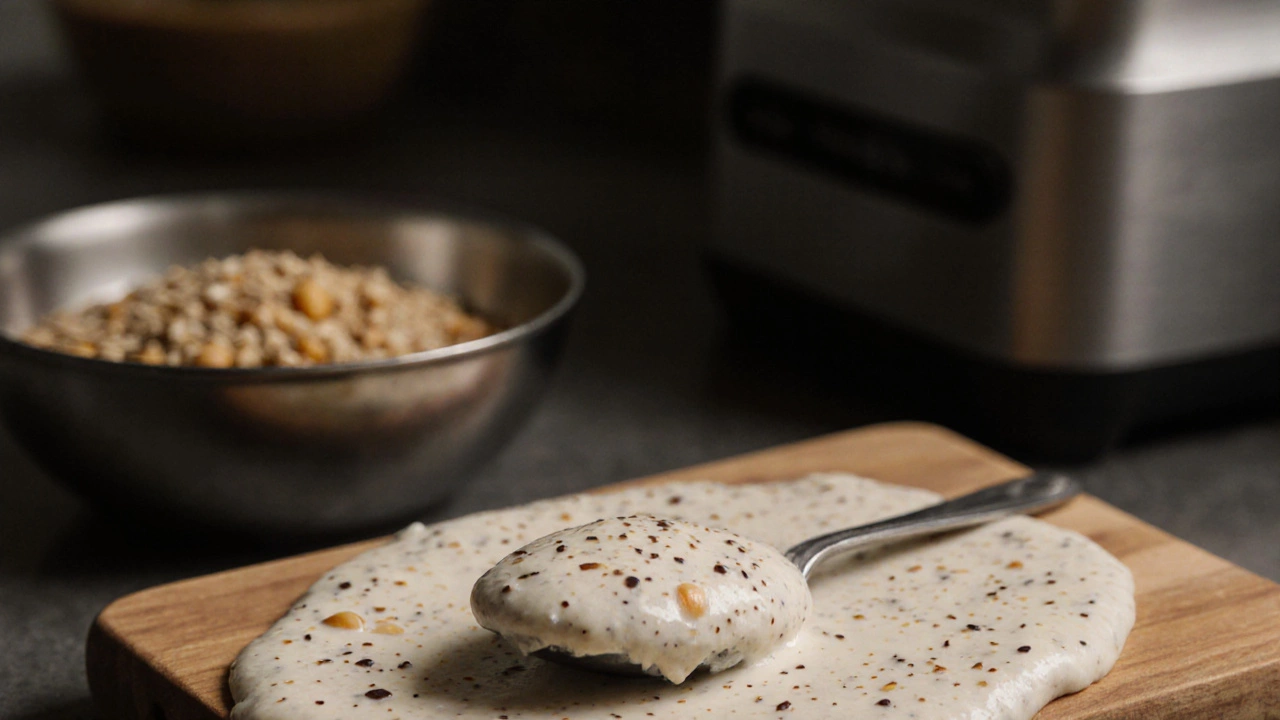
Is Grainy Dosa Batter Normal? Get the Perfect Smooth Texture
Learn why dosa batter can turn grainy, discover the main causes, and follow a step‑by‑step guide to achieve a smooth, perfectly fermented batter for crisp dosas.
View More