Most Selling Street Food India: Top Picks and Why They Dominate
When it comes to most selling street food India, the vibrant, fast-moving culinary culture of India’s sidewalks and corners. Also known as Indian fast food, it’s not just about hunger—it’s about flavor, speed, and tradition packed into one bite. You won’t find fancy plating or white tablecloths here. Instead, you’ll find sizzling pans, steaming carts, and hands that have been making the same snack for decades.
Think about pani puri, a crispy hollow ball filled with spiced water, potatoes, and chickpeas. Also known as golgappa, it’s sold by the dozen in every city, from Delhi to Mumbai. Or vada pav, a spicy potato fritter sandwiched in a bun, drenched in chutney. Also known as Indian burger, it’s the go-to lunch for millions of office workers. These aren’t just snacks—they’re cultural icons.
Then there’s the dosa, a thin fermented crepe made from rice and lentils, served with coconut chutney and sambar. Also known as South Indian pancake, it’s the breakfast of choice in the south and the late-night snack in the north. It’s sold by street vendors who start mixing batter at 3 a.m. and never stop until midnight. These foods survive because they’re cheap, filling, and taste better fresh off the griddle than anything you can order online.
Why These Foods Sell More Than Anything Else
It’s not luck. It’s design. The most selling street food India has three things in common: low cost, high flavor, and zero wait time. A plate of pav bhaji costs less than a bottle of water. A chaat combo gives you sweet, sour, spicy, and crunchy in one hand. And you don’t need a fork—just your fingers and a napkin.
These snacks also adapt. A vendor in Jaipur might add more chili to their mirchi vada. One in Kolkata turns their jhal muri with roasted peanuts and mustard oil. No two stalls are exactly alike, but the core recipe? Sacred. That’s why people return. That’s why they wait in line.
And it’s not just about taste—it’s about rhythm. The sound of oil bubbling, the clink of metal plates, the shout of "garam, garam!"—it’s part of the experience. You don’t just eat street food in India. You feel it.
Below, you’ll find real stories, real recipes, and real advice from people who live this food every day. Whether you want to know why pani puri bursts the way it does, how to spot a clean vendor, or which snack Indians eat most often at 10 p.m.—you’ll find it here. No fluff. Just the truth about what’s really on the streets.
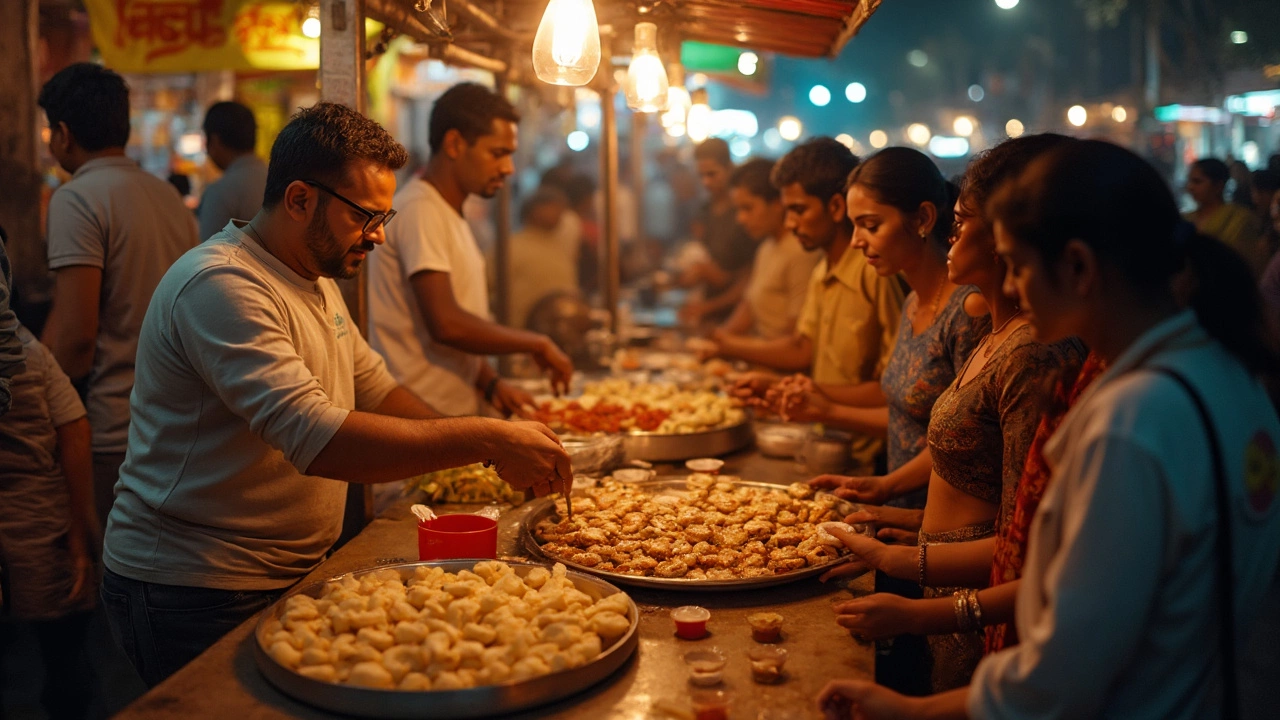
Most Selling Street Food in India: What Rules the Streets?
Which Indian street food sells the most? This article digs into the snack that’s practically everywhere, with reasons behind its popularity. Get interesting facts about its origins and why people keep going back for more. We’ll compare it to other favorites and give helpful tips for your street food adventures. By the end, you’ll know exactly what to try and how to spot the real deal.
View More