How to Eat Chutney: Simple Ways to Enjoy Indian Condiments
When you think of chutney, a spicy, tangy, or sweet condiment made from fruits, herbs, or vegetables, commonly used in Indian meals. Also known as chatni, it’s not just a side—it’s the flavor engine behind countless dishes. Most people assume chutney is just for dipping, but in India, it’s woven into the rhythm of eating. You’ll find it on plates, smeared on bread, mixed into rice, or even eaten straight off a spoon with a pinch of salt. It’s not an afterthought. It’s the punch that wakes up the whole meal.
Chutney works because it balances flavors. A coconut chutney cuts through the richness of idli. A tamarind chutney cuts the heat of samosas. A mint chutney lifts the dullness of grilled meats. You don’t need to follow rules—you just need to match it to what’s on your plate. idli, steamed rice and lentil cakes from South India, often served with chutney as a core part of the meal? They’re practically naked without it. dosa, a crispy fermented crepe that’s meant to be wrapped around chutney and sambar? The chutney isn’t optional—it’s the glue. Even plain roti becomes something special when you spread a thin layer of green mint chutney and roll it up. It’s not fancy. It’s functional. And it’s how millions eat every single day.
There’s no single way to eat chutney, but there are smart ways. Don’t save it for the end. Use it early. Mix it into yogurt for a quick raita. Stir it into dal for extra zing. Use it as a sandwich spread instead of mayo. Even plain rice tastes better with a dollop of coconut or tomato chutney stirred in. The key is texture and timing. Thick chutneys like peanut or date work well as spreads. Thin ones like cilantro or onion are better for drizzling. And never refrigerate it unless you have to—fresh chutney tastes brighter, and Indian kitchens keep it out on the counter for a reason.
Some people think chutney is just for spicy food, but that’s not true. Even mild dishes like khichdi or plain dal need that little kick. And if you’re new to Indian food, start with the milder ones—coconut, mint, or tamarind—before jumping into garlic or green chili versions. You don’t need to like it all at once. Just try it with one thing. A bite of idli with coconut chutney. A bite of toast with mint chutney. See how it changes the flavor. That’s how you learn.
Below, you’ll find real examples from everyday Indian meals—how chutney is used with breakfast, snacks, and even simple dinners. No theory. No fluff. Just what people actually do in their kitchens across India.
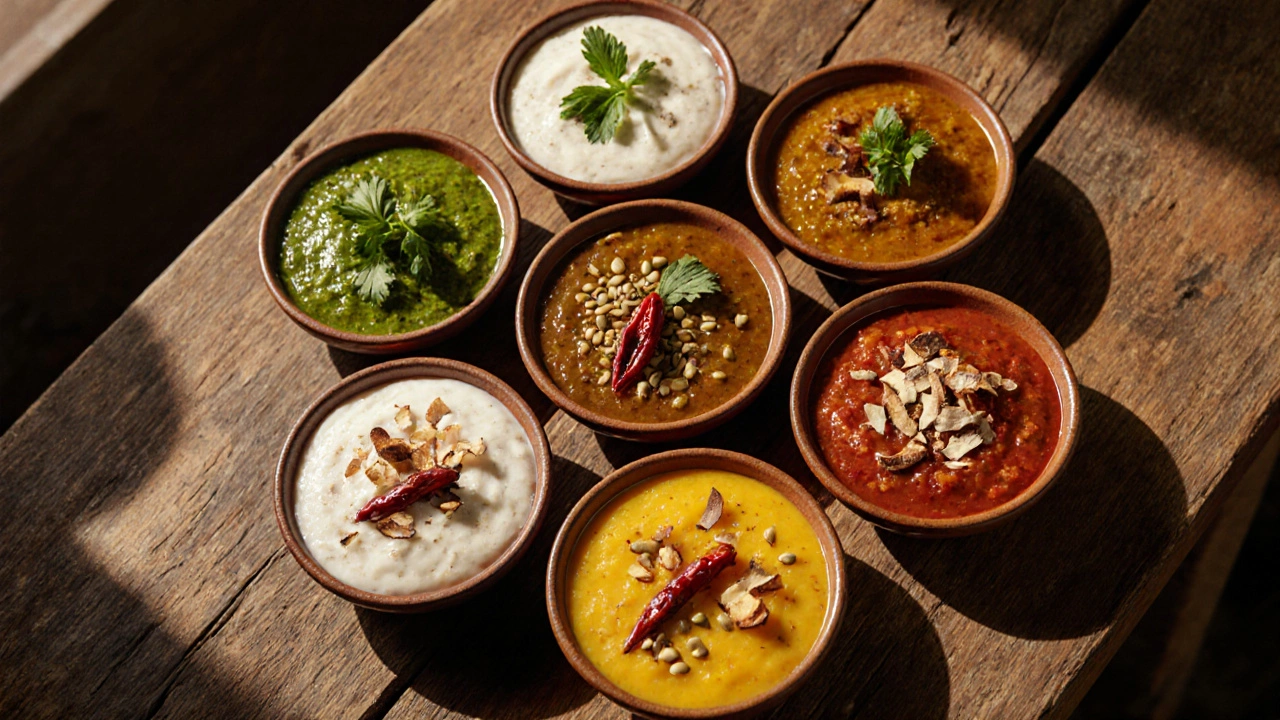
How to Eat Indian Chutney: Pairing Tips & Serving Ideas
Learn how to serve, pair, store, and revitalize Indian chutney with practical tips, quick hacks, and a handy comparison table.
View More