Hindu Dietary Rules: What You Can and Can't Eat Based on Tradition
When people talk about Hindu dietary rules, a set of food practices rooted in religious belief, regional culture, and centuries-old customs that guide what millions in India eat daily. Also known as strict Indian vegetarianism, it’s not just about avoiding meat—it’s about purity, balance, and respect for life. Unlike Western vegetarianism, which often focuses on health or ethics, Hindu dietary rules are deeply tied to dharma, ahimsa (non-violence), and the belief that food affects the mind and spirit.
Many Hindus follow a lacto-vegetarian, a diet that includes dairy products like milk, yogurt, ghee, and paneer, but excludes all meat, fish, and eggs. Also known as Indian vegetarian diet, this style of eating is common across North and West India, where temples and households treat dairy as sacred and nourishing. But it’s not that simple. Some strict followers also avoid onion, garlic, and even certain root vegetables, believing they stimulate passion or aggression. Others skip eggs not because they’re animal flesh, but because they’re seen as potential life. Then there’s the regional twist: in South India, coconut oil replaces ghee in many homes, and in some communities, even lentils are avoided during fasting periods.
The line between what’s allowed and what’s not isn’t written in stone—it’s shaped by caste, family, temple customs, and even the time of year. During festivals like Navratri, many Hindus eat only one meal a day, made from buckwheat or amaranth, avoiding grains altogether. Others give up dairy during specific rituals, turning to dairy-free Indian, meals made without milk, ghee, or paneer, often using coconut milk or plant-based oils instead. Also known as Indian vegan dishes, these meals prove you can still eat rich, flavorful food without dairy. And while butter chicken might be the world’s favorite Indian dish, it’s not eaten by many devout Hindus who avoid cream and butter made from cow’s milk during sacred times.
These rules aren’t about deprivation—they’re about intention. Food is seen as energy, and what you put in your body affects your thoughts, your actions, and your connection to the divine. That’s why a simple bowl of khichdi, made with rice, lentils, and turmeric, can be more meaningful than a five-star meal. It’s clean, simple, and aligned with tradition.
What you’ll find below isn’t a list of dos and don’ts—it’s a real look at how these rules play out in kitchens across India. From breakfasts that skip eggs entirely to snacks made without any dairy, you’ll see how Hindu dietary rules shape everyday meals, not just temple offerings. Whether you’re trying to eat like a devout Hindu, understand why your friend won’t touch garlic, or just want to cook more authentically, these posts give you the practical truth behind the tradition.
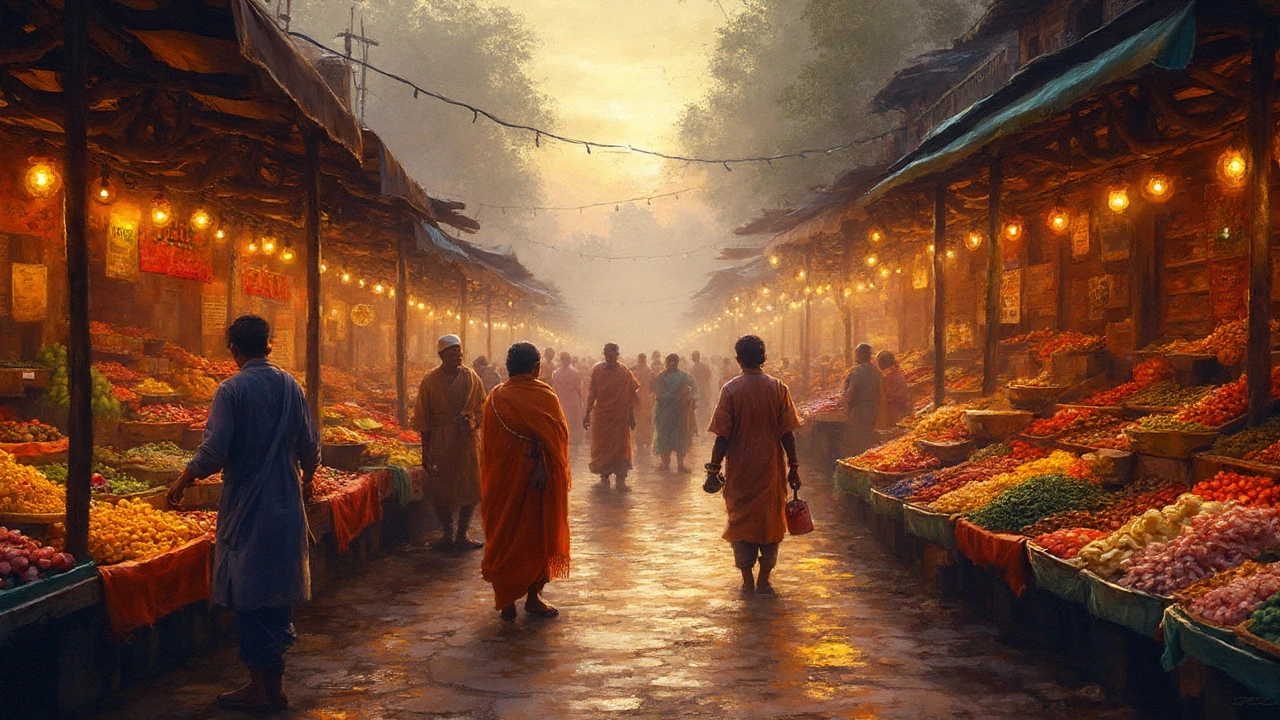
Why Hindus Don't Eat Pork: Cultural, Spiritual, and Practical Insights
Get to know why pork is off the menu for most Hindus. We dig into culture, faith, daily life, and surprising facts you’ve probably never heard.
View More