Food Chemistry in Indian Cooking: How Ingredients React and Why It Matters
When you make food chemistry, the science of how ingredients interact through physical and chemical changes during cooking. Also known as culinary science, it’s the hidden force behind why your dosa crisps up, your yogurt tenderizes chicken, and your paneer turns firm. This isn’t just lab talk—it’s what happens in every Indian kitchen, every day.
Take paneer, a fresh Indian cheese made by curdling milk with acid. Also known as Indian cottage cheese, it’s simple—but only if you use the right acid. Lemon juice seems natural, but it often leaves paneer grainy or bitter. Why? Citrus contains limonene and other compounds that interfere with protein bonding. Vinegar, with its clean acetic acid, works better because it coagulates milk proteins evenly. That’s food chemistry in action. Same with yogurt, a fermented dairy product used to marinate meats. Also known as curd, it’s not just flavor—it’s a tenderizer. The lactic acid breaks down muscle fibers, while enzymes soften the meat. That’s why tandoori chicken stays juicy even after hours in the oven. Swap yogurt for sour cream? You can—but you need to thin it out. Too thick, and you’re coating the meat in fat instead of letting the acid do its job.
Then there’s fermentation, a natural process where microbes break down sugars into acids, gases, or alcohol. Also known as culturing, it’s the secret behind idli and dosa batter. Overnight, bacteria and yeast turn rice and lentils into something lighter, more digestible, and packed with B vitamins. That’s why idli is easier on your gut than plain rice. The same process explains why soaked basmati rice cooks faster—it’s already absorbing water and softening its starch structure. Even the low sugar intake in India isn’t just cultural—it’s chemical. Jaggery breaks down slower than white sugar, and traditional meals rarely add extra sweeteners because the natural sugars in lentils, fruits, and milk are enough.
Food chemistry isn’t about complicated tools or lab coats. It’s about understanding why your grandmother’s recipe works. Why vinegar beats lemon for paneer. Why you don’t skip the yogurt in tandoori chicken. Why soaking rice matters. These aren’t myths—they’re reactions you can see, taste, and control. And once you know them, you stop following recipes and start cooking smarter.
Below, you’ll find real stories from Indian kitchens where food chemistry made the difference—whether it’s fixing grainy dosa batter, choosing the healthiest dal, or making dairy-free versions that still taste authentic. No guesswork. Just science you can use.
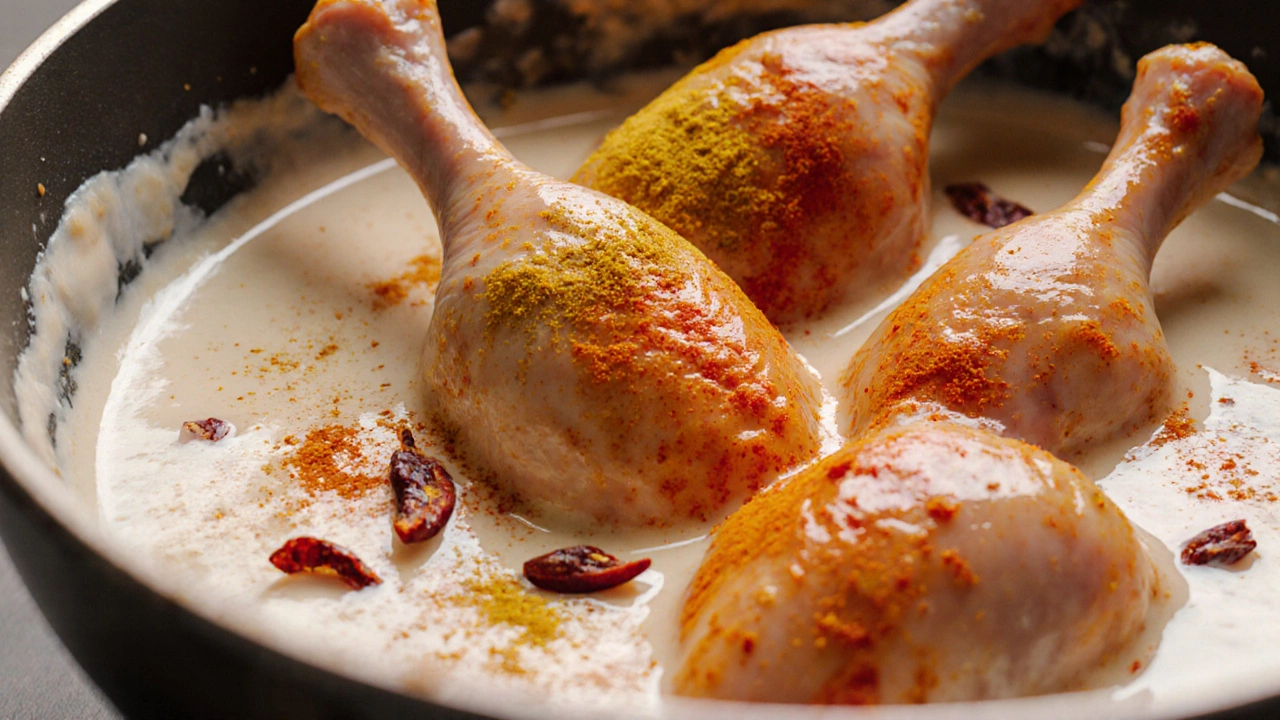
Why Is Tandoori Chicken Orange? The Science Behind Its Signature Color
Discover why tandoori chicken gets its signature orange hue, from spice pigments to cooking methods, and learn practical tips to perfect the color at home.
View More