Fermentation in Indian Cooking: How Ancient Techniques Shape Today’s Meals
When you bite into a soft, fluffy idli, a steamed rice and lentil cake that’s been naturally fermented overnight. Also known as fermented rice cake, it’s one of India’s most common breakfasts—and one of its most scientifically smart foods. Fermentation isn’t just a cooking step here; it’s a tradition that’s been keeping Indian meals nutritious, digestible, and full of life for centuries. This isn’t some trendy biohack—it’s how grandmothers made food better long before anyone talked about probiotics.
Fermentation shows up in more places than you think. Take dosa batter, a mix of rice and black lentils left to sit for 8–12 hours until bubbly and sour. Also known as fermented batter, it’s the base for crispy pancakes across South India. The same process turns yogurt into a tenderizing marinade for tandoori chicken, where lactic acid breaks down proteins so the meat stays juicy under high heat. Also known as yogurt-based marination, it’s why your chicken doesn’t turn dry. Even chutneys and pickles rely on wild microbes to deepen flavor and extend shelf life without preservatives. These aren’t random tricks—they’re inherited knowledge built on observation, patience, and trust in nature’s process.
What makes Indian fermentation special isn’t just what’s made, but how it’s done. No commercial yeast. No lab-grown cultures. Just water, grain, time, and the right temperature. In homes from Kerala to Punjab, rice and lentils sit in clay pots, warmed by the sun or kitchen heat, slowly turning into something alive. This isn’t cooking—it’s farming microbes. And it’s why idli is easier to digest than plain rice, why dosa batter doesn’t cause bloating, and why yogurt marinades outperform lemon juice for tenderizing meat.
You don’t need fancy gear to do it right. A warm corner of your kitchen, a clean cloth, and time are all you need. If your dosa batter turns grainy, it’s not broken—it just needs more rest. If your yogurt marinade feels too thick, thin it with water. Fermentation doesn’t demand perfection. It rewards consistency.
Below, you’ll find real stories from Indian kitchens—how people fix sour batter, why citrus ruins paneer, what happens when you swap yogurt for sour cream, and why some meals stay healthy simply because they’re fermented. No theory. No fluff. Just what works, day after day, in homes across India.
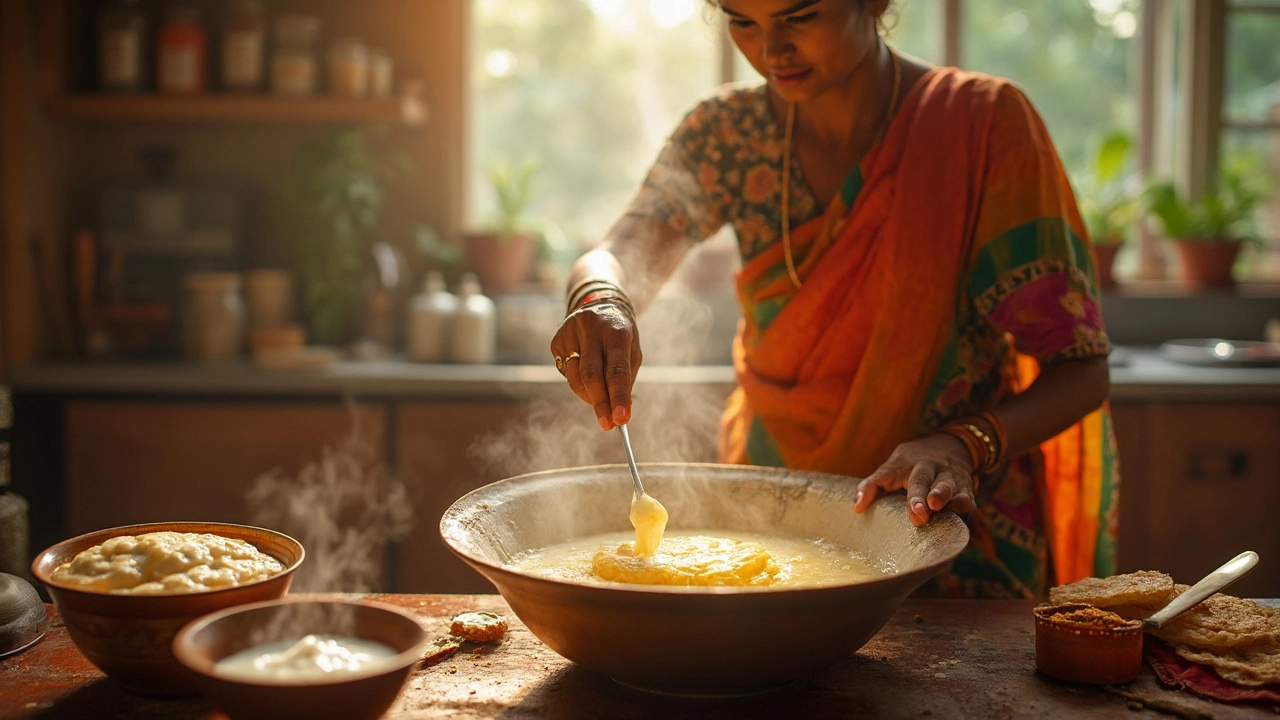
Curd in Dosa Batter: What Really Happens?
Adding curd to dosa batter changes more than just the taste—it shakes up the texture and fermentation too. This article reveals why curd is sometimes used in dosa batter, what effects it has, and how you can use it for crispier dosas, especially in tough weather. You'll get easy tips for using curd, plus a look at common mistakes and how to fix them. Find out if curd could be your shortcut to the perfect dosa.
View More
The Impact of Too Much Urad Dal in Dosa Batter: What You Need to Know
Urad dal is a key player in the dosa batter, but what happens when you go overboard with it? This article explores the effects of excess urad dal on the texture, taste, and fermentation process of dosa batter. Understand how the proportion of urad dal can make or break your dosa-making efforts with practical insights and tips to get that perfect crispy dosa every time.
View More