Ferment Dosa Batter Quickly: Fast, Reliable Methods for Perfect Dosa
When you're craving crispy fermented dosa batter, a living mixture of rice and lentils that transforms through natural bacteria to become light, tangy, and perfect for making dosas and idlis. Also known as dosa batter, it's the foundation of South Indian breakfasts and needs time—usually 8 to 12 hours—to rise properly. But what if you don’t have that kind of time? You can still get great results faster, and here’s how.
The key to speeding up fermentation isn’t about adding yeast or chemicals—it’s about controlling the environment. Temperature, the single biggest factor in how fast your batter rises. In cooler climates, batter can take over 18 hours. In warm places like Tamil Nadu or Karnataka, it’s often ready in 6. If you live where winters linger, try placing your batter near a warm appliance—like a running oven with the light on, or on top of a fridge that’s generating heat. Avoid direct sunlight; it can overheat and kill the good bacteria. Another trick? Add a pinch of fenugreek seeds while grinding. They’re not just for flavor—they contain natural enzymes that boost fermentation. Many home cooks skip this, but it makes a real difference in both speed and texture.
Grinding technique, how you blend your rice and urad dal. If your batter is grainy, it won’t ferment well. You need smooth, fluffy batter—not coarse or watery. Grind the urad dal first until it’s airy and white, then add the soaked rice. Don’t over-grind the rice; it turns gummy. The right batter should feel like thick cream and hold its shape when you lift a spoon. And always use filtered water. Chlorine in tap water can kill the wild yeast that does the work. Some people swear by adding a tablespoon of cooked rice or a splash of leftover batter from a previous batch. It’s like adding a starter culture—it jumpstarts the process. It’s not magic, just smart biology.
You don’t need fancy gadgets. A warm spot, good ingredients, and patience are all you need. If you’re in a hurry, try the oven method: preheat your oven to 100°F, turn it off, then place the covered batter inside. Leave it for 4–6 hours. Most people think fermentation is slow by nature, but it’s only slow when you ignore the conditions. Get the heat right, grind well, and skip the shortcuts that backfire—like adding baking soda. It might puff things up, but it ruins the taste and texture.
Below, you’ll find real recipes and fixes from people who’ve been there—grainy batter, slow rise, flat dosas. You’ll see how temperature, ingredients, and timing play out in actual kitchens. No theory. Just what works.
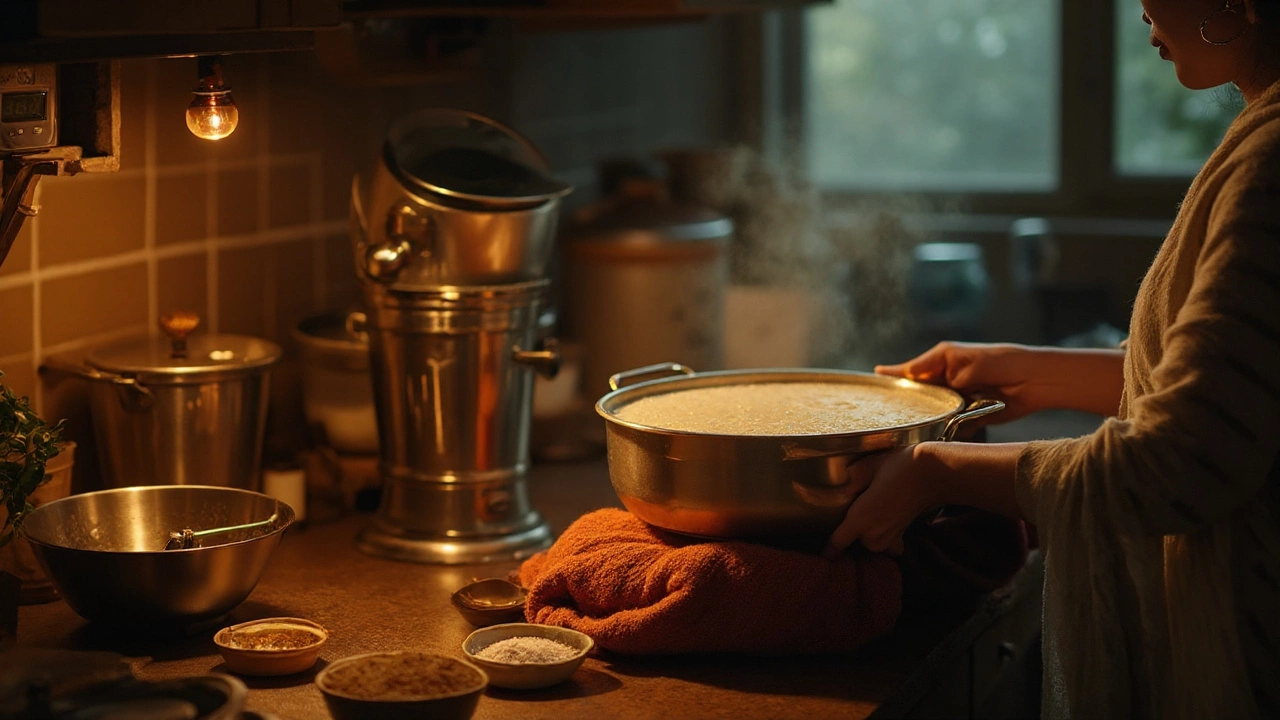
How to Ferment Dosa Batter Quickly (No Yeast): Fast, Reliable Methods That Work
Need dosa batter to ferment fast without yeast? Get proven ratios, temps, and warm-incubation hacks, plus Instant Pot, oven-light, and cold weather tips.
View More