Dosa Tips: Perfect Crispy Dosa Every Time with Proven Tricks
When you think of dosa, a thin, fermented rice and lentil crepe from South India, often served with chutney and sambar. Also known as South Indian pancake, it’s one of the most loved breakfast foods across the country—and one of the most frustrating to make right. The problem isn’t the recipe. It’s the batter. Too thick? Too grainy? Won’t spread? Doesn’t crisp up? You’re not alone. Most people fail at dosa because they skip the basics: fermentation, texture, and heat control.
The dosa batter, a fermented mix of rice and urad dal, usually soaked, ground, and left to rise overnight. Also known as fermented batter, it’s the foundation of everything—not just dosa, but idli and uttapam too. If your batter is grainy, it’s because you didn’t grind it long enough or used old rice. If it doesn’t rise, your kitchen’s too cold. And if it sticks to the pan? You didn’t preheat it right. The crispy dosa, the ideal version with a light, crunchy edge and soft center. Also known as crisp dosa, it’s not luck—it’s technique. You need the batter at room temperature, a hot tawa, and just enough oil to let it spread without greasing it up.
People think dosa is hard because they follow YouTube videos that show perfect results in 30 seconds. But real dosa takes time. You need to soak rice and dal separately, grind them to a silky paste, let the batter bubble for 8–12 hours, and test it with a drop of water before cooking. If it floats, you’re good. If it sinks, wait longer. And never, ever add baking soda to make it rise faster—that’s a shortcut that ruins flavor. The magic happens naturally, with good bacteria doing the work. That’s why traditional homes keep a jar of old batter in the corner—it’s like a sourdough starter, but for dosa.
Once you get the batter right, the rest is simple. Heat the pan until a drop of water sizzles and vanishes. Pour a ladleful, swirl it fast, and drizzle oil around the edges—not on top. Let it cook until the edges lift and turn golden. Flip it once, if at all. Most dosas don’t need flipping. Just cover with a lid for a minute to steam the center. That’s how you get that perfect soft-inside, crunchy-outside texture. No fancy gadgets. No expensive pans. Just patience and practice.
Below, you’ll find real advice from people who’ve made hundreds of dosas—some failed, some nailed it. You’ll learn why your batter turns grainy, how to fix it fast, what temperature to cook at, and why some people swear by coconut water in the batter. You’ll also see how dosa relates to idli, why fermentation matters more than spices, and what common mistakes ruin even the best recipes. This isn’t theory. It’s what works when you’re standing in your kitchen at 7 a.m., hungry, and tired of soggy dosas.
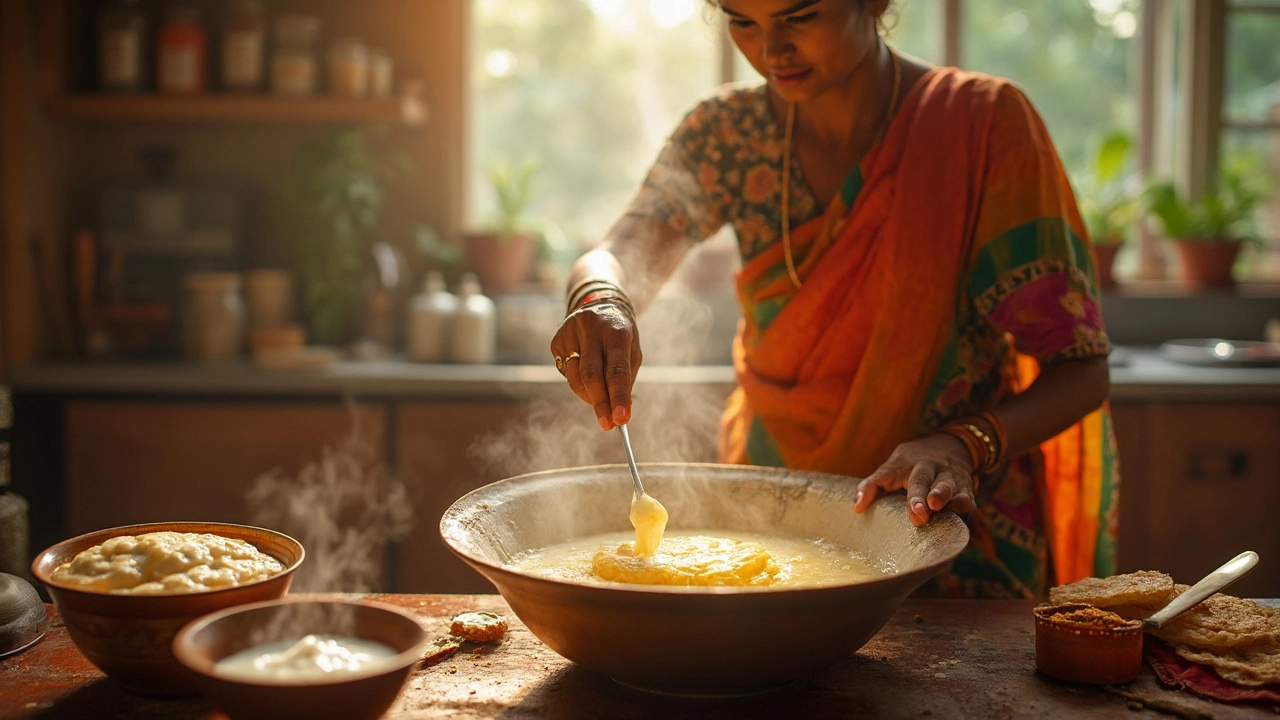
Curd in Dosa Batter: What Really Happens?
Adding curd to dosa batter changes more than just the taste—it shakes up the texture and fermentation too. This article reveals why curd is sometimes used in dosa batter, what effects it has, and how you can use it for crispier dosas, especially in tough weather. You'll get easy tips for using curd, plus a look at common mistakes and how to fix them. Find out if curd could be your shortcut to the perfect dosa.
View More