Dosa Batter Consistency: How to Get It Right Every Time
When you're making dosa batter consistency, the ideal texture of fermented rice and lentil batter used to make crispy South Indian dosas. Also known as dosa batter texture, it's the difference between a flimsy, sticky mess and a golden, crisp-edged dosa that cracks just right under your fork. It’s not about following a fixed ratio—it’s about feel, time, and temperature. Many people think dosa batter is just rice and urad dal mixed together, but that’s only half the story. The real magic happens during fermentation, where tiny microbes transform the batter into something light, airy, and perfectly balanced.
The fermentation, the natural process where bacteria and yeast break down starches in the batter to produce gas, making it rise and become fluffy. Also known as natural leavening, it’s what gives dosa its signature lift and subtle tang depends on your climate. In cold winters, you might need to wrap the bowl in a towel and leave it near a heater. In humid summers, it could be ready in just 6 hours. The batter should look bubbly, smell slightly sour like yogurt, and double in volume. If it doesn’t, your dosa won’t crisp up—it’ll just stick to the pan and feel heavy. And don’t forget the urad dal, the black lentil that gives dosa batter its structure, elasticity, and crispiness. Also known as black gram, it’s the secret behind that satisfying snap when you bite into a fresh dosa. Use too little, and your dosa tears. Use too much, and it turns rubbery. The standard is 1 part urad dal to 3 parts rice, but even that can shift based on the age of your rice or how finely you grind the dal.
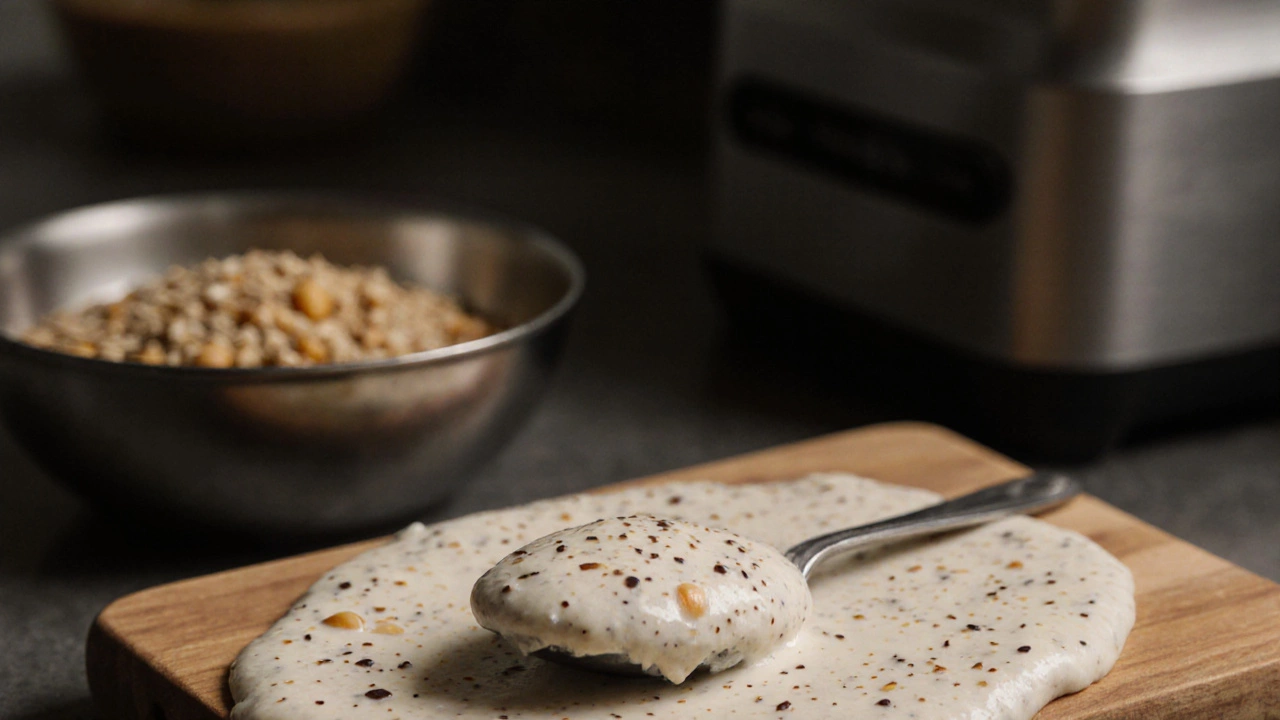
Water matters too. Add it slowly while grinding. You want the batter thick enough to hold its shape when you lift a spoon—like heavy cream, not soup. If it’s too thin, your dosa spreads too wide and burns at the edges. If it’s too thick, it won’t spread at all. And never, ever add cold water after fermentation. It kills the yeast. Always use room temperature water if you need to adjust the texture. Regional styles vary: in Tamil Nadu, they prefer a thinner batter for crisp dosas; in Karnataka, they like it thicker for softer, fluffier versions. Your batter should match your goal.
What you’ll find below are real, tested posts from home cooks and chefs who’ve cracked the code. You’ll see how to fix runny batter, why your dosa sticks even with a hot tawa, and how to store batter for days without losing its lift. No theory. No fluff. Just what works, tested in kitchens from Chennai to Chicago.
Is Grainy Dosa Batter Normal? Get the Perfect Smooth Texture
Learn why dosa batter can turn grainy, discover the main causes, and follow a step‑by‑step guide to achieve a smooth, perfectly fermented batter for crisp dosas.
View More