Dal to Water Ratio: Perfect Consistency for Every Indian Lentil Dish
When you cook dal to water ratio, the proportion of lentils to liquid that determines whether your dal turns out thick and hearty or thin and soupy. It's not just a number—it's the foundation of flavor, texture, and comfort in Indian kitchens from Punjab to Tamil Nadu. Get it wrong, and your dal might be watery and bland. Get it right, and it becomes the kind of dish that makes you want to lick the bowl clean.
The lentil type, whether it's masoor, toor, chana, or moong changes everything. Toor dal, the most common in South Indian sambar, needs about 1:3.5 ratio—so 1 cup of dal to 3.5 cups of water. But moong dal, softer and quicker to cook, works better with 1:2.5. If you’re using whole urad dal for dal makhani, you’ll need even more liquid—sometimes up to 1:5—because those skins hold onto water and swell more. And don’t forget soaking. Soaked lentils absorb less water during cooking, so you can reduce the amount slightly. Unsoaked? Add an extra quarter cup per cup of dal.
The cooking method, whether you’re using a pressure cooker, pot, or Instant Pot also shifts the game. Pressure cooking traps steam, so you need less water—about 1:3 for most dals. On the stove, where steam escapes, you’ll need more to avoid burning. And if you’re making a thick dal like Rajma or Chana Dal, you’ll want to start with less water and add more as it simmers. Many home cooks in India start with a little less than they think they need, then adjust. It’s better to thin it out than to rescue a gluey mess.
Regional styles, from the watery dal of Bengal to the thick, buttery dal of Punjab all rely on this ratio. In the South, dal is often served with rice as a light broth. In the North, it’s stirred with ghee, cream, and spices until it clings to the spoon. The dal to water ratio isn’t just a recipe step—it’s a cultural choice. Your grandmother didn’t measure it with cups. She watched the lentils, listened to the bubbles, and knew when it was right.
That’s why you’ll find posts here about everything from perfecting moong dal khichdi to making dal tadka that doesn’t turn into soup. You’ll see how fermentation, pressure cooking, and even the age of your lentils affect the outcome. You’ll learn why some cooks add a pinch of baking soda to soften older dal, and why others swear by rinsing until the water runs clear. This isn’t about following a rigid rule. It’s about understanding the why behind the ratio so you can adapt it—whether you’re cooking for one or feeding a crowd.
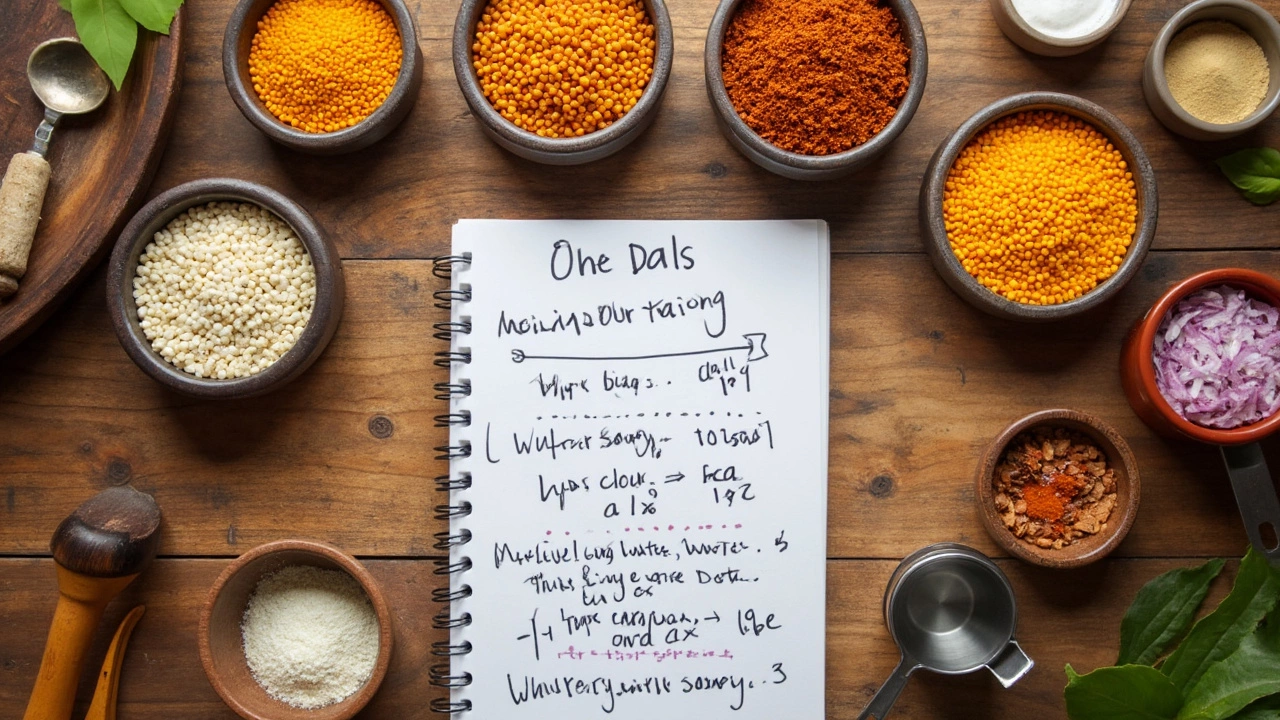
How Much Water for 1 Cup of Dal? Practical Tips for Perfect Texture
Wondering how much water you actually need for 1 cup of dal? Here's a no-nonsense guide with helpful tips for getting the perfect consistency, whether you like your dal thick or soupy. Learn how different types of dals soak up water, common mistakes people make, and real-life tricks I swear by. Cooking dal doesn't need to be confusing—let's take the guesswork out of it. Get ready for better, tastier dal every time.
View More