Crispy Dosa: How to Make the Perfect South Indian Crisp Pancake
When you think of a crispy dosa, a thin, fermented rice and lentil pancake cooked until golden and crisp. Also known as South Indian dosa, it’s the breakfast that wakes up millions across India—not with sugar, but with crunch, heat, and flavor. It’s not just food. It’s texture, timing, and tradition all rolled into one. The best crispy dosa doesn’t just sit on your plate—it sings when you bite into it. That crackle? That’s the sound of perfectly fermented batter, just the right heat on the griddle, and a thin spread of oil doing their job.
What makes a dosa crispy isn’t just the recipe—it’s the fermented dosa batter, a living mixture of rice and urad dal that bubbles and grows over 8–12 hours. Skip fermentation, and you get a flat, chewy disc. Get it right, and you get that signature crisp edge that holds up to chutney without falling apart. The batter needs to be smooth, airy, and just slightly sour. Grainy batter? That’s a red flag. Too thick? It won’t spread. Too thin? It tears. It’s a balance most home cooks miss—until they learn the little tricks: soaking rice and lentils separately, grinding them at the right speed, and letting the batter rest in a warm spot, not the fridge.
Then there’s the South Indian breakfast, a daily ritual built around dosa, idli, and upma. In Tamil Nadu, Karnataka, or Kerala, breakfast isn’t cereal. It’s hot, savory, and served with coconut chutney and sambar. A crispy dosa isn’t a snack. It’s the centerpiece. And while some people think it’s heavy, it’s actually one of the lighter options—low in fat if you use minimal oil, high in protein from the lentils, and easy to digest thanks to fermentation. Compare it to idli: same batter, but steamed. One’s soft, one’s crisp. Both are staples. But if you want crunch, texture, and that addictive bite, crispy dosa wins.
You’ll find posts here that explain why your batter turns grainy, how to fix it, and what temperature to cook it at. You’ll learn how much oil is too much, and why some people swear by cast iron while others use non-stick. You’ll see how this one dish connects to bigger ideas—like why Indians eat less sugar, what makes a meal healthy, and how fermentation changes nutrition. This isn’t just about making a pancake. It’s about understanding a whole way of eating. And if you’ve ever bitten into a dosa that was too soft, too thick, or just plain dull—you’ll find the fix here.
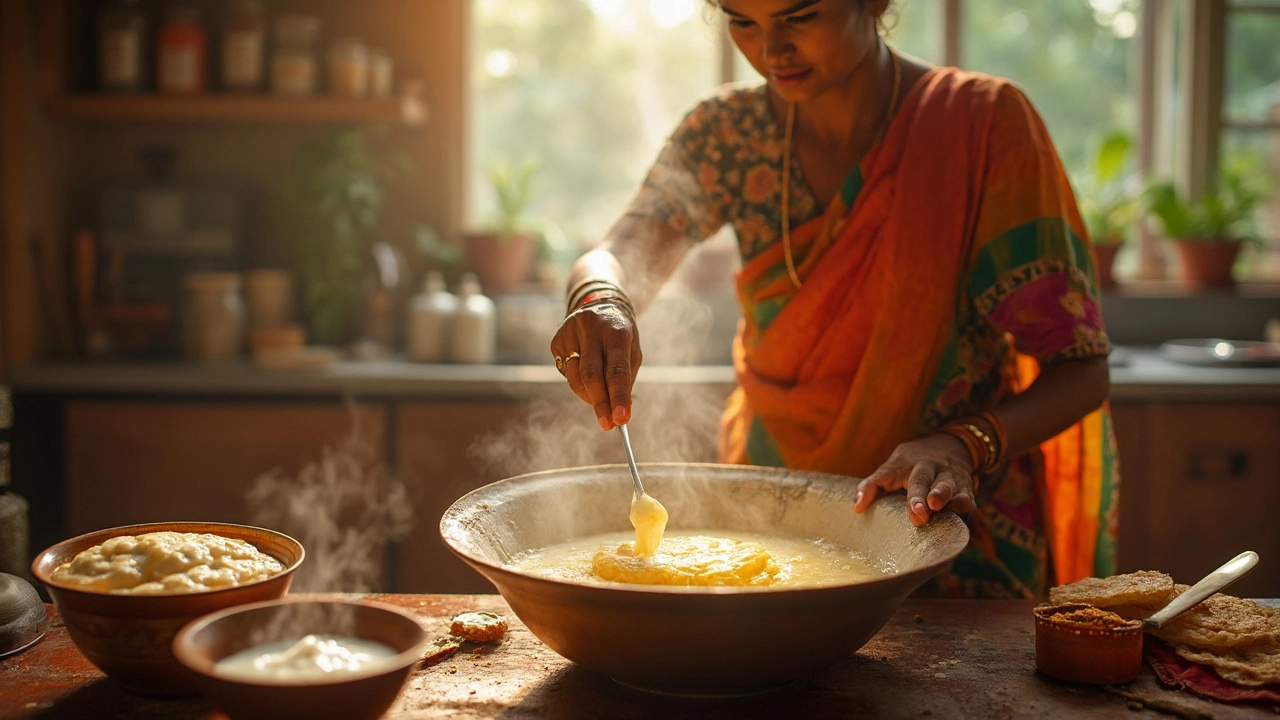
Curd in Dosa Batter: What Really Happens?
Adding curd to dosa batter changes more than just the taste—it shakes up the texture and fermentation too. This article reveals why curd is sometimes used in dosa batter, what effects it has, and how you can use it for crispier dosas, especially in tough weather. You'll get easy tips for using curd, plus a look at common mistakes and how to fix them. Find out if curd could be your shortcut to the perfect dosa.
View More