Cold Weather Fermentation: How Low Temperatures Affect Indian Fermented Foods
When you’re making cold weather fermentation, the process of using natural microbes to break down sugars in food at low temperatures. Also known as slow fermentation, it’s what turns dosa batter into fluffy idlis and milk into tangy yogurt—even when your kitchen feels like a winter morning. Most recipes assume warmth, but India has millions of homes where winters drop below 20°C. That’s not a problem—it’s just a different rhythm.
Fermented Indian foods, traditional dishes like idli, dosa, and dhokla that rely on natural bacterial cultures to rise and develop flavor don’t need a heat lamp. They need time, patience, and a little know-how. In South India, families keep batter near the stove, wrapped in towels, or even inside closed microwave ovens with a bowl of hot water. The microbes aren’t lazy—they’re just slower. Lactic acid bacteria, the same ones that make yogurt, work best around 30°C. Below that, they take twice as long. But they still work. And when they do, the flavor is deeper, the texture smoother.
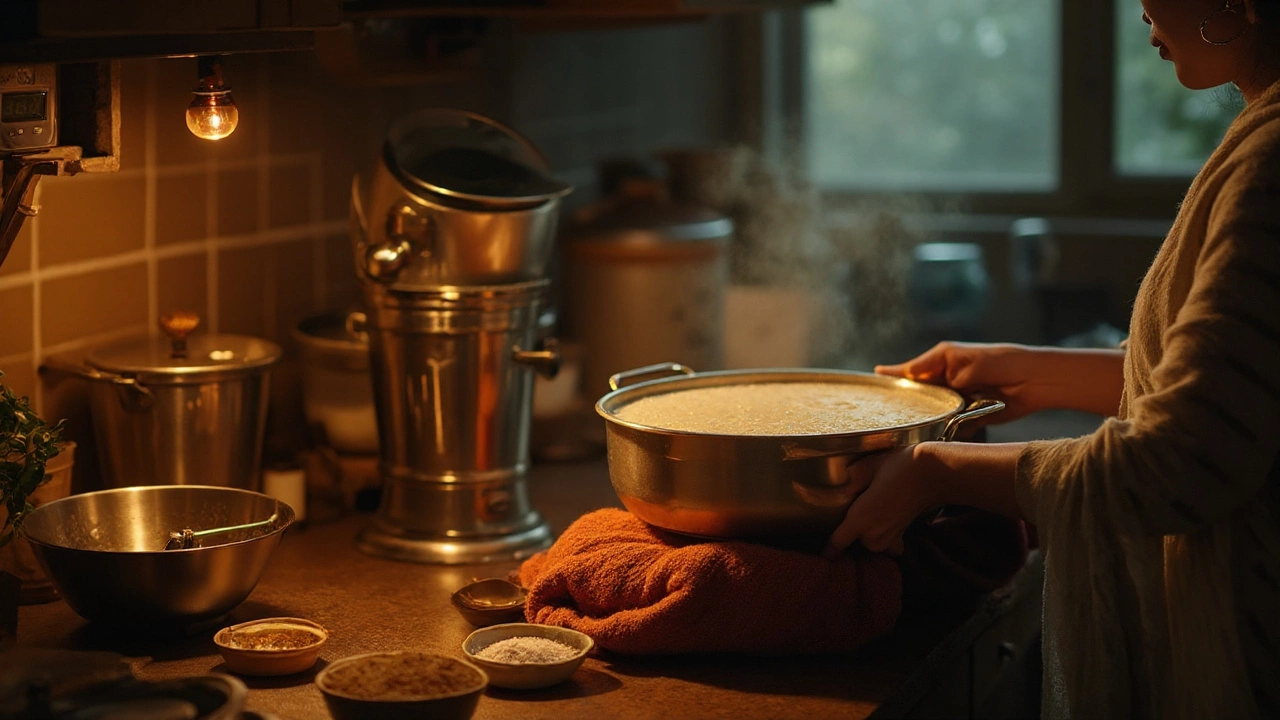
Dosa batter, a fermented mix of rice and urad dal used to make crispy pancakes is the most common victim of cold weather. Grainy, flat dosas? That’s not bad rice—that’s under-fermented batter. The fix isn’t more yeast or baking soda. It’s insulation. Wrap the container in a blanket. Place it on a heating pad set to low. Or leave it in a closed bathroom with the shower running for 10 minutes to raise the air temp. Don’t rush it. Let the batter sit 12 to 18 hours. You’ll know it’s ready when it smells sour, looks bubbly, and has doubled in volume.
Idli batter, a steamed rice and lentil batter that rises into soft, fluffy cakes behaves the same way. If your idlis come out dense, the batter didn’t get enough time to ferment. Cold doesn’t kill the culture—it just puts it to sleep. A warm spot is all it needs to wake up. Many households use the oven light, a radiator, or even a thermos filled with hot water to create a mini fermentation chamber. The key? Consistency. Don’t open the lid every hour. Let it be.
And then there’s yogurt fermentation, the process of turning milk into probiotic-rich yogurt using bacterial cultures. In winter, yogurt makers in India skip the electric yogurt maker. They use clay pots, wrap them in wool, and leave them overnight near a heater. The result? Thicker, creamier yogurt than any store-bought version. No sugar. No stabilizers. Just milk, culture, and time.
You don’t need fancy gear. You don’t need to live in a tropical climate. You just need to understand that fermentation isn’t a clock—it’s a conversation between food and microbes. Cold weather doesn’t break the process. It just asks you to listen closer. The posts below show exactly how real Indian kitchens handle this—whether it’s fixing grainy dosa batter, adjusting fermentation times for idlis, or making yogurt when the thermometer drops. No theory. No fluff. Just what works, day after day, in homes across the country.
How to Ferment Dosa Batter Quickly (No Yeast): Fast, Reliable Methods That Work
Need dosa batter to ferment fast without yeast? Get proven ratios, temps, and warm-incubation hacks, plus Instant Pot, oven-light, and cold weather tips.
View More