Clean Lentils: How to Prep, Cook, and Use Them in Indian Kitchen
When you buy clean lentils, washed and sorted pulses like moong dal or toor dal used in everyday Indian cooking. Also known as washed dals, they're the foundation of meals that keep families fed across India—simple, nutritious, and deeply comforting. Most people skip this step, but cleaning lentils isn’t just about removing dirt. It’s about removing tiny stones, husks, and dust that can ruin texture, cause digestive issues, or even chip a tooth. In Indian kitchens, skipping this means risking a gritty dal or a broken tooth at dinner.
Moong dal, a bright yellow lentil used in everything from breakfast khichdi to sweet desserts, needs a good rinse because it’s often sold with a thin outer skin that can turn bitter if not washed well. Toor dal, the staple for sambar and tamarind-based curries in South India, carries more grit because it’s harvested and dried in open fields. Even masoor dal, the red lentil that cooks fast and turns creamy, needs attention—its tiny particles can hide sand or debris from processing. Cleaning isn’t optional; it’s part of the recipe.
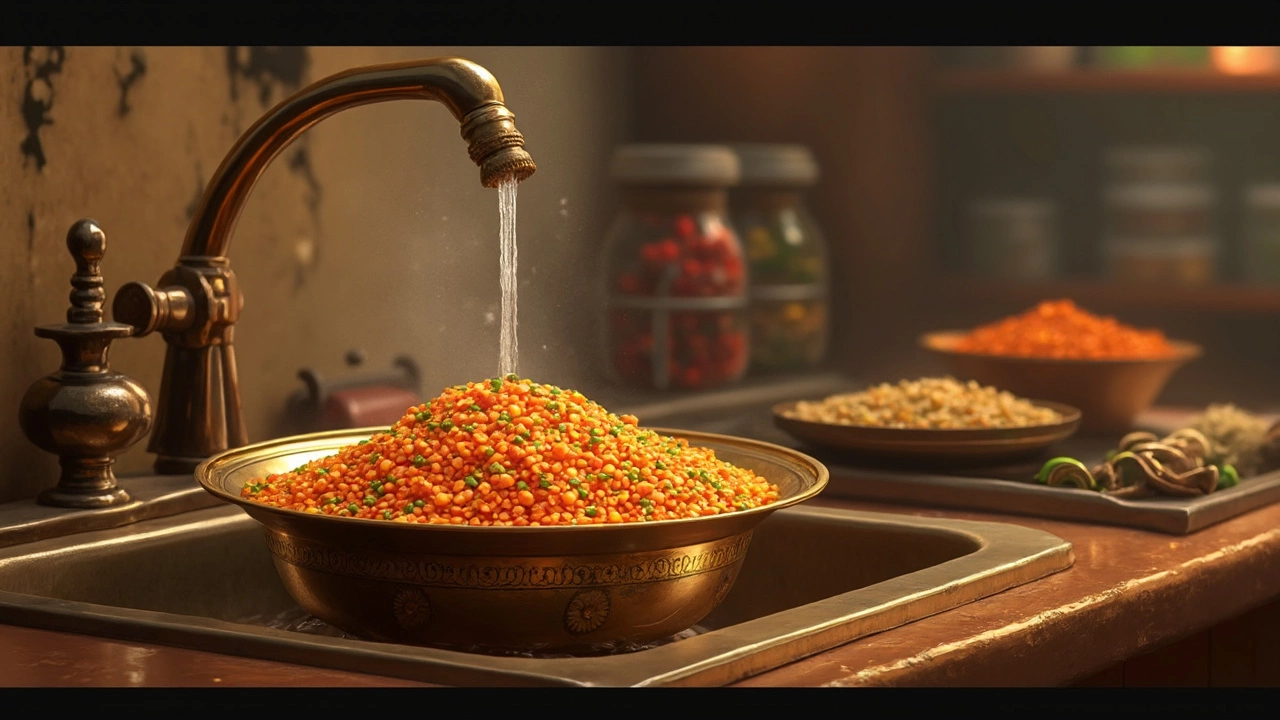
Here’s how it’s done: put your lentils in a bowl, cover with water, swirl with your hand, and let the dirt sink. Pour off the cloudy water. Repeat 2–3 times until the water runs clear. No need for fancy tools—your hands and a colander work fine. Some people soak lentils after cleaning to reduce cooking time and improve digestibility, especially if you’re sensitive to beans. That’s a habit passed down from grandmothers who knew that a well-cleaned dal doesn’t just taste better—it sits better.
Why does this matter? Because Indian cooking isn’t just about spices. It’s about starting with the right base. A dirty lentil turns a simple dal into a disappointing meal. Clean lentils absorb flavors better, cook evenly, and give you that smooth, creamy texture you want in chana dal or moong dal khichdi. They’re also safer—no surprise rocks in your food. You’ll find this step in nearly every traditional recipe on this site, from the simplest tarka dal to the layered biryani with lentils.
Below, you’ll find real recipes and tips from Indian homes—how to make dal taste richer after cleaning, why some regions skip soaking, and how to use clean lentils in snacks, soups, and even sweets. No fluff. Just what works.
Why You Shouldn't Skip Rinsing Lentils
Rinsing lentils is essential to ensure they are clean and free from debris before cooking. Skipping this step can lead to gritty textures and unwanted dirt in your dish. Rinsing also reduces compounds that cause digestive discomfort, making your meal more enjoyable. This process is quick and makes a real difference in flavor and texture. Don't overlook this small but crucial step when making your favorite dal.
View More