Chutney Tips: Smart Ways to Make, Store, and Use Indian Chutneys
When you think of chutney, a spicy, tangy condiment that elevates Indian meals from simple to unforgettable. Also known as chatni, it's not just a side—it's the flavor anchor that ties together dosas, idlis, samosas, and even plain rice. Most people treat chutney like an afterthought, but the truth is, a great chutney can turn an ordinary meal into something memorable. The difference between a good one and a great one? Small, smart choices in ingredients, timing, and storage.
One of the biggest mistakes? Using watery ingredients without draining them first. Fresh mint, coriander, or coconut need to be patted dry before blending—any extra moisture turns your chutney into a soup. And don’t skip the salt. It’s not just for taste; it acts as a natural preservative. A pinch of sugar or jaggery balances acidity, especially when you’re using tamarind or lemon. For longer shelf life, always store chutney in clean, dry glass jars. A thin layer of oil on top? That’s the secret trick used in homes across South India to keep chutneys fresh for weeks without refrigeration.
Tamarind, a sour fruit pulp used in chutneys from Andhra to Maharashtra. Also known as imli, it’s the backbone of many classic chutneys. But not all tamarind is the same. The sticky, dark kind from dried pods gives deeper flavor than the pre-made paste sold in bottles. And coconut chutney, a staple in South Indian breakfasts, made from fresh grated coconut, green chilies, and roasted lentils. Also known as nariyal chutney, it’s best when blended just before serving. If you make it ahead, let it sit for 10 minutes after blending—the flavors deepen. Don’t over-blend, though. A little texture keeps it authentic.
Chutney isn’t just for breakfast. Use it as a dip for grilled veggies, a spread on sandwiches, or even stirred into yogurt for a quick raita. The key is balance: too much garlic? Burn it lightly first. Too sour? Add a pinch of roasted cumin. Too thick? Thin it with a splash of water or buttermilk. Every region has its own version—from the fiery red chutney of Karnataka to the sweet-tangy one from Gujarat—but the rules stay the same: fresh ingredients, proper seasoning, and smart storage.
You’ll find plenty of recipes below that show you exactly how to nail each type—whether it’s mint, peanut, or tomato chutney. No fluff, no guesswork. Just real tips from kitchens where chutney isn’t an add-on—it’s the soul of the meal.
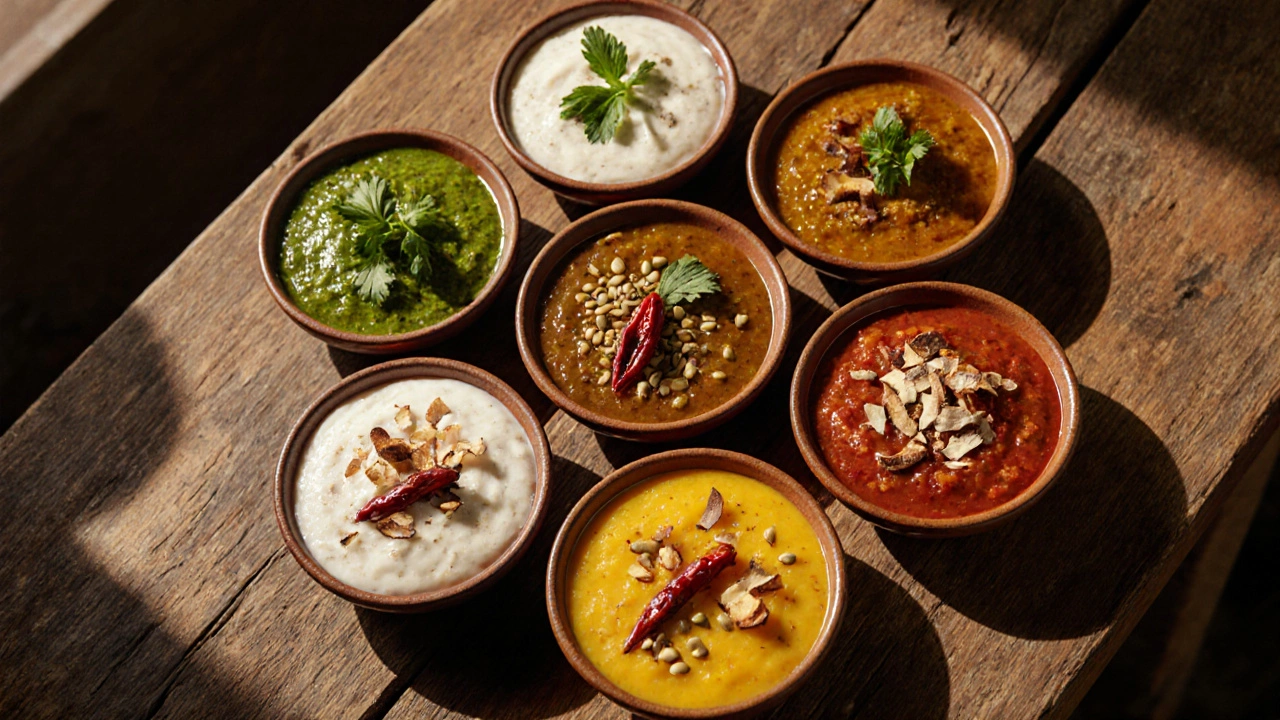
How to Eat Indian Chutney: Pairing Tips & Serving Ideas
Learn how to serve, pair, store, and revitalize Indian chutney with practical tips, quick hacks, and a handy comparison table.
View More
How to Remove Bitterness from Chutney Fast
Too much bitterness can ruin a chutney, but it's not the end of the world. This guide shares practical tricks for taking that harsh edge out of your chutney without having to throw it away. You'll find out why chutney gets bitter, what ingredients and tweaks make a real difference, and learn some smart ways to balance the taste. Plus, there are mistakes to avoid so you don't make it even worse. Save your homemade chutney and get it back to delicious.
View More